Rhyming skills development Rhyming Worksheets for Ages 3-4
3 filtered results
-
From - To
Boost your child's early literacy with our engaging Rhyming Worksheets, designed specifically for ages 3-4. These fun and educational activities help young learners develop essential rhyming skills, fostering phonemic awareness and auditory discrimination. Each worksheet features colorful images and diverse exercises that encourage children to identify, match, and create rhyming words in an interactive way. As they play and learn, they'll enhance their vocabulary and set the foundation for successful reading and writing. Discover a delightful way to support your preschooler's language development with our expertly crafted rhyming worksheets. Perfect for home or classroom use!
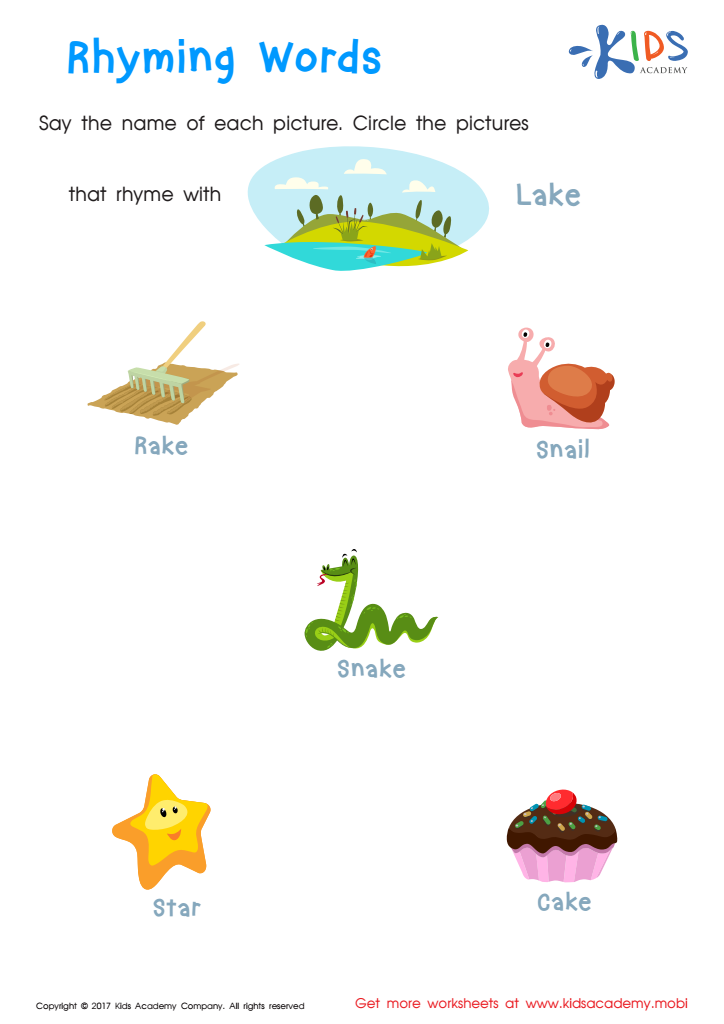
Rhyming Words Rhyming Worksheet
 Assign to My Students
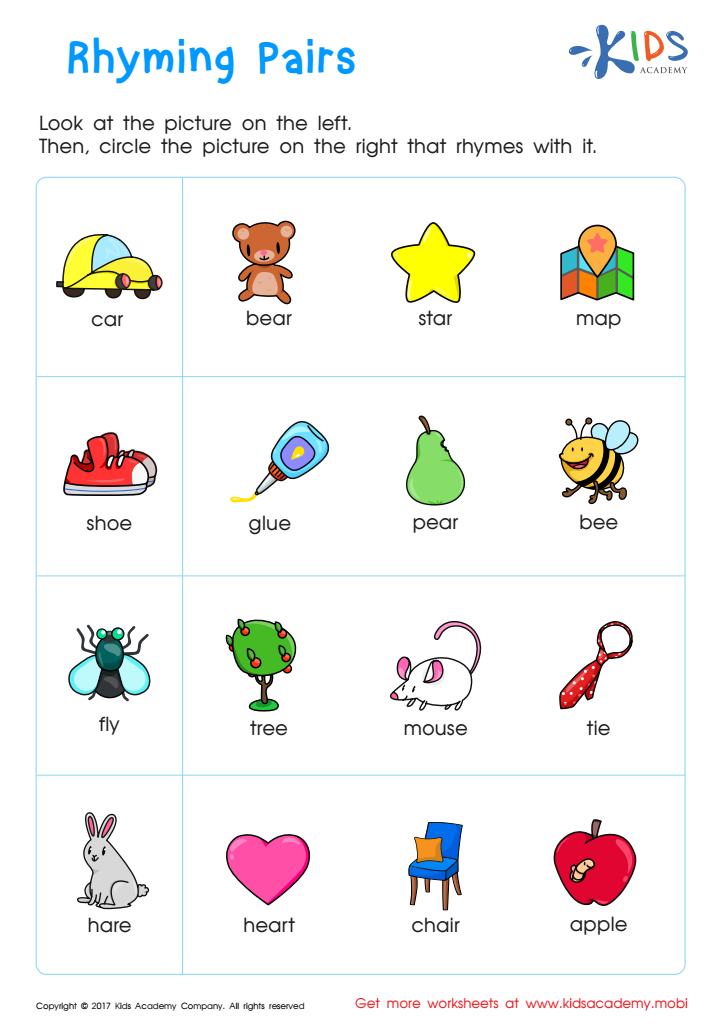
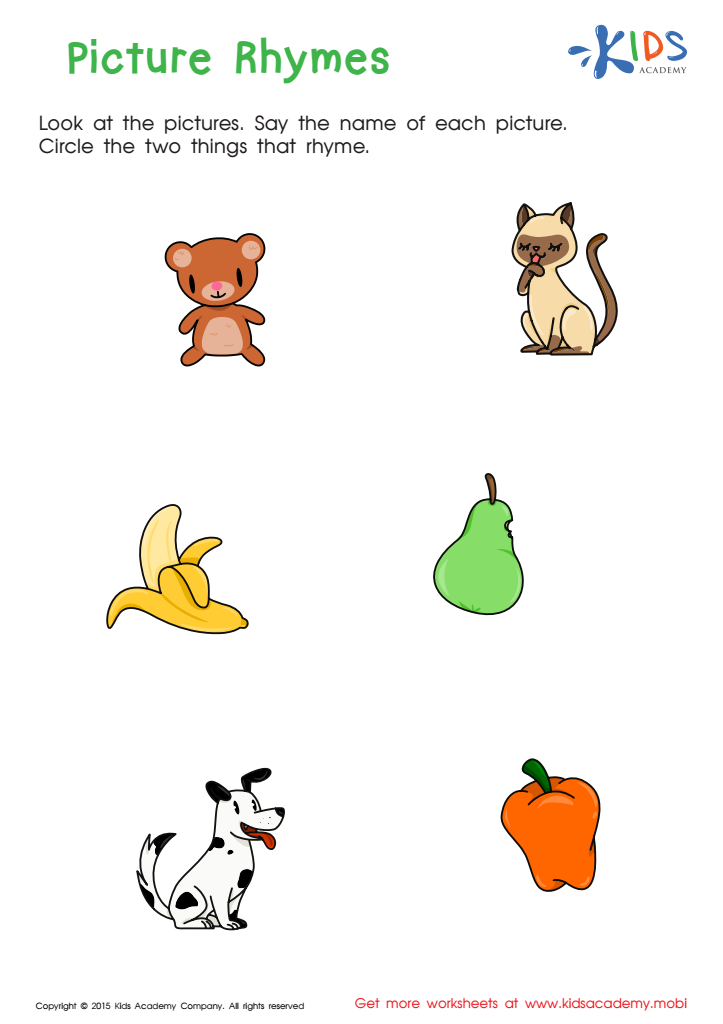
First Words: Picture Rhymes Worksheet







Rhyming skills are vital for early language and literacy development in children aged 3-4 because they lay the groundwork for reading and spelling proficiency. When children recognize and generate rhyming words, they become more aware of individual sounds within words (phonemic awareness), which is a crucial pre-reading skill.
Phonemic awareness helps children understand that words can be broken down into smaller sound units. Through rhyming, they learn to notice patterns in words, making it easier to decode new words, enhancing vocabulary, and improving memory retention. Activities like singing nursery rhymes, reading rhyming books, or playing rhyming games not only engage young children but also make learning fun, fostering a positive attitude toward reading.
Moreover, rhyming activities support social and emotional growth by allowing children to express creativity and share stories with peers and adults. When children feel confident in their language skills, they are more likely to take part in classroom discussions and activities, which promotes better communication skills and teamwork.
Thus, by encouraging rhyming skills at an early age, parents and teachers are setting the stage for children’s future academic success, cultivating essential literacy skills while also nurturing their confidence and social abilities.







