Vocabulary enhancement Rhyming Worksheets for Ages 3-4
4 filtered results
-
From - To
Nurture your child's language development with our engaging "Vocabulary Enhancement Rhyming Worksheets" designed for ages 3-4. These printable worksheets aim to improve your child's vocabulary through fun and interactive rhyming activities. Carefully crafted to suit early learners, they stimulate creativity and auditory skills, helping kids recognize and produce rhyming words. With vibrant images and simple exercises, children will enjoy exploring the sounds of language while building a strong vocabulary foundation. Perfect for both classroom and at-home learning, our rhyming worksheets make early literacy an enjoyable adventure for young minds. Download and print today!
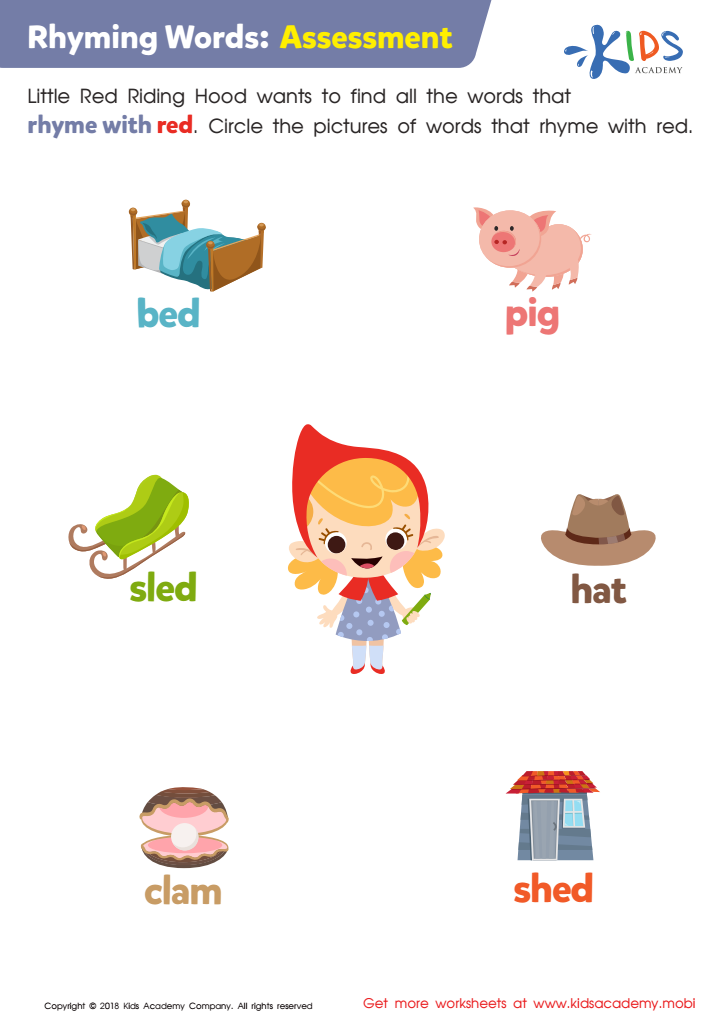
Rhyming Words: Assessment Worksheet
 Assign to My Students
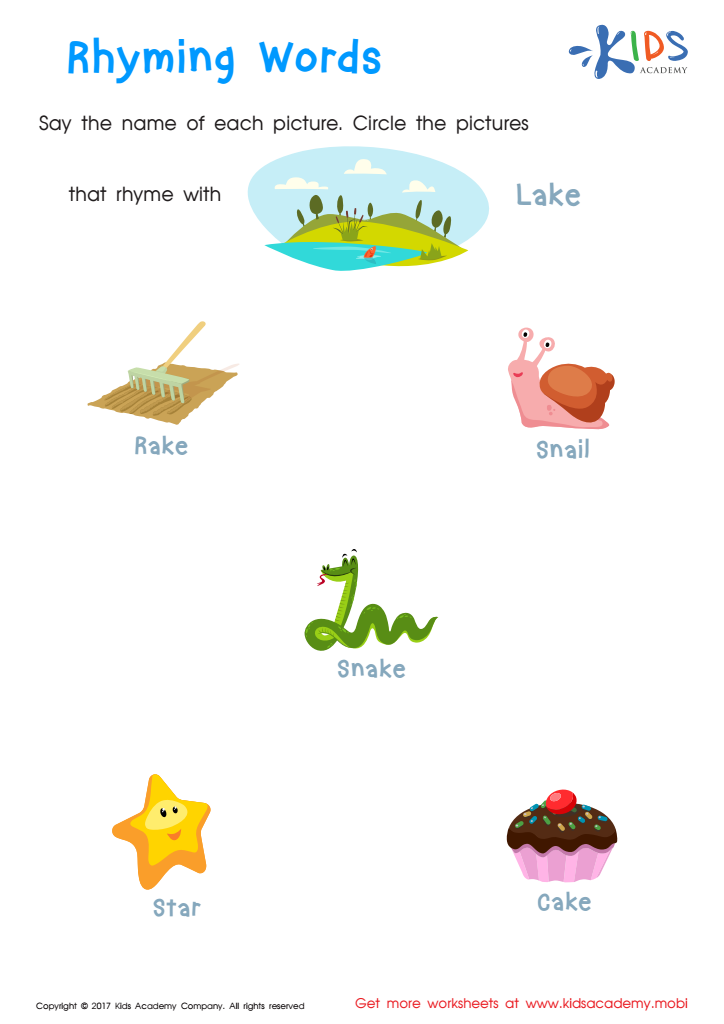
Rhyming Words Rhyming Worksheet
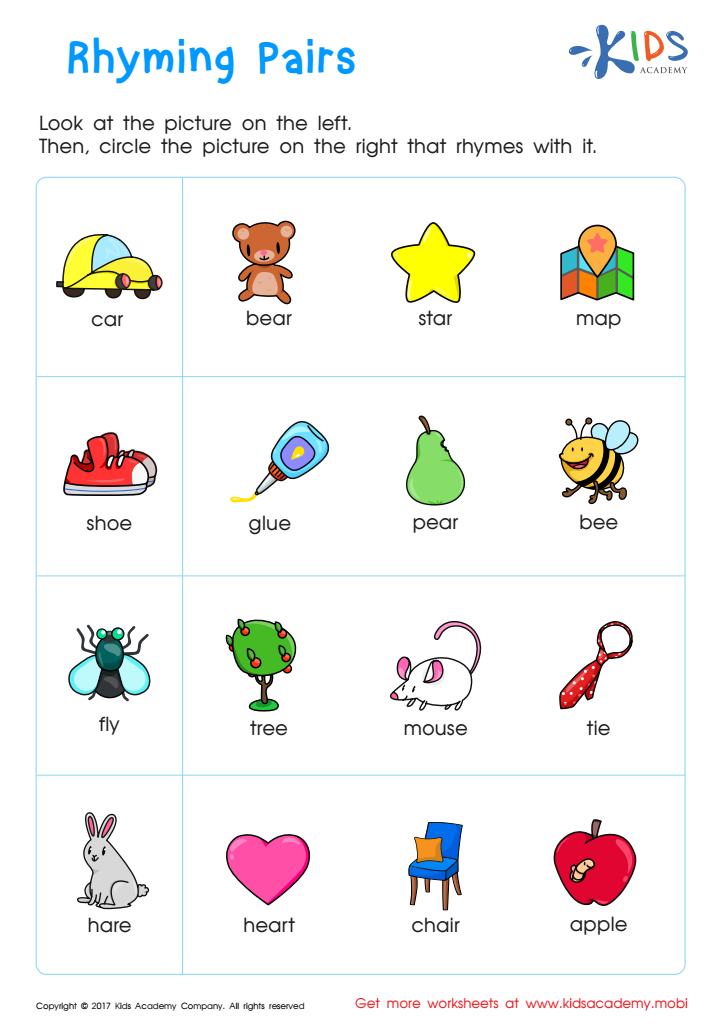
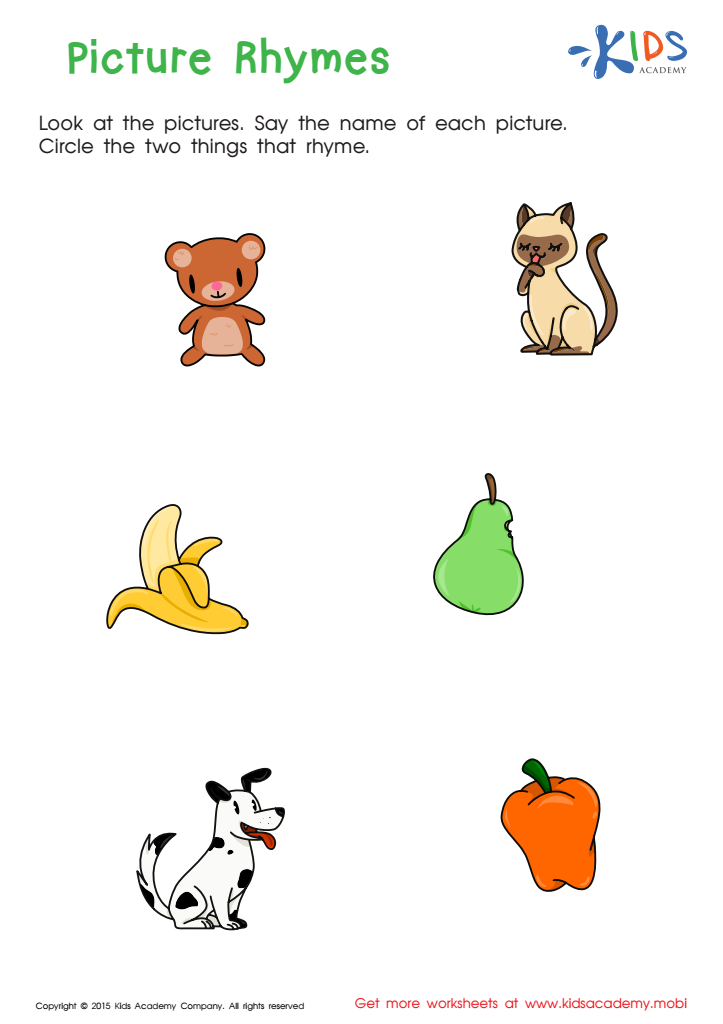
First Words: Picture Rhymes Worksheet








Vocabulary enhancement through rhyming for children aged 3-4 is a crucial aspect of early childhood education and development. At this tender age, children's brains are highly receptive to language and sound patterns. Rhyming serves as a fun and effective way to enrich their vocabulary and improve phonemic awareness—understanding that words are made up of individual sounds.
When children engage with rhymes, they learn to recognize and predict patterns in language, which builds their memory and auditory skills. This predictive capability is foundational, helping them grasp the concept of word families and encouraging them to explore new words. For instance, if they know "cat" rhymes with "hat", they begin to understand the common '-at' sound, making it easier to decode new words.
Furthermore, rhyming activities can enhance a child's listening skills, improve their ability to focus, and foster a love for reading. Rhymes are often rhythmic and repetitive, making them easier for young children to memorize and enjoy. The joy and satisfaction of mastering these rhymes ultimately promote confidence and curiosity in language learning.
For parents and teachers, emphasizing rhymes means setting a solid groundwork for children’s language and literacy development. This early intervention can lead to greater academic success down the line, as a robust vocabulary is a key predictor of a child's reading proficiency and overall communication skills.







