Letter recognition Tracing Letters Worksheets for Ages 3-4 - Page 2
26 filtered results
-
From - To
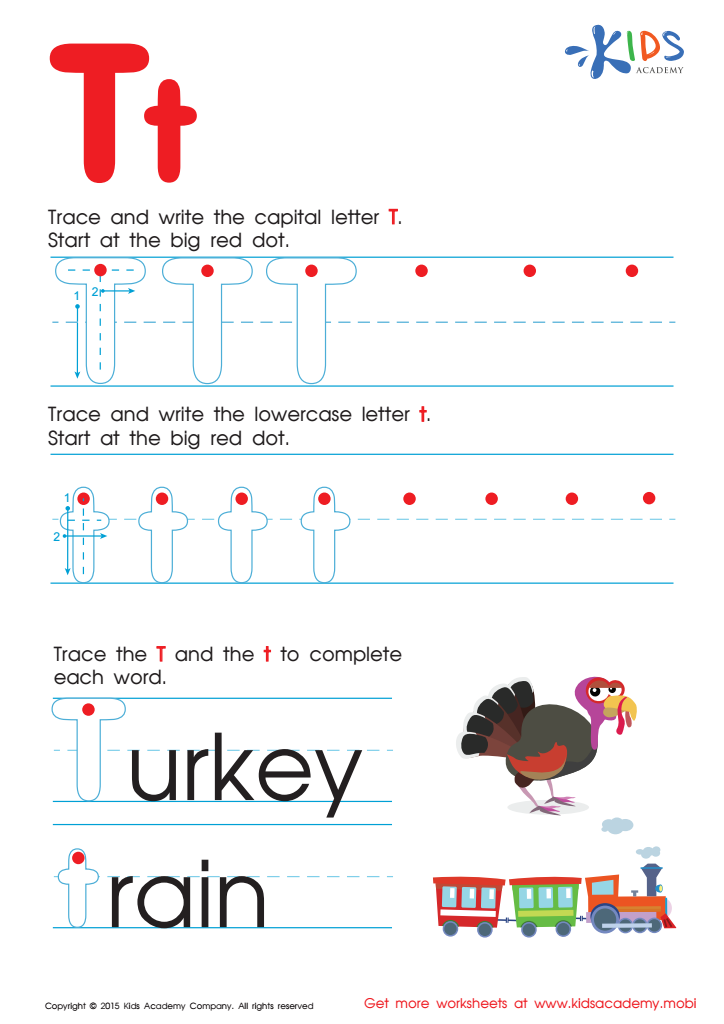
Letter T Tracing Page
 Assign to My Students
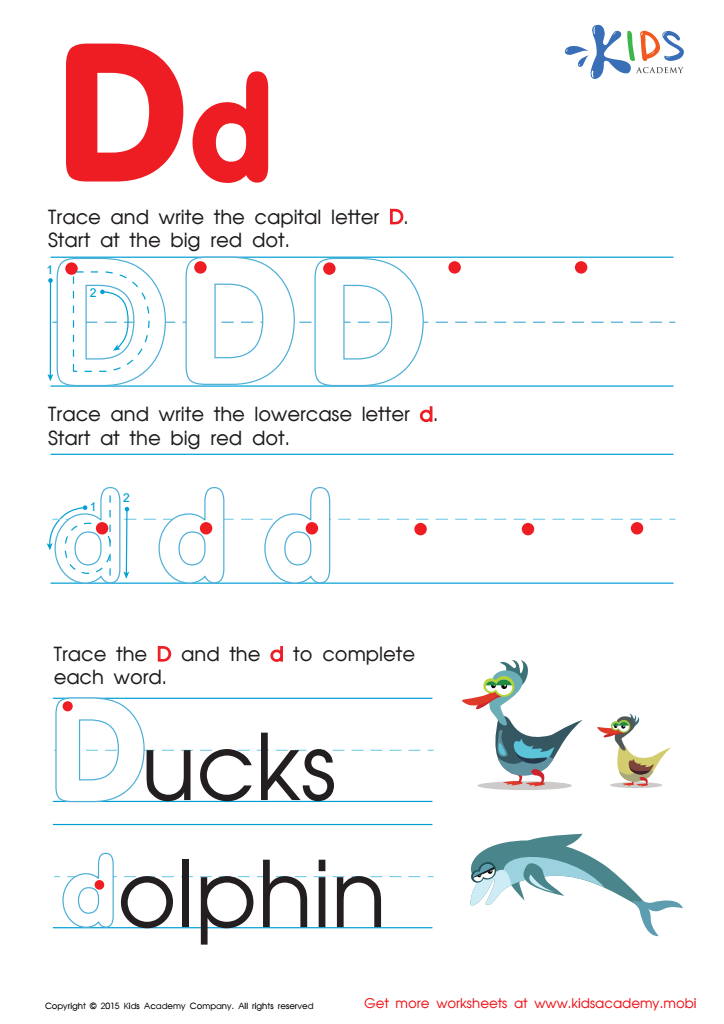
Letter D Tracing Page








Letter recognition and tracing letters are foundational skills critical to early childhood development. For ages 3-4, these activities offer numerous educational benefits that parents and teachers should prioritize. Firstly, they form the cornerstone of literacy. Recognizing and tracing letters helps children understand the alphabetic principle, an essential step towards reading and writing.
Engaging in letter recognition and tracing hones fine motor skills. Holding a pencil and controlling its movement to form letters strengthens hand-eye coordination and dexterity, supporting other task proficiencies. It also aids in cognitive development by encouraging memory retention and recall of letter shapes and sounds.
Socially and emotionally, mastering these skills can build a child’s confidence and sense of accomplishment, creating a positive attitude towards learning. Academically, early literacy skills set a solid foundation for future schooling, making the transition to reading smoother and more successful.
Additionally, these exercises often incorporate games and interactive elements, making learning enjoyable and engaging. This positive interaction with educational content fosters a love for learning that can propel academic enthusiasm for years to come.
Ultimately, focusing on letter recognition and tracing provides children with the essential tools needed to succeed academically, socially, and developmentally, offering them a strong start on their educational journey.








