Fine motor skills development Upper & Lowercase Letters Worksheets for Ages 3-4
3 filtered results
-
From - To
Enhance your child's fine motor skills while introducing the alphabet with our engaging Upper & Lowercase Letters Worksheets for ages 3-4. Designed specifically for young learners, these worksheets combine letter recognition with fun activities that encourage the development of essential hand-eye coordination and dexterity. Each worksheet offers an array of tracing, coloring, and connecting exercises that make learning interactive and enjoyable. Perfect for preschool or homeschooling, our resources help prepare your little ones for future writing skills while fostering a love for letters. Start your child’s educational journey today and watch their confidence grow alongside their capabilities!
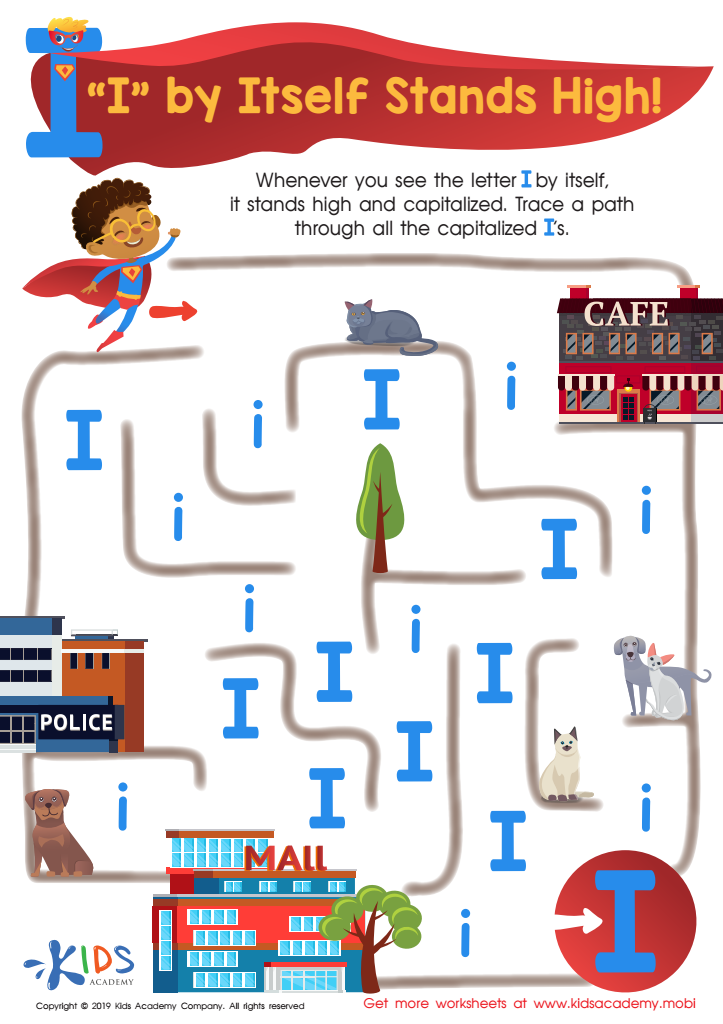
I Stands High Worksheet
 Assign to My Students











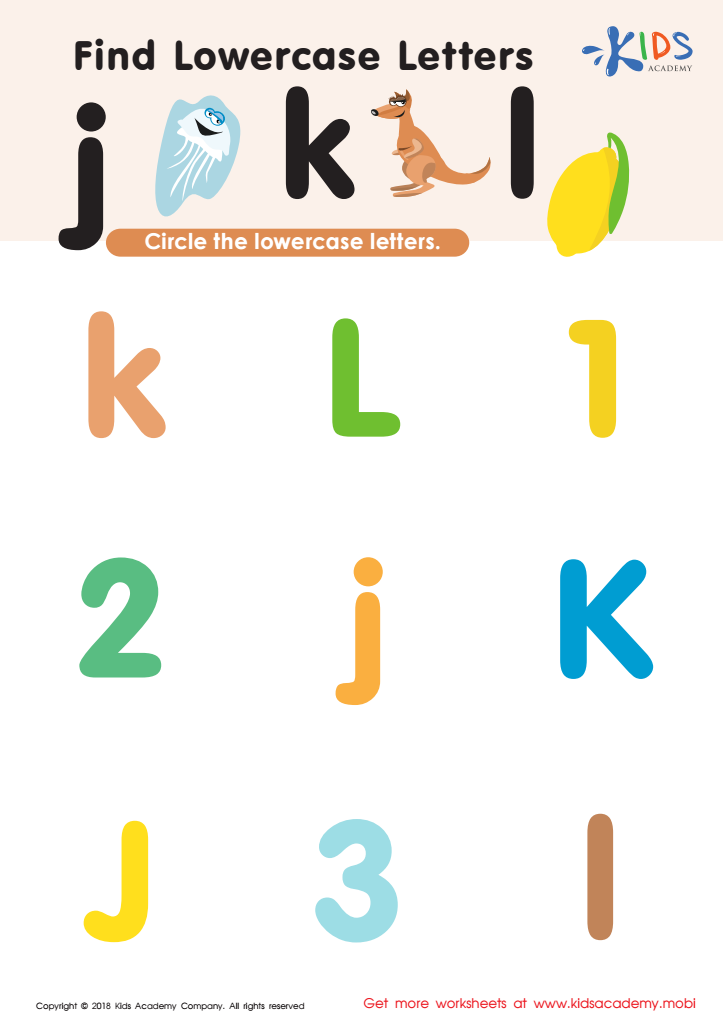
Find Lowercase Letters j k l Worksheet
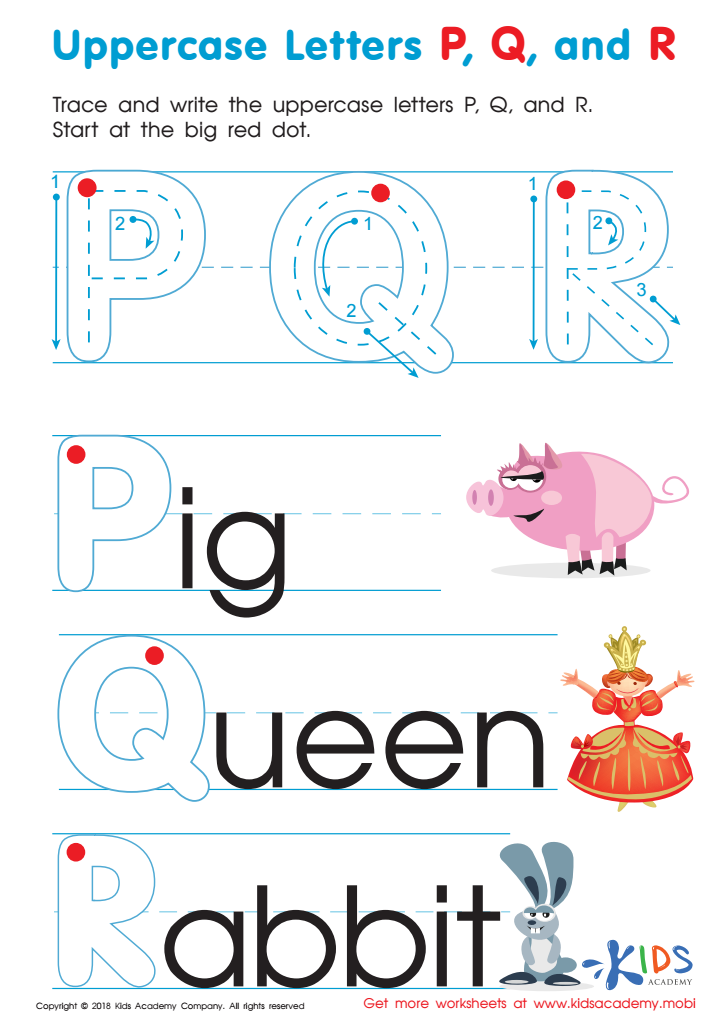
Uppercase Letters P, Q, and R Worksheet






Fine motor skills development in children ages 3-4 is crucial for several reasons, especially when it comes to writing uppercase and lowercase letters. During this growth stage, children are honing their hand-eye coordination and dexterity, both essential for tasks like holding a pencil, cutting with scissors, or even buttoning clothes. Developing these skills lays the foundation for future academic success and self-sufficiency.
In the context of letter formation, teaching children to differentiate between uppercase and lowercase letters helps them understand the structure of written language. It enhances their ability to recognize and spell their own names, as well as familiar words, boosting their literacy confidence. Fine motor activities that involve tracing, coloring, and manipulating small objects indirectly promote these skills, making learning engaging and enjoyable.
Additionally, strong fine motor skills contribute to a child’s overall cognitive development. Crafting, writing, and engaging in play are proven to stimulate brain activity and enhance concentration. By prioritizing fine motor skills development, parents and teachers empower children to explore their creativity and express themselves confidently through writing. This foundational skill set is essential for academic readiness and can impact a child’s self-esteem, social interactions, and future learning experiences.







