Lowercase letter writing Upper & Lowercase Letters Worksheets for Ages 3-4
3 filtered results
-
From - To
Help your child master lowercase letter writing with our comprehensive Upper & Lowercase Letters Worksheets, designed for ages 3-4. These printable activities from Kids Academy make learning fun and engaging, focusing on handwriting skills crucial at this developmental stage. Our expertly crafted worksheets feature clear guidelines, tracing examples, and vibrant illustrations to captivate young learners. By practicing both upper and lowercase letters, your child will develop fine motor skills, improve letter recognition, and build a strong foundation for reading and writing. Give your preschooler a head start on academic success with our expertly designed worksheets.
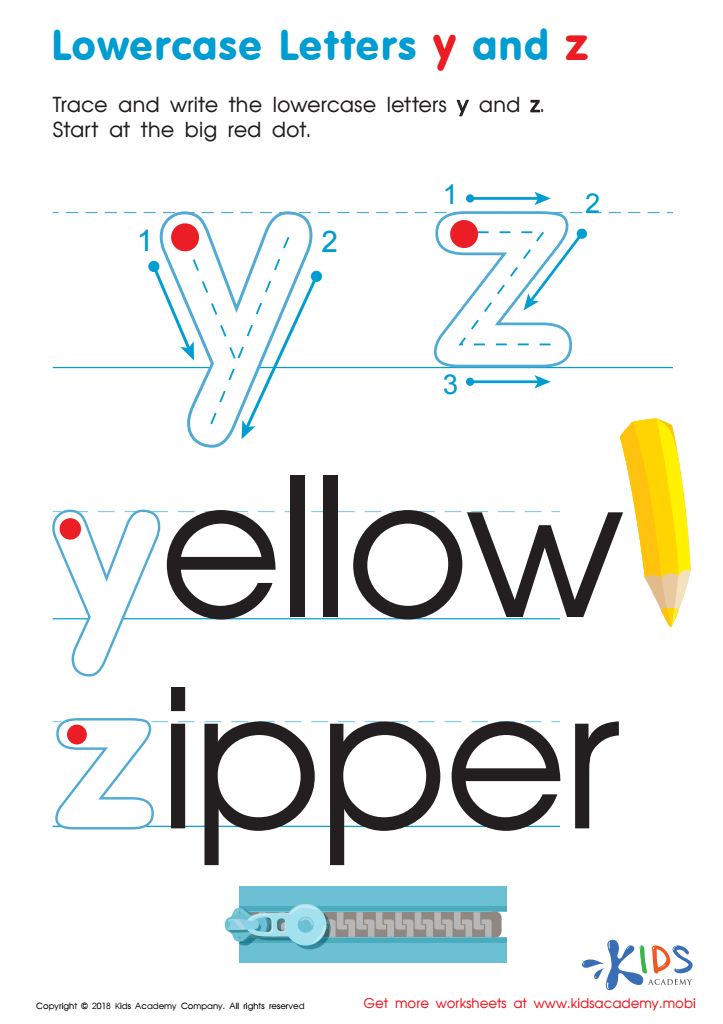
Lowercase Letters y z Worksheet
 Assign to My Students

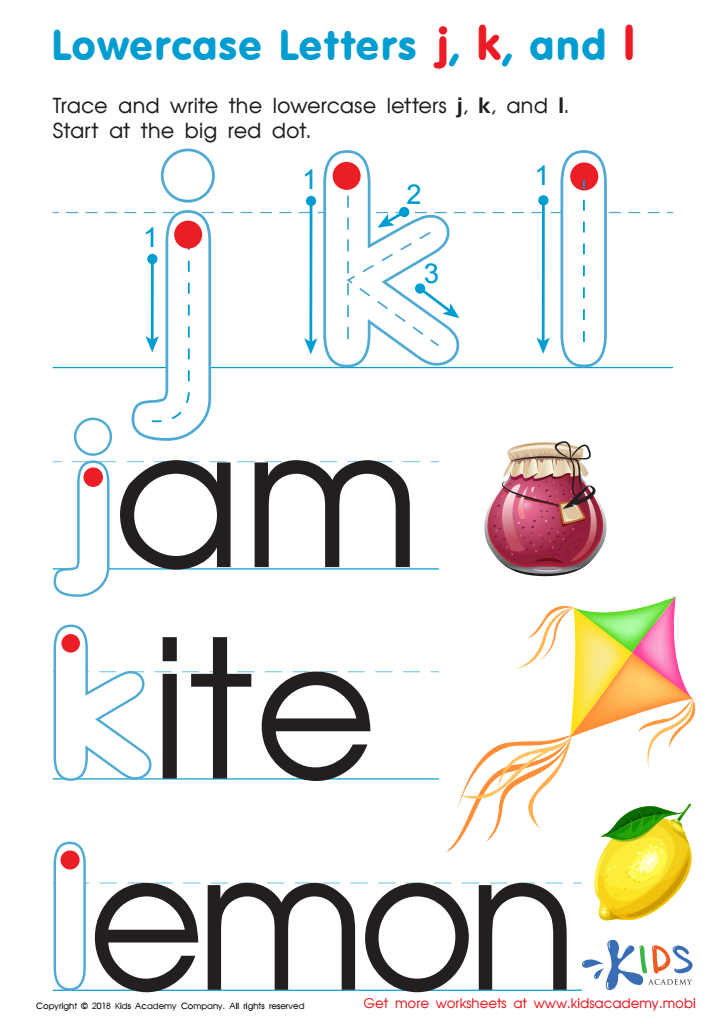
Lowercase Letters j k l Worksheet
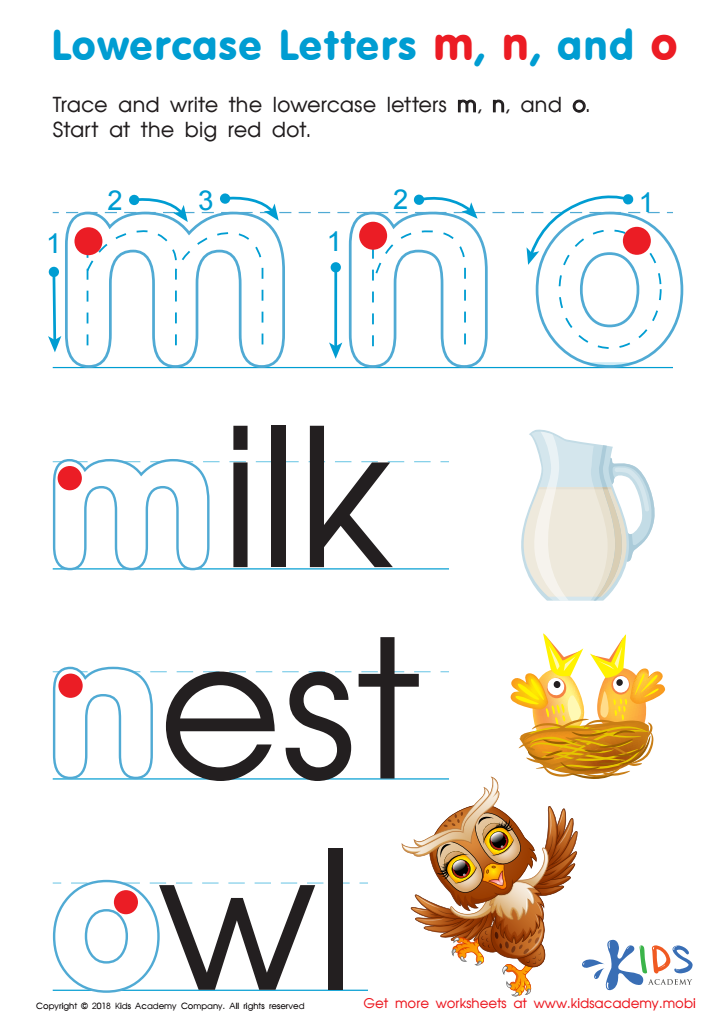
Lowercase Letters m n o Worksheet






Teaching children aged 3-4 to write lowercase and uppercase letters is foundational for their early literacy development. At this age, children are highly receptive to learning new skills and engaging in playful, educational activities that set the groundwork for future academic success. By introducing both uppercase and lowercase letters, parents and teachers help children recognize the full scope of alphabetic symbols they will encounter in reading and writing.
Lowercase letters appear more frequently in written English, so familiarity with them is crucial for reading fluency. Uppercase letters, meanwhile, help with understanding the structure of sentences and proper nouns. Practice with both types of letters enhances fine motor skills, essential for all writing tasks, and encourages correct letter formation, preventing bad habits that can be hard to break later.
Additionally, early writing exercises bolster cognitive development by strengthening memory, attention, and sequencing skills. This dual-letter approach also promotes confidence as children master more complex aspects of language.
For these reasons, lower and uppercase letter instruction for 3-4-year-olds shouldn’t be overlooked. It lays the educational cornerstones, makes reading and writing less intimidating, and builds a strong relationship between letter recognition and sound, fostering a lifelong love for learning and literacy.







