Vocabulary enhancement Vowels Worksheets for Ages 3-4
4 filtered results
-
From - To
Boost your child's language skills with our engaging Vocabulary Enhancement Vowels Worksheets designed for ages 3-4! These printable worksheets are crafted to enhance early learners' understanding of vowel sounds while expanding their vocabulary. Through fun activities featuring vibrant images and playful exercises, children will learn to recognize, pronounce, and use vowel-based words effectively. Perfect for preschool and kindergarten readiness, our worksheets foster literacy and communication skills in an enjoyable way. Equip your little one with the essential building blocks for reading and writing by exploring our comprehensive vowels worksheets at Kids Academy today!
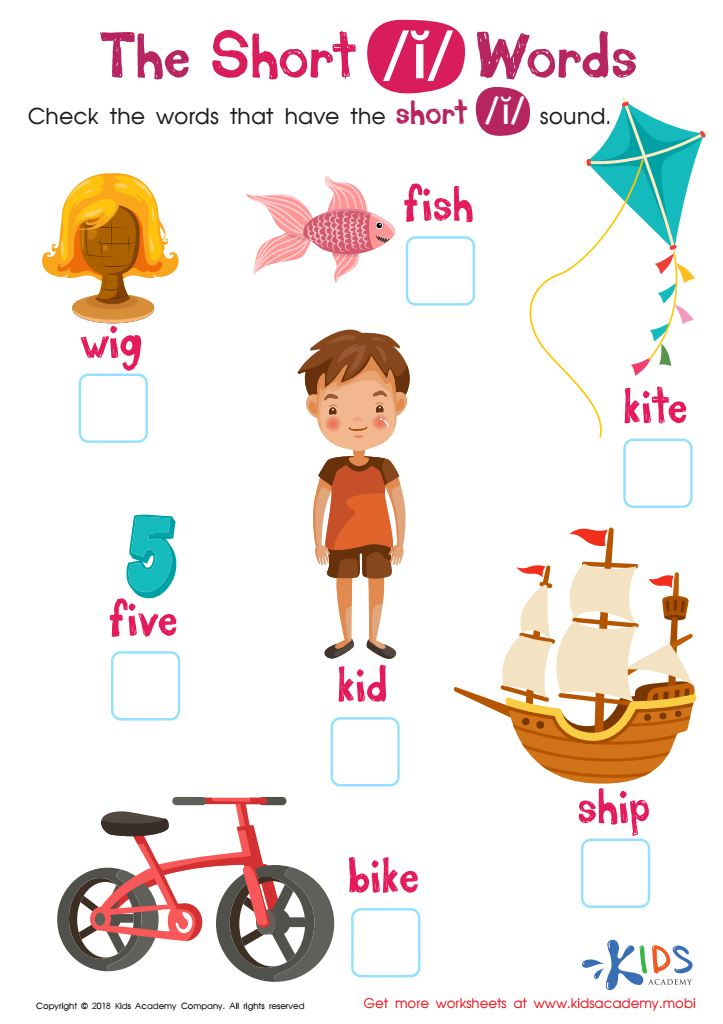
The Short I Words Reading Worksheet
 Assign to My Students
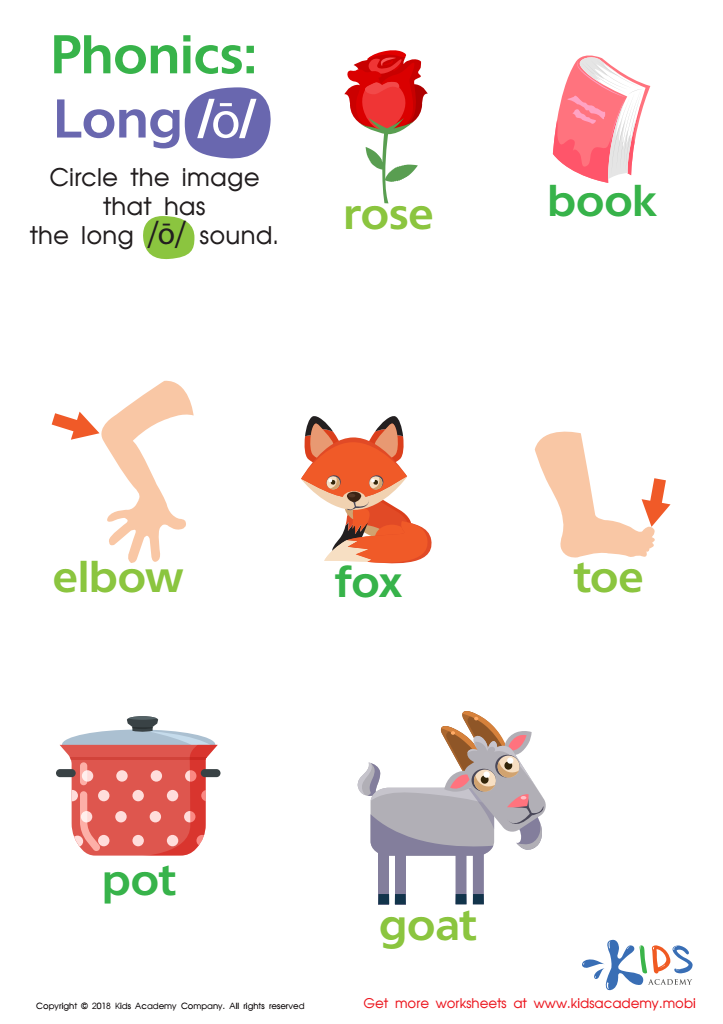
Phonics Long O Reading Worksheet
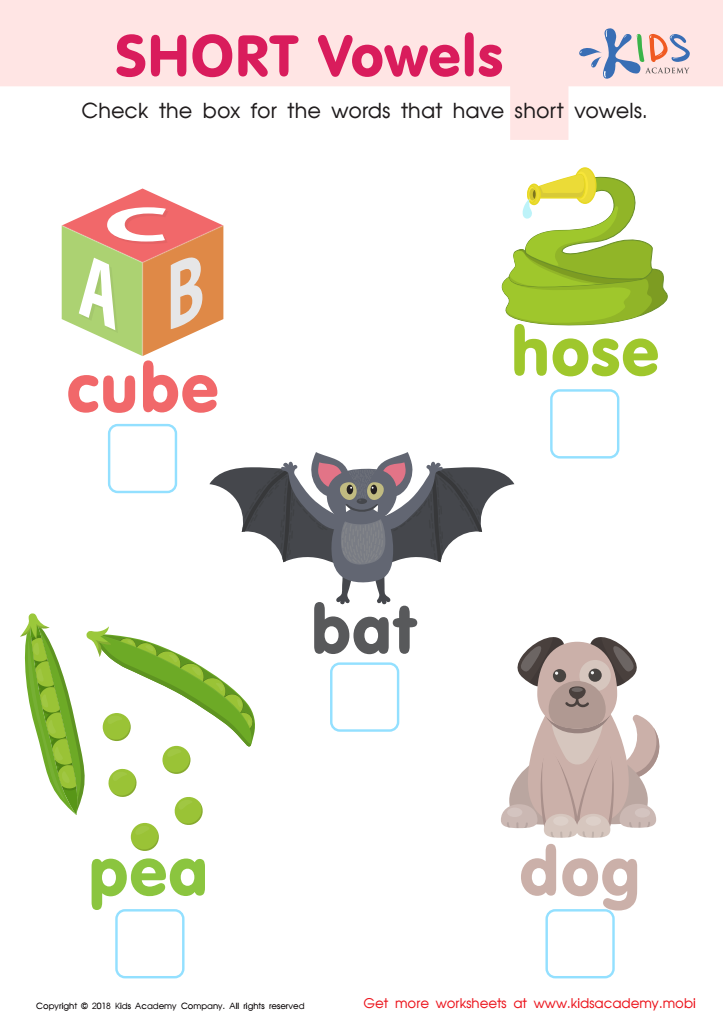
short vowels Worksheet
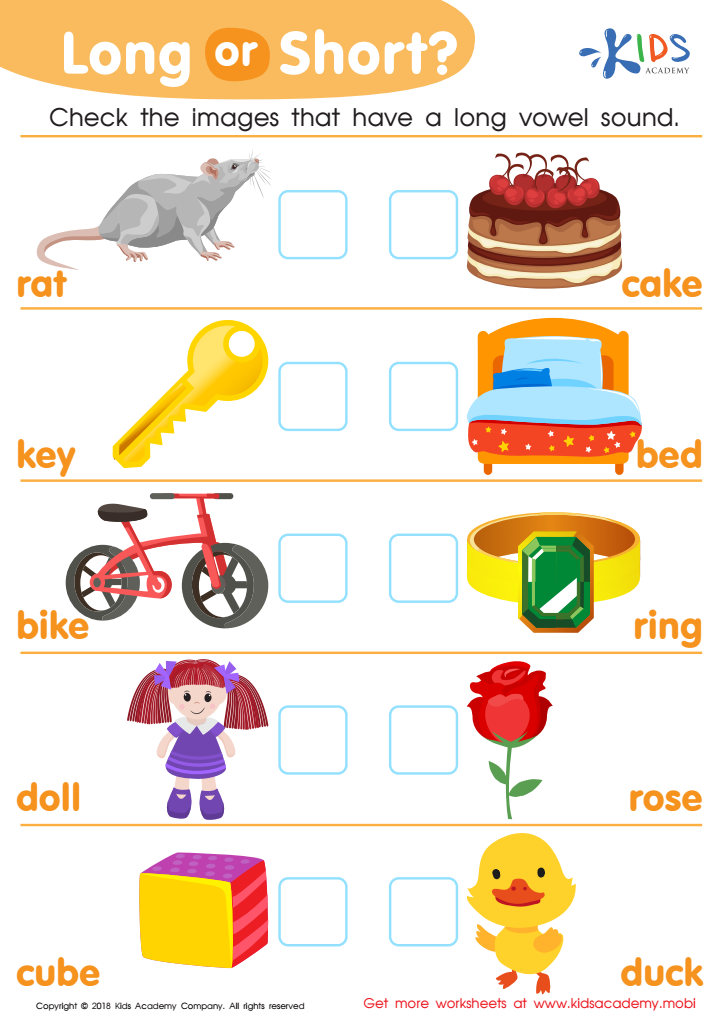
Long or Short Reading Worksheet





Enhancing vocabulary and understanding vowels for children aged 3-4 is foundational for their early literacy skills. At this stage, renowned for rapid brain development, children begin to decode the language by discerning sounds and words. Focusing on vowels—a, e, i, o, u—is crucial as they form the core of syllable construction and word formation.
When children grasp the distinct sounds vowels make, they enhance their phonemic awareness, ultimately easing the journey towards fluent reading. This early focus aids in clearer pronunciation, better listening skills, and a richer understanding of language nuances. For parents and teachers, there is also empirical evidence that children with a robust early vocabulary enter school better prepared. Vocabulary enhancement helps them with sentence formation, improves comprehension, and establishes a strong academic trajectory.
Moreover, engaging children in playful, rhythmic, and interactive vowel-centered activities fosters a love for learning. Creating contexts where they can experiment with sounds boosts their confidence and enthusiasm. Thus, prioritizing vocabulary and vowel sounds isn't just about prepping kids for future schooling—it's about giving them the communication tools vital for expressing themselves and understanding the vibrant world around them.
Advocating for early vocabulary enhancement and vowel recognition is investing in a child’s future success and overall cognitive development.







