Shape identification Coloring Pages Worksheets for Ages 3-4
3 filtered results
Difficulty Level
Grade
Age
-
From - To
Subject
Activity
Standards
Welcome to our Shape Identification Coloring Pages Worksheets for ages 3-4! Designed to spark creativity while enhancing essential learning skills, these engaging worksheets introduce young children to various shapes in a fun and interactive way. By coloring and identifying shapes such as circles, squares, and triangles, kids strengthen their fine motor skills and visual recognition. Our printable pages provide a wonderful opportunity for parents and educators to encourage shape learning during playtime. Download today and embark on an exciting journey of exploration and creativity with your little ones! Start laying the foundation for foundational math concepts in an enjoyable and entertaining manner.
Favorites
With answer key
Interactive
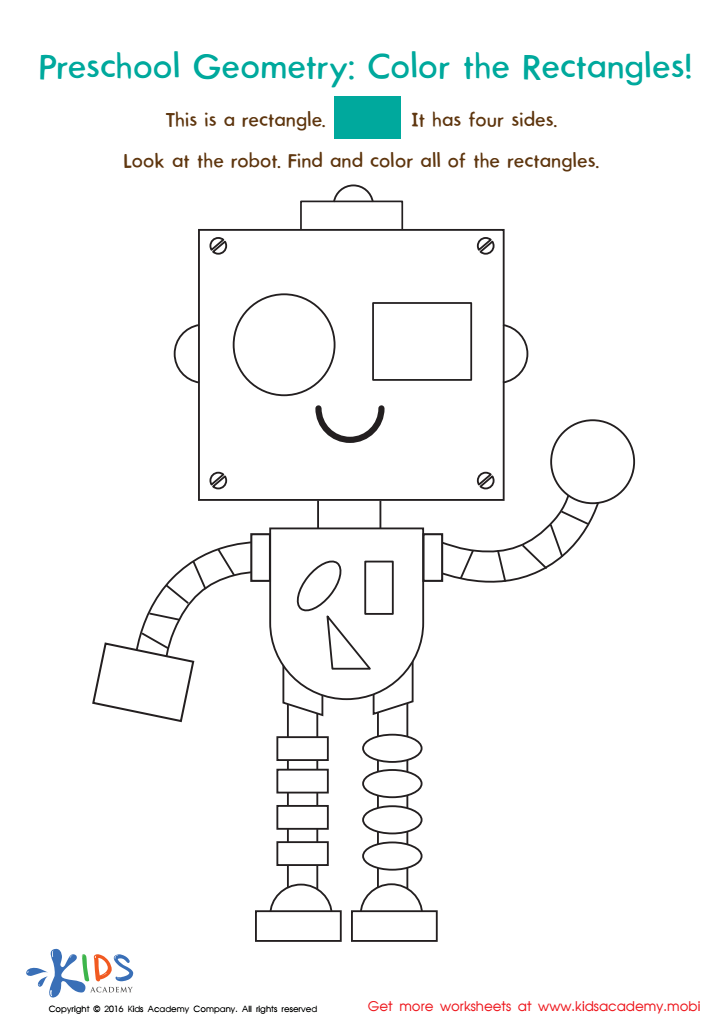
Geometry Worksheet
Geometry can be fun for kids! They explore shapes that create their favorite pics and objects. This preschool worksheet explains that rectangles have four sides, then kids color rectangles on a funny robot!
Geometry Worksheet
Worksheet
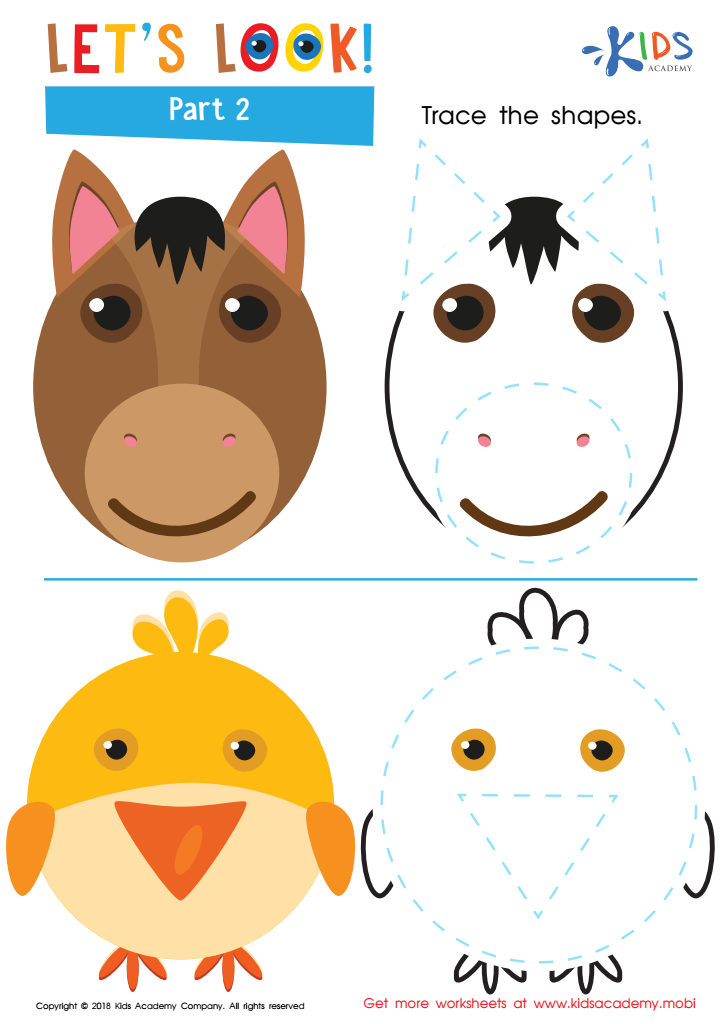
Let's Look! Part 2 Worksheet
This tracing sheet helps your little ones develop their skills. Ask them to identify the animals, then trace the shapes in the space provided, following the dotted lines. It's a simple task that can help them grow and have fun!
Let's Look! Part 2 Worksheet
Worksheet
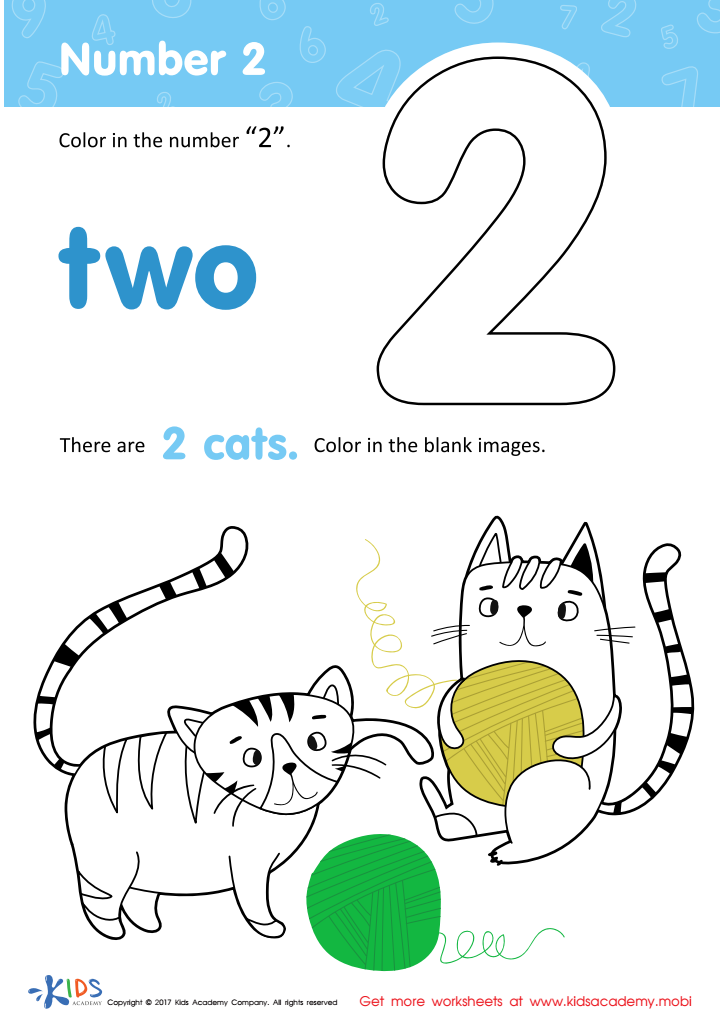
Number 2 Printable
Help your child learn to recognize the number two with these cats and their yarn balls. Print this coloring page – it's great for counting and coloring fun! Your child will develop basic numeracy skills as they visually see numbers in action.
Download (PDF)
 Assign to My Students
Assign to My Students
Number 2 Printable
Worksheet
Join Kids Academy for Free
Who is primarily going to use this learning content?








Shape identification coloring pages for ages 3-4 are an important educational tool that parents and teachers should prioritize. These activities play a crucial role in early childhood development, as they promote visual recognition skills, critical for cognitive growth. By engaging with different shapes, children learn to identify and differentiate between various geometric forms, which lays the foundation for more complex mathematical concepts later on.
Moreover, coloring fosters fine motor skills by helping young learners improve their hand-eye coordination and grasp technique. As they color within the lines, children refine their ability to control writing instruments, a skill essential for tasks such as writing and drawing.
Additionally, shape identification coloring pages can enhance language development. Adults can use these activities as an opportunity to introduce vocabulary, describing shapes and their attributes. This interactive approach not only builds knowledge but also encourages communication skills.
Lastly, coloring is a creative outlet that allows children to express themselves while having fun. It builds confidence as they complete tasks and share their artwork. Overall, integrating shape identification coloring pages into educational practices enriches a child's learning experience and supports their cognitive, motor, and social development, making it a worthwhile investment for parents and teachers alike.