Letter tracing skills English for Beginners Worksheets for Ages 3-4
3 filtered results
-
From - To
Discover our engaging "Letter Tracing Skills Worksheets" designed specifically for beginners aged 3-4. These printable resources provide children with a fun and interactive way to develop their letter recognition and writing skills. Each worksheet features colorful illustrations and dotted letters to guide young learners as they practice tracing and writing both uppercase and lowercase letters. Perfect for parents and educators, these worksheets support early literacy in a playful manner, fostering a love for learning. Enhance your child's English language skills and build a strong foundation for future writing success. Start their educational journey with our captivating worksheets today!
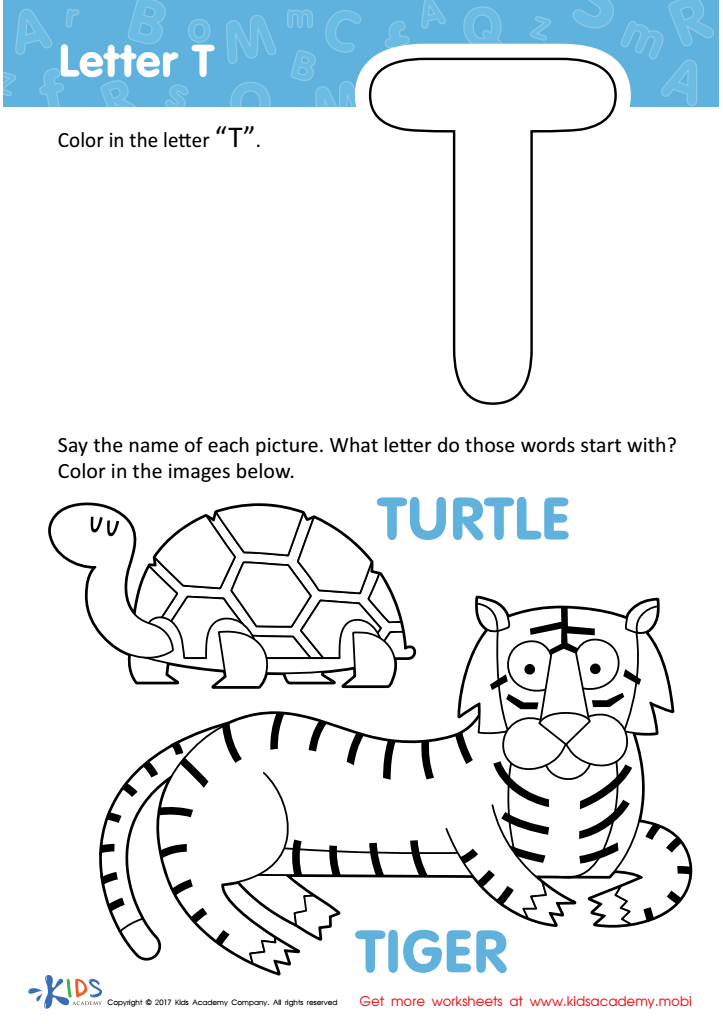
Letter T Coloring Sheet
 Assign to My Students
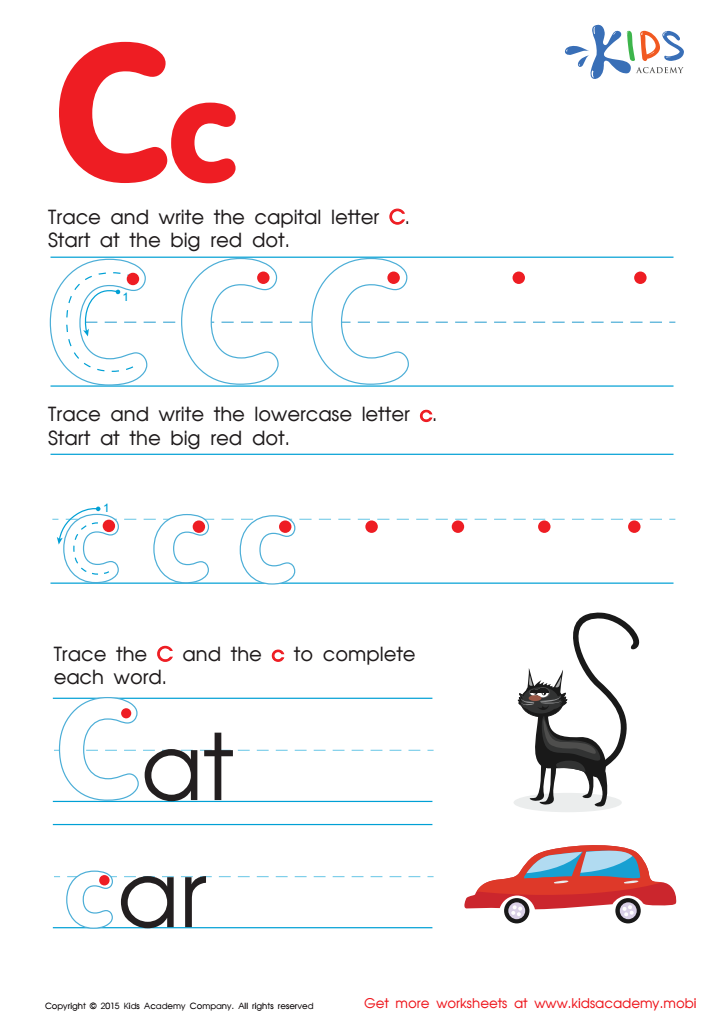
Letter C Tracing Page
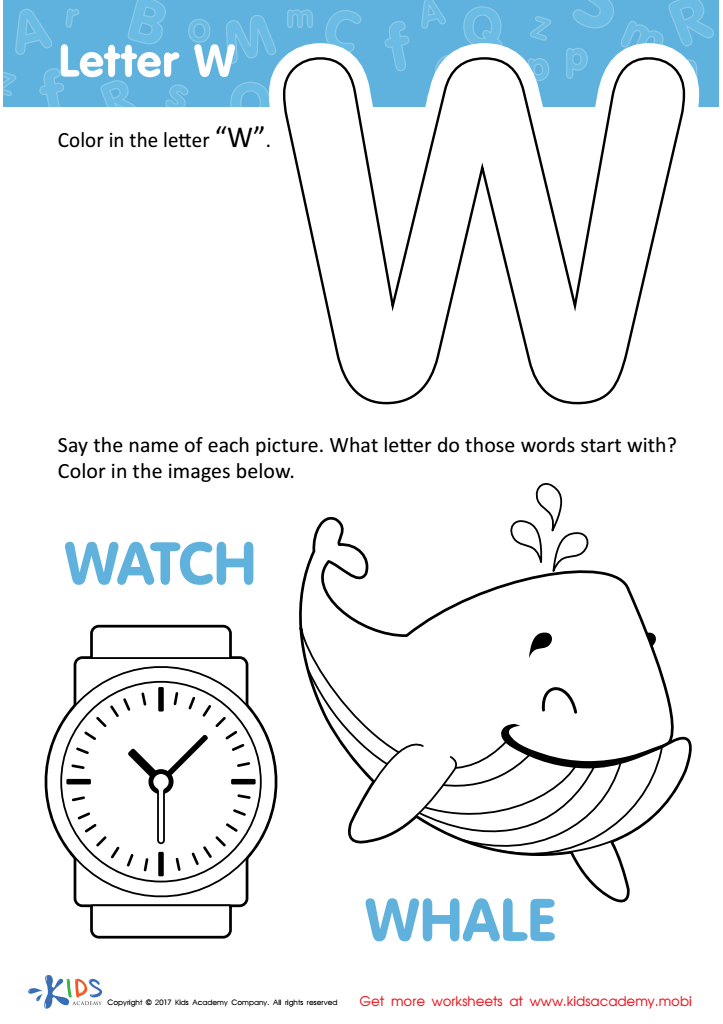
Letter W Coloring Sheet
Assign to My Students




Letter tracing skills are crucial for early learners aged 3-4 for several reasons. First, they build foundational literacy skills, introducing children to the shapes and sounds of letters. This early exposure is essential for developing phonemic awareness—a precursor to reading. By tracing letters, children improve fine motor skills, which are vital for writing, drawing, and other manual tasks.
Additionally, letter tracing enhances cognitive skills, such as hand-eye coordination and visual-motor integration. Practicing these skills at a young age prepares children for more advanced writing tasks in the future. Early mastery can lead to greater confidence in literacy, fostering a love for reading and learning.
Parents and teachers should also consider that engaging in letter tracing activities creates opportunities for quality interaction, reinforcing parent-child or teacher-student bonds, and enriching the learning environment. It provides a structured way for adults to guide children through their initial learning stages, allowing for close observation of each child's progress.
Overall, focusing on letter tracing not only supports language development but also aids in the broader aspects of child development, laying a robust foundation for lifelong learning. Investing time and resources in these skills is a meaningful step towards academic success.