
Addition up to 5 Worksheets for Ages 3-4
4 filtered results
Difficulty Level
Grade
Age
-
From - To
Subject
Activity
Standards
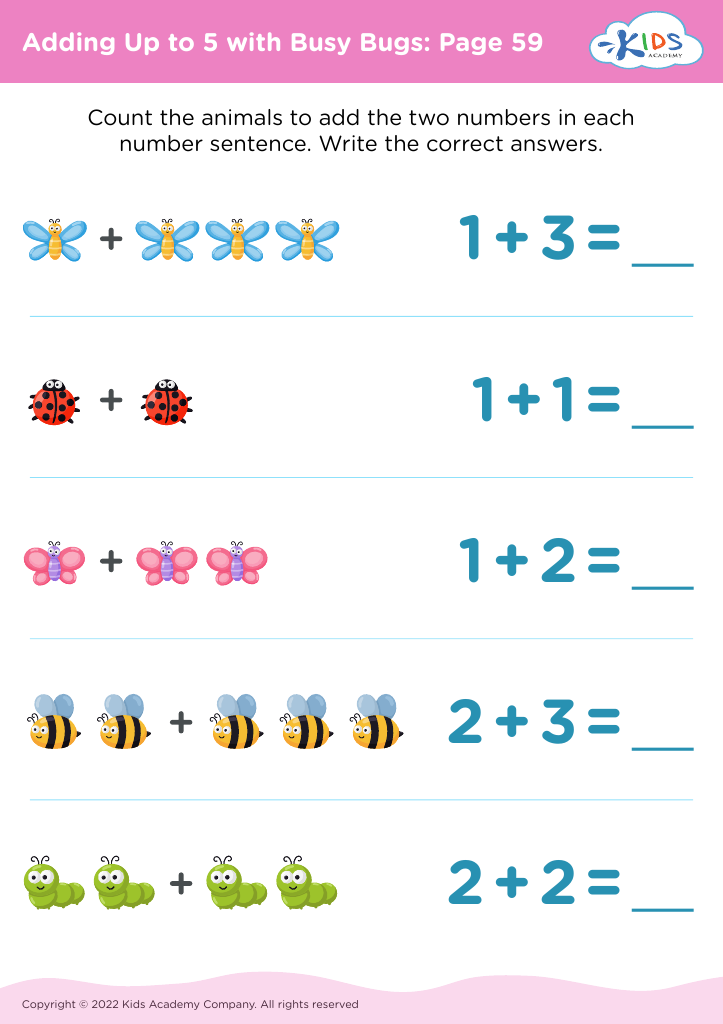
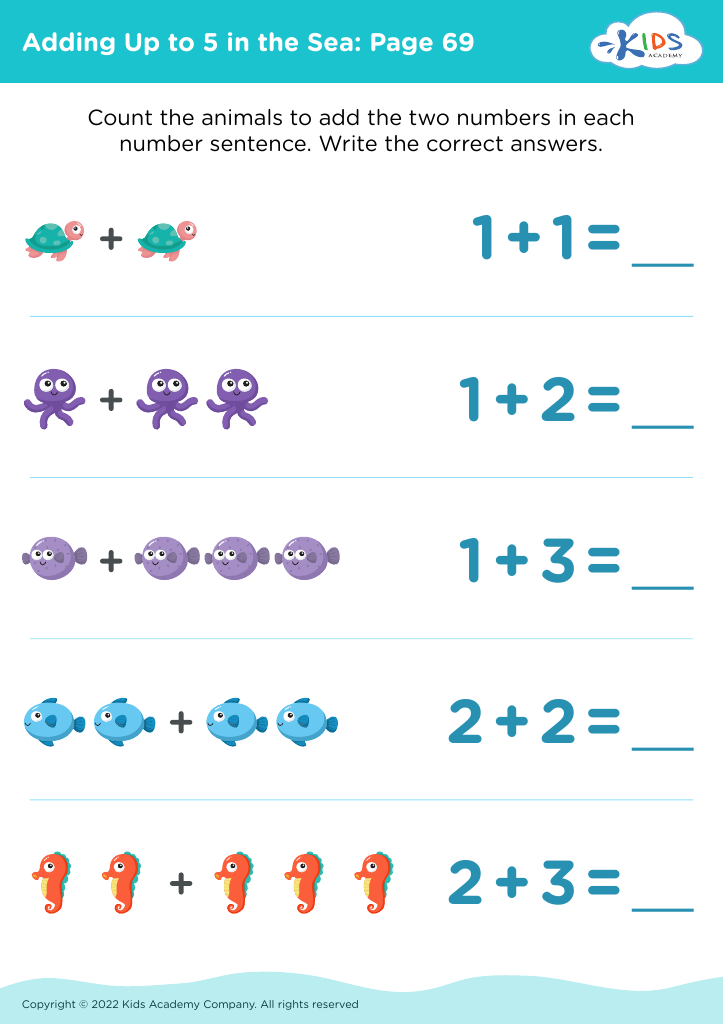
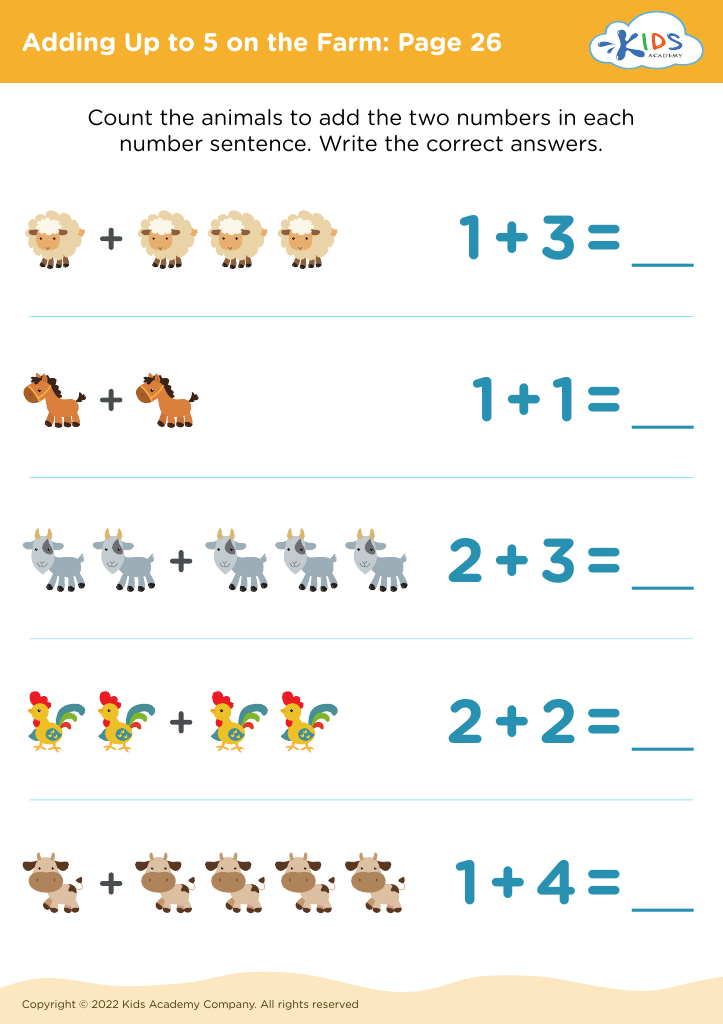
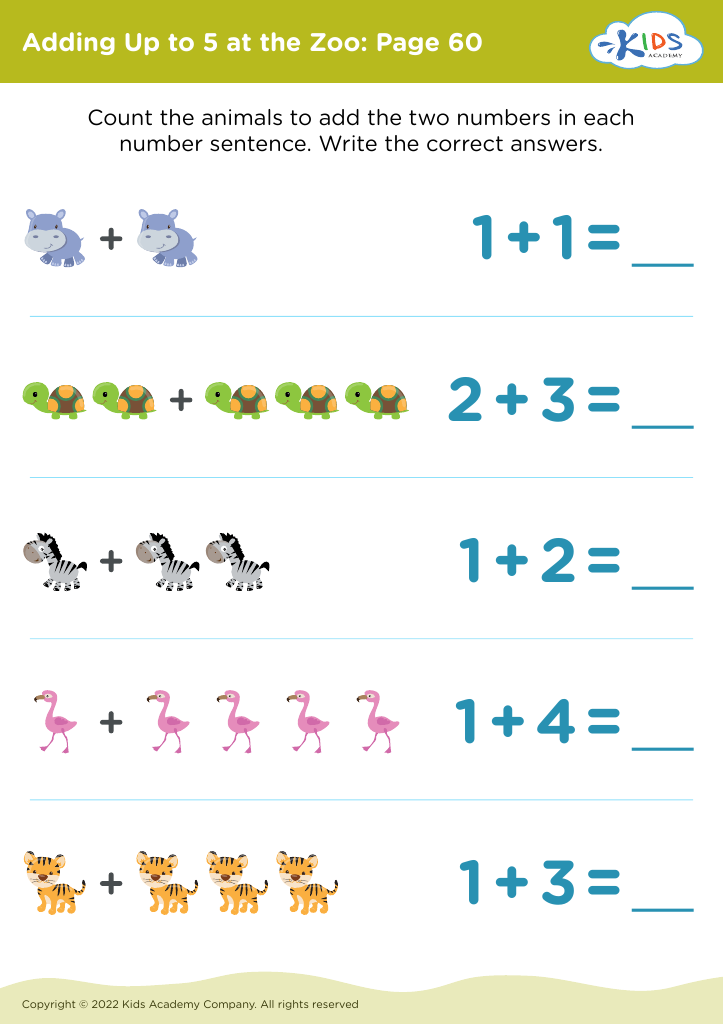
Welcome to our Addition up to 5 Worksheets designed specifically for children ages 3-4! These engaging and colorful worksheets aim to introduce your little one to the fundamentals of addition in a fun and interactive way. With simple exercises focused on combining numbers up to 5, your child will develop essential early math skills while enjoying playful activities. Each worksheet is tailored to capture their attention, making learning math an exciting adventure. Ideal for homeschooling or supplementary practice, these worksheets will promote early problem-solving and critical thinking skills. Start your child's mathematical journey today with our engaging addition resources!
Favorites
With answer key
Interactive
Join Kids Academy for Free
Who is primarily going to use this learning content?








Addition up to 5 is a foundational math skill that plays a crucial role in early childhood development, particularly for children ages 3-4. At this stage, children are keen observers and eager learners, making it an ideal time to introduce them to basic mathematical concepts. Understanding simple addition fosters numeracy skills, enabling children to build confidence in their mathematical abilities.
For parents and teachers, focusing on addition up to 5 not only develops children's mathematical skills but also enhances critical thinking and problem-solving abilities. These early experiences with numbers help children begin to see patterns, understand relationships between quantities, and develop cognitive skills essential for later academic success.
Additionally, integrating addition into daily activities, such as counting toys or snacks, fosters a fun and engaging learning environment. This practical application reinforces concepts in real-life contexts, helping children make sense of the world around them.
Furthermore, mastering basic addition serves as a stepping stone for more complex mathematical concepts as they grow. By ensuring young learners grasp these fundamentals, parents and teachers equip children with the necessary tools to succeed in future mathematical endeavors and promote a positive attitude towards learning in general.








