
Alphabetical understanding Worksheets for Ages 3-4
3 filtered results
Difficulty Level
Grade
Age
-
From - To
Subject
Activity
Standards
Introduce your little learners to the fascinating world of letters with our carefully designed Alphabetical Understanding Worksheets for Ages 3-4. These engaging printables from Kids Academy foster early literacy skills through playful activities, guiding children in recognizing and writing uppercase and lowercase letters. Each worksheet is designed to captivate young minds with colorful images, games, and exercises, ensuring that learning remains exciting and fun. Perfectly suited for preschoolers, these resources build a strong foundation for reading and writing, helping children develop essential skills that will support their educational journey. Start your child's alphabet adventure today!
Favorites
With answer key
Interactive
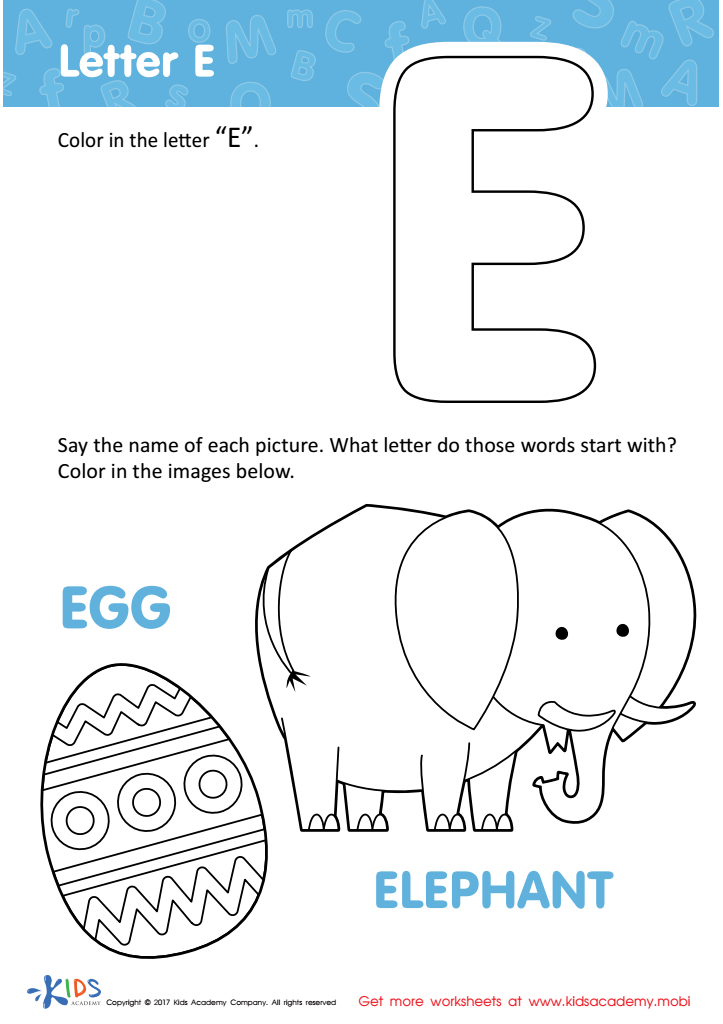
Letter E Coloring Sheet
Coloring pages are great for teaching kids the alphabet and words! This "E" page features a cute elephant and Easter egg. Kids will love it and learn the letter "E" at the same time. 80 words
Download (PDF)
 Assign to My Students
Assign to My Students
Letter E Coloring Sheet
Worksheet
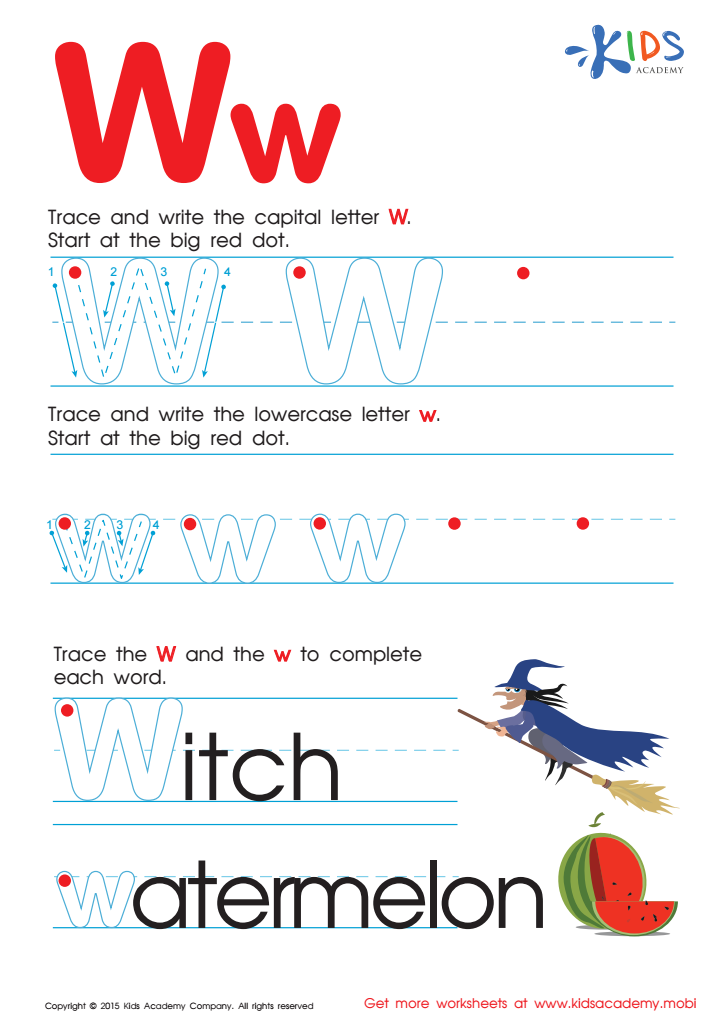
Letter W Tracing Page
Trace and write the capital and lowercase letter W with this free letter tracing worksheet by Kids Academy. Complete the words "Witch" (capital) and "watermelon" (lowercase). Check out our other kindergarten alphabet worksheets!
Letter W Tracing Page
Worksheet
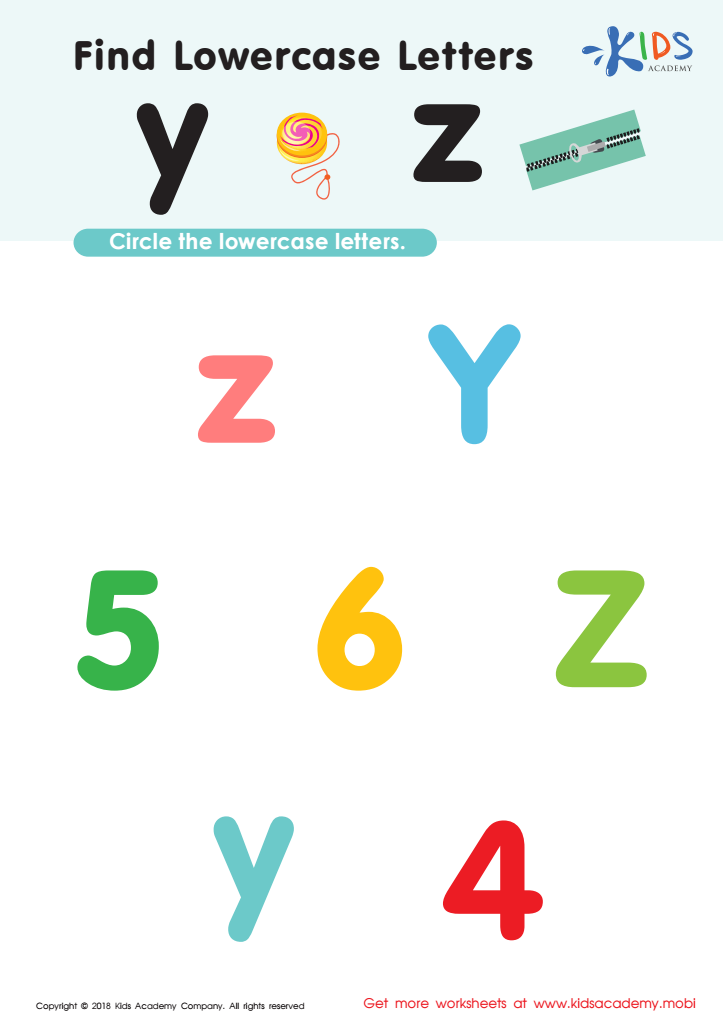
Find Lowercase Letters y z Worksheet
Help your kid learn the alphabet. Before they can move on to words and reading, they must first know the lower and uppercase letters. Show them how to find the letters y and z in this worksheet, which is filled with uppercase letters and numbers. Together, find and circle them.
Find Lowercase Letters y z Worksheet
Worksheet
Join Kids Academy for Free
Who is primarily going to use this learning content?


.jpg)




Parents and teachers should care about alphabetical understanding for ages 3-4 because it lays the groundwork for lifelong literacy and cognitive development. During these formative years, children experience rapid brain growth and development, making it an ideal time to introduce fundamental skills. Understanding the alphabet helps children recognize letters, associate them with corresponding sounds, and begin to form words. This early literacy skill is crucial for learning to read, which is a cornerstone for academic success in all subject areas.
Alphabetical understanding also promotes better communication abilities. When children are familiar with letters and sounds, they are more capable of expressing themselves clearly, both verbally and in writing. This foundation boosts their confidence and encourages a love for reading and learning. Additionally, early exposure to the alphabet can enhance children’s phonemic awareness—the ability to hear, identify, and manipulate individual sounds in words—an essential skill for decoding words when they start reading independently.
Moreover, mastering alphabetical understanding at a young age supports other areas of development, such as memory, attention span, and fine motor skills as they practice writing letters. In essence, investing effort into teaching children alphabetical understanding at ages 3-4 is a crucial step in fostering a comprehensive and prosperous education journey.








