
Basic math abilities Worksheets for Ages 3-4
3 filtered results
Difficulty Level
Grade
Age
-
From - To
Subject
Activity
Standards
Introduce your little one to the exciting world of numbers with our "Basic Math Abilities Worksheets for Ages 3-4." Designed to develop foundational math skills, these engaging, printable worksheets feature fun activities that teach counting, number recognition, simple addition, and shape identification. Ideal for young learners, they turn math practice into an enjoyable experience, boosting confidence and readiness for school. Each worksheet provides carefully structured tasks that blend play with learning, using vivid illustrations to capture children's interest. Give your child a head start in math with Kid’s Academy's expertly crafted resources. Discover the joy of early math mastery today!
Favorites
With answer key
Interactive
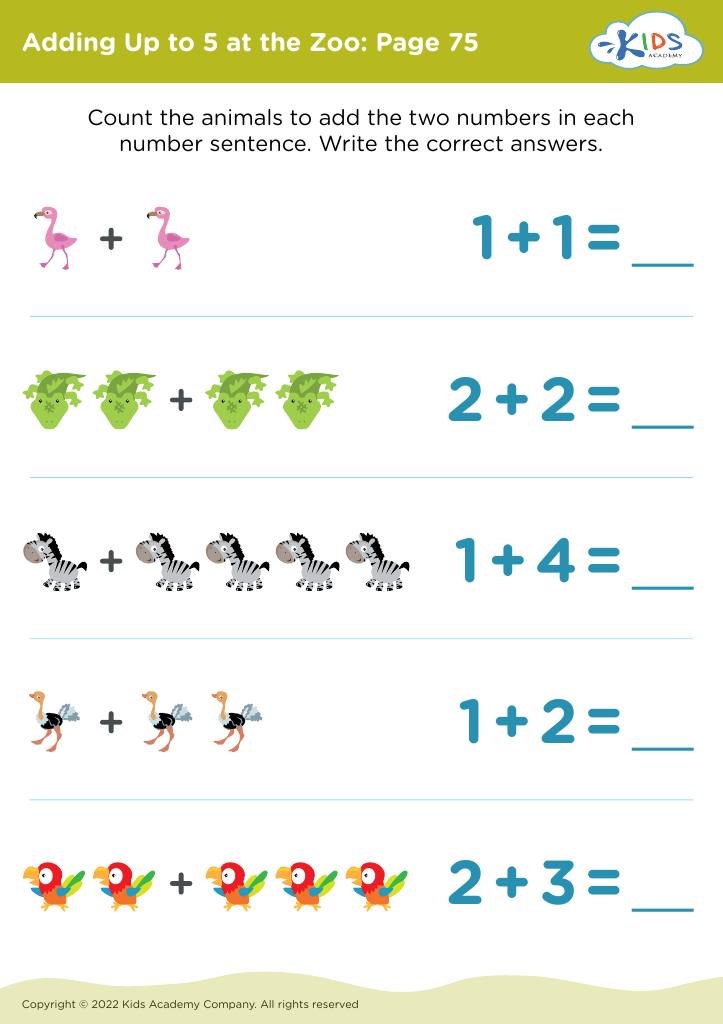
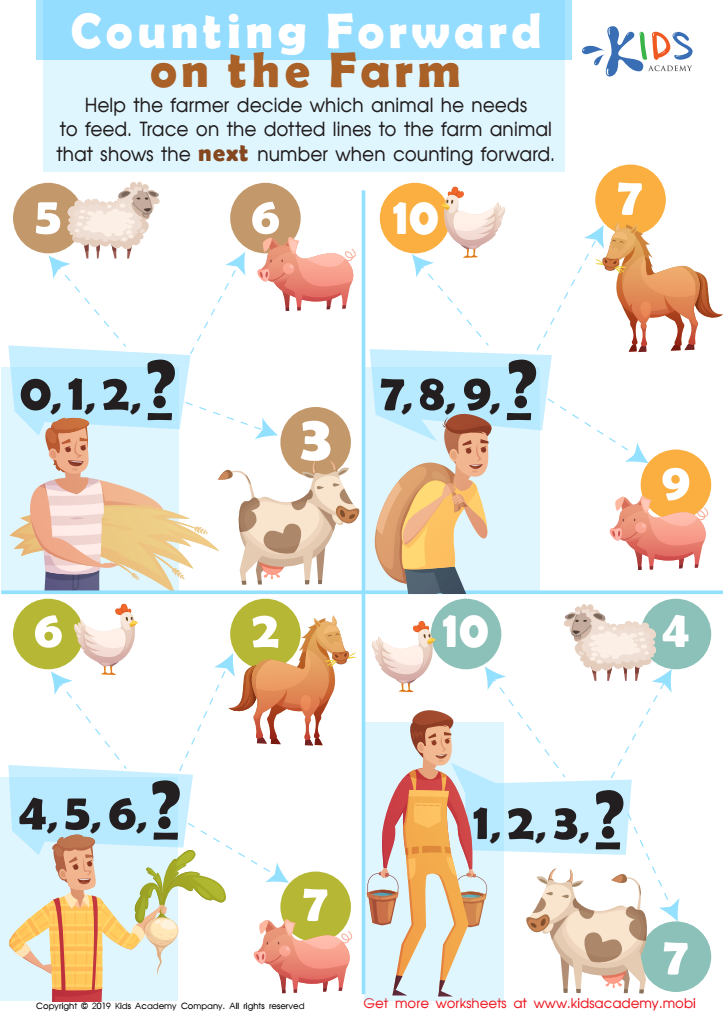
Counting Forward On the Farm Worksheet
Help your child practice counting with this fun worksheet. Have them help a farmer feed the right animal by counting on from a starting point. This activity will help them build number line thinking and refine fine motor skills.
 Assign to My Students
Counting Forward On the Farm Worksheet
Worksheet
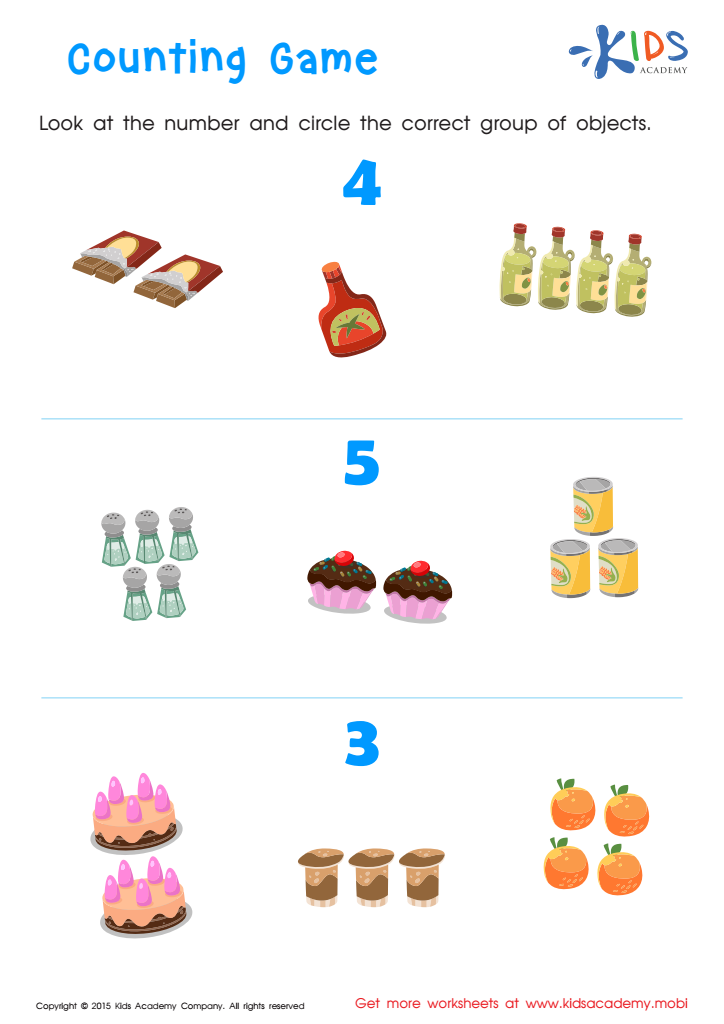
Counting Worksheet
Kids can connect printed numbers to groups of objects on this worksheet, helping them learn math by visually seeing item groups. Give your preschooler a fun, interactive way to learn counting!
Counting Worksheet
Worksheet
Join Kids Academy for Free
Who is primarily going to use this learning content?




.jpg)


Parents and teachers should prioritize developing basic math abilities in children aged 3-4 because these early math skills are foundational for future academic success and everyday problem-solving. During this critical developmental period, young children's brains are highly receptive to learning, and fostering mathematical thinking can lead to stronger cognitive development.
Basic math skills, such as counting, recognizing numbers, and understanding simple patterns, are crucial for building later, more complex mathematical understanding. Early exposure to math helps children develop logical reasoning, spatial awareness, and critical thinking skills, which are applicable across various life situations and subjects beyond math.
Furthermore, early proficiency in math is a strong predictor of academic performance in later years. Research shows that children who enter school with a solid foundation in math are more likely to excel not only in mathematics but also in other academic areas, including reading.
Engaging young children in playful and interactive math activities also builds their confidence and reduces math anxiety, fostering a positive attitude towards learning. Simple activities like counting objects, playing with shapes, or recognizing numbers in everyday contexts can significantly benefit their development. Consequently, parents and teachers play a vital role in creating a supportive environment for early mathematical exploration, setting children on a path toward long-term success.








