
Develop problem-solving abilities Worksheets for Ages 3-4
3 filtered results
Difficulty Level
Grade
Age
-
From - To
Subject
Activity
Standards
Help your little ones embark on a fun learning journey with our "Develop Problem-Solving Abilities Worksheets for Ages 3-4." These engaging worksheets are designed to nurture critical thinking and enhance cognitive skills through playful activities. Tailored for young learners, they encourage exploration and creativity while addressing age-appropriate challenges. From pattern recognition to simple math problems, each worksheet fosters perseverance as children work through tasks at their own pace. Empower your preschoolers with the essential skills they need for future learning success. Discover our collection today and watch them thrive as they tackle problems with confidence and joy!
Favorites
With answer key
Interactive
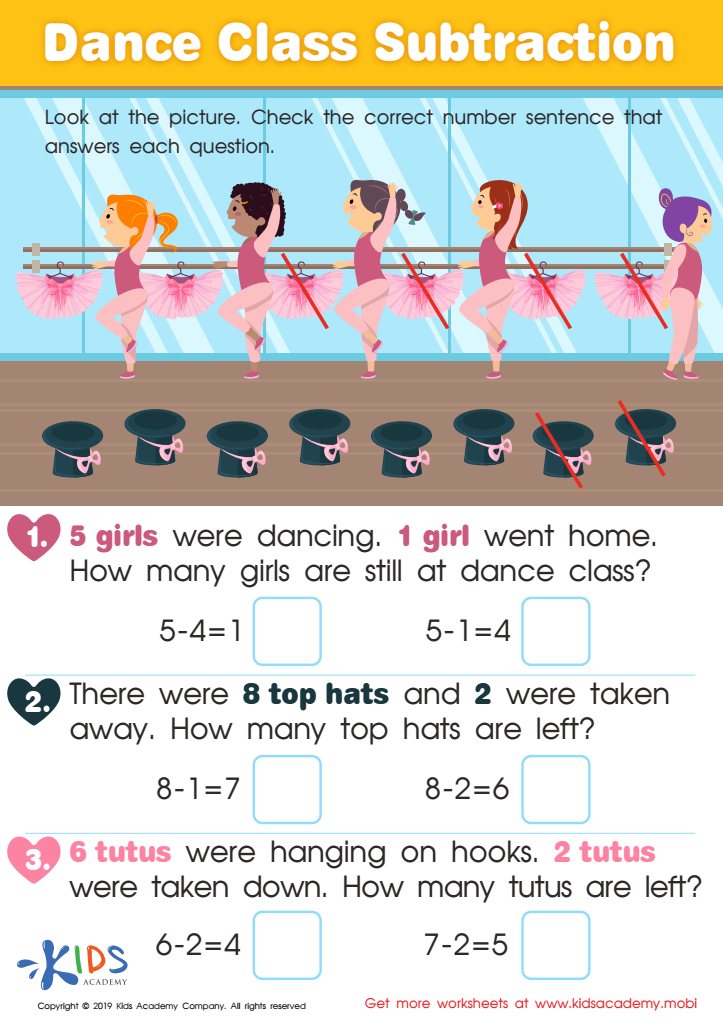
Dance Class Subtraction Worksheet
Dancing is an excellent form of exercise, and some people dance professionally, expressing their feelings through body movements. Help your kids identify the type of dance in the picture and answer the word problems in this worksheet. Encourage them to check the correct number sentence that answers the question.
 Assign to My Students
Dance Class Subtraction Worksheet
Worksheet
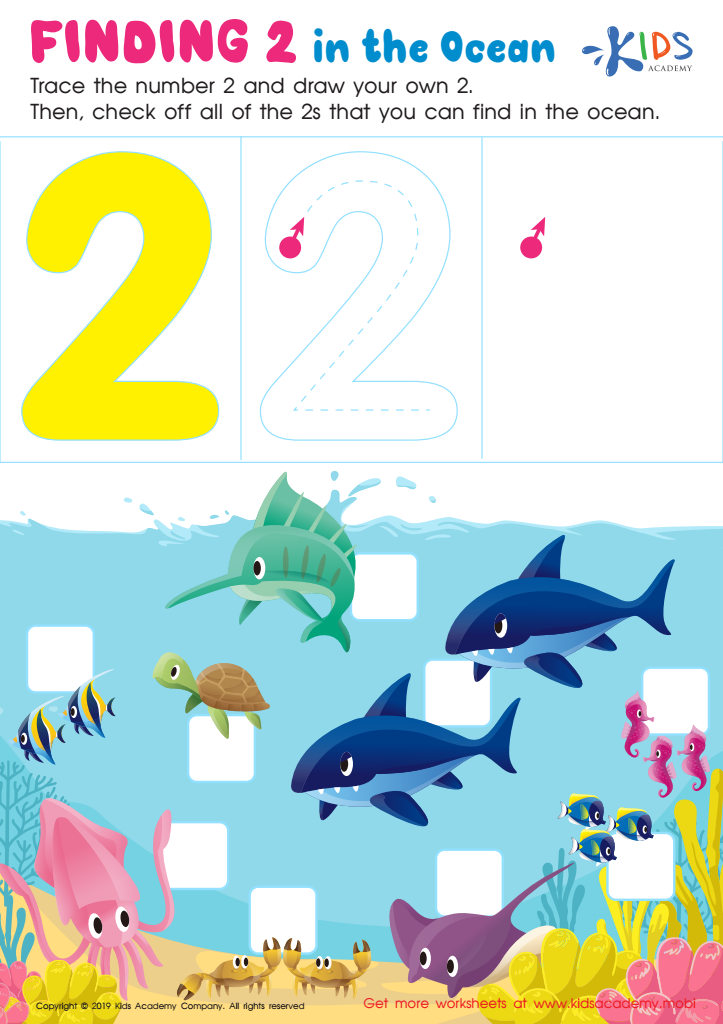
Finding 2: In the Ocean Worksheet
Kids start their math journey with basic numbers. Finger counting, number representation with pictures and this worksheet help build number sense. Kids trace lines and dots to write the number two and identify groups of two sea creatures for easy success and to feel proud of their math skills.
Finding 2: In the Ocean Worksheet
Worksheet
Join Kids Academy for Free
Who is primarily going to use this learning content?








Developing problem-solving abilities in children ages 3-4 is crucial for their cognitive, social, and emotional growth. At this age, children are naturally curious and eager to explore their environment; fostering their problem-solving skills helps channel this curiosity into productive learning experiences. Engaging children in problem-solving activities enhances critical thinking and creativity, as they learn to approach challenges from multiple angles.
Moreover, strong problem-solving skills promote independence. When children are encouraged to think through a situation or find solutions, they gain confidence in their abilities and become more resilient when faced with difficulties. This foundational skill set not only benefits them academically but also prepares them for various life situations as they grow.
Teachers and parents play key roles in nurturing these abilities. By creating environments that encourage exploration, asking open-ended questions, and providing opportunities for collaborative play, adults can scaffold children’s problem-solving journeys. Engaging in these activities helps them develop essential social skills as they learn to negotiate, share ideas, and empathize with others. Ultimately, prioritizing problem-solving abilities leads to well-rounded, competent individuals who are equipped to tackle the complexities of the world around them.








