
Enhancing critical thinking Worksheets for Ages 3-4
5 filtered results
Difficulty Level
Grade
Age
-
From - To
Subject
Activity
Standards
Discover our collection of engaging "Enhancing Critical Thinking Worksheets for Ages 3-4" designed to stimulate young minds. At Kids Academy, our expertly-crafted activities harness playful learning to develop crucial cognitive skills. These worksheets encourage problem-solving, logical reasoning, and creative thinking through fun, age-appropriate tasks. By integrating foundational concepts in an interactive format, we help children build their critical thinking abilities from an early age. Perfect for both parents and educators seeking to nurture intellectual curiosity and foster a love for learning, our resources provide endless opportunities for growth and development in young children. Explore today!
Favorites
With answer key
Interactive
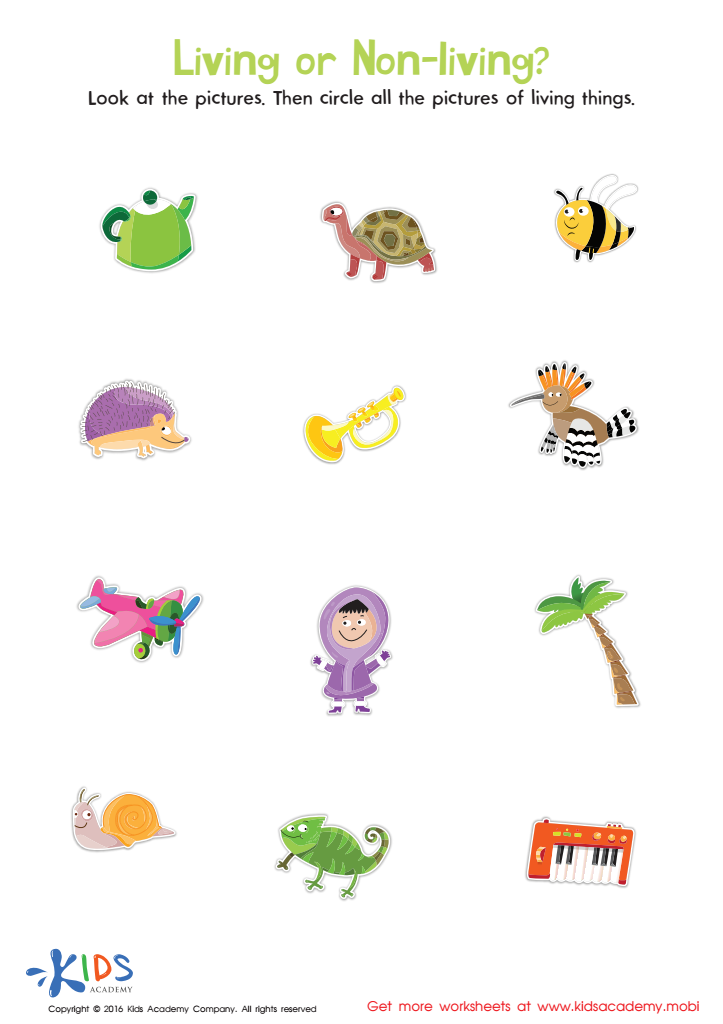
Identifying Living and Non–living Things Sorting Worksheet
Help your child sort living and non-living objects with this cute worksheet. Kids will use problem-solving skills to recognize and categorize the images they see. Matching worksheets available to help their skills soar.
 Assign to My Students
Identifying Living and Non–living Things Sorting Worksheet
Worksheet
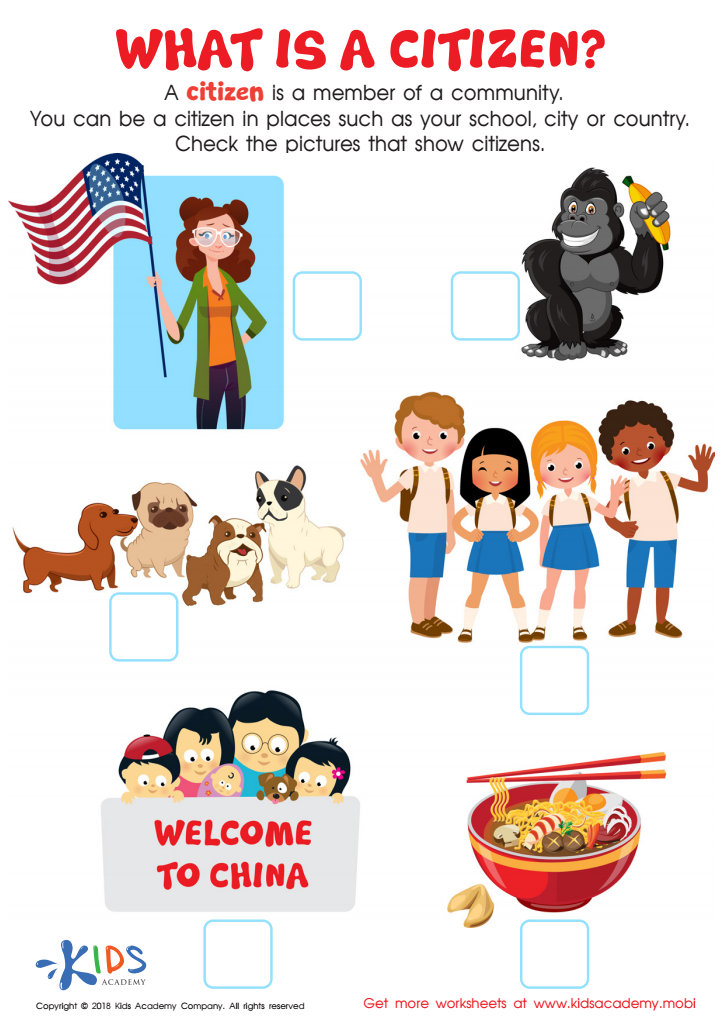
What is a Citizen? Worksheet
Do your students know who a citizen is? Use this worksheet to teach them: a citizen is a member of a community, such as your school, city or country. Look at the pictures in the pdf with your students. Ask them to identify who or what is in the pictures, and help them check which are citizens.
What is a Citizen? Worksheet
Worksheet
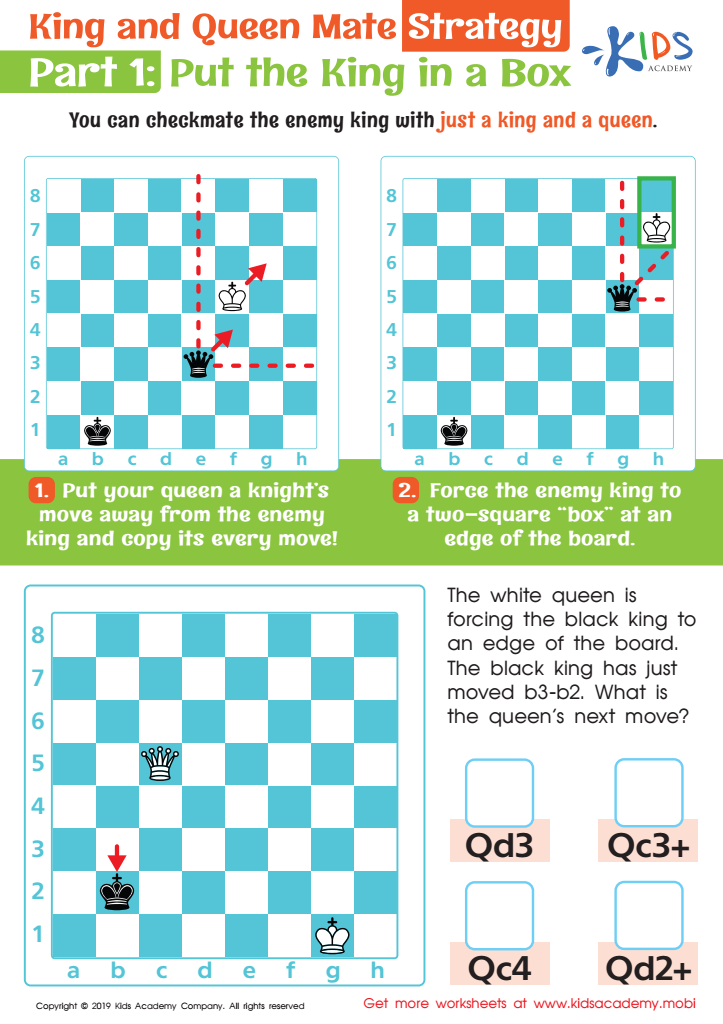
King and Queen Mate Strategy: Part 1 Worksheet
This worksheet will help your young chess player strategize. They’ll learn how to checkmate the opponent’s king using just a king and a queen. Descriptive sample boards will show them the strategy and then a practice board will test their knowledge. Allowing them to plan the queen’s next move to checkmate the opposing king.
King and Queen Mate Strategy: Part 1 Worksheet
Worksheet
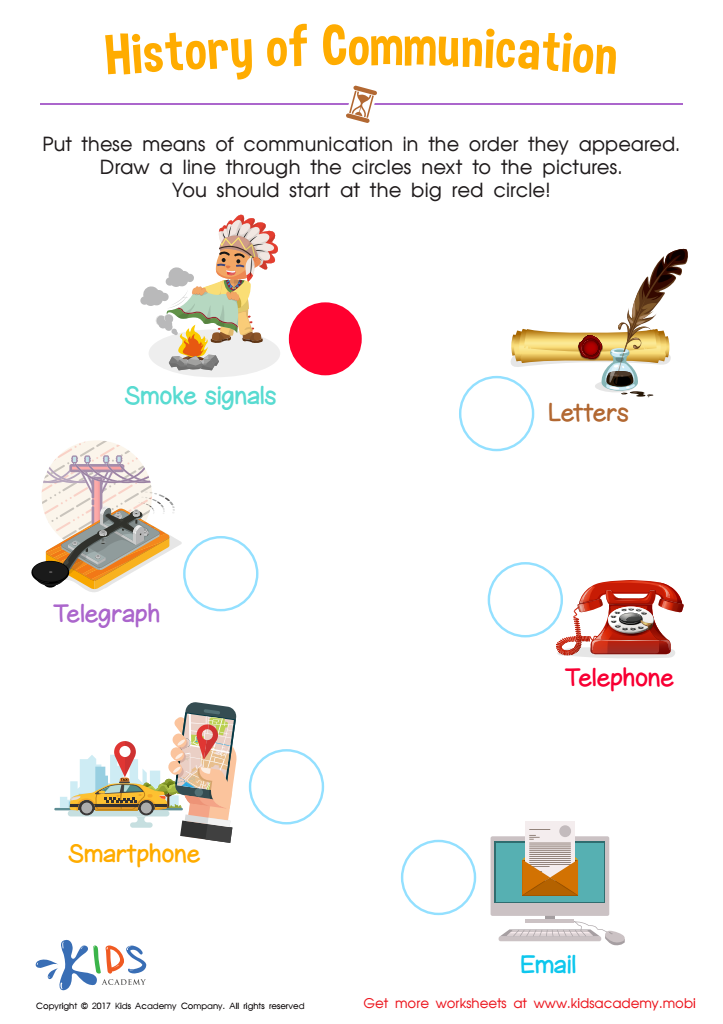
History of Communication Worksheet
Help your child understand history's communication evolution! With this worksheet, your child will learn about the various ways people communicated over time, and how that compares to today. It'll also foster an interest in history and bring the past to life!
History of Communication Worksheet
Worksheet
Join Kids Academy for Free
Who is primarily going to use this learning content?








Enhancing critical thinking skills in children aged 3-4 is crucial for their overall development and sets a strong foundation for future learning. At this tender age, children's brains are highly receptive, and they are naturally curious about the world around them. By fostering critical thinking early, parents and teachers can enable children to become better problem-solvers, which is essential for real-world success.
Early critical thinking involves asking questions, evaluating information, and making decisions, which helps children develop cognitive flexibility and adaptability. These skills are vital as they provide young learners with the tools needed to approach challenges creatively and with confidence. Encouraging critical thinking also promotes language development, as children learn to articulate their thoughts and reasoning.
Furthermore, building these skills enhances social-emotional development. Children learn to understand different perspectives, negotiate their viewpoints, and cultivate empathy. By reasoning through dilemmas, they gain a deeper understanding of their emotions and how to manage them effectively.
For parents and teachers, investing time in nurturing these abilities offers long-term educational benefits. Children with strong critical thinking skills tend to perform better academically and adjust more easily to new learning environments and experiences. Therefore, making an effort to enhance critical thinking in early childhood serves as a stepping stone for lifelong learning and responsible citizenship.








