Letter recognition Worksheets for Ages 3-4 - Page 5
99 filtered results
-
From - To
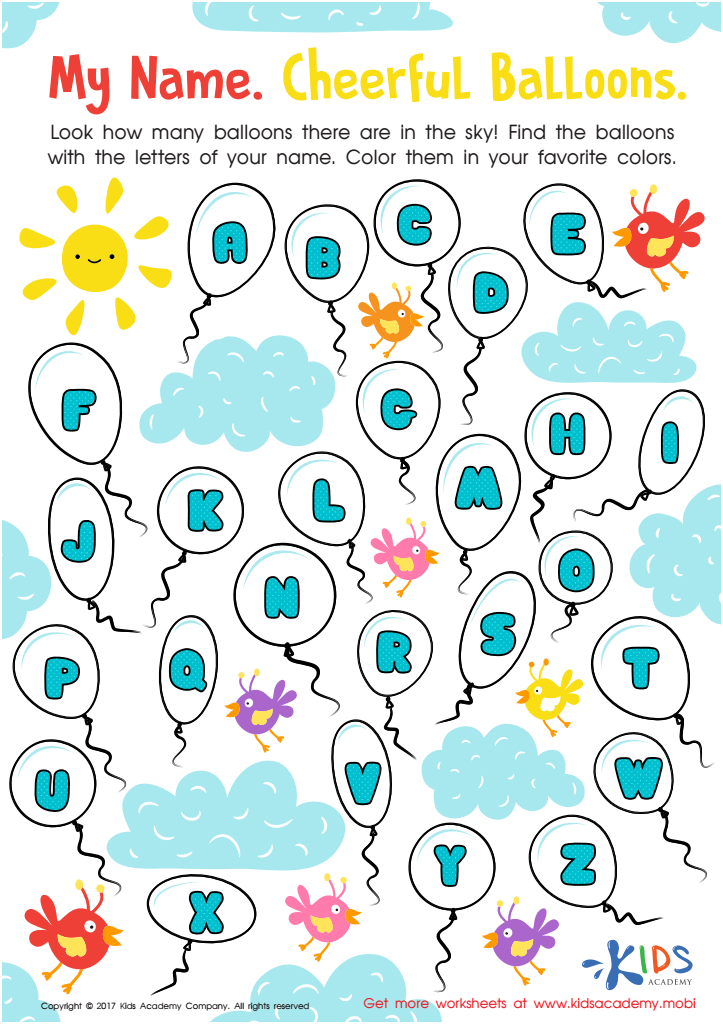
My Name: Cheerful Balloons Worksheet
 Assign to My Students
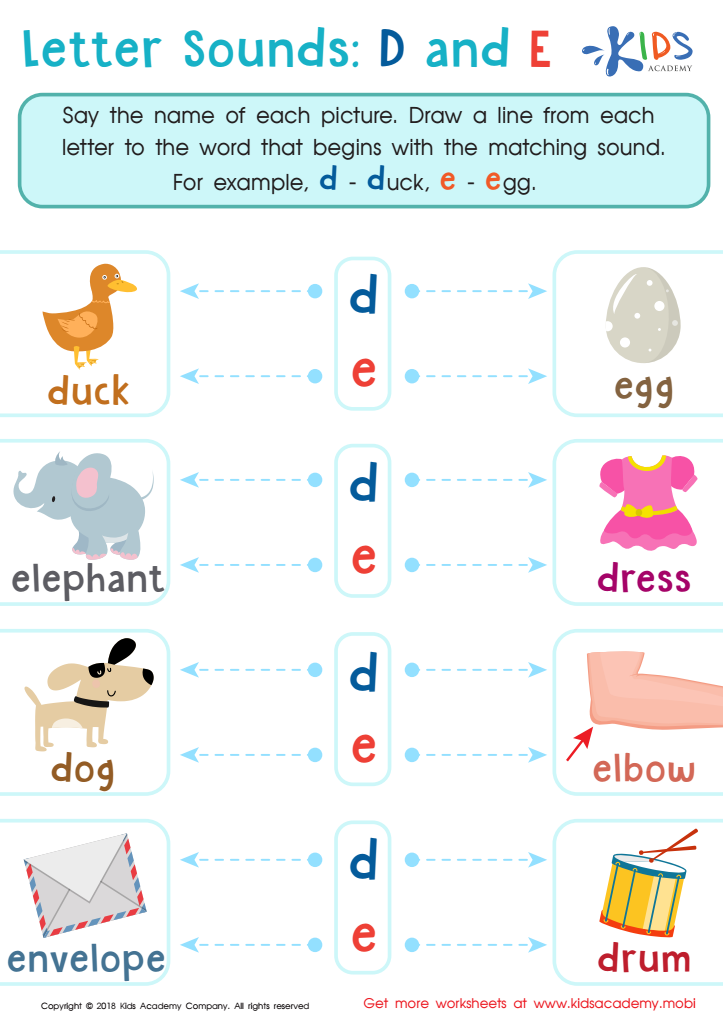
Letter D and E Sounds Worksheet
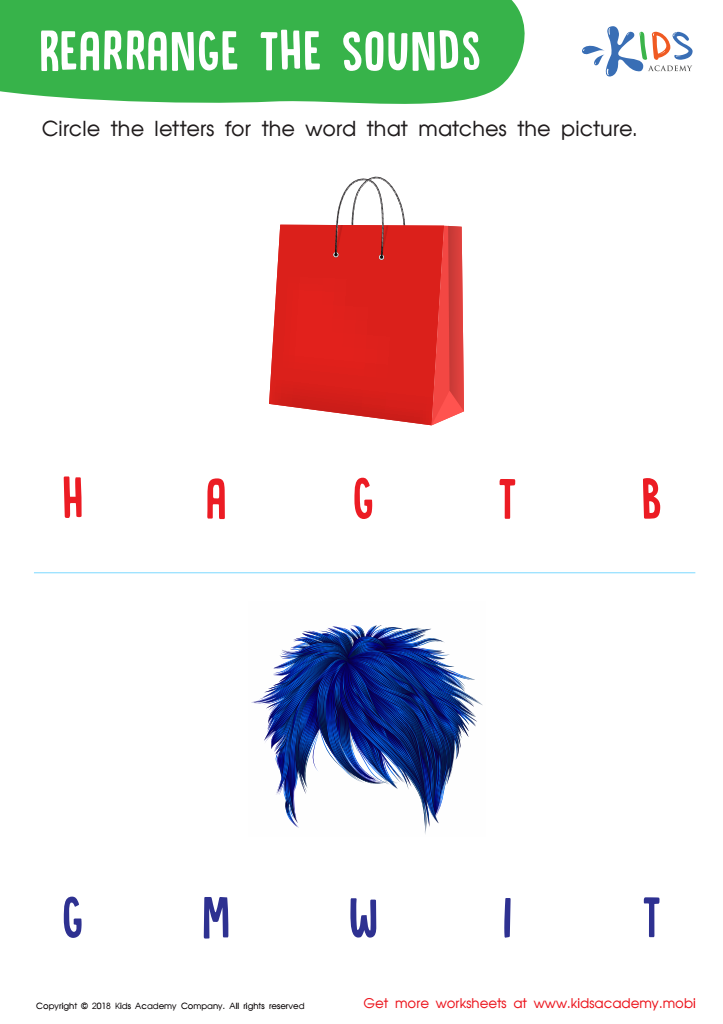
Rearrange the Sounds Worksheet








Letter recognition is a crucial skill for children aged 3-4, as it serves as the foundation for literacy and effective communication. During this developmental stage, children are naturally curious and eager to learn, making it an ideal time to introduce letters. Recognizing letters not only helps children identify their names but also enhances their ability to read and write as they progress through their education.
For parents and teachers, fostering letter recognition can spark a lifelong love for reading. Engaging children in fun activities like songs, games, and interactive storytime can make learning enjoyable and memorable. Additionally, early exposure to letters aids in language development, expanding vocabulary, and improving phonemic awareness—an essential skill for reading success.
Moreover, letter recognition can boost a child’s confidence in their abilities. When children can identify and name letters, they feel empowered to engage in writing tasks and participate in classroom activities, promoting a sense of belonging and achievement. Supporting efforts in letter recognition ultimately sets the groundwork for academic success, helping children navigate the foundational stages of literacy with enthusiasm and joy. Thus, prioritizing letter recognition is essential for parents and teachers alike, directly influencing children's readiness for school and future learning challenges.








