Math fluency Worksheets for Ages 3-4
3 filtered results
-
From - To
Boost your child's early math skills with our Math Fluency Worksheets designed for ages 3-4. These engaging, colorful, and playful activities help young learners develop essential arithmetic abilities, laying a strong foundation for future success. Through counting, number recognition, and basic addition, kids build confidence as they explore numbers. Our age-appropriate worksheets are crafted to make learning fun and interactive, while parents and teachers can enjoy seeing consistent progress. Perfect for homeschooling or supplemental practice, these resources from Kids Academy provide an enjoyable and effective way to foster a love for math in your preschooler. Get started now!
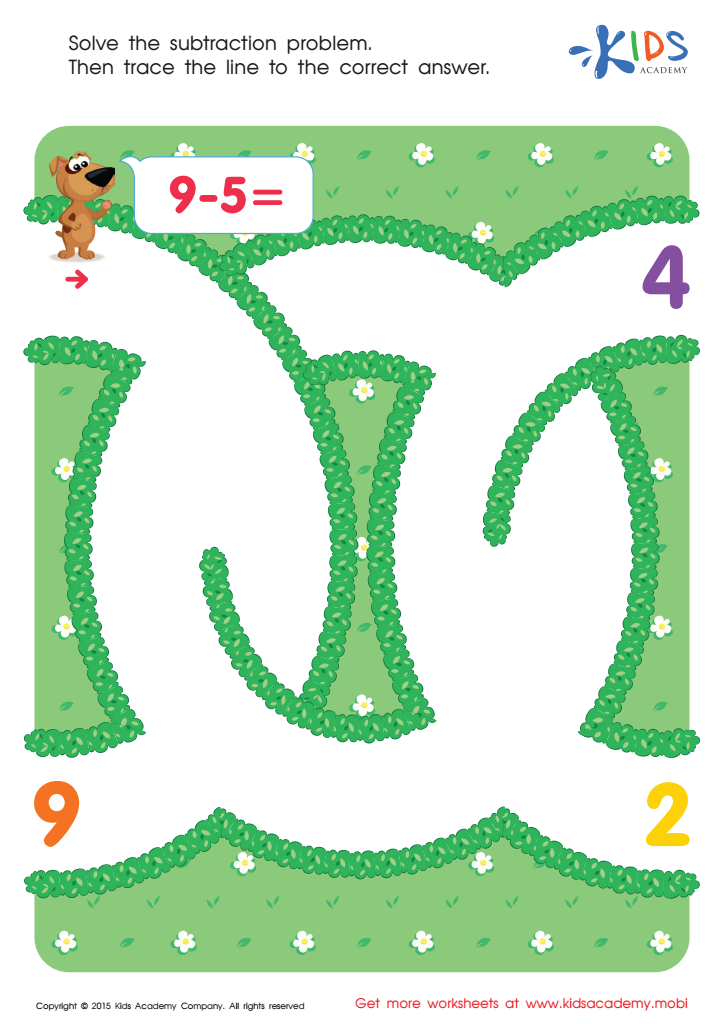
Subtraction Nine And Five Worksheet
 Assign to My Students
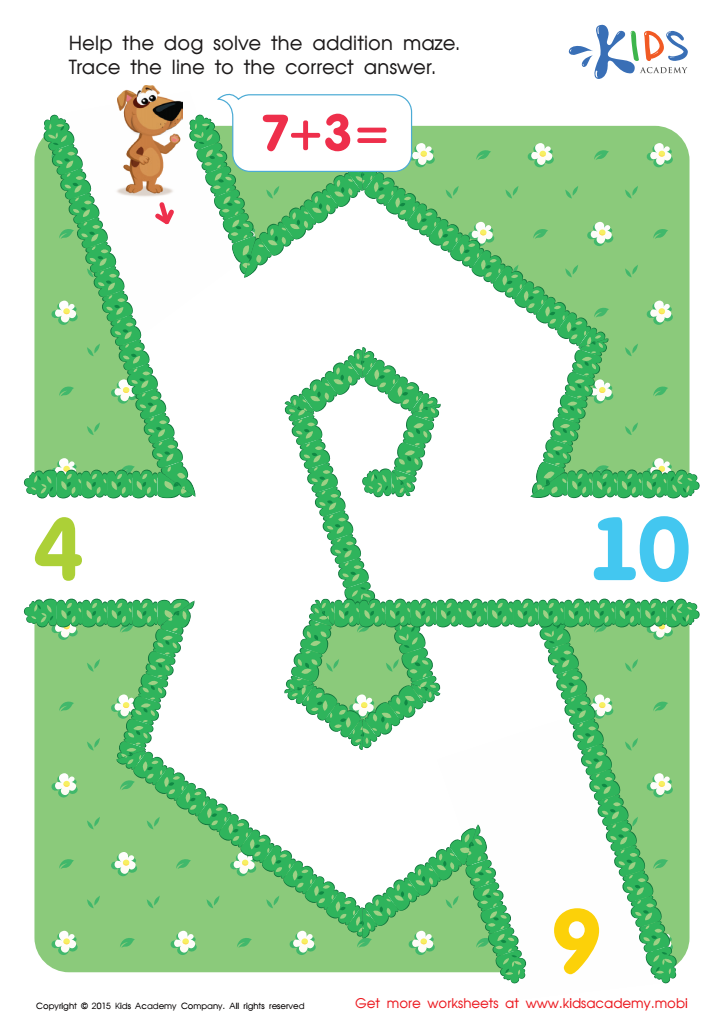
Seven Plus Three Worksheet
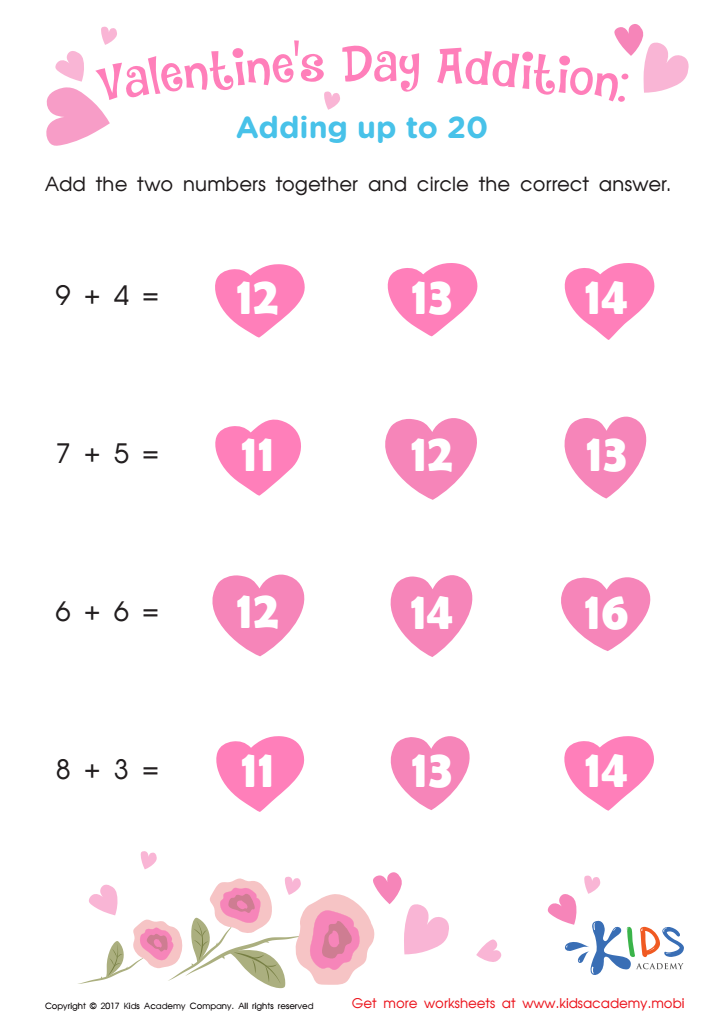
Valentine's Day Addition Worksheet








Math fluency for ages 3-4 builds a strong foundation for later academic success and problem-solving abilities. At this stage, children are naturally curious and eager to learn new concepts. Early exposure to math helps develop important cognitive skills such as pattern recognition, logical thinking, and spatial awareness. By understanding numbers and basic math concepts, children will be better prepared for more complex mathematical tasks in kindergarten and beyond.
Parents and teachers play a vital role in nurturing these skills through engaging activities and playful experiences. Simple actions like counting everyday objects, sorting toys by shape or color, and playing number games can significantly enhance a child's mathematical understanding. This early involvement not only fosters a positive attitude towards math but also strengthens the child's ability to focus, follow instructions, and persevere through challenges.
Investing time in improving math fluency at this age also supports the development of language and social skills, as children often need to communicate their reasoning and collaborate with others during group activities. Therefore, emphasizing math fluency in preschool can lead to more confident, capable, and enthusiastic learners who are ready to tackle future academic challenges. By doing so, parents and teachers set the stage for a lifelong love of learning and problem-solving.








