Money recognition Worksheets for Ages 3-4
6 filtered results
-
From - To
Discover our engaging Money Recognition Worksheets designed specifically for young learners aged 3-4. These interactive worksheets introduce preschoolers to the basics of identifying and understanding money. Through colorful visuals and fun activities, children will explore different coins and bills, enhancing their counting skills while developing brand-new financial literacy. Each worksheet promotes hands-on learning, making complex concepts accessible in a playful manner. Perfect for homeschooling or classroom settings, our money recognition resources lay the foundation for essential life skills in early childhood. Start your little one's journey towards financial awareness and independence today with our delightful, age-appropriate worksheets!
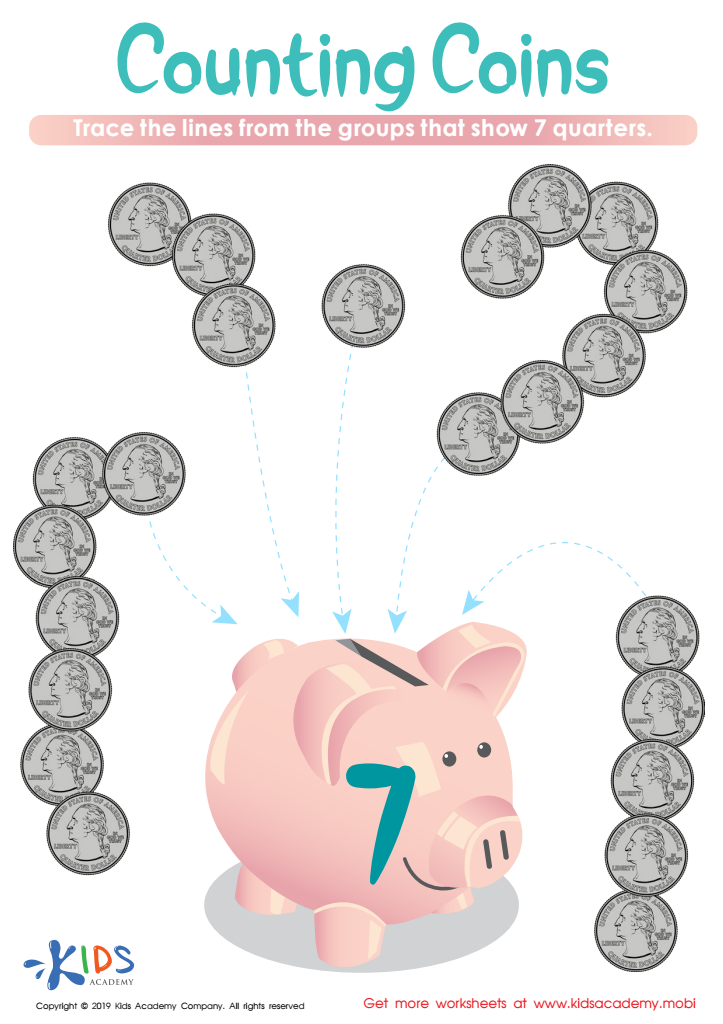
Counting Coins Worksheet
 Assign to My Students
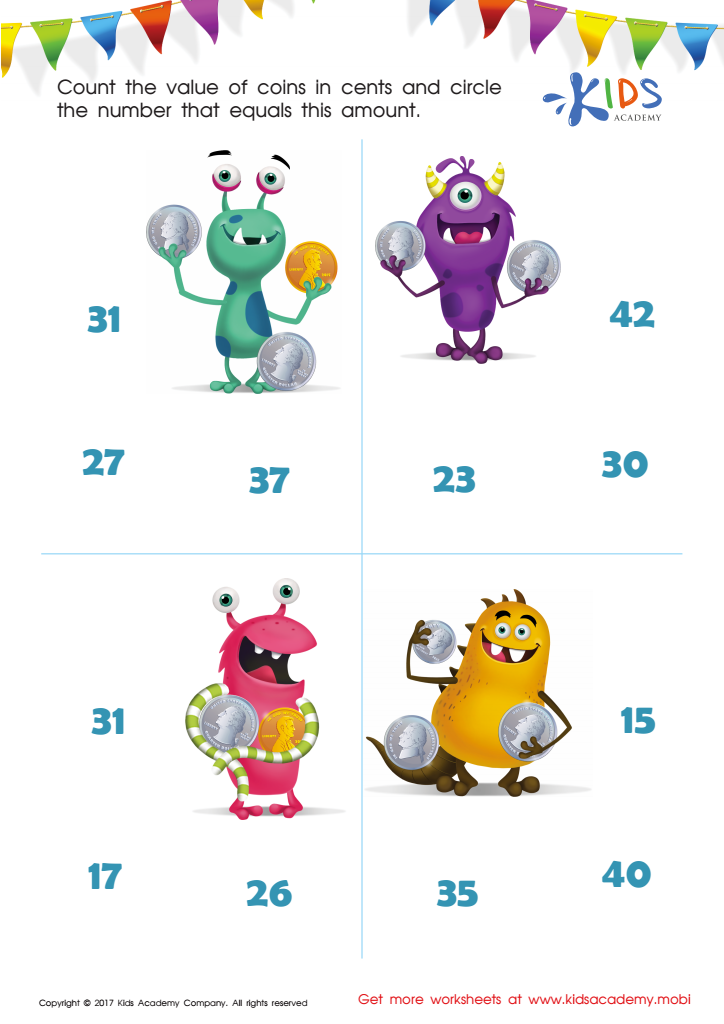
How Many Coins Money Worksheet
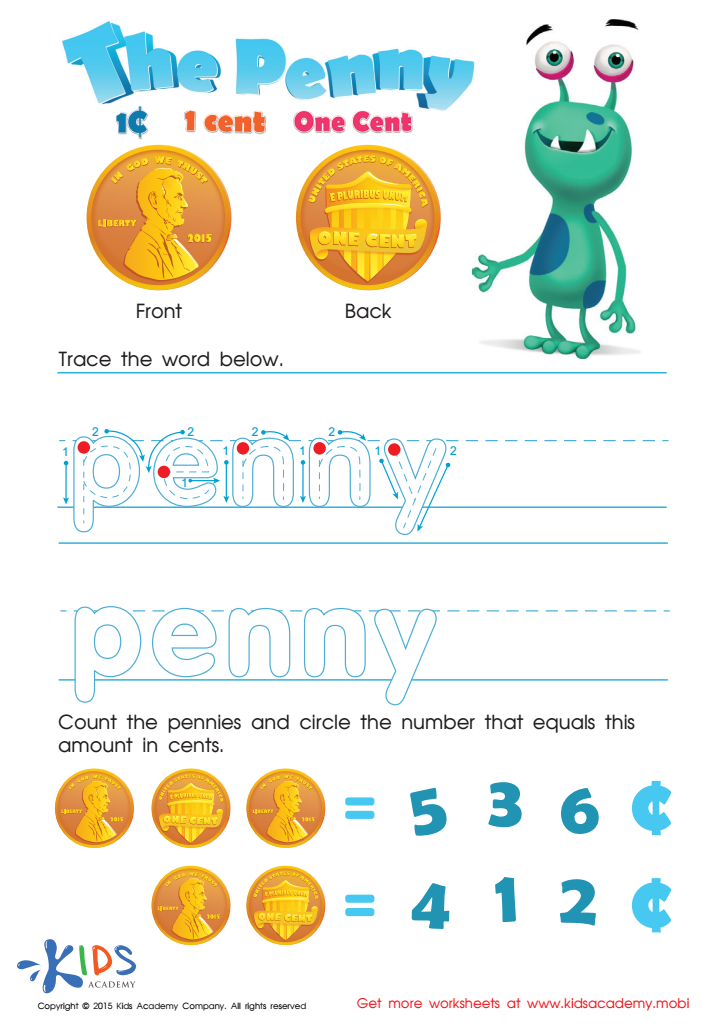
One Cent or the Penny Money Worksheet
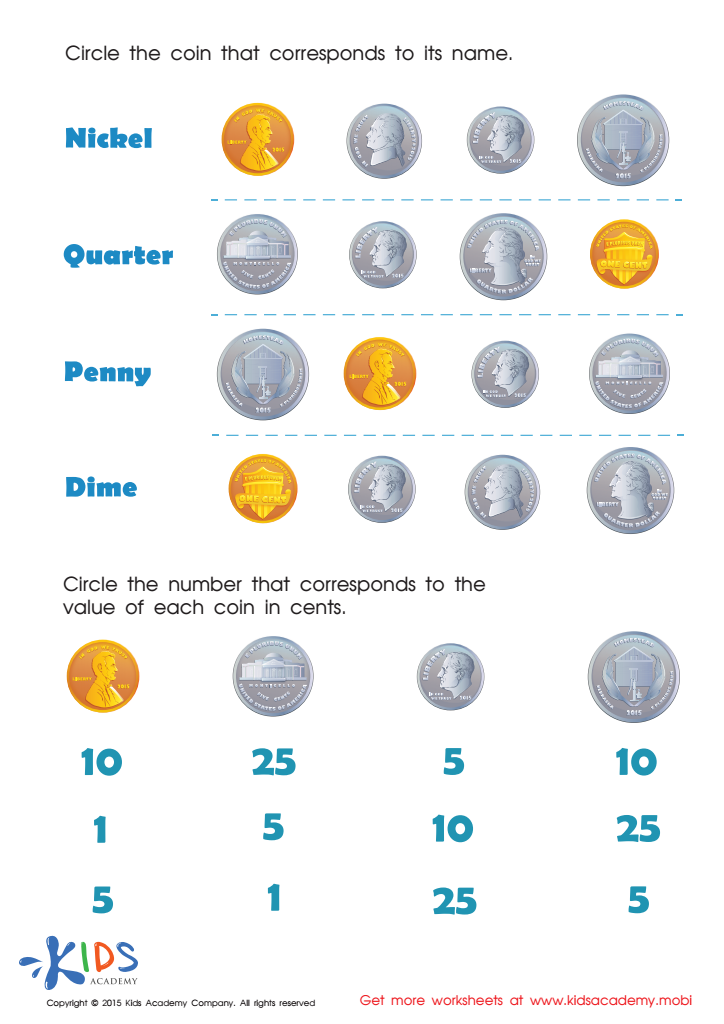
Coin Names and Values Money Worksheet
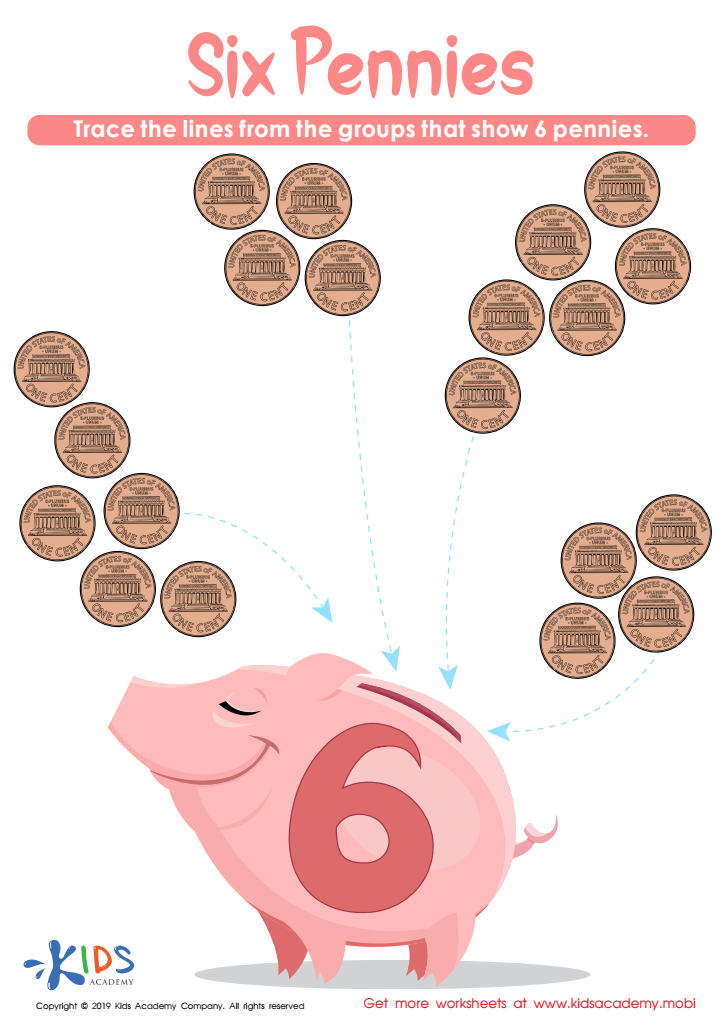
Six Pennies Worksheet
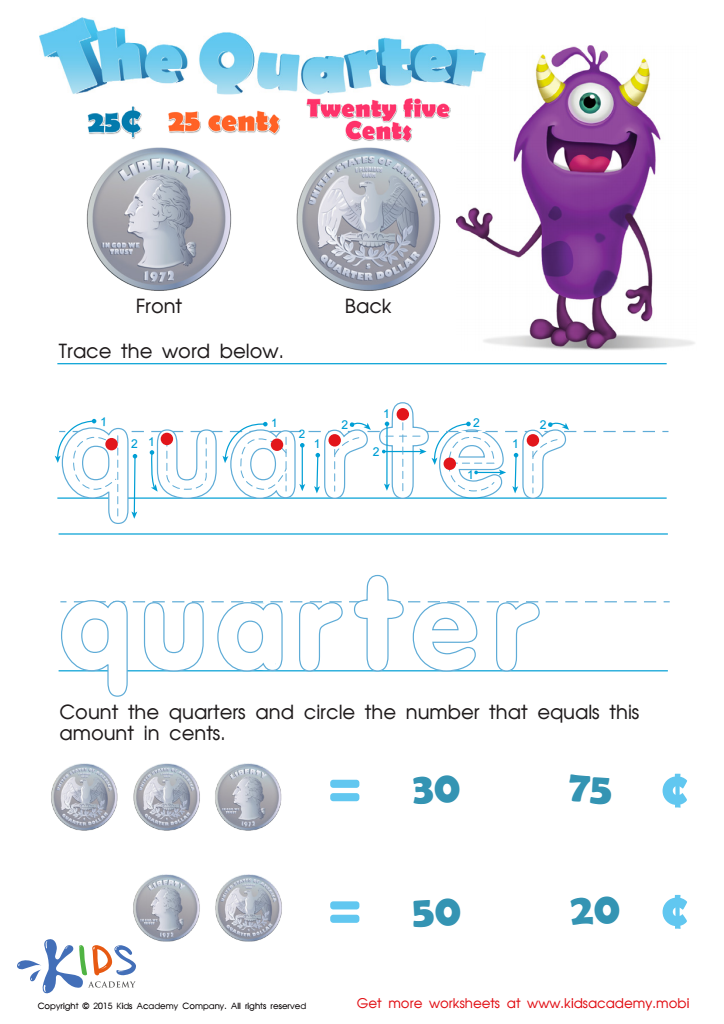
Twenty Five Cents or the Quarter Money Worksheet








Understanding money recognition is crucial for children aged 3-4 as it lays the foundation for essential life skills. At this developmental stage, children begin to explore their environment, and learning about money helps them make sense of the world around them. Recognizing different coins and bills not only introduces basic math concepts but also fosters counting skills and early problem-solving abilities.
For parents and teachers, nurturing money recognition can cultivate a sense of responsibility and encourage good financial habits in the long run. Engaging children in playful activities with play money during pretend play scenarios makes learning enjoyable and relatable. Furthermore, it enhances their cognitive development, as they categorize and identify various denominations.
Moreover, financial literacy in early childhood can reduce misconceptions about money, helping children understand its value and the importance of saving. With changing economic landscapes, equipping young learners with foundational knowledge about money encourages informed decision-making as they grow. Ultimately, fostering money recognition supports a child's overall development and empowers them with skills that will benefit them throughout their lives. By prioritizing this learning, parents and teachers create opportunities for exploration and ensure that children are informed and responsible consumers in the future.








