Number counting Worksheets for Ages 3-4
3 filtered results
-
From - To
Introduce your young learners to the joy of numbers with our "Number Counting Worksheets for Ages 3-4." Designed to lay a solid foundation in early math skills, these engaging, colorful, and fun worksheets offer a variety of activities to help children recognize, count, and write numbers. Each worksheet is crafted to enhance cognitive development, fine motor skills, and numerical understanding. Perfect for preschoolers, these exercises reinforce concept mastery through play and creativity, making learning both effective and enjoyable. Access our expertly curated worksheets today and watch your child’s confidence and skills grow!
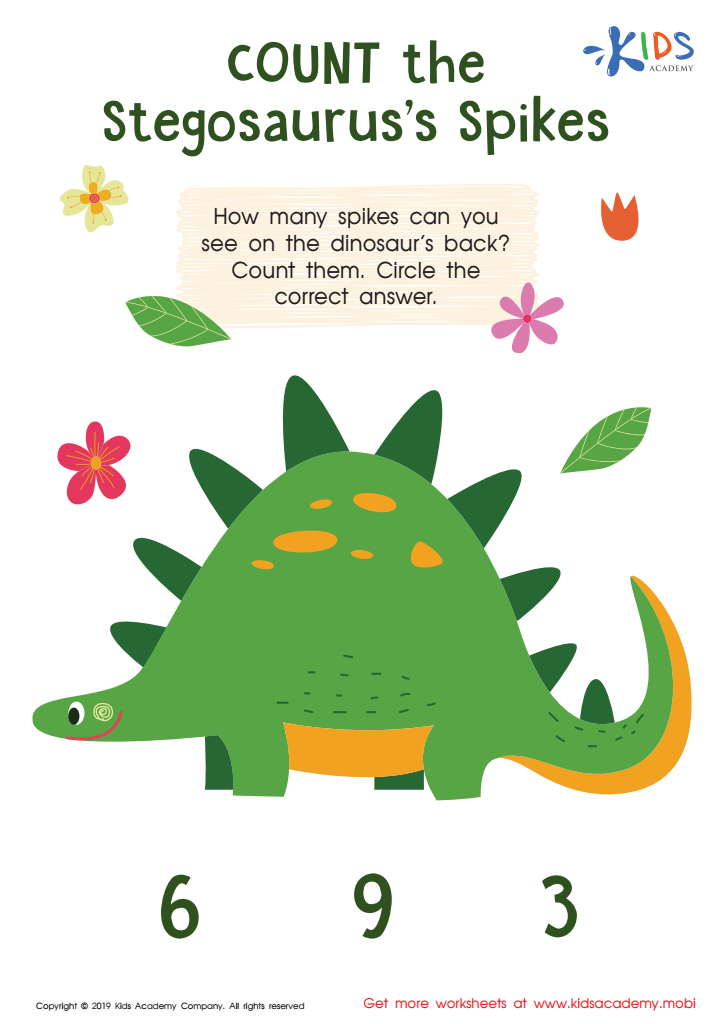
Count the Stegosaurus's Spikes Worksheet
 Assign to My Students
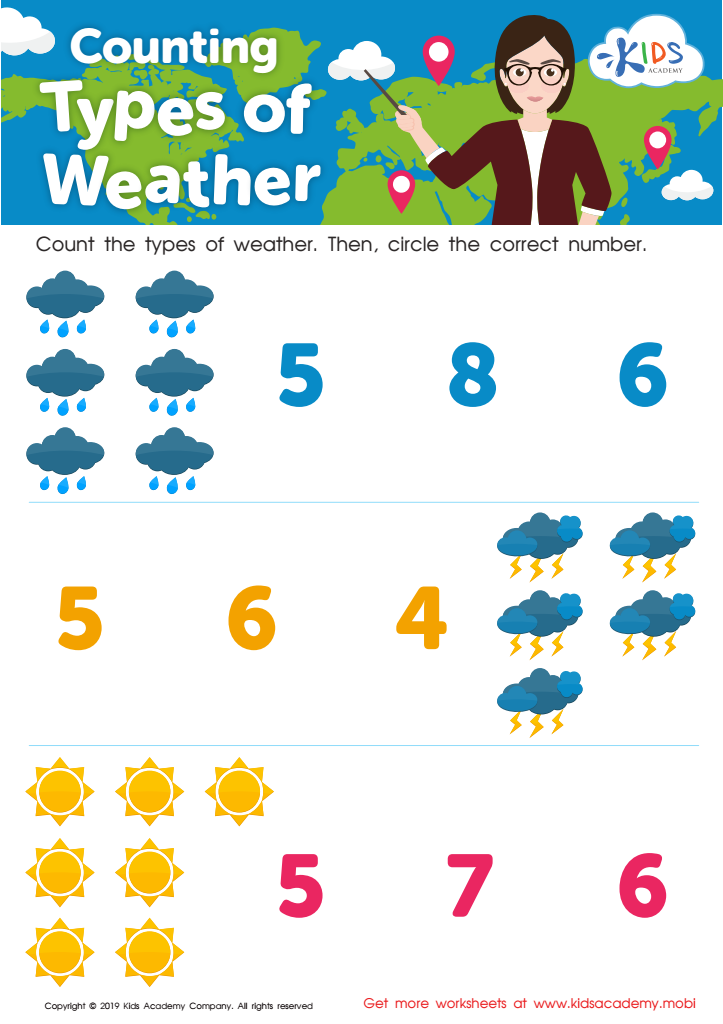
Counting Types of Weather Worksheet








Understanding number counting by ages 3-4 is fundamental for children's cognitive and academic development. At this early stage, developing basic numerical skills forms the foundation for future math learning and problem-solving abilities. Counting isn't just about reciting numbers; it introduces children to key concepts such as quantity, order, and patterns, all of which are crucial building blocks for math proficiency.
Engaging children in counting exercises hones their fine motor skills as they manipulate objects while counting. It also improves memory through repetition and sequencing. When parents and teachers prioritize number counting activities, they are fostering not only mathematical understanding but also language development, as children learn new vocabulary and terms.
Moreover, early competence with numbers builds self-confidence and a positive attitude towards learning, crucial for long-term educational success. Simple counting tasks encourage persistence, concentration, and the ability to see tasks through to completion. When supported in counting exercises, children develop a more substantial cognitive base, better preparing them for the structured learning environment of school.
Parents and teachers who invest time in teaching counting empower children with the fundamental skills needed for complex mathematical concepts in later years, culminating in more robust academic achievement and enthusiasm for learning.








