Pattern identification Worksheets for Ages 3-4
4 filtered results
-
From - To
Discover our engaging Pattern Identification Worksheets designed specifically for children aged 3-4. These worksheets introduce young learners to the fundamentals of pattern recognition, an essential skill in early childhood development. Through fun and interactive activities, kids can explore various patterns using vibrant images and shapes, fostering critical thinking and problem-solving abilities. Our carefully crafted exercises not only enhance cognitive skills but also encourage creativity as children experiment with matching and predicting patterns. Perfect for both classroom use and home learning, these worksheets make mastering patterns enjoyable and effective. Spark your child's curiosity and support their learning journey today!
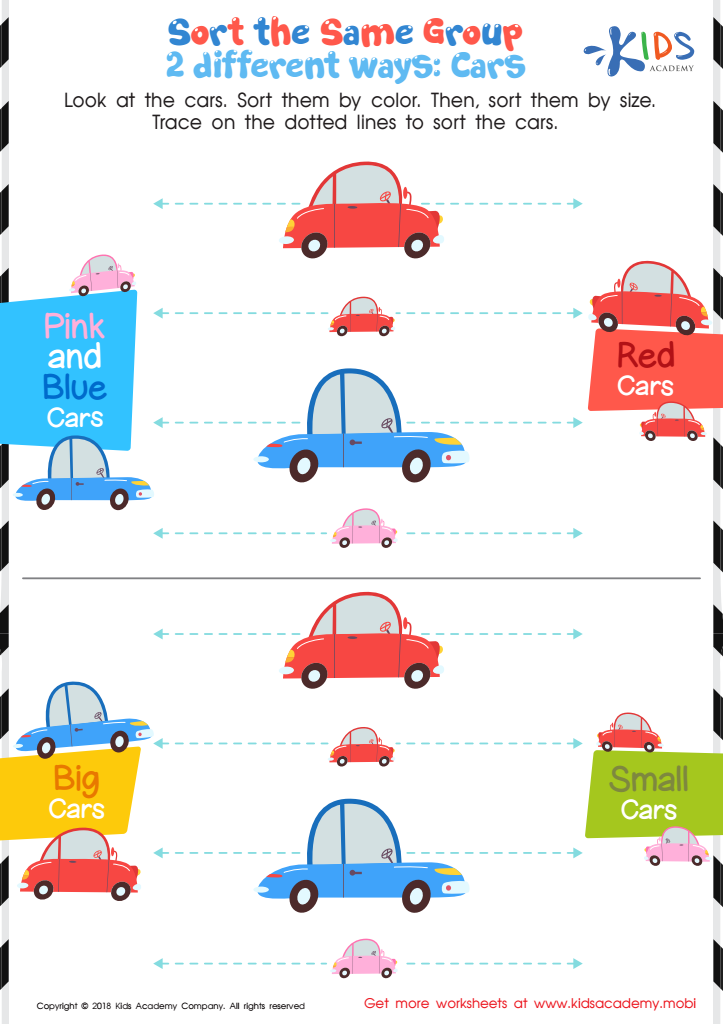
Sort the Same Group 2 Different Ways: Cars Worksheet
 Assign to My Students
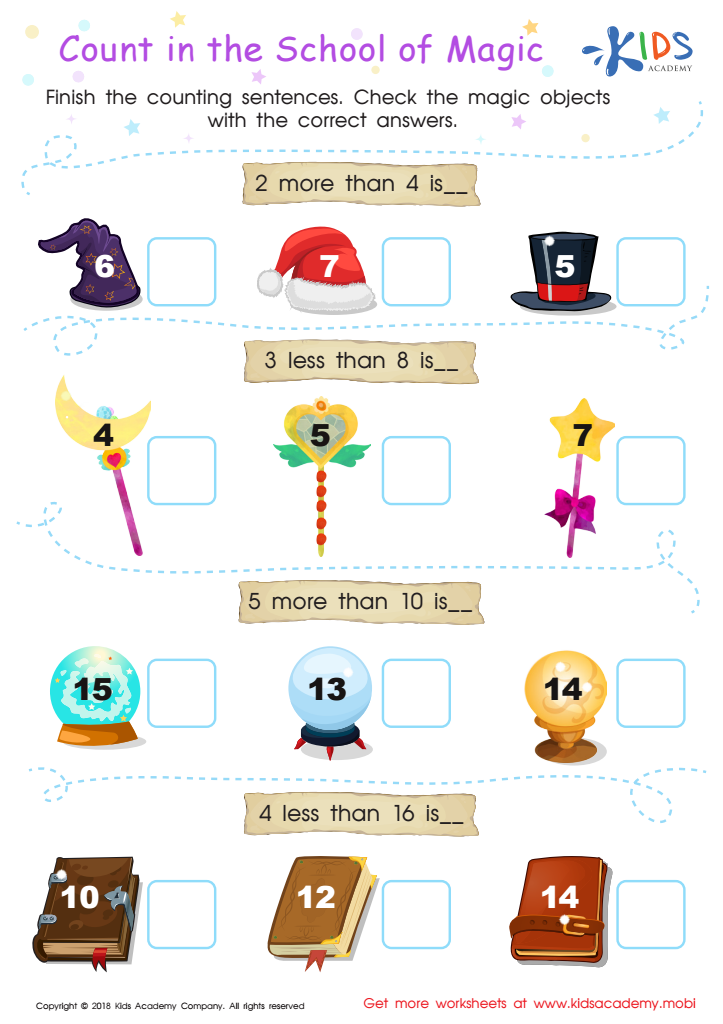
Count in the School of Magic Worksheet
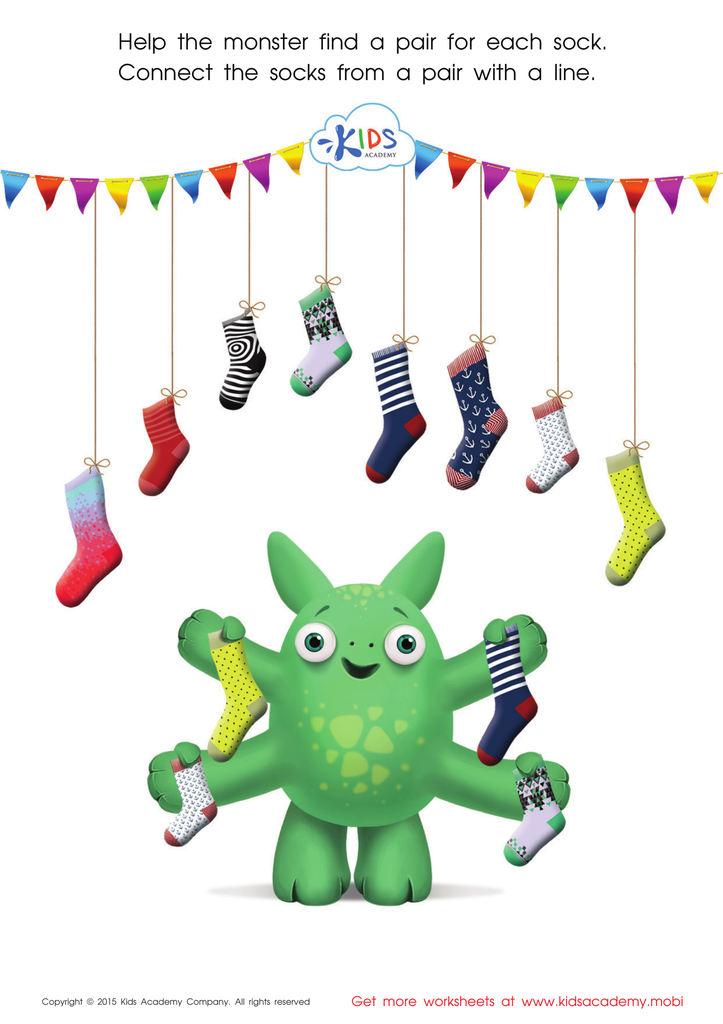
Math Matching Pairs Game: Monsterв's Socks Worksheet
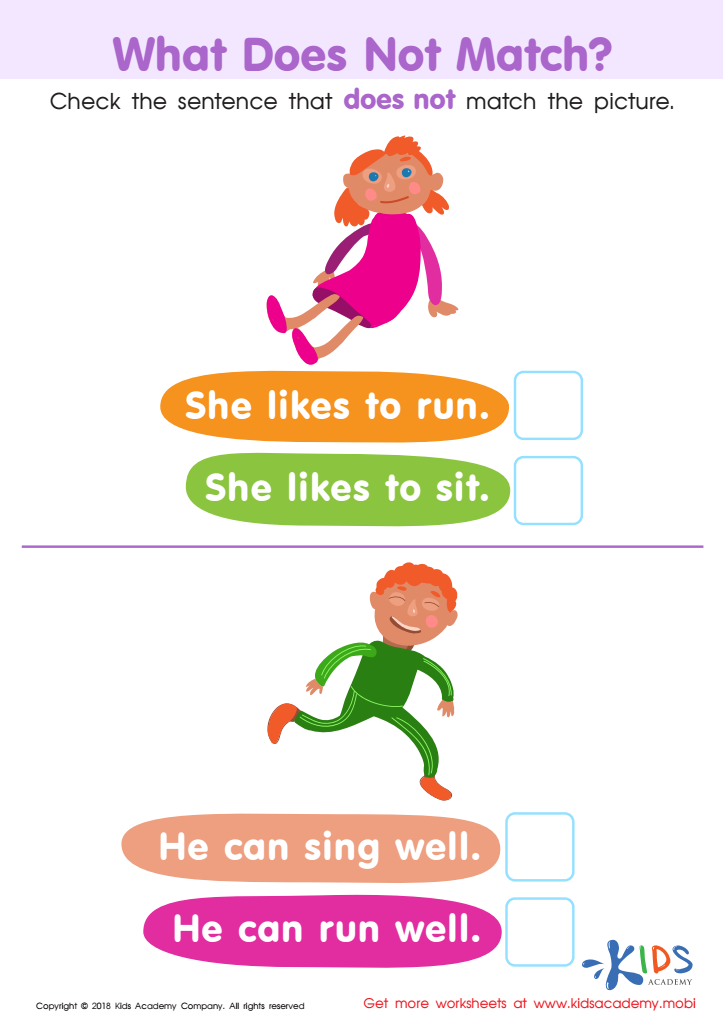
What Does Not Match? Worksheet








Pattern identification is a crucial skill for children aged 3-4 as it forms the foundation for critical thinking and cognitive development. At this age, children are naturally curious and eager to make sense of the world around them. Engaging with patterns helps develop their ability to recognize similarities and differences, a key component of mathematical understanding as they grow.
Learning to identify patterns also enhances cognitive skills such as memory and attention, improving overall learning capabilities. For example, recognizing shapes, colors, and sequences lays the groundwork for more complex problem-solving tasks later in their education. Additionally, this skill fosters creativity as children begin to understand combinations and variations in their play and art.
Moreover, when parents and teachers incorporate pattern-related activities—like sorting objects, singing songs with repetition, or creating simple patterns with blocks—they are promoting interactive and collaborative learning experiences that strengthen parent-child or teacher-student relationships. Such activities not only make learning fun and engaging but also support social skills as children learn to communicate and share ideas during these exercises.
Ultimately, prioritizing pattern identification at this early age nurtures a child's natural inclination toward exploration and logic, setting the stage for lifelong learning and academic success.








