
Understanding seasons Worksheets for Ages 3-4
4 filtered results
Difficulty Level
Grade
Age
-
From - To
Subject
Activity
Standards
Introduce your little learner to the magic of seasons with our "Understanding Seasons Worksheets for Ages 3-4"! Specially designed for preschoolers, these vibrant and engaging worksheets help children identify and understand the four seasons and their unique characteristics. Through fun activities like coloring, matching, and tracing, kids will not only grasp seasonal changes but also develop essential cognitive and fine motor skills. Perfect for home or classroom use, our worksheets make learning about spring, summer, fall, and winter an exciting adventure. Start exploring today, and watch your child's awareness of the world blossom with each colorful page!
Favorites
With answer key
Interactive
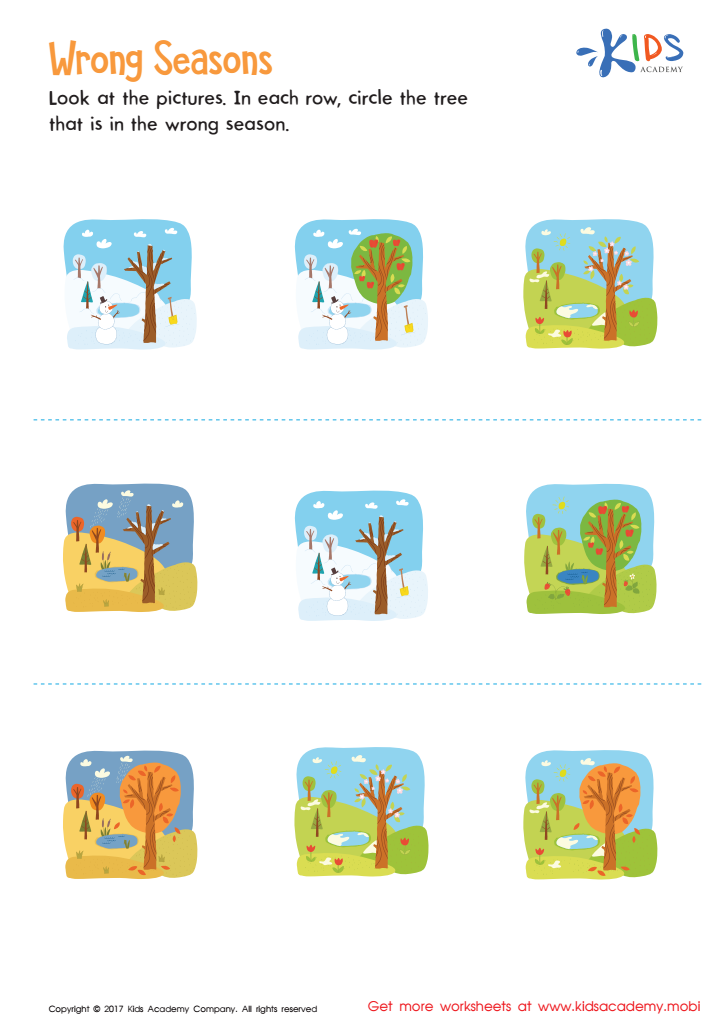
Wrong Seasons Worksheet
Uh oh! Trees are out of place in these vibrant pictures! Use this wrong seasons worksheet to help your child develop observation, analytical, and critical thinking skills. They'll learn about how the seasons change the surroundings, like trees. Print it out today to sharpen your child's eye for spotting the seasons!
Wrong Seasons Worksheet
Worksheet
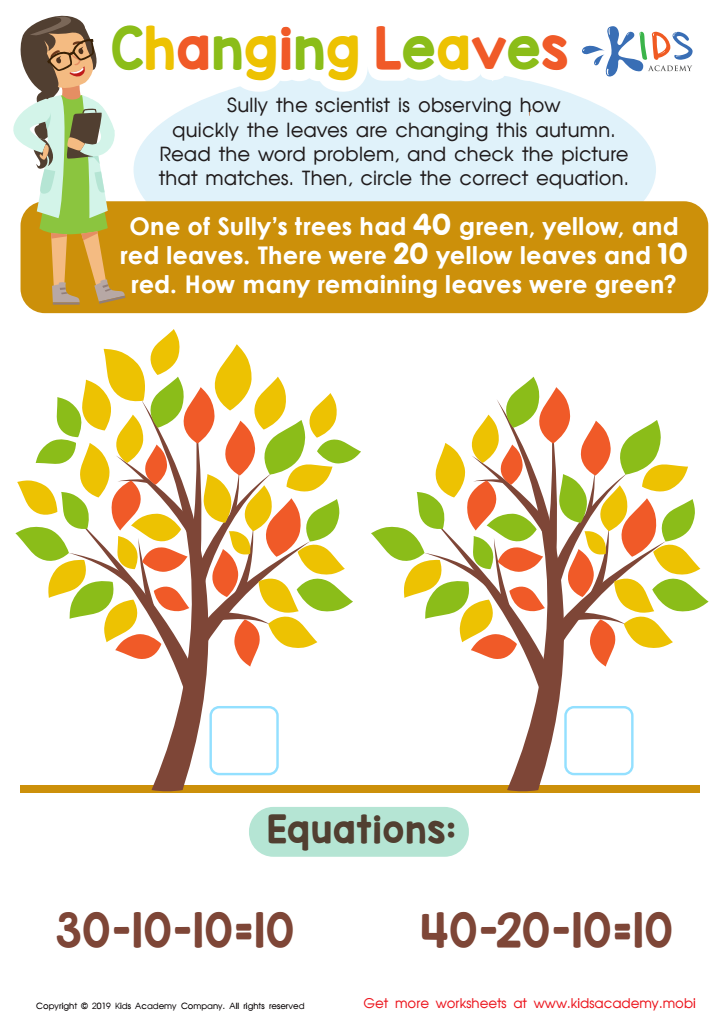
Changing Leaves Worksheet
Fall is the perfect time for kids to help Sully the scientist observe the changing leaves! Download the free worksheet with a subtraction word problem and bolded info to find the matching equation and picture. It's a fun way for your tots to learn while they admire the reddening, yellowing, and orange leaves.
Changing Leaves Worksheet
Worksheet
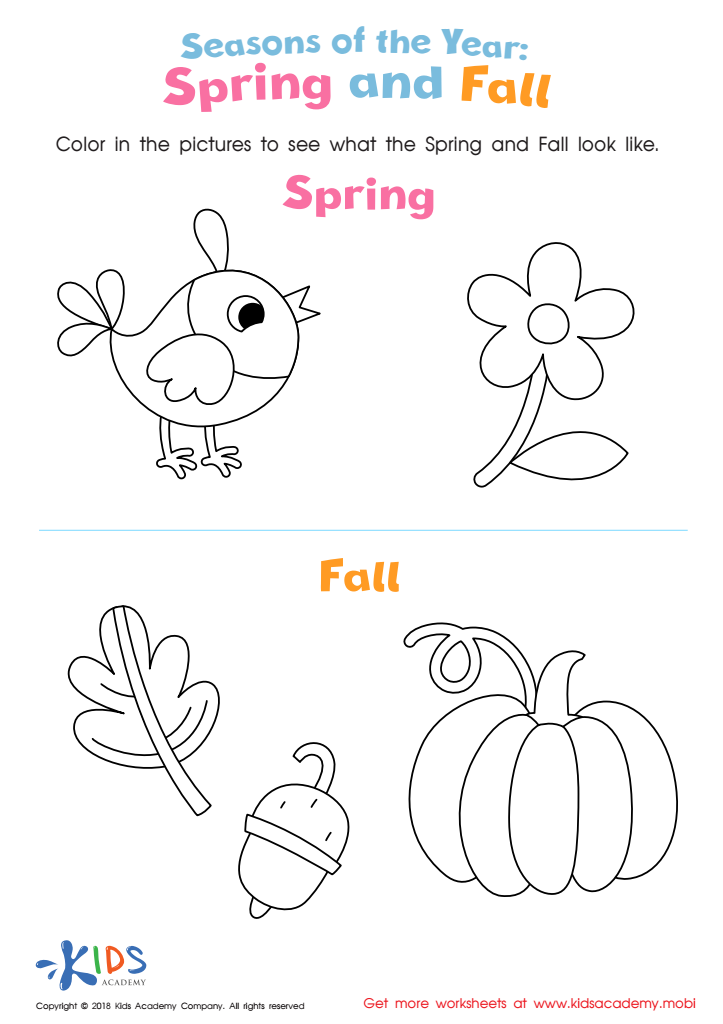
Spring and Fall Worksheet
This coloring sheet is great fun for kids. It features animals, shapes, and asks kids to identify spring and fall. Ask them to name the things in the sheet, and then help choose colors that fit each season. Let their imaginations run wild!
Download (PDF)
 Assign to My Students
Assign to My Students
Spring and Fall Worksheet
Worksheet
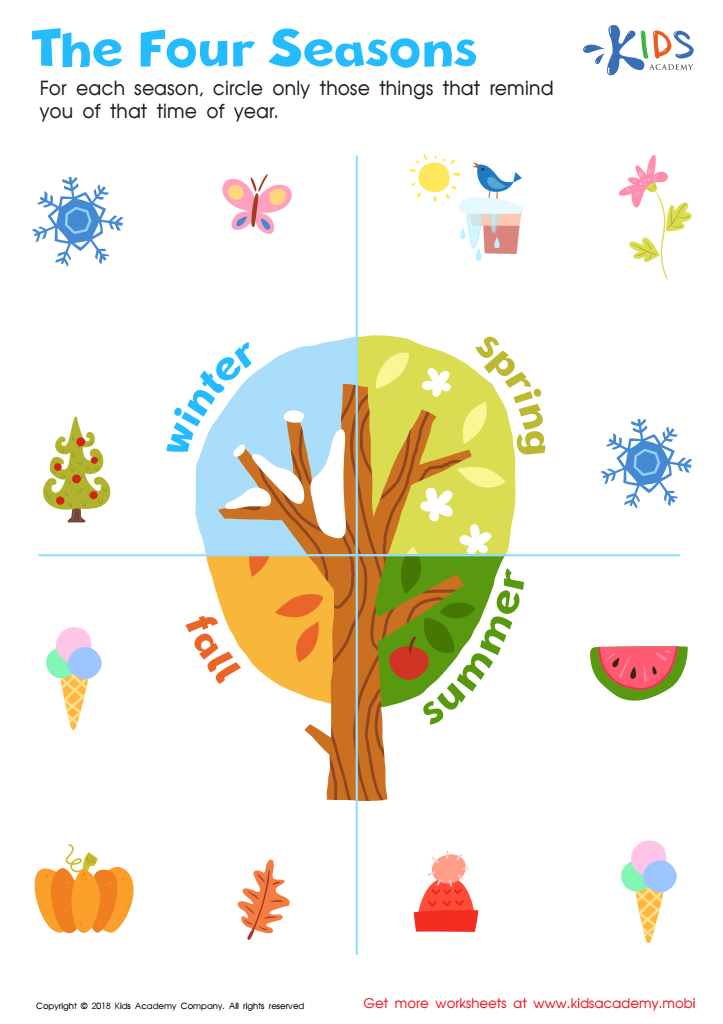
The Four Seasons Worksheet
Tell your child to circle things that remind them of each season. The tree has four squares, one for each season. Some things in each square match the season, others don't. Ask if any are out of place. Help them circle only items that remind them of that season.
The Four Seasons Worksheet
Worksheet
Join Kids Academy for Free
Who is primarily going to use this learning content?






Understanding seasons is crucial for children aged 3-4 as it lays a foundation for their cognitive and emotional development. At this age, children are naturally curious and eager to explore the world around them. Introducing them to the concept of seasons helps expand their vocabulary and enhances their language skills as they learn new words related to weather patterns, clothing, and activities typical for each season.
Learning about seasons also instills an early appreciation for nature and the environment. By observing changes in weather, plants, and animals, children develop a sense of wonder and respect for the natural world. This can lead to environmentally responsible behaviors as they grow older.
Additionally, understanding seasons helps children grasp important time-related concepts. Knowing that seasons follow a predictable pattern sets the stage for learning about days, weeks, and months, facilitating their comprehension of the passage of time.
From a social and emotional standpoint, discussing seasons can help children prepare for and adapt to changes in their routine and activities, reducing anxiety. Seasonal topics can also be integrated into various fun and engaging learning activities, such as arts and crafts, themed storytelling, and seasonal outdoor play, making learning enjoyable and memorable. Thus, providing a holistic developmental benefit by fostering curiosity, routine understanding, and early science literacy.








