Visual interpretation Worksheets for Ages 3-4
7 filtered results
-
From - To
Enhance your child's learning journey with our Visual Interpretation Worksheets designed specifically for ages 3-4! These engaging worksheets encourage young learners to develop critical skills such as observation, reasoning, and shape recognition through fun activities. Each worksheet is crafted to stimulate creativity and promote cognitive abilities, ensuring children can identify elements in pictures and understand visual contexts. Whether sorting images, matching patterns, or interpreting simple visuals, your little ones will build a strong foundation for future learning. Perfect for home reinforcement or classroom use, our printable worksheets are easy to access and utilize, making educational play fun and effective! Start exploring today!
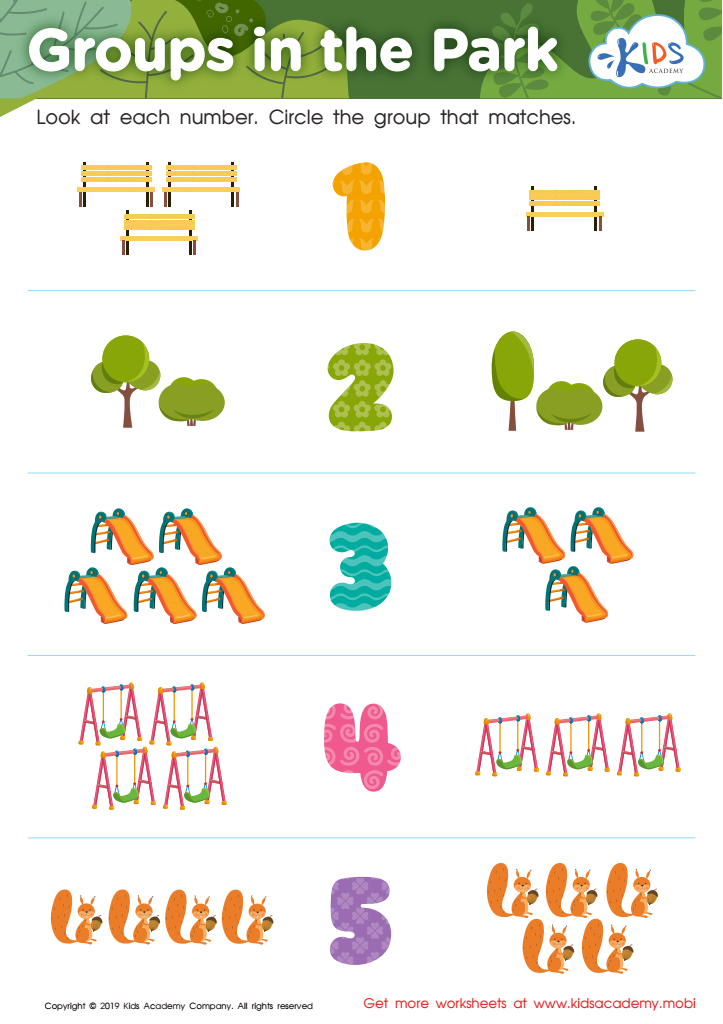
Groups in the Park Worksheet
 Assign to My Students
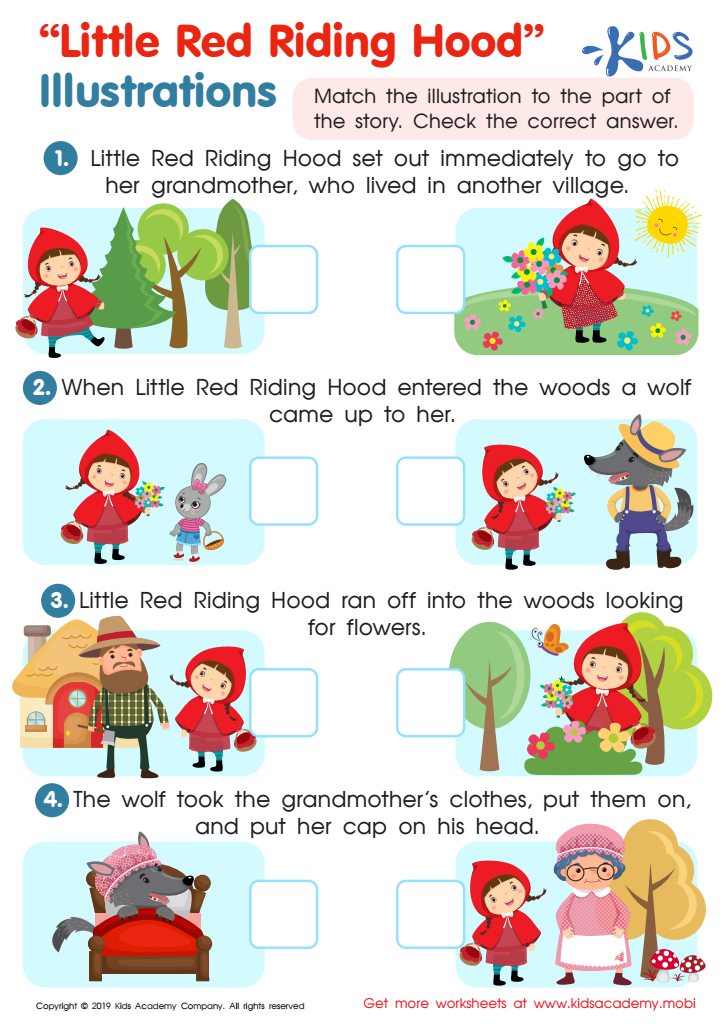
Little Red Riding Hood: Illustrations Worksheet
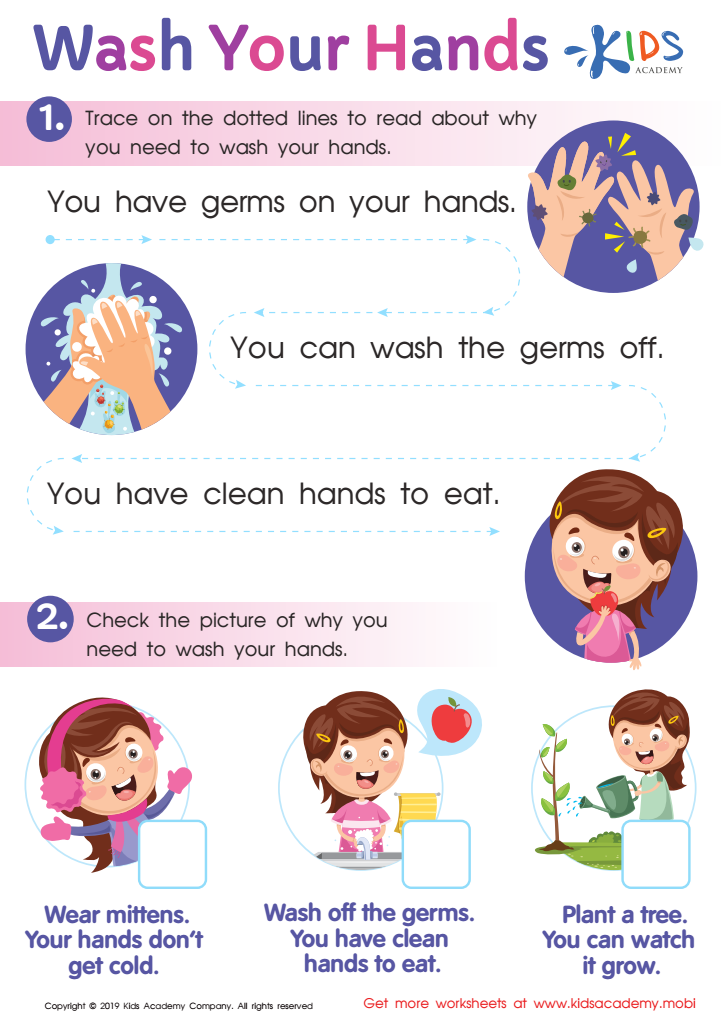
Wash Your Hands Worksheet
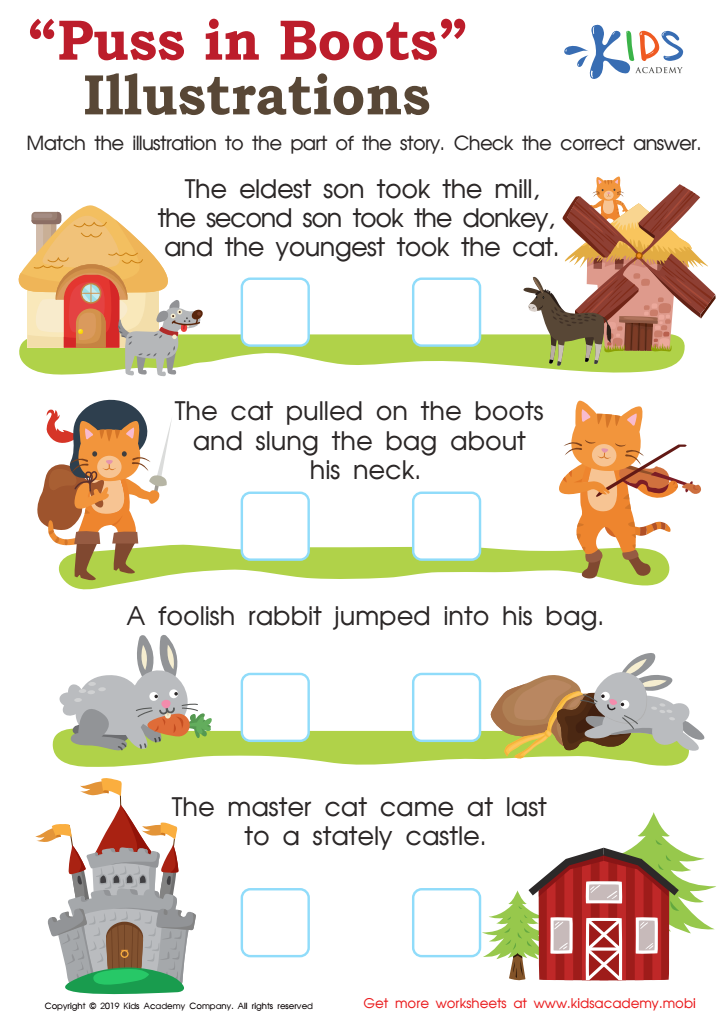
Puss in Boots Illustrations Worksheet
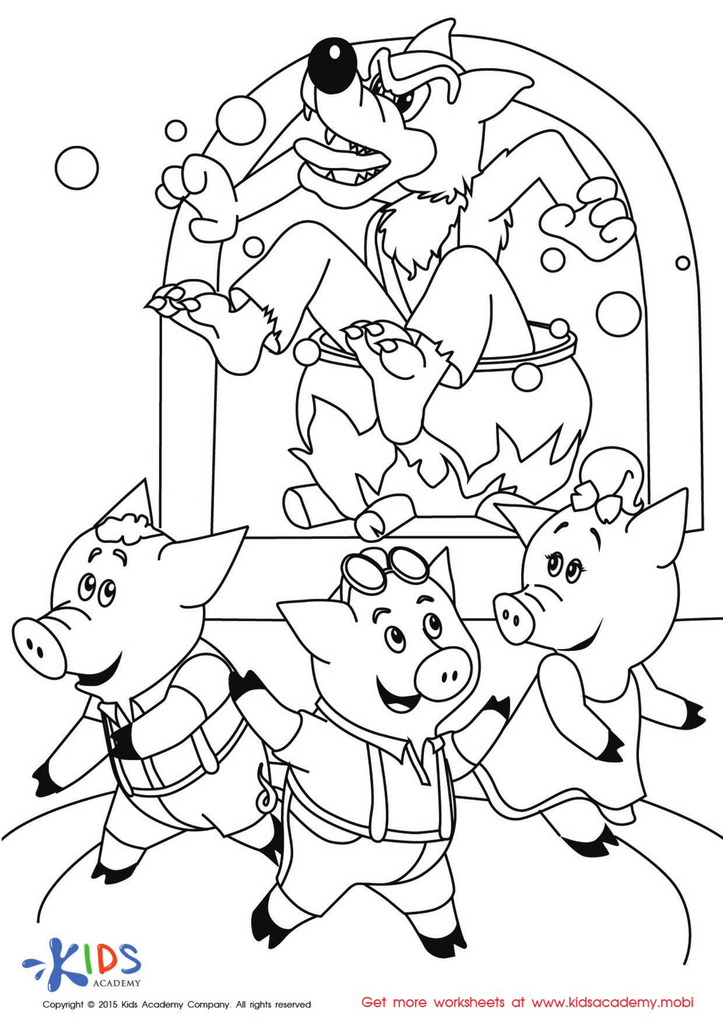
The Three Little Pigs and The Big Bad Wolf Printable
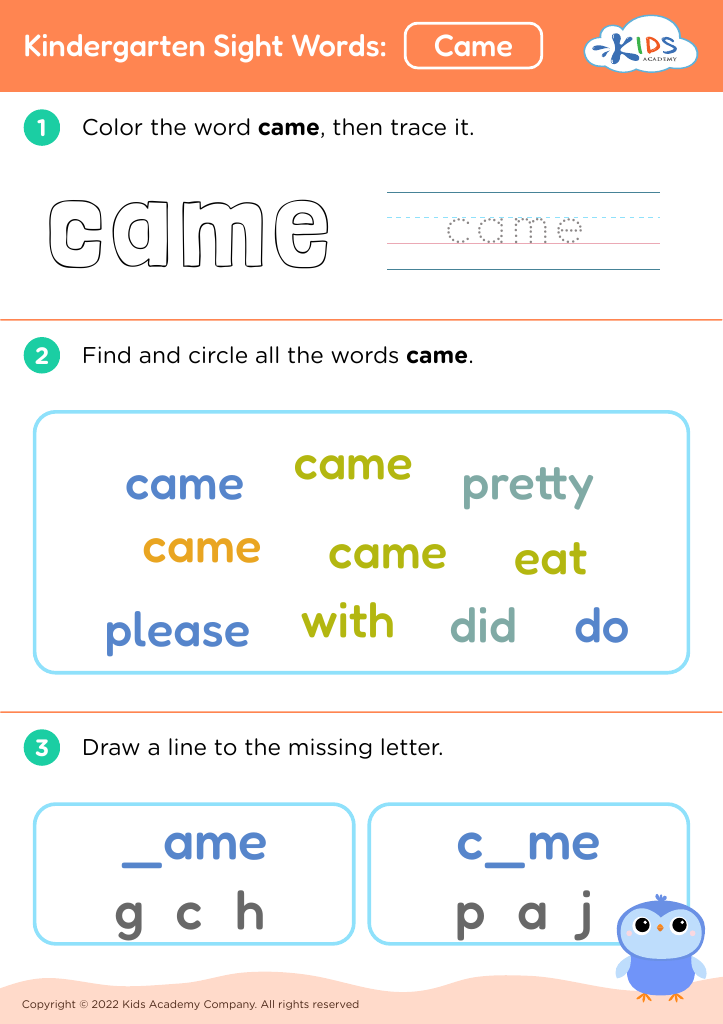






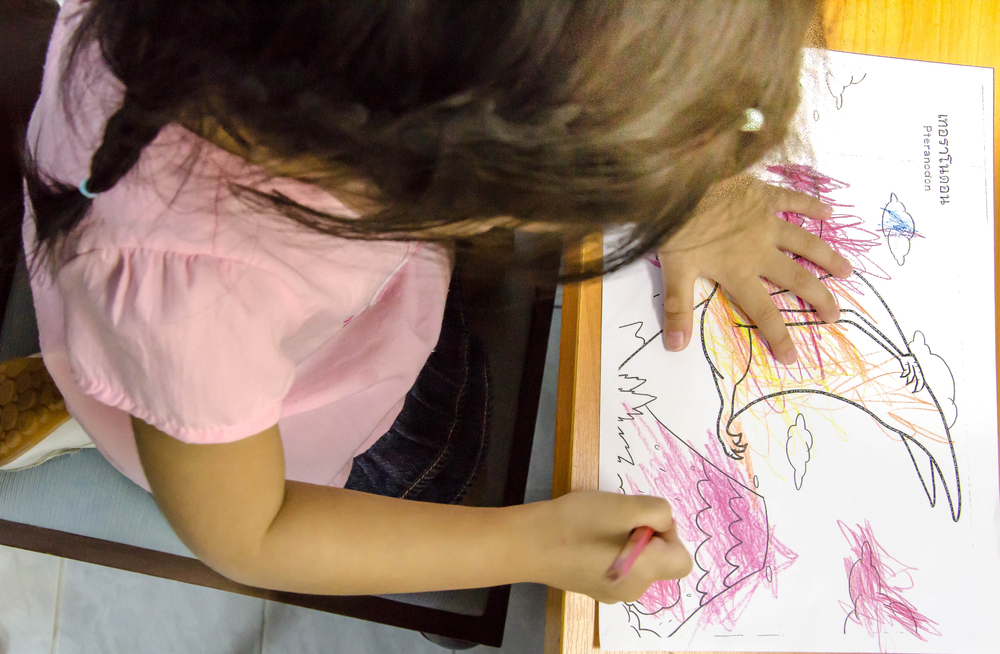

Visual interpretation is a crucial skill for children aged 3-4, as it lays the foundation for cognitive development and future learning. At this age, children are naturally curious and eager to explore the world around them. Engaging in activities that promote visual interpretation helps enhance their observational skills, which are essential for understanding their environment.
Parents and teachers should care about visual interpretation because it aids in language development. As children learn to recognize and interpret images, they are likely to associate them with words and concepts, enriching their vocabulary and communication skills. Furthermore, visual interpretation fosters critical thinking and problem-solving abilities. When children analyze pictures or illustrations, they learn to make connections, draw conclusions, and think creatively.
Additionally, early experiences with visual stimuli can enhance a child's social-emotional development. Discussing images can lead to conversations about feelings, experiences, and perspectives, helping young children develop empathy and relational skills. Overall, nurturing visual interpretation skills in preschoolers can boost their self-confidence, curiosity, and enthusiasm for learning, setting the stage for a lifelong love of knowledge and discovery. Therefore, it is essential for parents and teachers to actively engage children in activities that bolster these vital skills.








