Animal recognition Adding at the Zoo Worksheets for Ages 3-4 - Page 2
43 filtered results
-
From - To
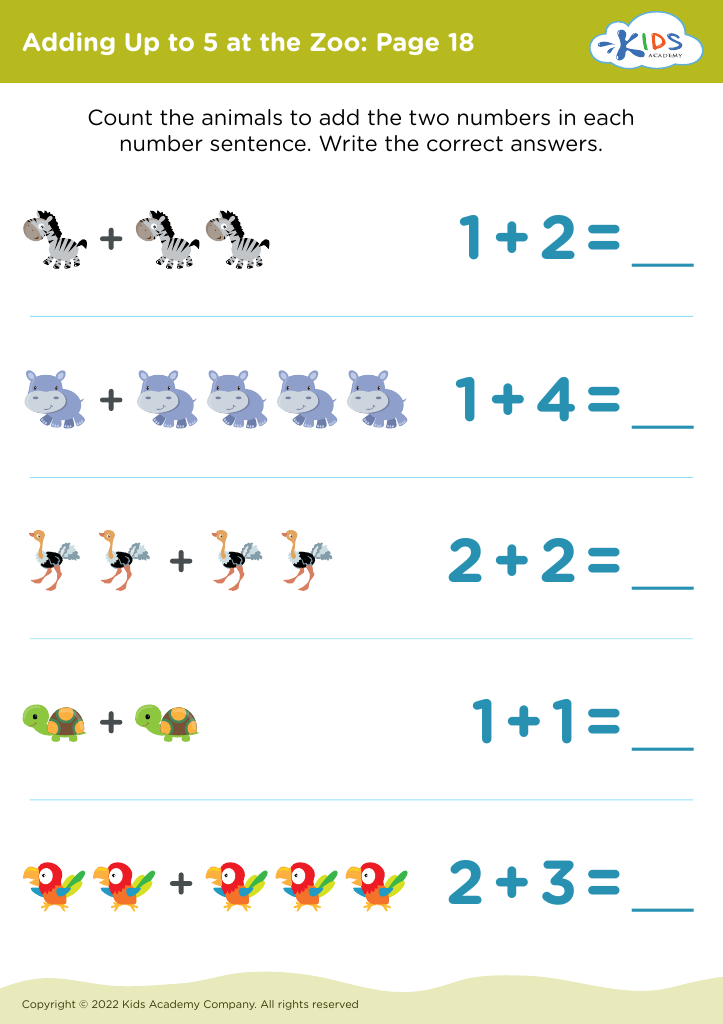
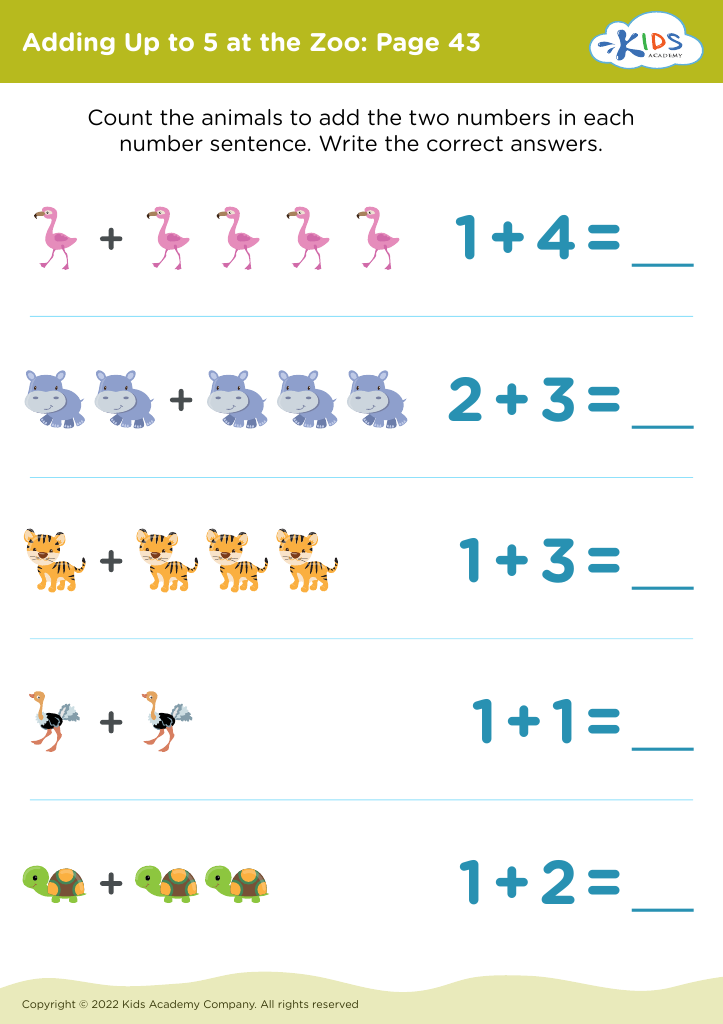
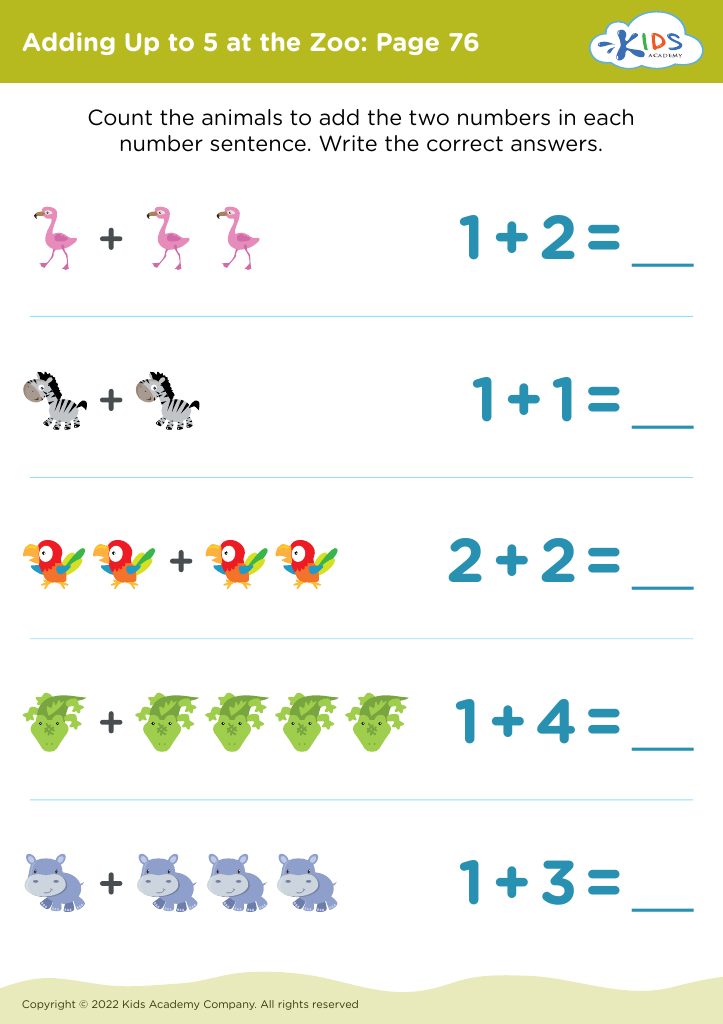
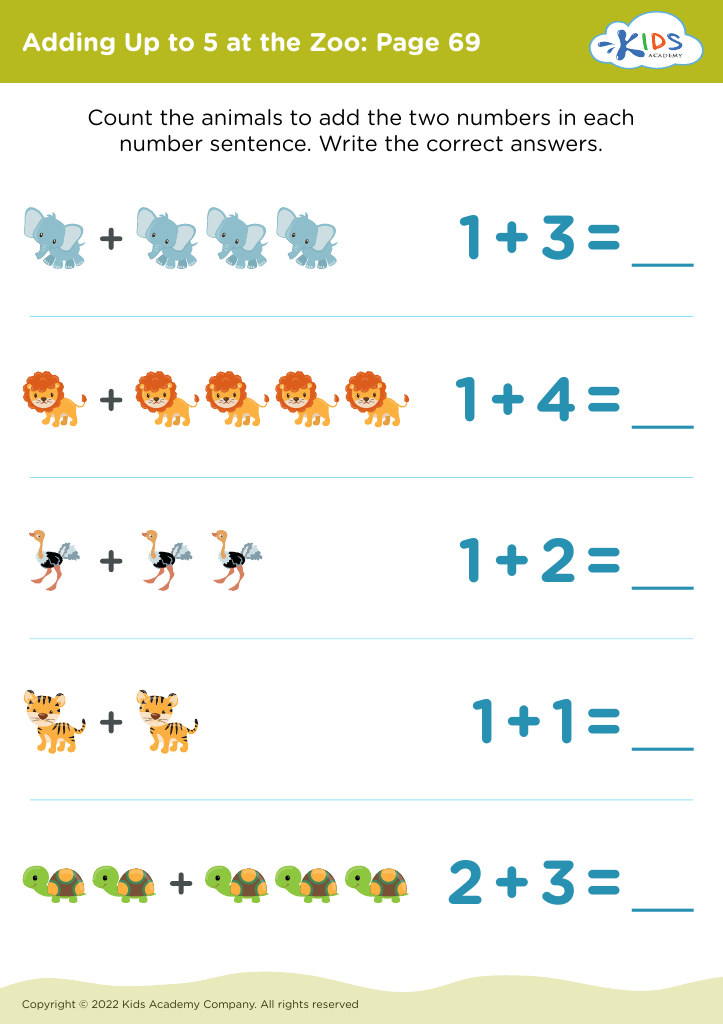
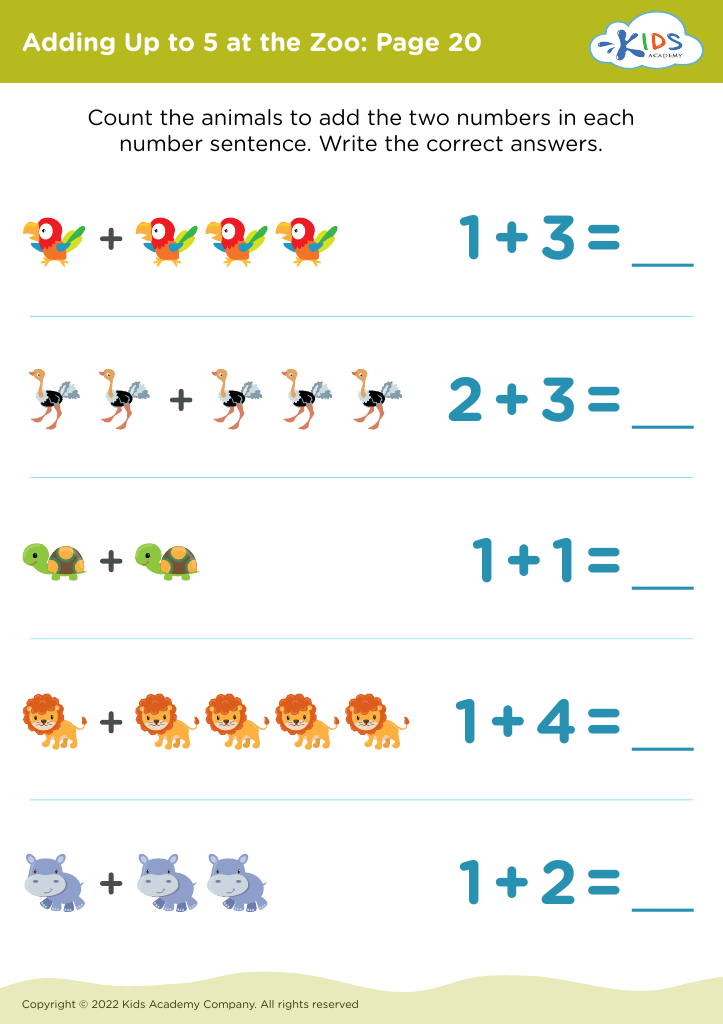
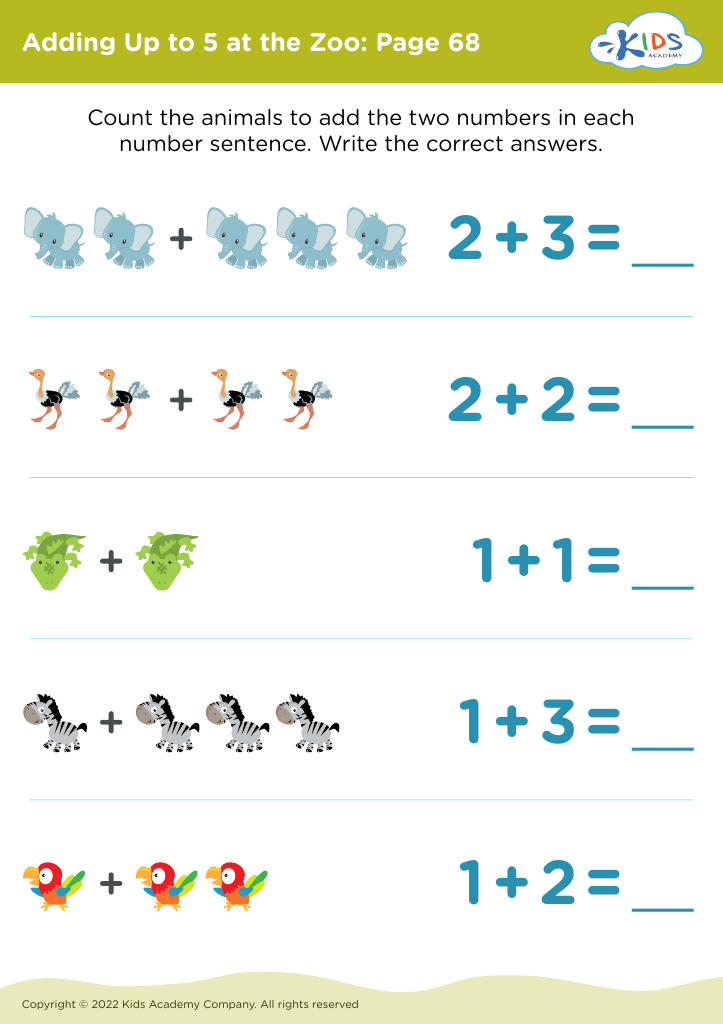
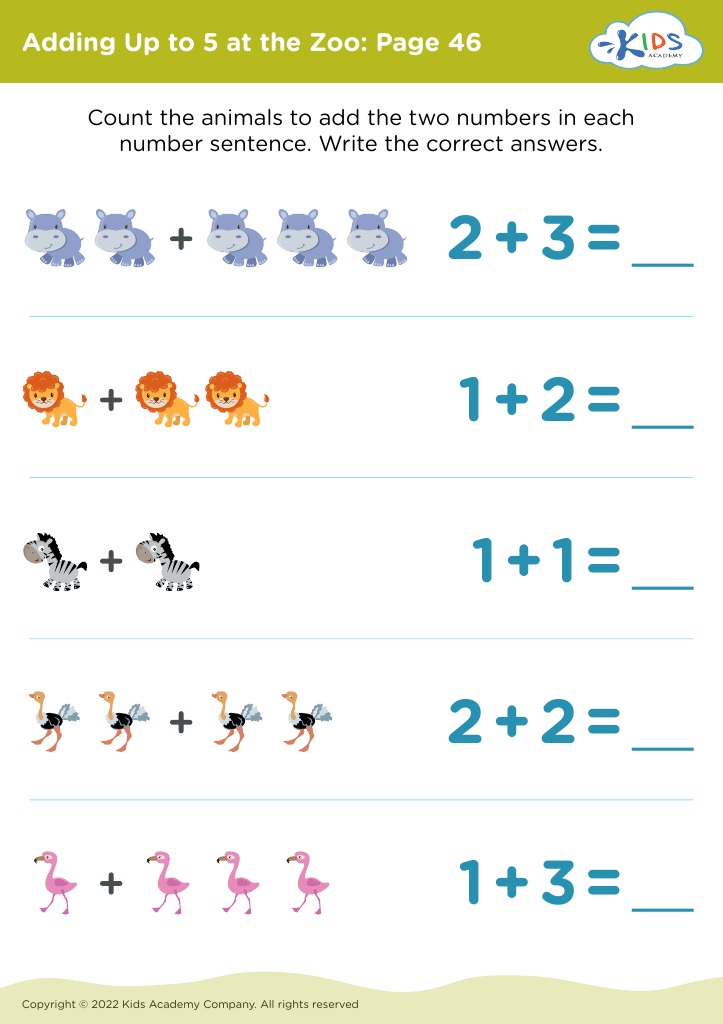
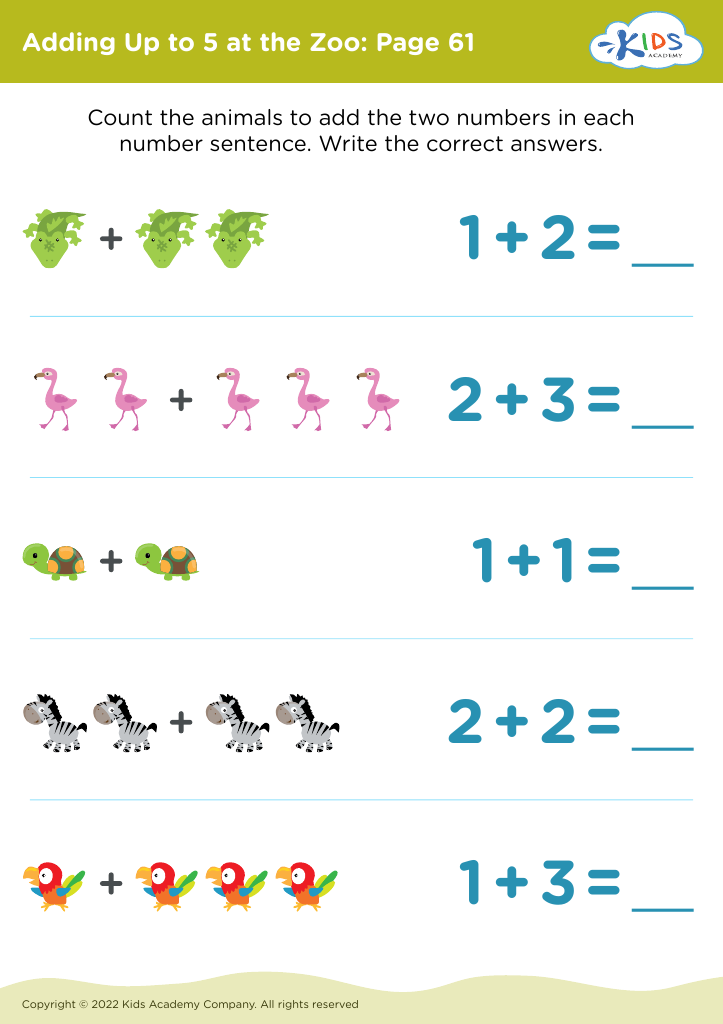
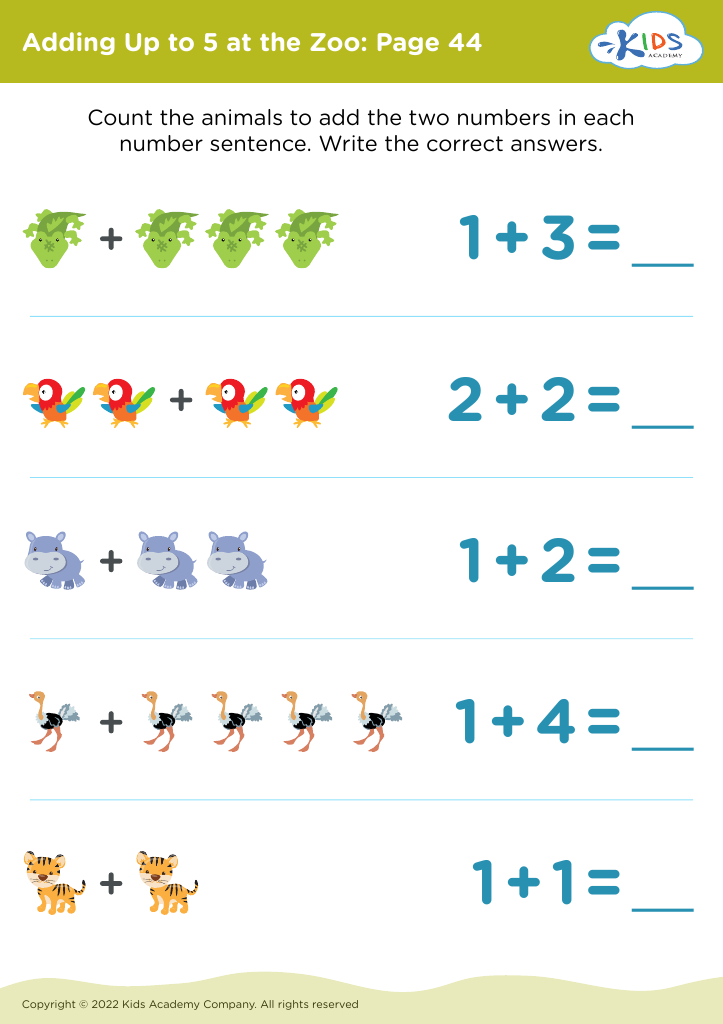
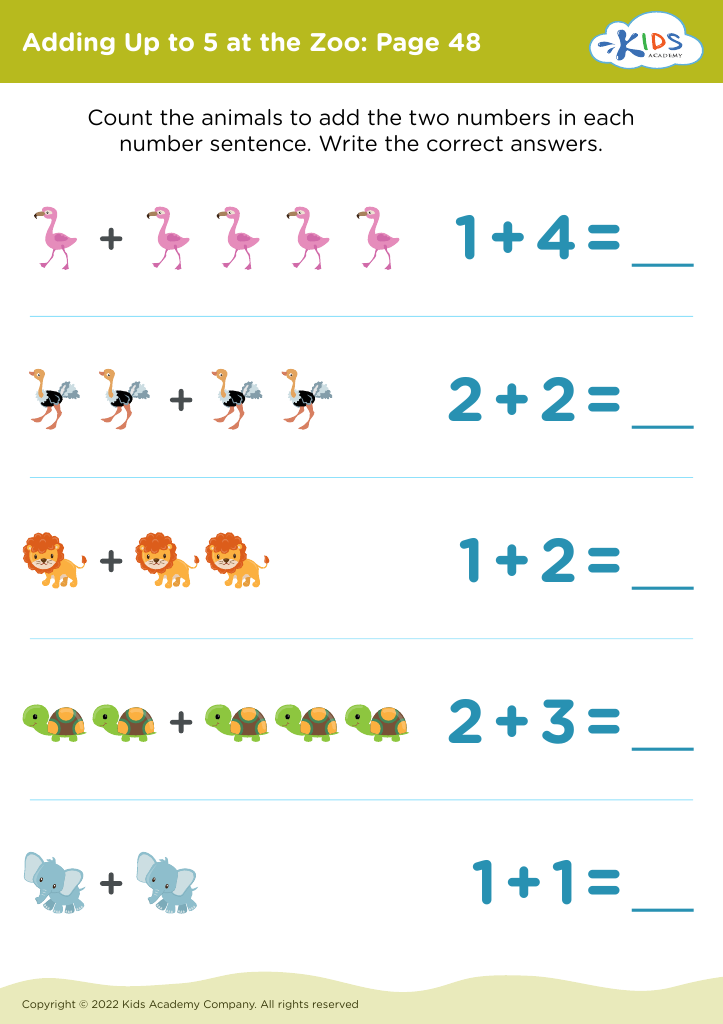
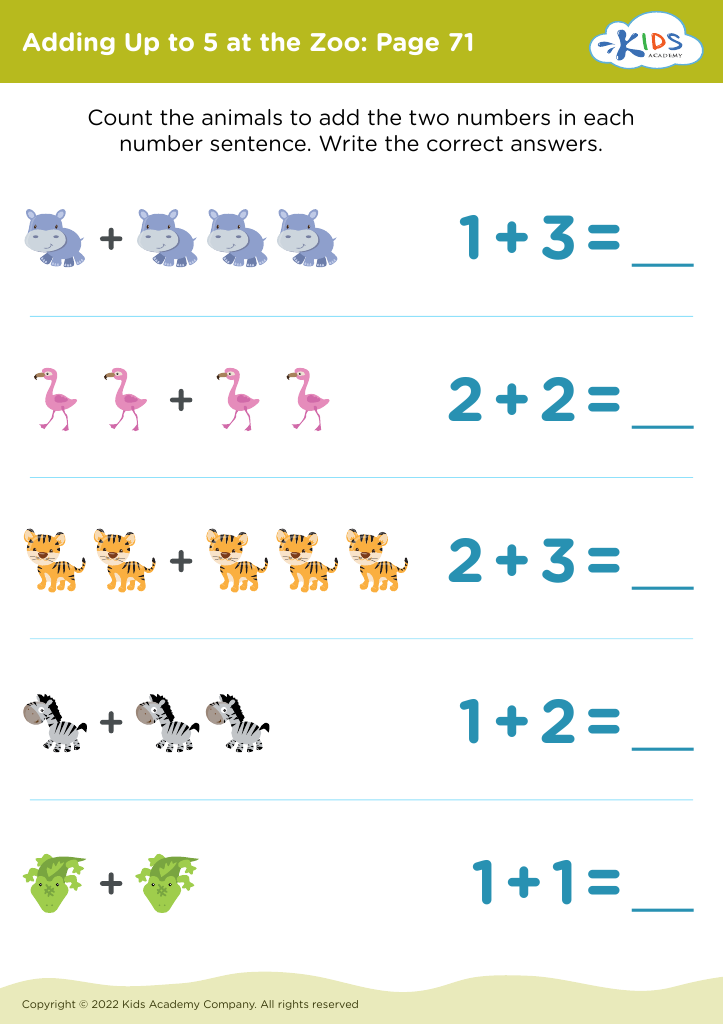
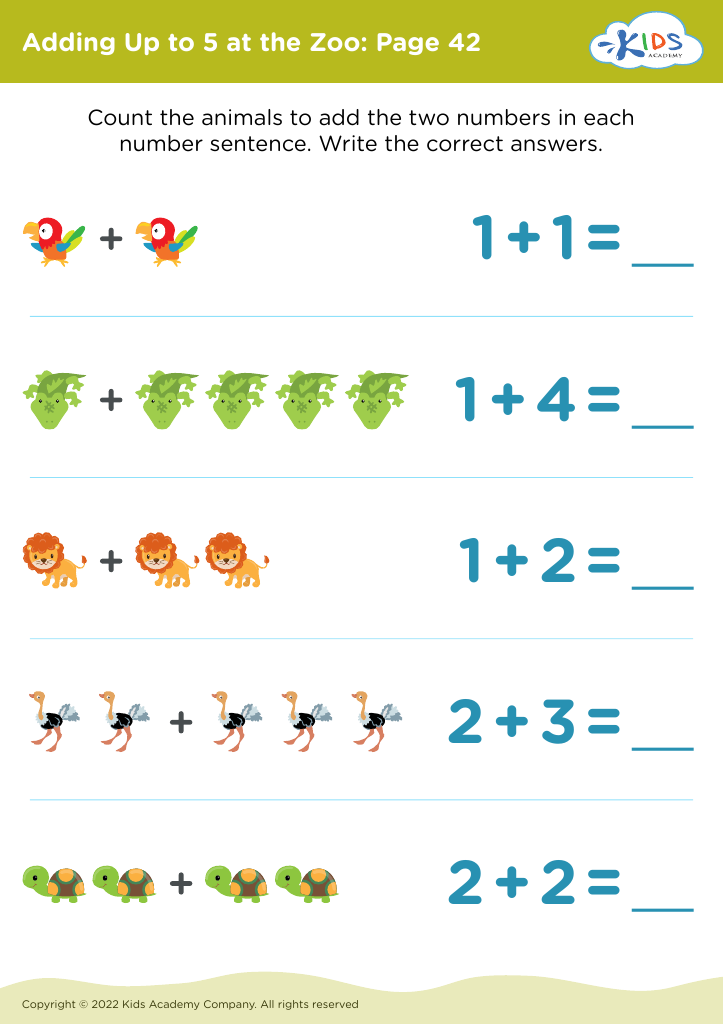
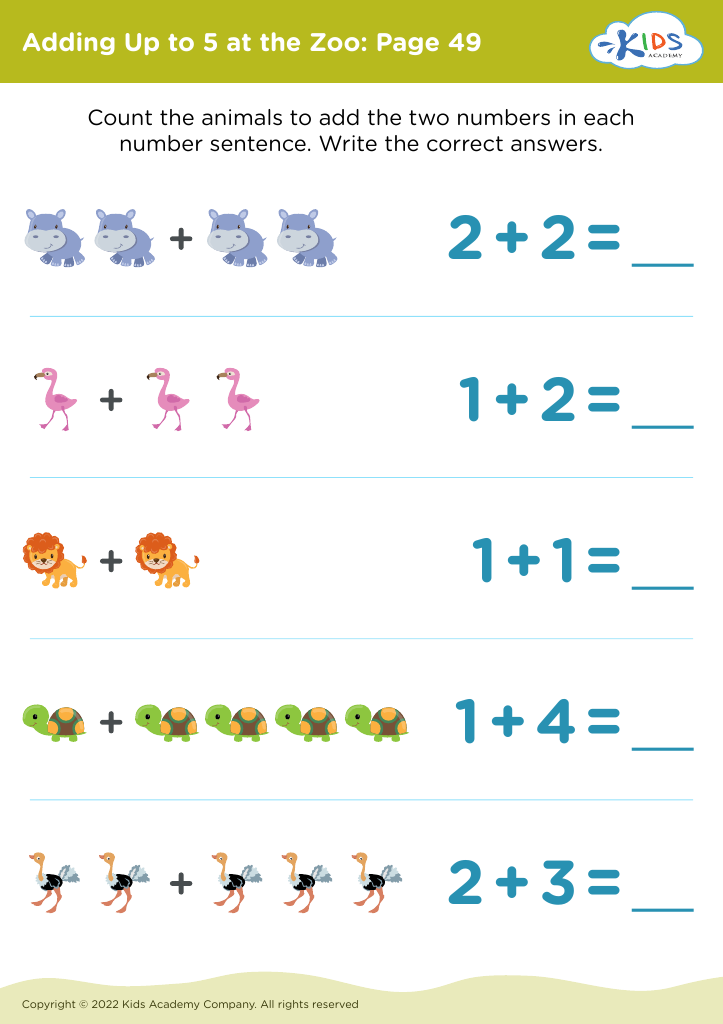
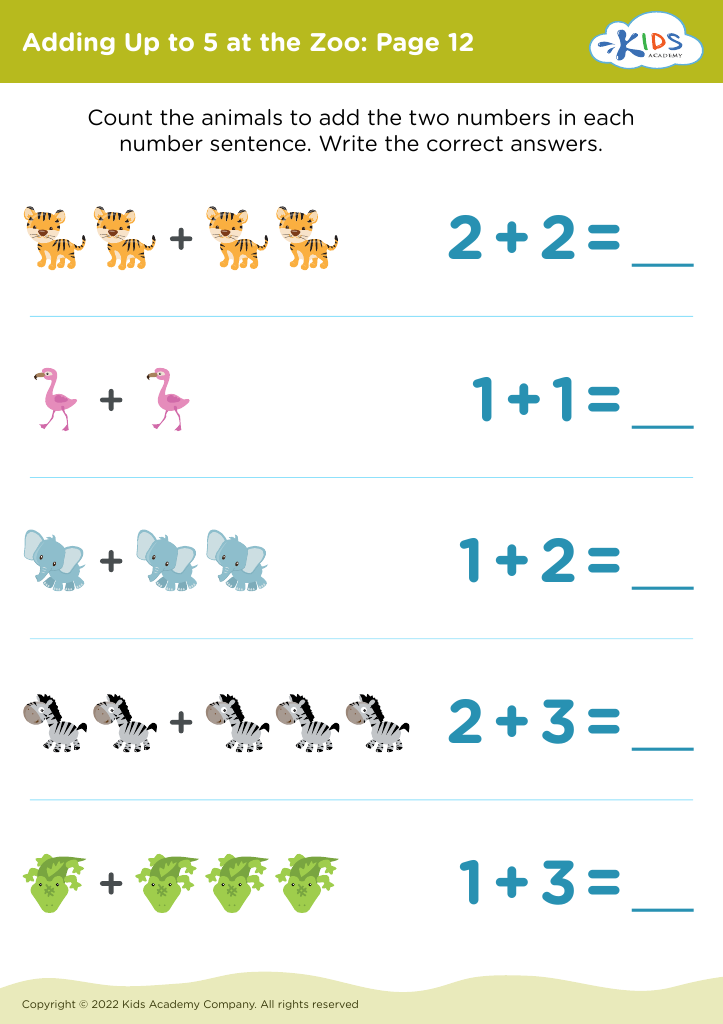
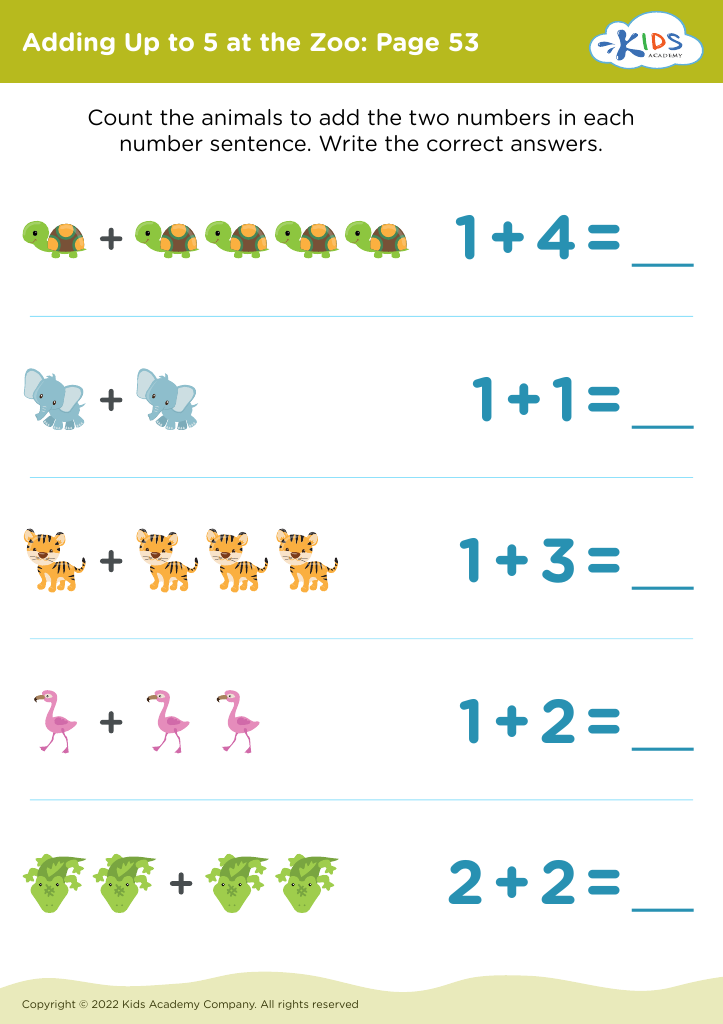
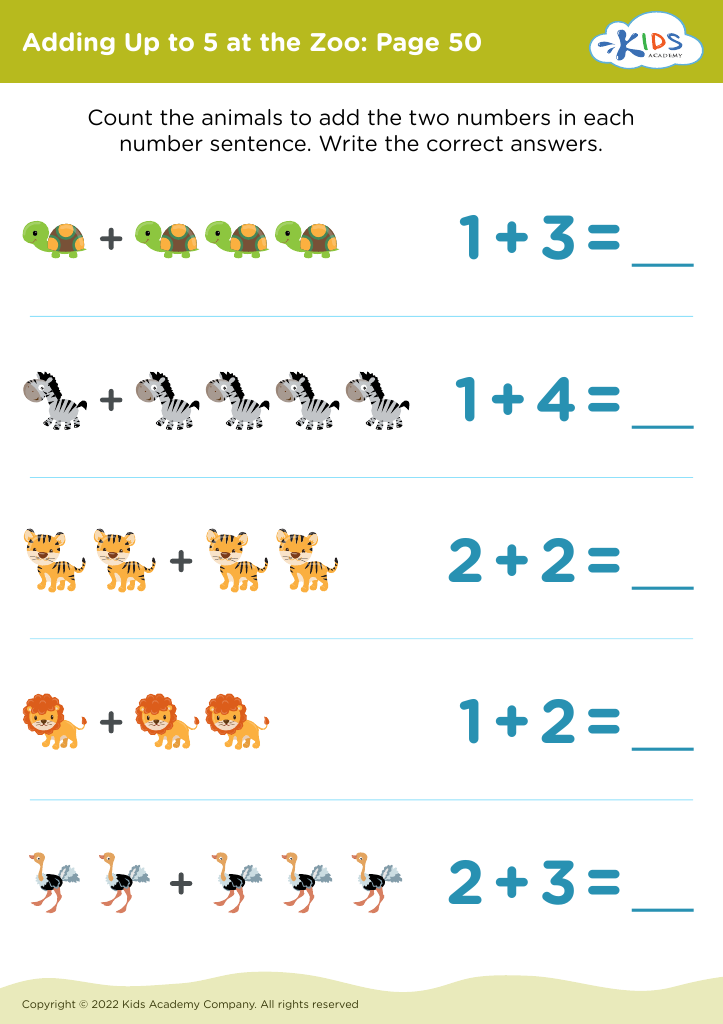
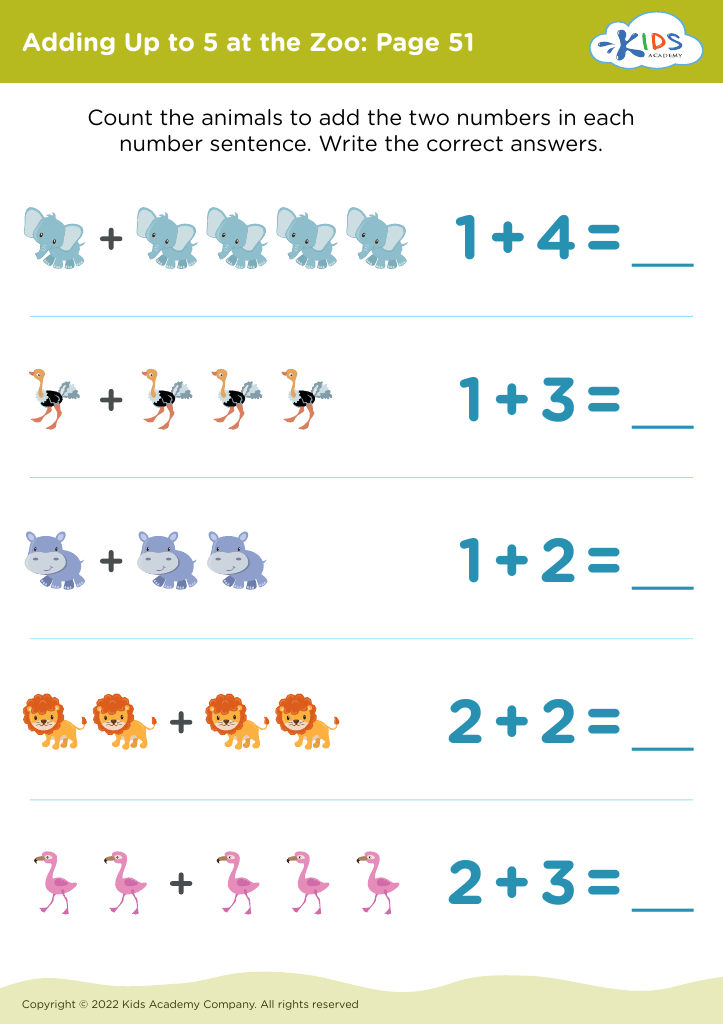
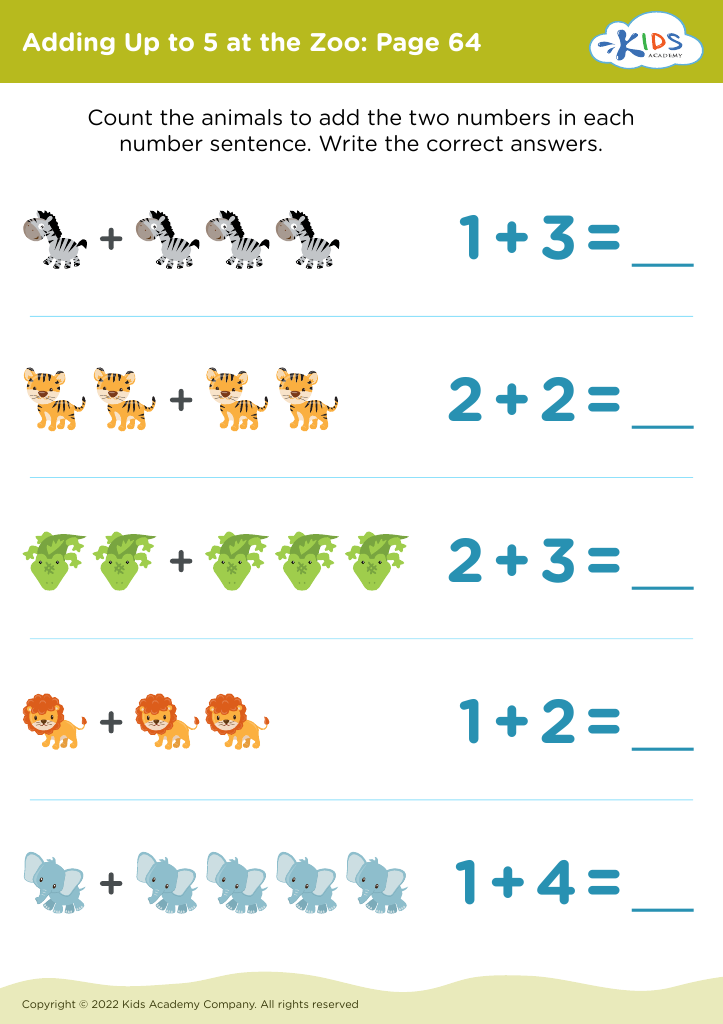
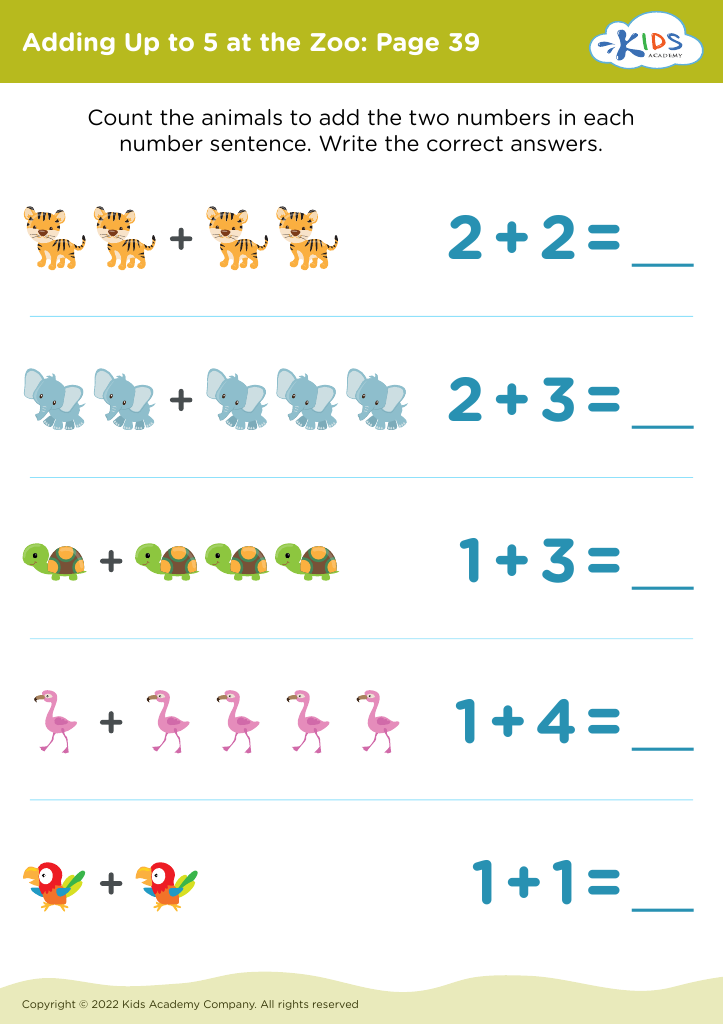



Animal recognition and addition activities at the zoo cater to the natural curiosity and developmental needs of children aged 3-4. During this formative stage, young minds are like sponges, absorbing vast amounts of information through sensory experiences.
Parents and teachers should care about fostering animal recognition because it enhances cognitive development. Recognizing animals, their names, sounds, and characteristics help build vocabulary and language skills. Additionally, distinguishing between different animals encourages observational skills and attention to detail, laying the foundation for scientific thinking.
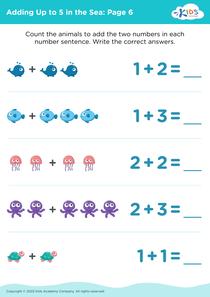
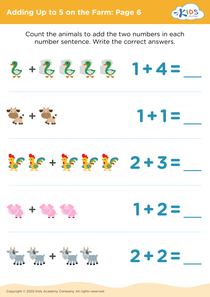
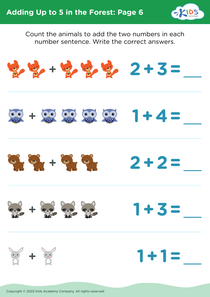
Incorporating basic addition into zoo visits further stimulates cognitive growth. Using visual stimuli, like counting the number of monkeys or birds, nurtures early numeracy skills. This integration bridges the gap between play and structured learning, making math concepts tangible and engaging.
Moreover, the zoo environment ignites a sense of wonder and fosters emotional and social development. Interacting with animals can teach empathy and respect for living beings. Group activities also promote cooperation and communication skills among peers.
Engaging preschoolers in animal recognition and addition at the zoo is a holistic educational approach. It merges language, math, social, and emotional learning, ensuring a well-rounded developmental experience for young children.