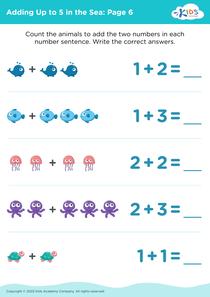
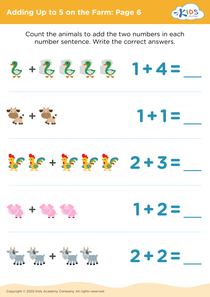
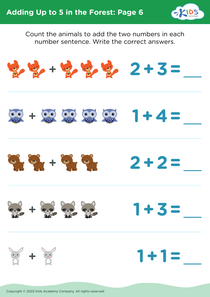
Basic addition practice Adding at the Zoo Worksheets for Ages 3-4
3 filtered results
-
From - To
Explore the exciting world of numbers with our "Basic Addition Practice: Adding at the Zoo Worksheets" designed for ages 3-4! These engaging worksheets invite young learners to join a fun zoo adventure while mastering the fundamentals of addition. Through playful illustrations of animals and familiar settings, children will practice adding numbers up to 10. Each worksheet is crafted to boost early math skills, enhance cognitive development, and promote a love for learning. Ideal for parents and educators, these activities encourage interactive learning and can be easily printed for use at home or in the classroom. Start your fun journey today!
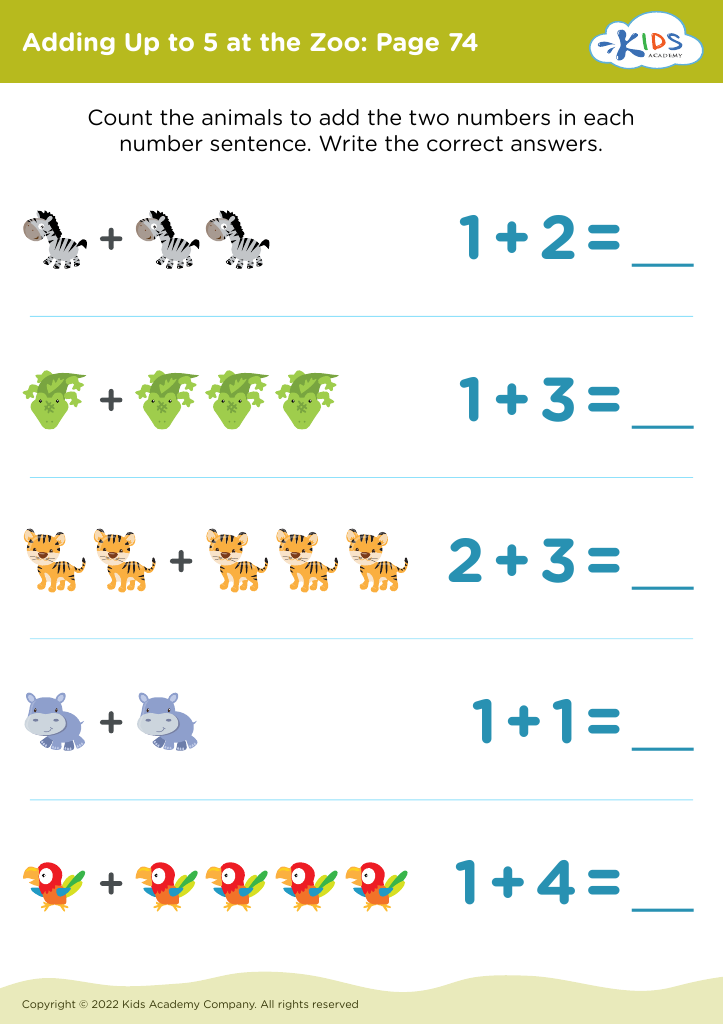
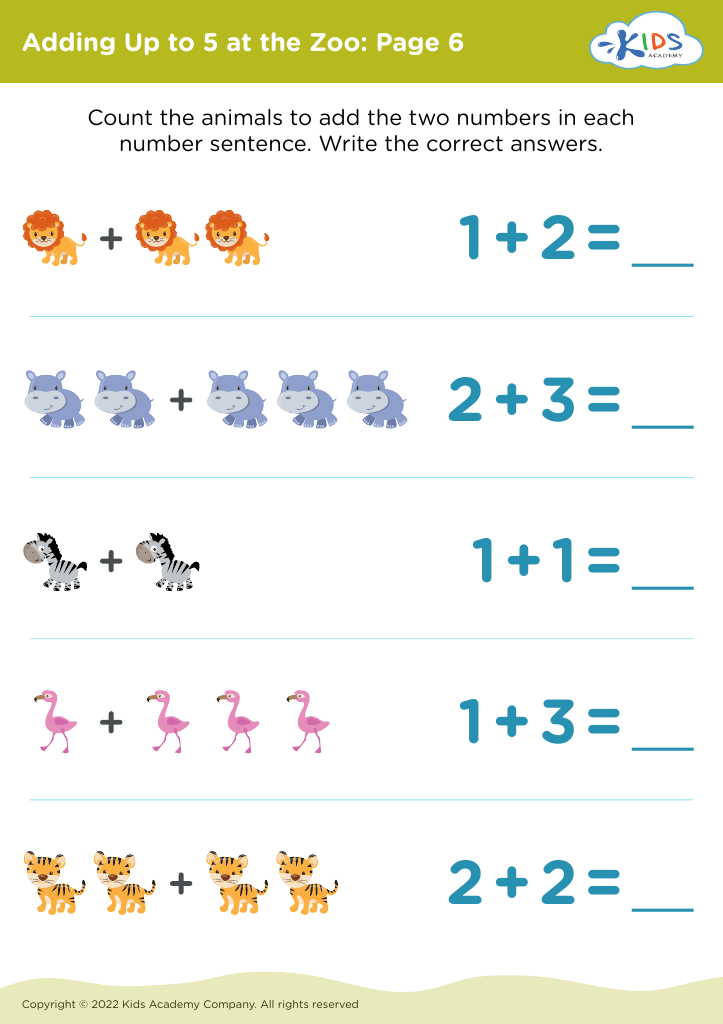
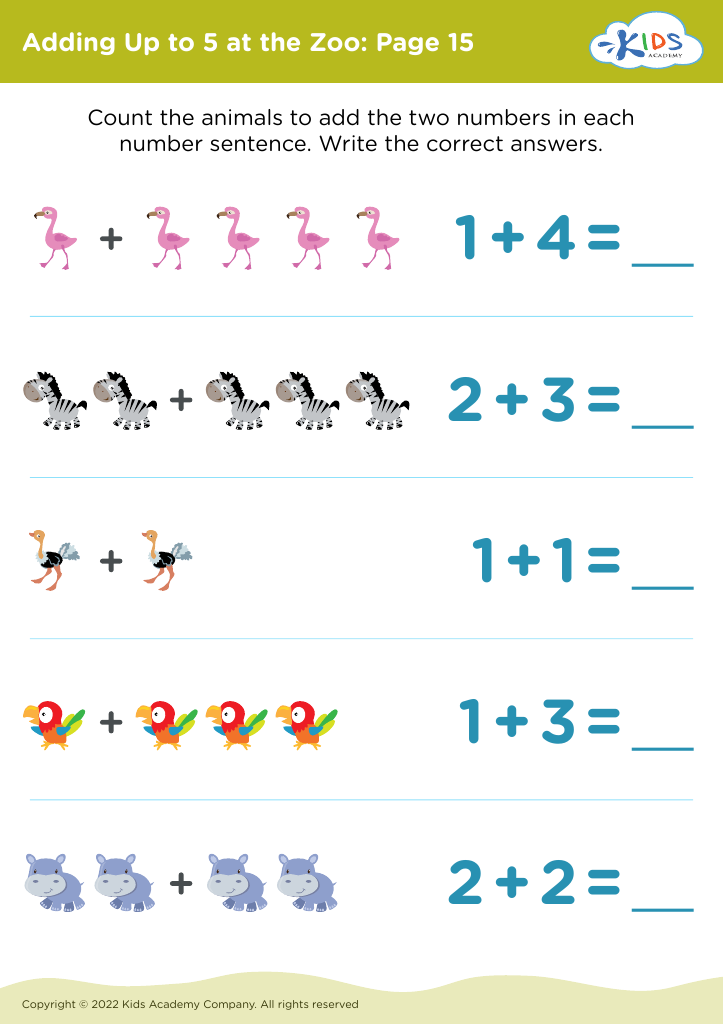



Basic addition practice, like "Adding at the Zoo," is essential for parents and teachers of children aged 3-4 for several reasons. At this developmental stage, children are naturally curious and ready to engage with numbers through play and exploration. Incorporating a fun theme like the zoo captures their interest, helping make learning enjoyable and relevant.
Learning to add provides a strong foundation for mathematics, a crucial skill that underpins many areas of academic and everyday life. Early addition practice enhances cognitive development, nurtures problem-solving abilities, and develops critical thinking skills. Additionally, it encourages interactive learning, where caregivers can engage children through games, visual aids, and hands-on activities, fostering a rich learning environment.
Furthermore, basic addition helps capture the attention of children by connecting math to familiar objects, like animals, which boosts retention. This practice instills confidence in young learners, showing them that math can be fun and rewarding. Finally, parents and teachers play a vital role in nurturing a positive attitude toward learning that carries through their child's educational journey, helping set the stage for a lifelong love of learning and eventual academic success.