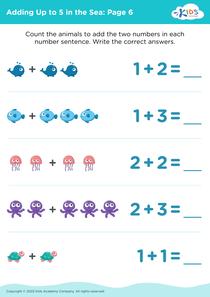
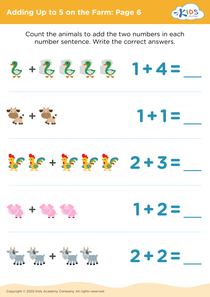
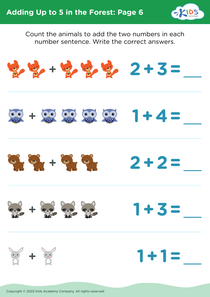
Basic Arithmetic Adding at the Zoo Worksheets for Ages 3-4
7 filtered results
-
From - To
Introduce your little learners to the exciting world of basic arithmetic with our "Basic Arithmetic Adding at the Zoo Worksheets for Ages 3-4." These engaging worksheets combine the familiar setting of the zoo with entertaining addition problems, helping children develop early math skills. Designed for ages 3-4, these activities feature adorable animal illustrations, making learning fun and relatable. As they count and add animals, kids strengthen their understanding of numbers and lay the groundwork for future mathematical concepts. Ideal for parents and teachers, our worksheets are perfect for practice at home or in the classroom. Download today and watch your child’s math skills grow!
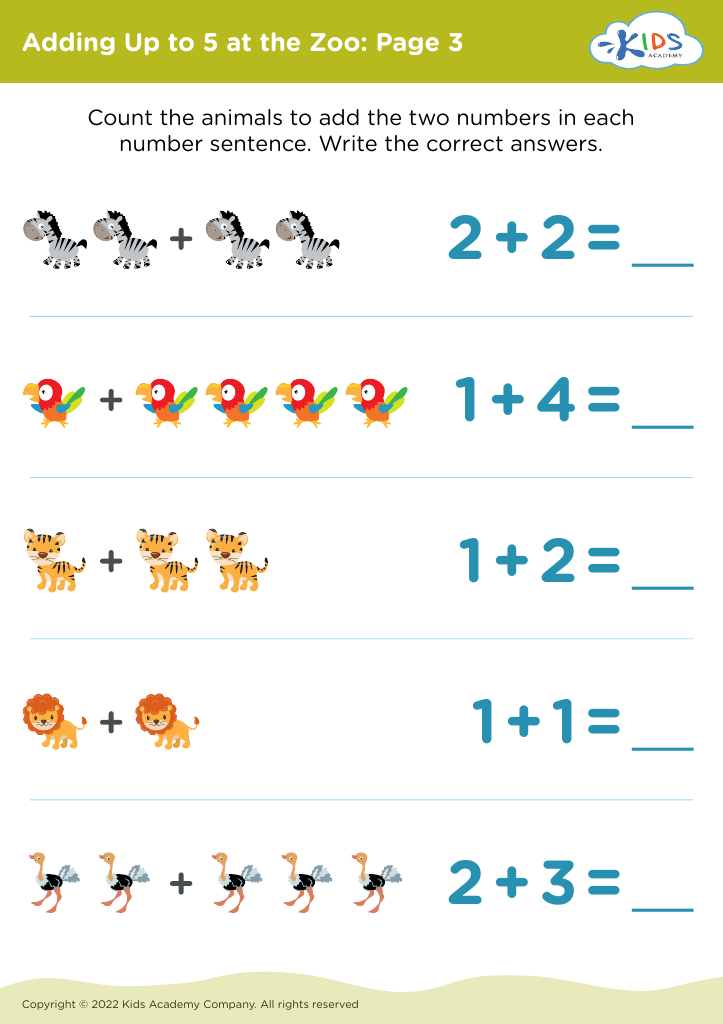
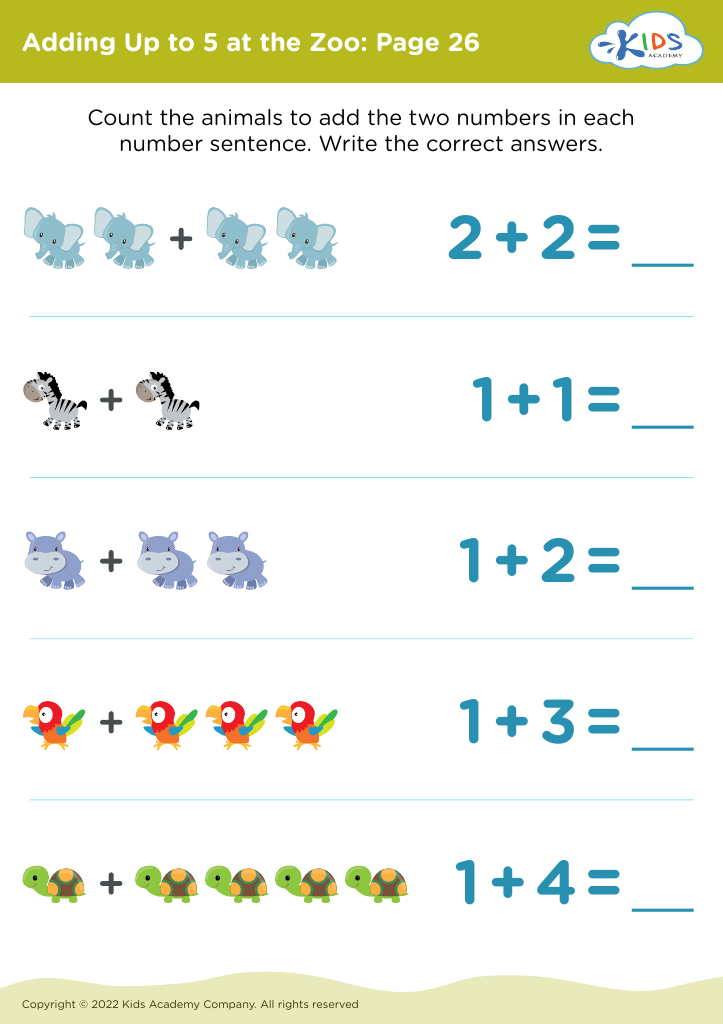
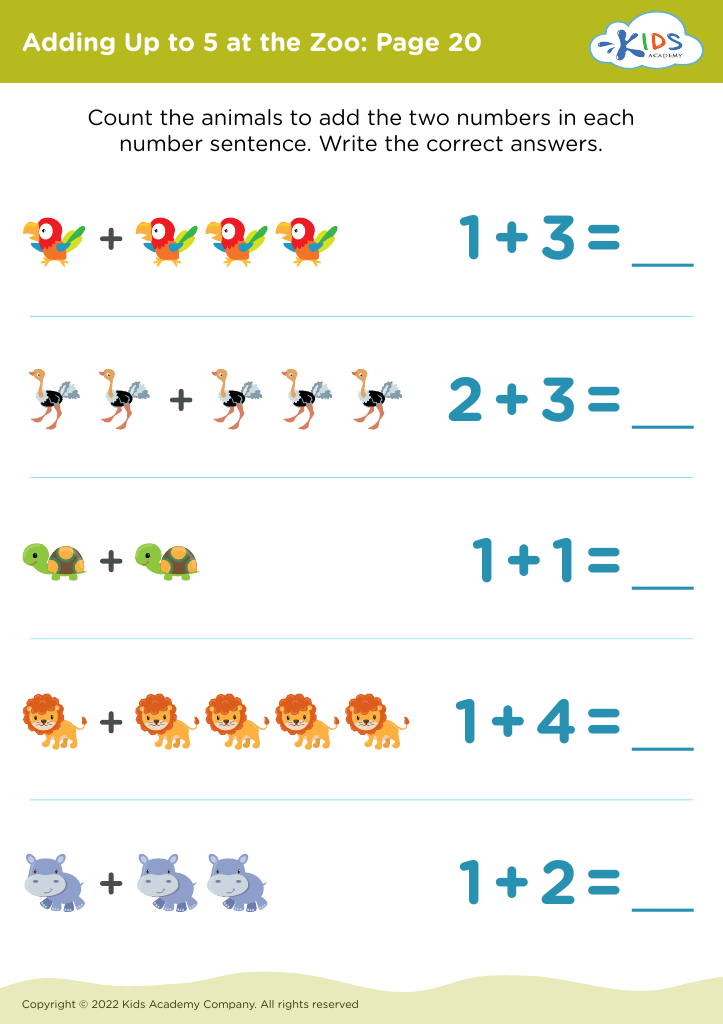
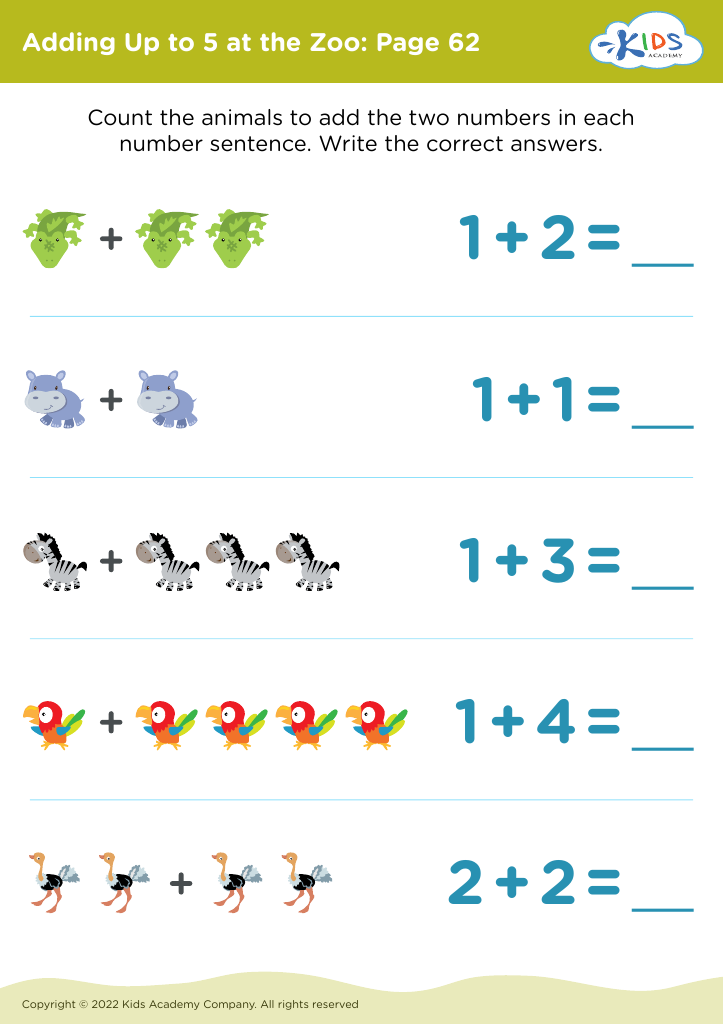
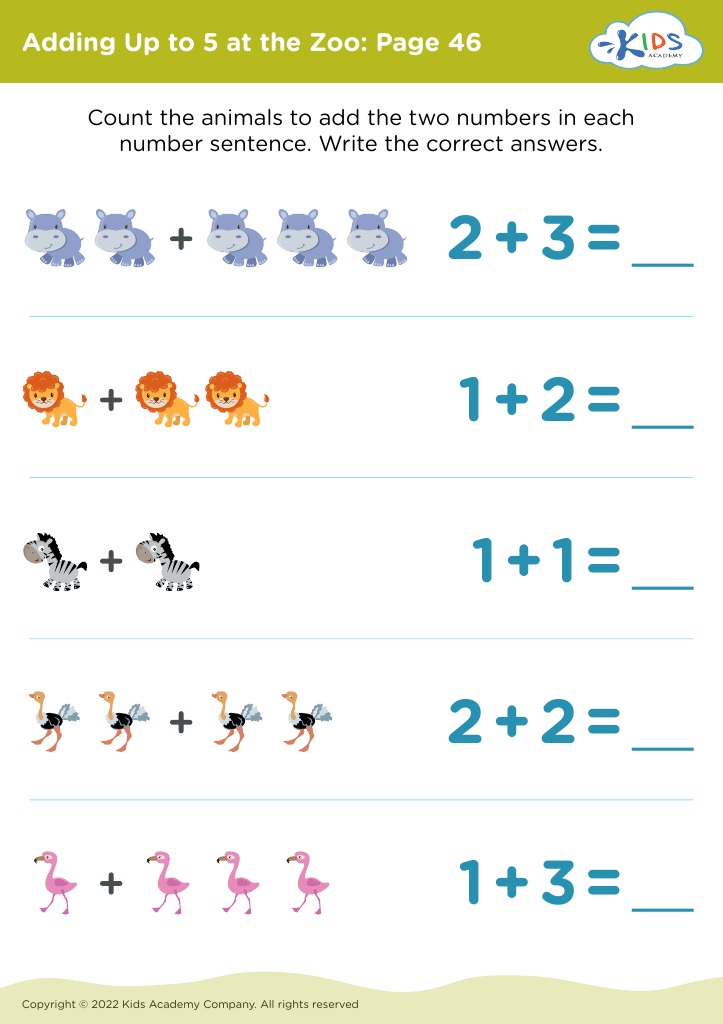
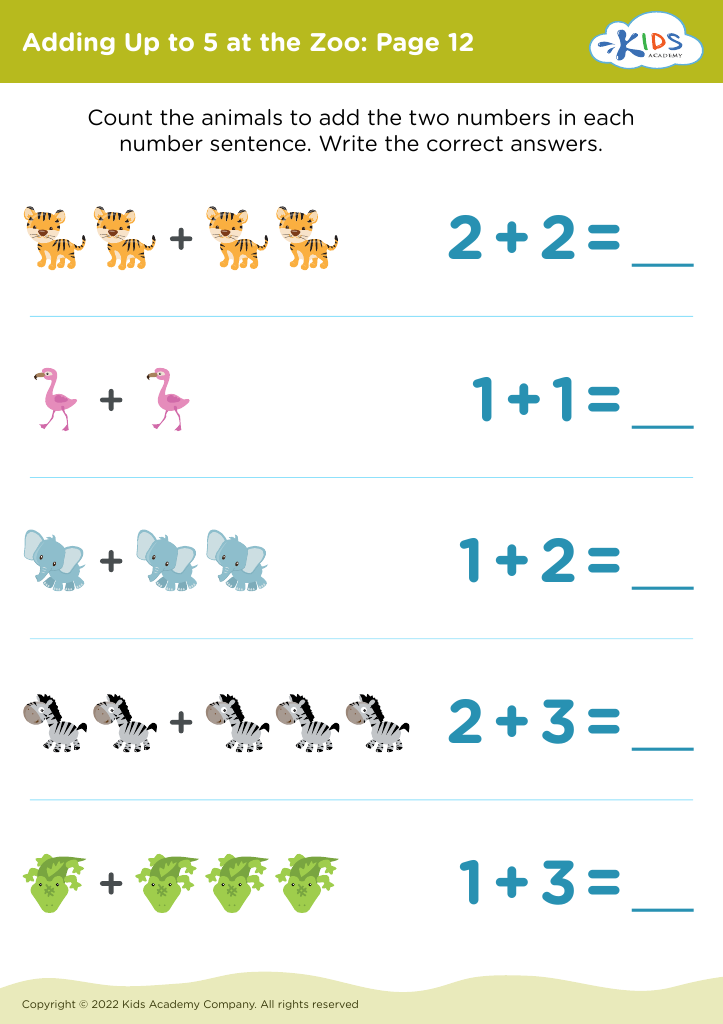
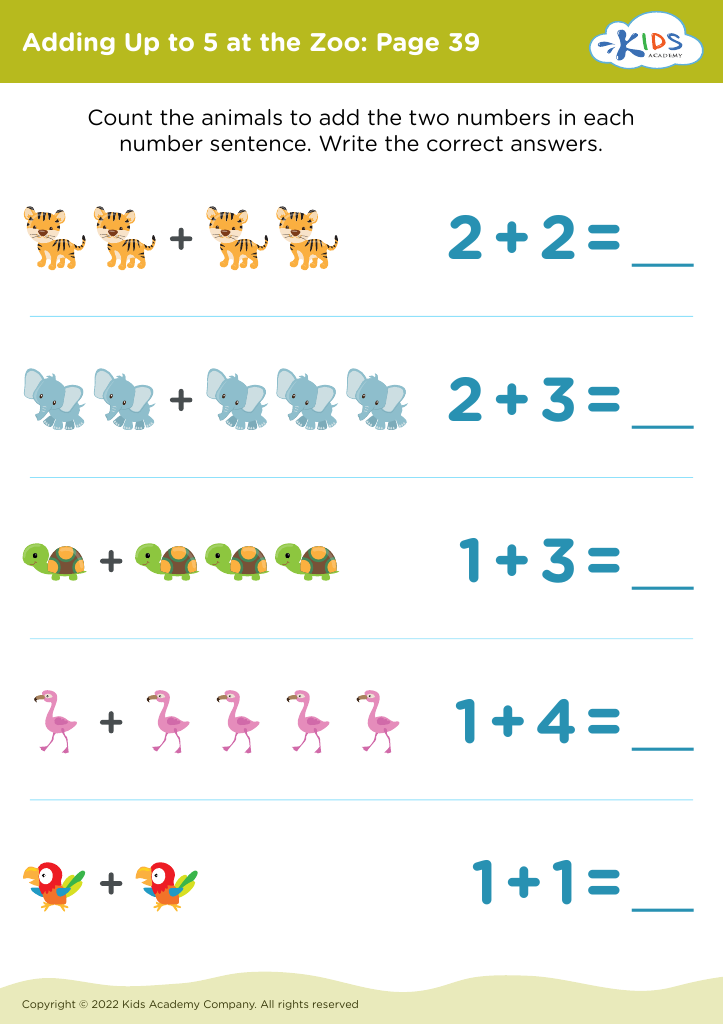



Parents and teachers should care about introducing Basic Arithmetic Adding at the Zoo for ages 3-4 because early math skills are foundational for later academic achievement and functional daily skills. This engaging, creative approach taps into young children's natural curiosity while providing an enjoyable context for learning. A zoo-themed counting and adding activity harnesses the excitement of animals, making learning vivid and relatable.
At ages 3-4, children are at a critical stage in their cognitive development. Their brains are highly receptive to new information, and early exposure to basic arithmetic lays the groundwork for higher mathematical concepts. By incorporating animals and familiar zoo environments, abstract numbers become tangible and understandable.
Additionally, developing arithmetic skills through play enhances children’s problem-solving abilities and strengthens their memory. Teaching basic addition in a fun and interactive way supports a positive attitude towards math, setting a solid foundation for future learning. It also encourages parent-child interaction, reinforcing the learning process through shared experiences.
Furthermore, this type of thematic math activity can integrate other subjects, such as language development and science, making it a holistic educational experience. Fostering these skills early prepares children for a smoother transition into preschool and kindergarten, where math becomes a more structured part of the curriculum.