Basic arithmetic practice Adding at the Zoo Worksheets for Ages 3-4
4 filtered results
-
From - To
Welcome to our Basic Arithmetic Practice: Adding at the Zoo Worksheets for Ages 3-4! Designed for young learners, these engaging worksheets make math fun and exciting. Children will explore basic addition skills using delightful zoo-themed visuals that capture their imagination. As they add animals and facts, they enhance counting abilities and develop essential early math concepts. Perfect for kindergarten readiness, these activities promote critical thinking and problem-solving skills, while also fostering a love for learning. Encourage your child's mathematical journey with these interactive worksheets that combine education and play. Dive into a world of numbers and fun at the zoo today!
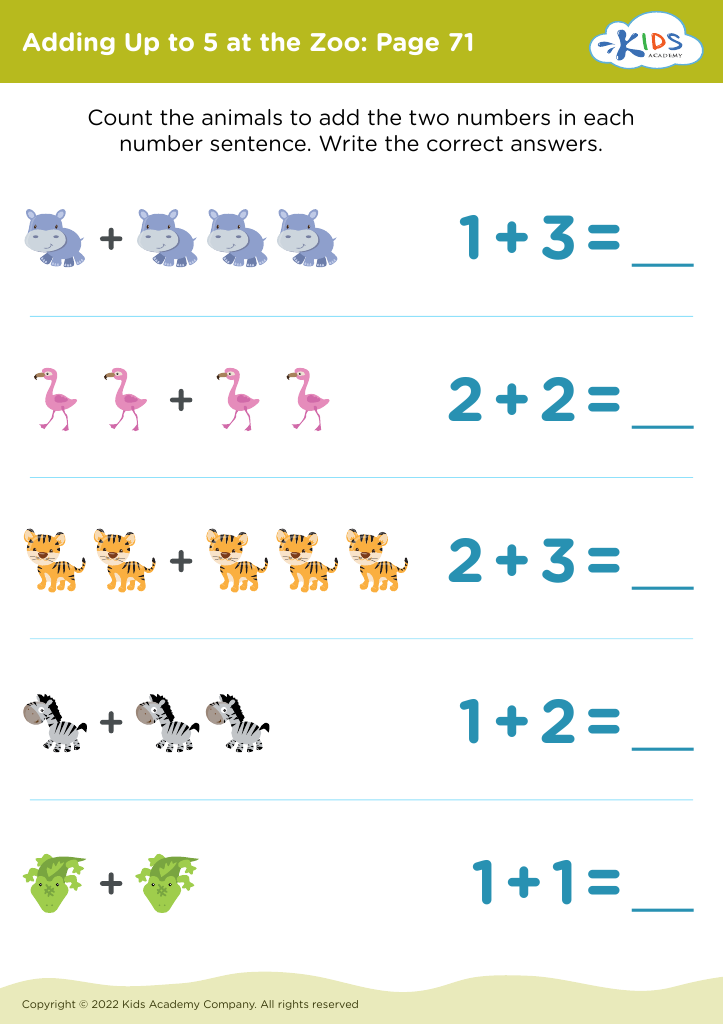
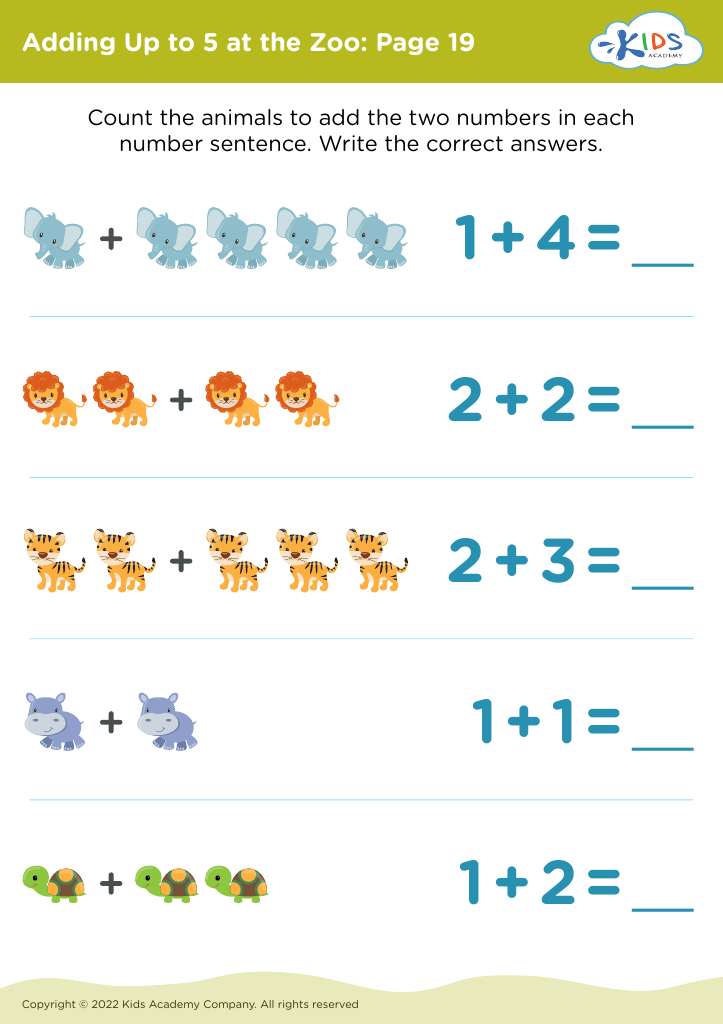
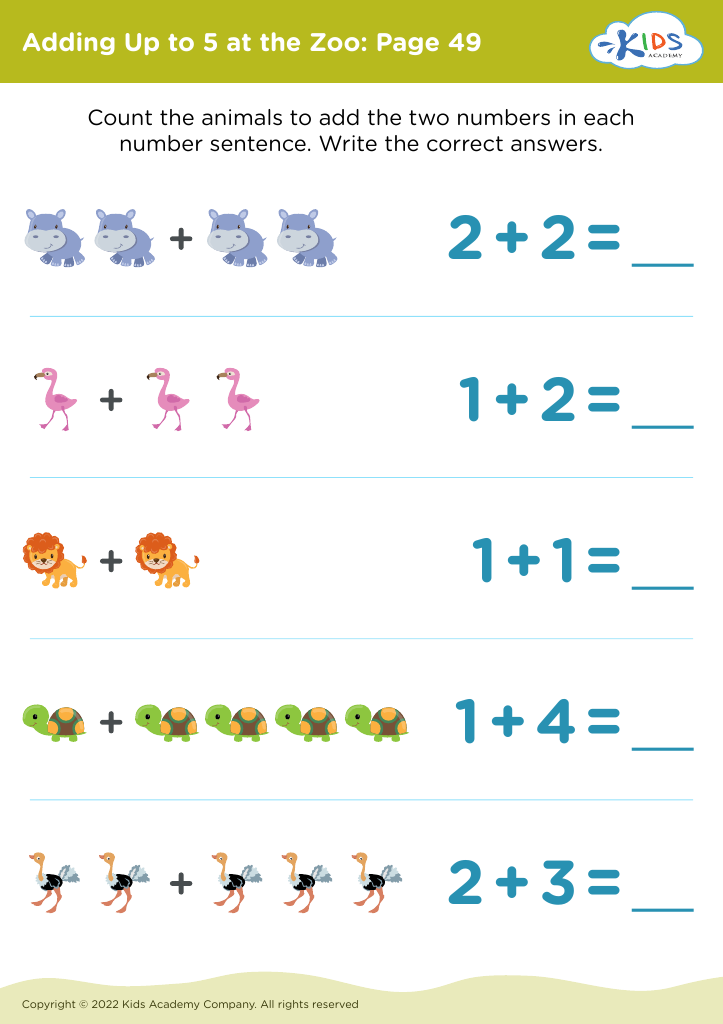
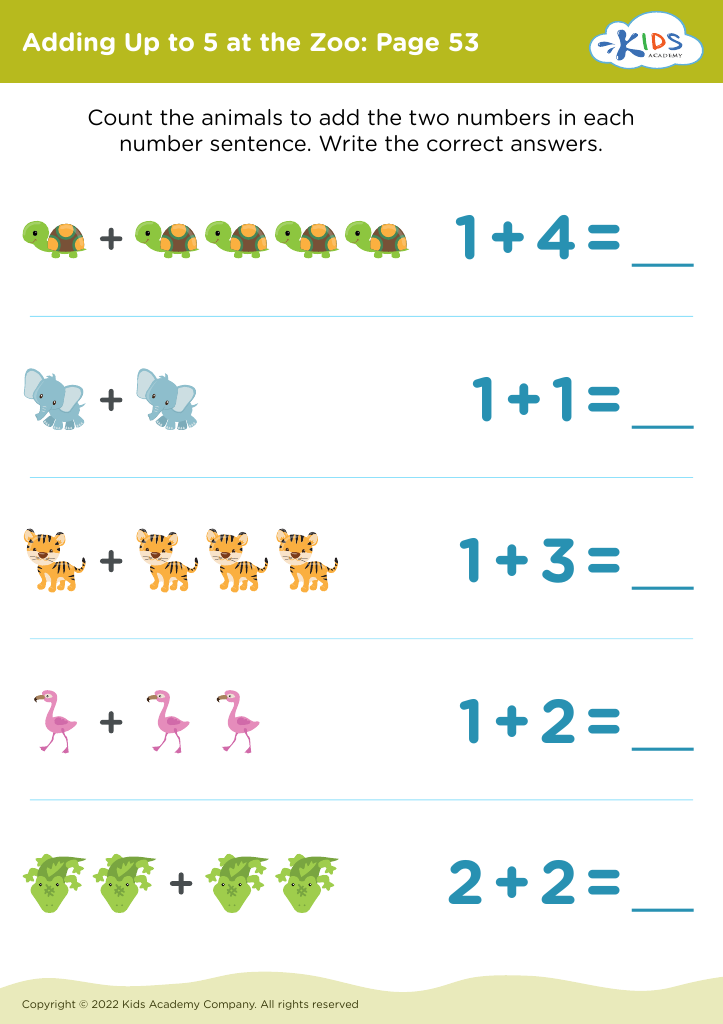



Parents and teachers should prioritize basic arithmetic practice, such as "Adding at the Zoo," for children aged 3-4 because early math skills lay the foundation for future learning. Engaging in addition activities not only fosters numerical understanding but also enhances cognitive development, critical thinking, and problem-solving abilities. "Adding at the Zoo" introduces arithmetic in a fun and relatable context, using animals that captivate young learners' attention.
This hands-on approach encourages exploration and interactive learning, making math enjoyable rather than intimidating. Additionally, such activities improve fine motor skills as children manipulate objects or drawings, reinforcing their physical and mental coordination. Social skills are also developed as children collaborate on math tasks, share ideas, and celebrate each other’s achievements.
Moreover, early math proficiency can have long-term academic benefits. Research indicates that children who develop strong numerical abilities in preschool are more likely to succeed in later math subjects. By incorporating games and playful learning scenarios like "Adding at the Zoo," parents and teachers can cultivate a positive attitude toward math, building confidence and fostering a lifelong curiosity about numbers and patterns. Ultimately, these early experiences are key to making arithmetic a natural part of children's everyday lives.