Filters

18 filtered results

Clear all filters
Favorites
With answer key
Interactive

18 filtered results

Difficulty Level

Grade


Explore our "Cognitive Development Adding at the Zoo Worksheets" crafted specifically for children aged 3-4! These engaging worksheets provide a fun way for young learners to enhance their numerical skills through colorful zoo-themed illustrations. Kids will practice basic addition by counting adorable animals and solving simple equations. Tailored to stimulate cognitive development, these activities promote critical thinking, problem-solving, and early math skills in an enjoyable setting. Ideal for parents and educators, our worksheets make learning interactive and exciting, fostering a love for math while nurturing essential cognitive abilities. Download now to spark your child’s curiosity and boost their confidence in math!
Check out this FREE Trial Lesson on Adding at the Zoo for age 3-4!

Match Objects that Fit Together

Favorites
With answer key
Interactive
  • 3-4
  • Cognitive Development
  • Adding at the Zoo
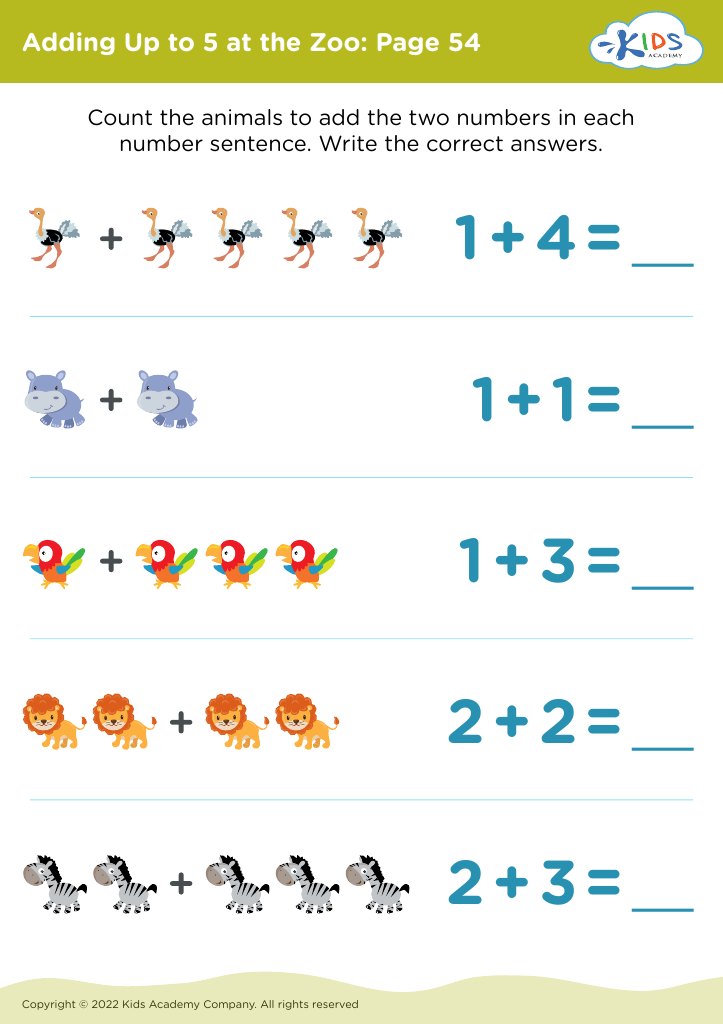
Adding Up to 5 at the Zoo: Page 54
Worksheet
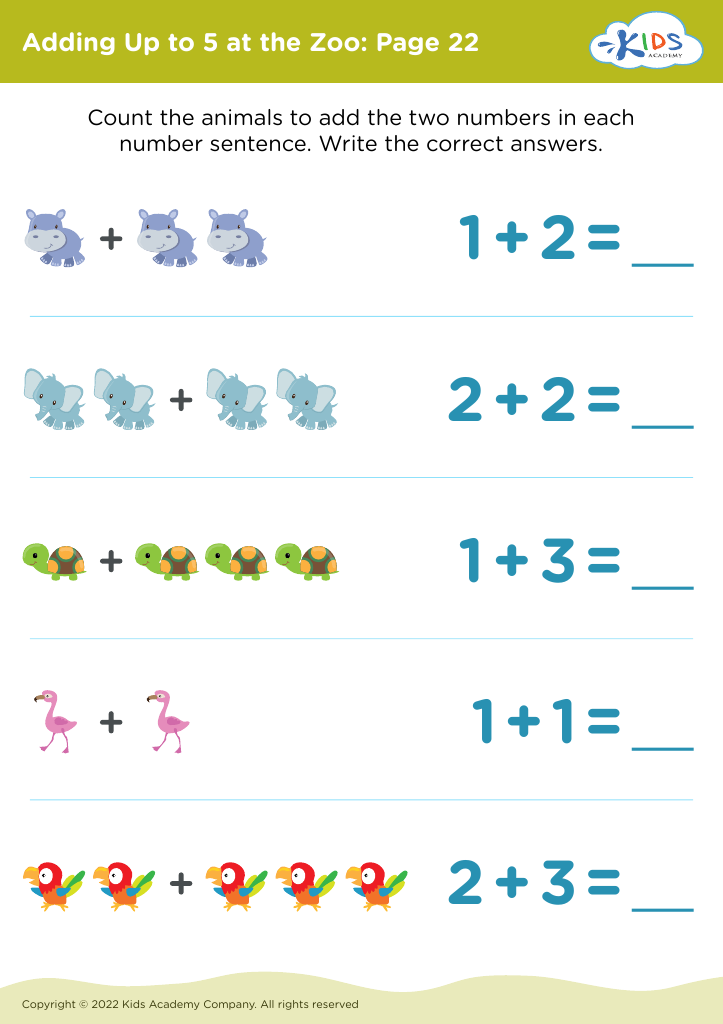
Adding Up to 5 at the Zoo: Page 22
Worksheet
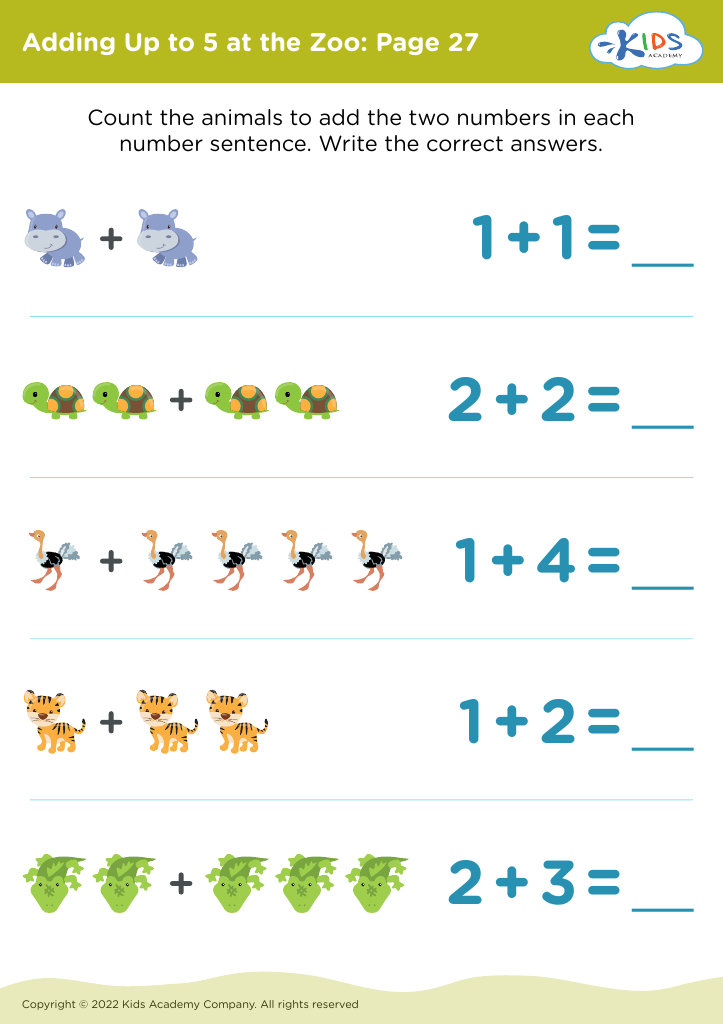
Adding Up to 5 at the Zoo: Page 27
Worksheet
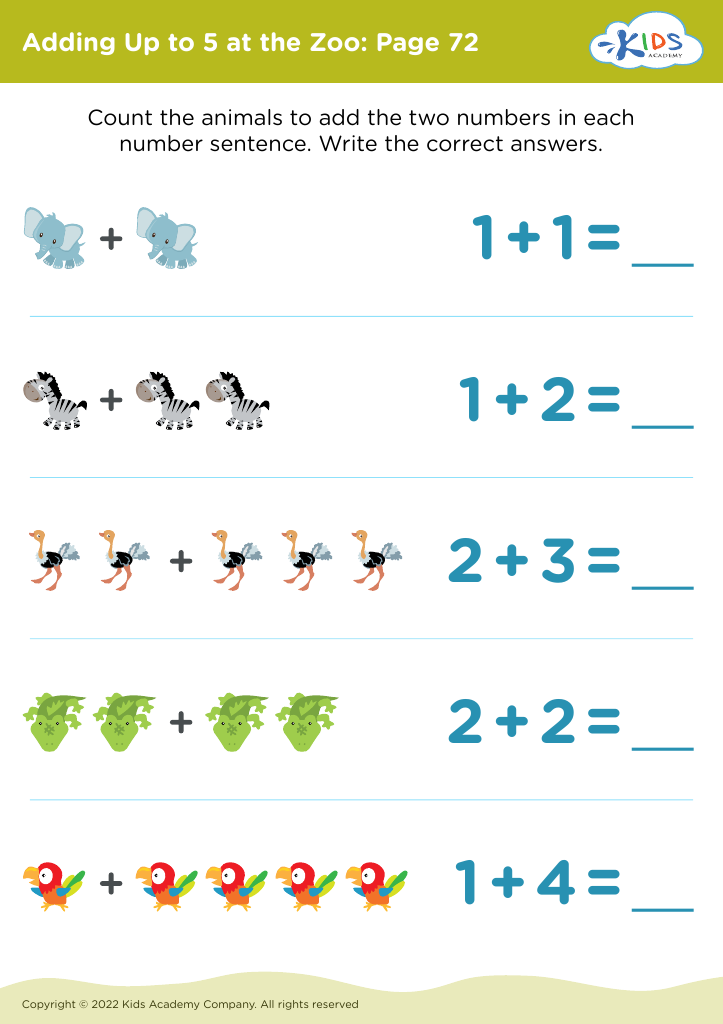
Adding Up to 5 at the Zoo: Page 72
Worksheet
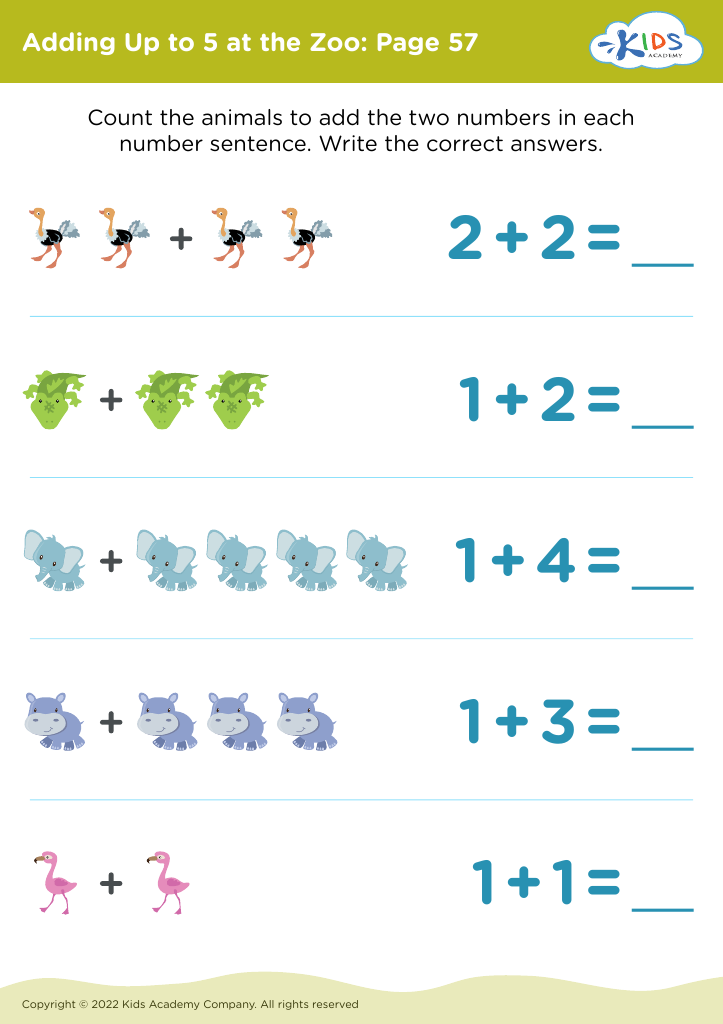
Adding Up to 5 at the Zoo: Page 57
Worksheet
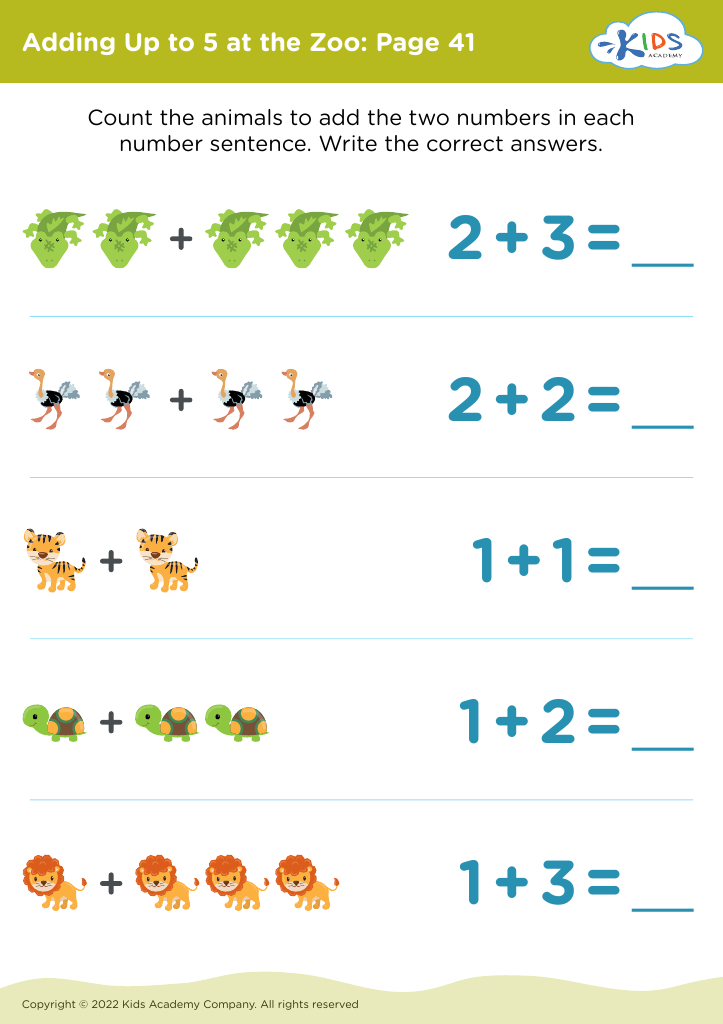
Adding Up to 5 at the Zoo: Page 41
Worksheet
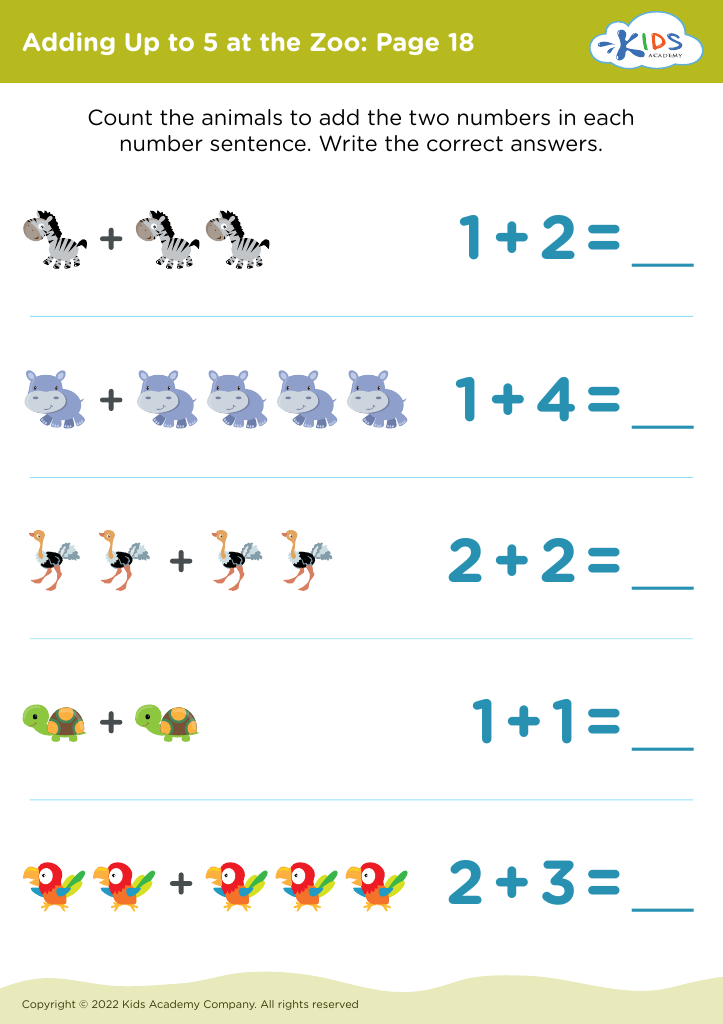
Adding Up to 5 at the Zoo: Page 18
Worksheet
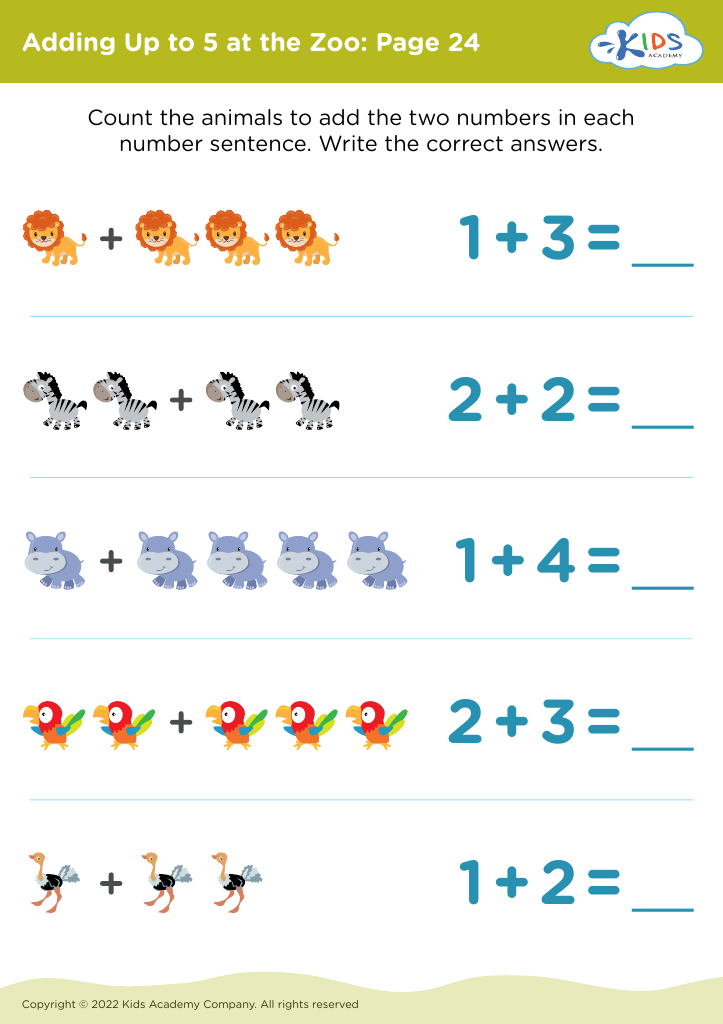
Adding Up to 5 at the Zoo: Page 24
Worksheet
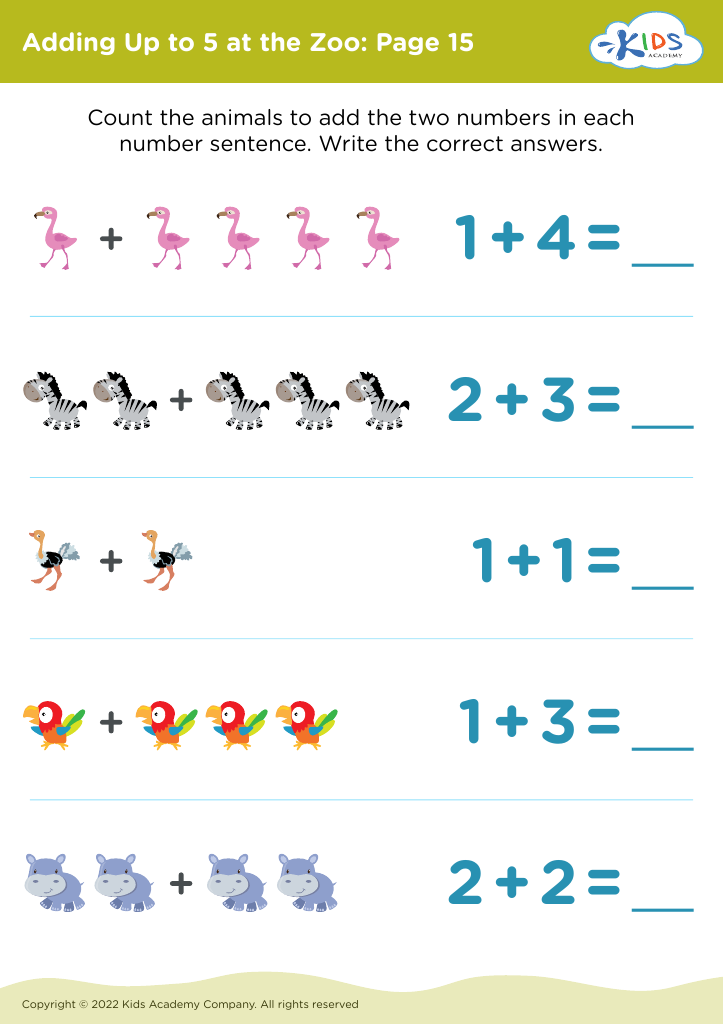
Adding Up to 5 at the Zoo: Page 15
Worksheet
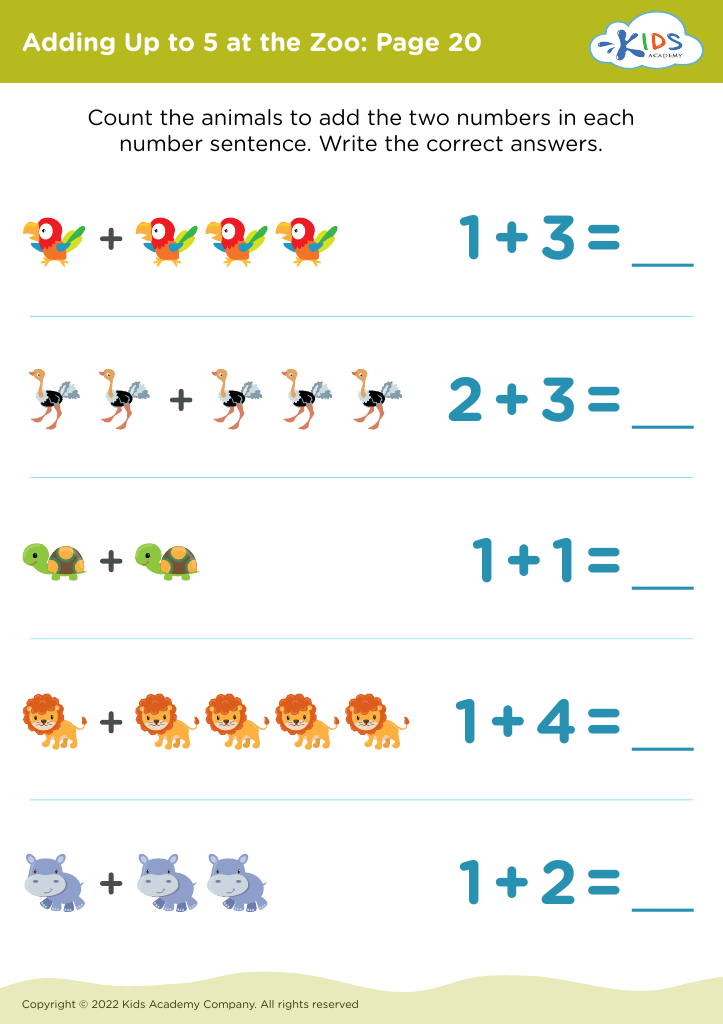
Adding Up to 5 at the Zoo: Page 20
Worksheet
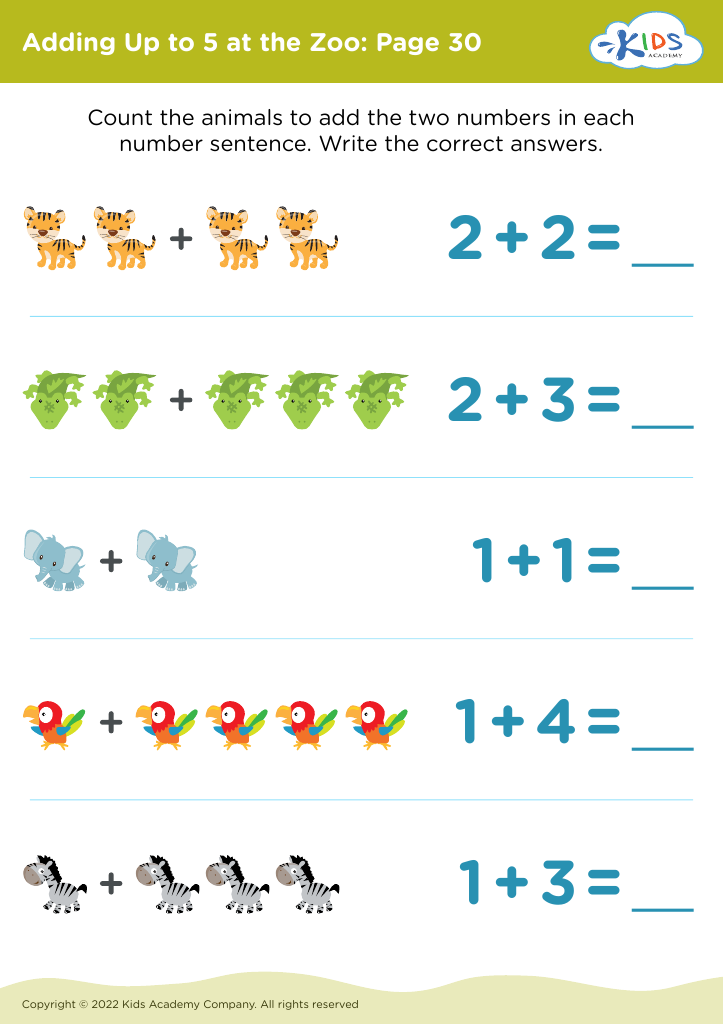
Adding Up to 5 at the Zoo: Page 30
Worksheet
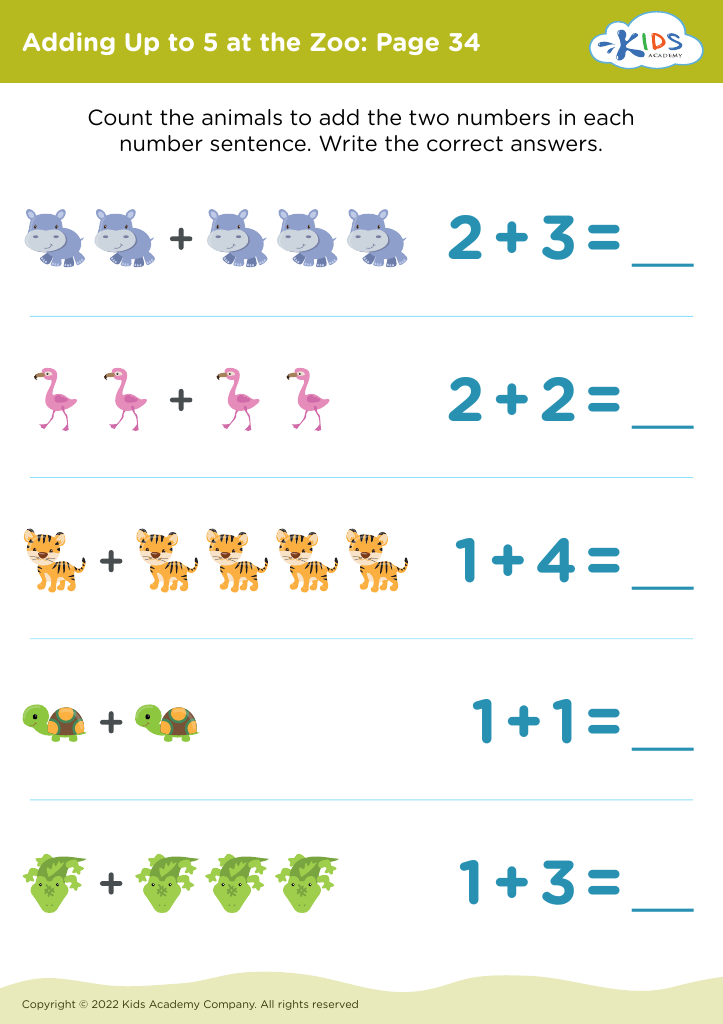
Adding Up to 5 at the Zoo: Page 34
Worksheet
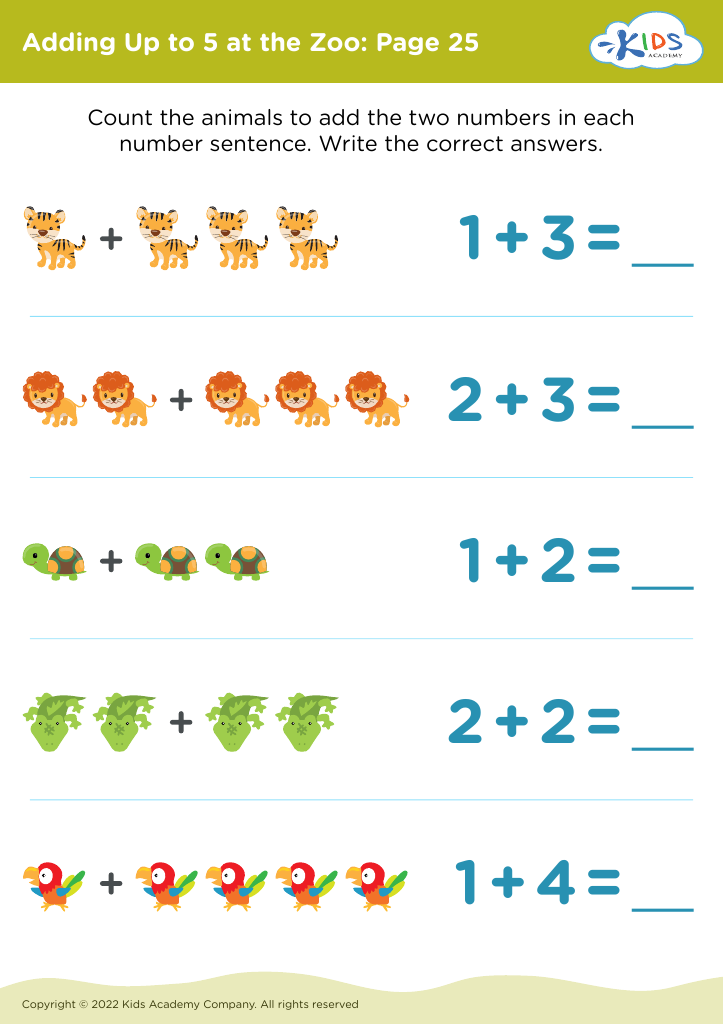
Adding Up to 5 at the Zoo: Page 25
Worksheet
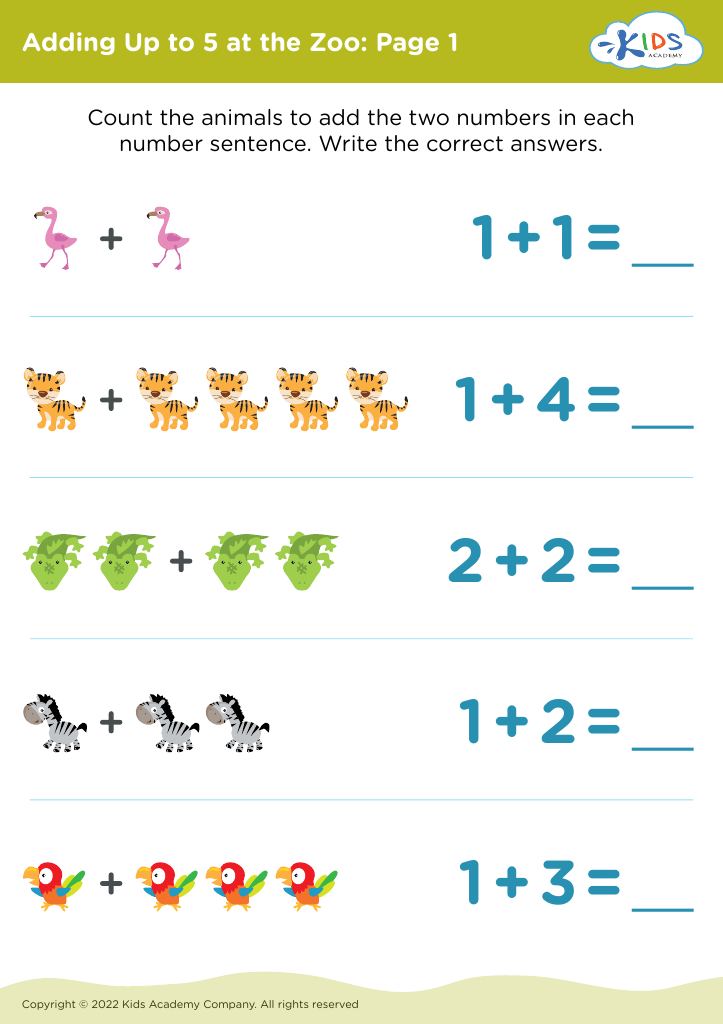
Adding Up to 5 at the Zoo: Page 1

Adding Up to 5 at the Zoo: Page 1

Adding Up to 5 at the Zoo: Page 1
Worksheet
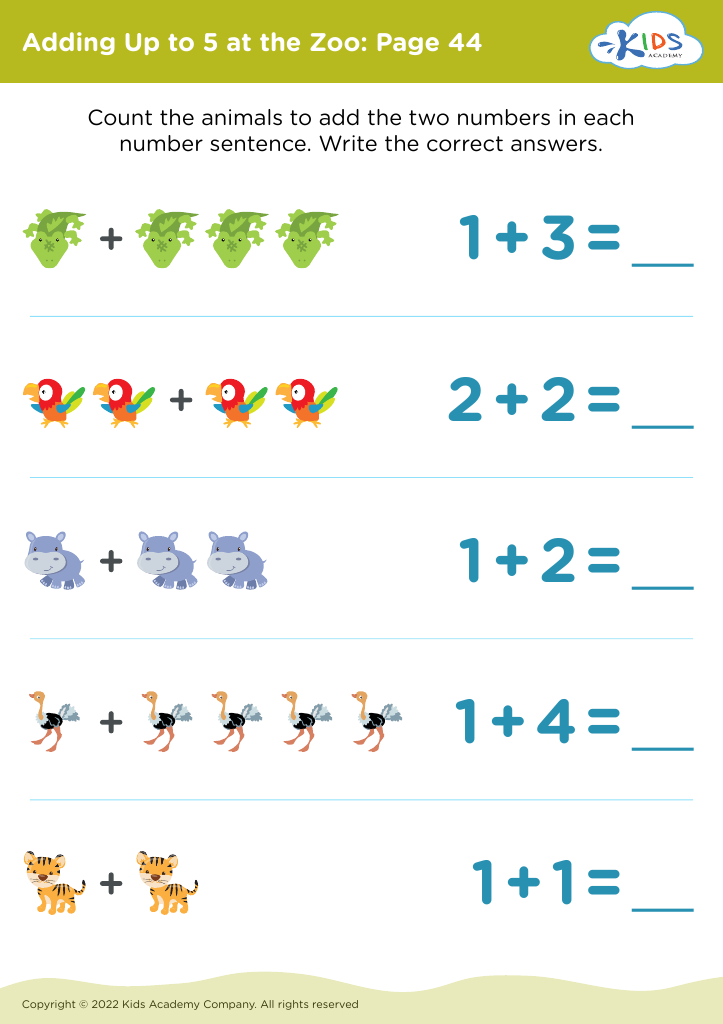
Adding Up to 5 at the Zoo: Page 44
Worksheet
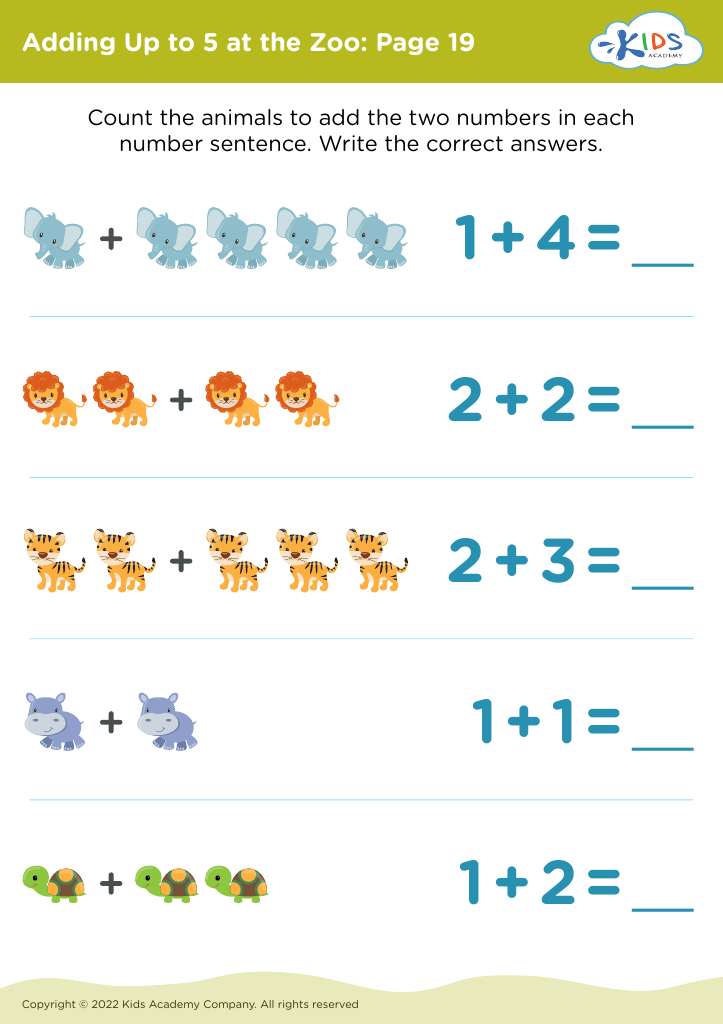
Adding Up to 5 at the Zoo: Page 19
Worksheet
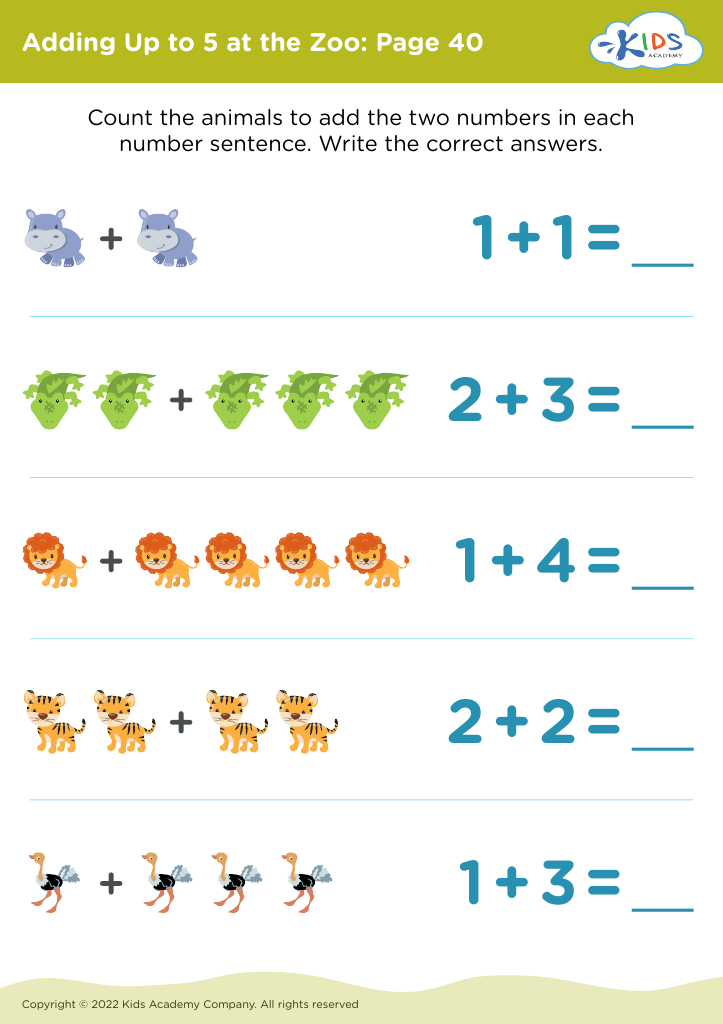
Adding Up to 5 at the Zoo: Page 40
Worksheet
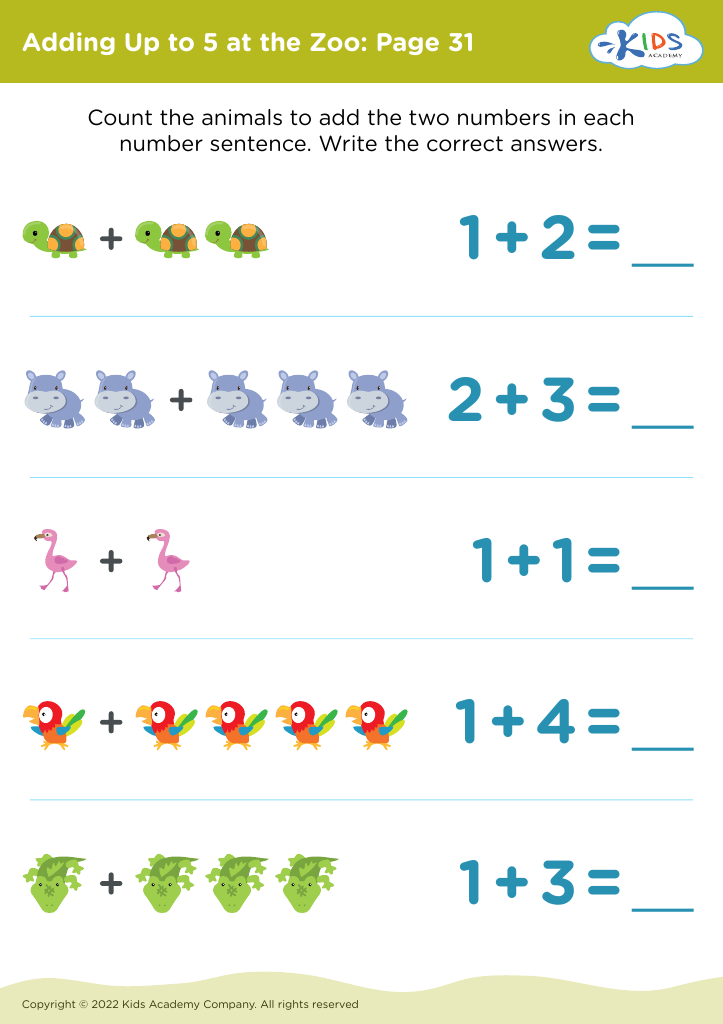
Adding Up to 5 at the Zoo: Page 31
Worksheet


Cognitive development during early childhood is crucial, as it lays the foundation for lifelong learning and genuinely shapes a child's understanding of the world. Engaging young children in activities like "Adding at the Zoo" offers a playful yet educational way to enhance their cognitive skills. Through this interactive experience, children aged 3-4 can develop essential mathematical concepts, such as counting, addition, and number recognition, while also fostering problem-solving abilities.

Furthermore, activities set in familiar contexts like a zoo resonate with children's interests, making learning enjoyable and relevant. When parents and teachers prioritize cognitive development through activities focused on adding, they help children cultivate critical thinking, attention, and memory skills, which are pivotal for future academic success.

Additionally, collaborative activities encourage social skills and communication, enhancing the overall learning experience. It enables adults to observe individual progress and identify specific areas where children may need support. Ultimately, supporting cognitive development means nurturing confident, curious, and capable learners, equipping them for the challenges ahead. Therefore, parents and teachers should embrace engaging and educational play like "Adding at the Zoo" to build foundational skills, enhance children's love for learning, and promote holistic growth.