Hand-eye Coordination Adding at the Zoo Worksheets for Ages 3-4
3 filtered results
-
From - To
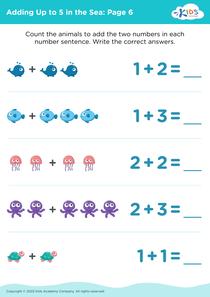
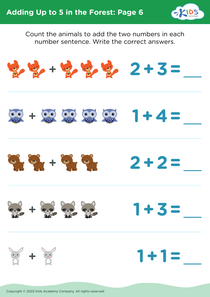
Welcome to our "Hand-eye Coordination Adding at the Zoo Worksheets" for ages 3-4! These engaging worksheets combine early math skills with fun zoo themes, helping young learners develop essential hand-eye coordination while practicing addition. Children will enjoy colorful animal visuals as they count and add, making math both entertaining and educational. Designed with age-appropriate activities, these worksheets support fine motor skills through drawing, tracing, and interactive tasks. Perfect for parents and teachers, our resources foster a love for learning and build a strong foundation in mathematics, all while exploring the exciting world of the zoo. Download your worksheets today!
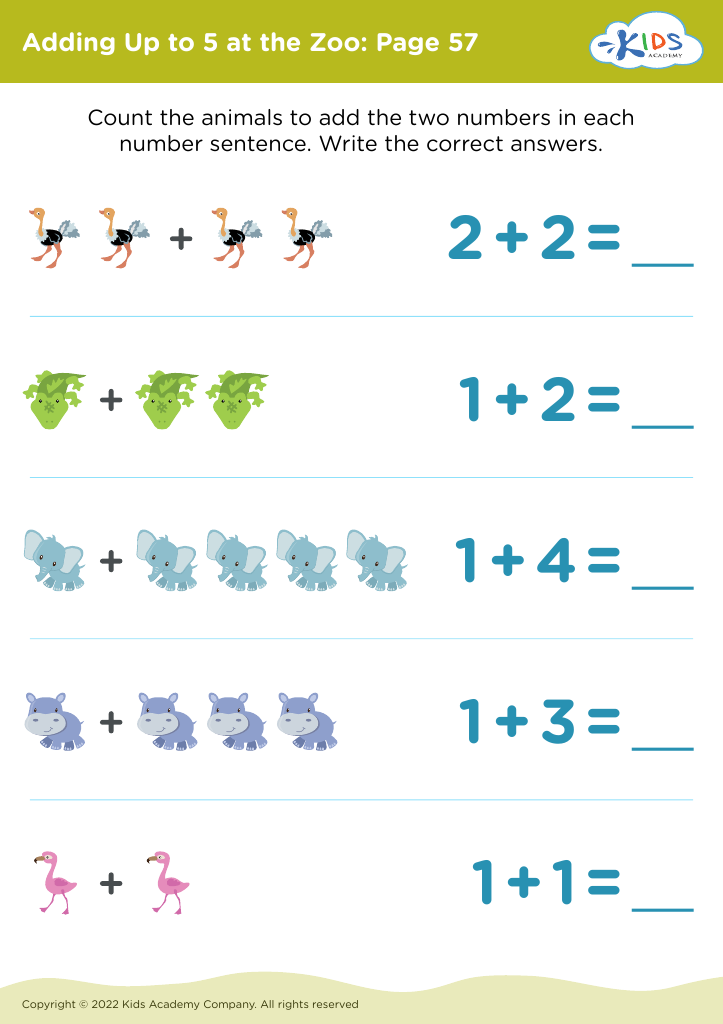
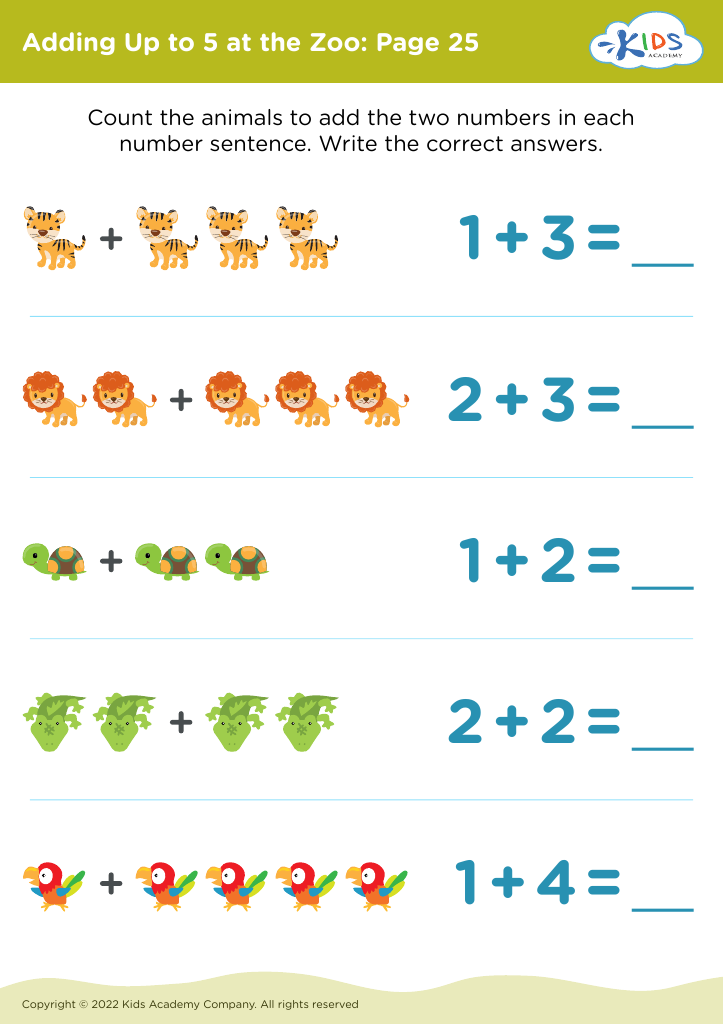
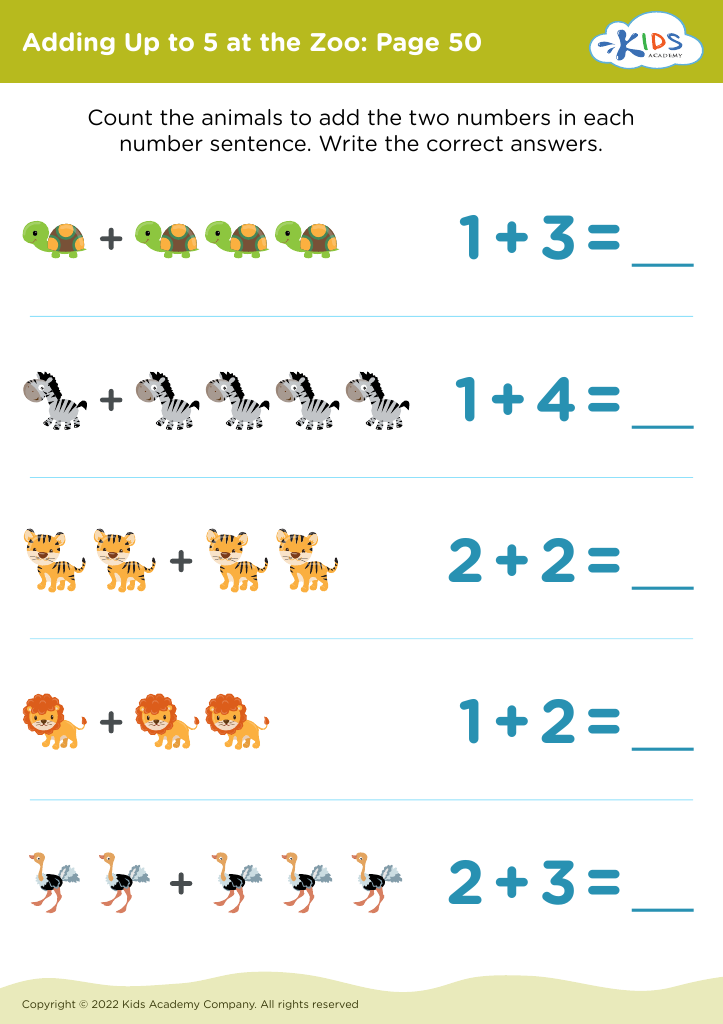



Hand-eye coordination is a crucial developmental skill for young children, particularly for ages 3-4, as it plays a significant role in their overall motor skills, cognitive development, and daily activities. Incorporating activities like "Hand-eye Coordination Adding at the Zoo" not only engages children with animals and encourages an interest in the natural world but also promotes learning and essential motor skills.
In this playful setting, children practice coordinating their hand movements with their visual input, an important precursor to more complex actions such as writing, drawing, and sports. The zoo theme motivates children, making the activity enjoyable and interactive, thus enhancing their attention and retention. Engaging with colorful images of animals while participating in addition tasks reinforces foundational math skills, laying the groundwork for future learning.
Additionally, collaborative engaging experiences foster social skills and communication, as children may share, discuss, and work together in playful scenarios. Therefore, parents and teachers should prioritize such activities; they not only enhance essential developmental milestones but also create a memorable and enriching learning environment that nurtures a child's growth holistically. By focusing on these foundational skills, caregivers invest in their children’s future success in academics and life.