Filters

71 filtered results

Clear all filters
Favorites
With answer key
Interactive

71 filtered results

Difficulty Level

Grade


Check out this FREE Trial Lesson on Adding at the Zoo for age 3-4!

X

Favorites
With answer key
Interactive
  • 3-4
  • Number Recognition
  • Adding at the Zoo
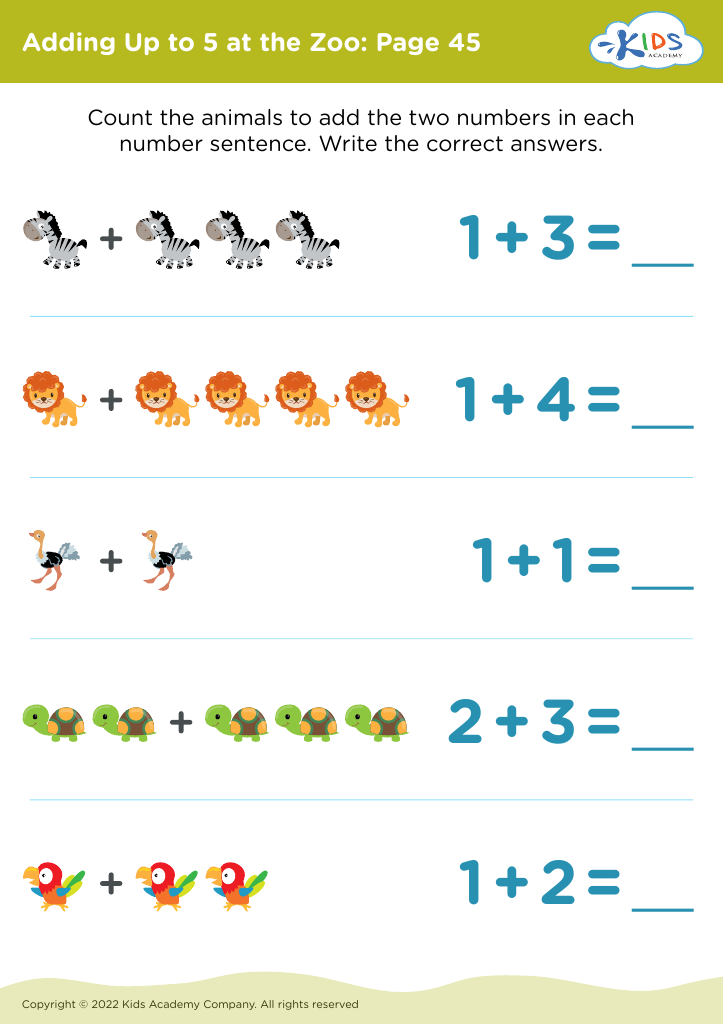
Adding Up to 5 at the Zoo: Page 45
Worksheet
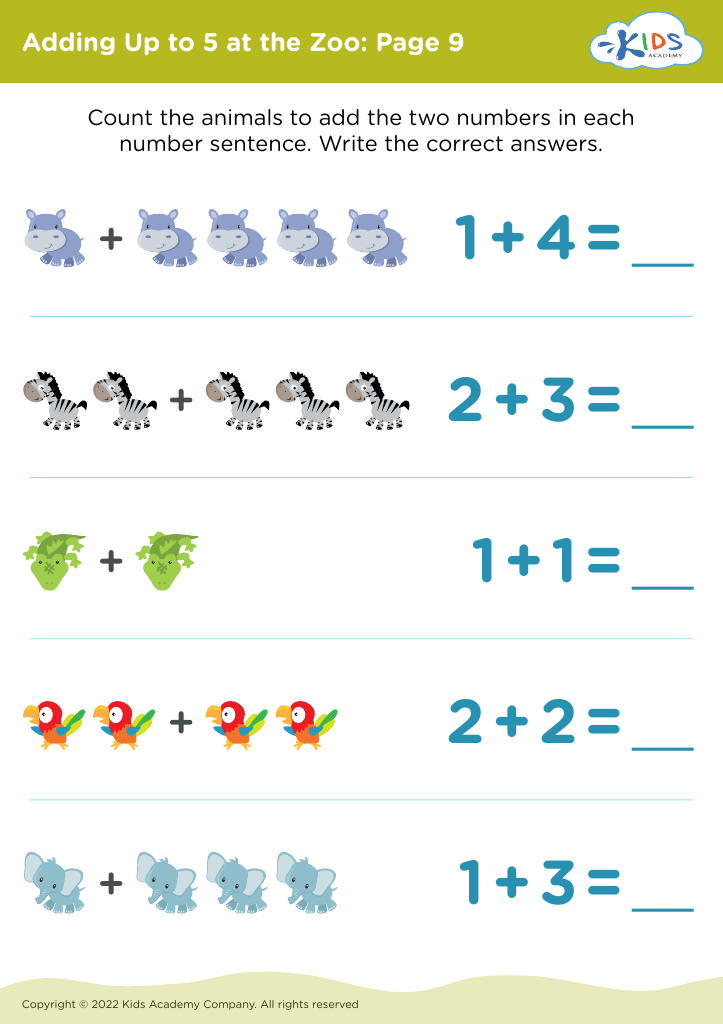
Adding Up to 5 at the Zoo: Page 9

Adding Up to 5 at the Zoo: Page 9

Adding Up to 5 at the Zoo: Page 9
Worksheet
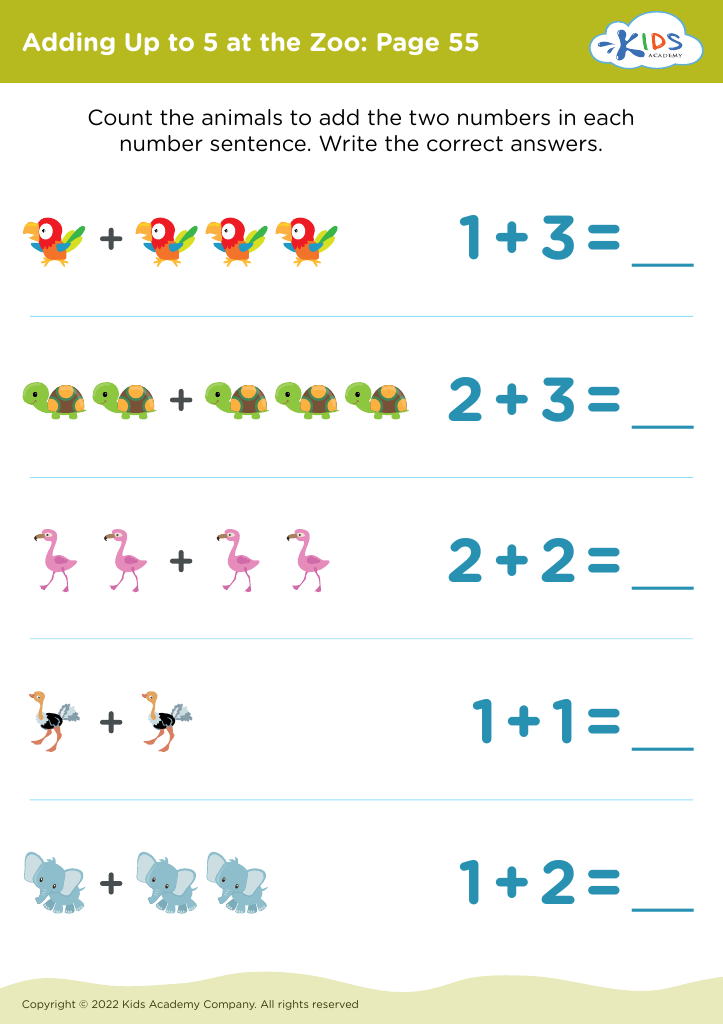
Adding Up to 5 at the Zoo: Page 55
Worksheet
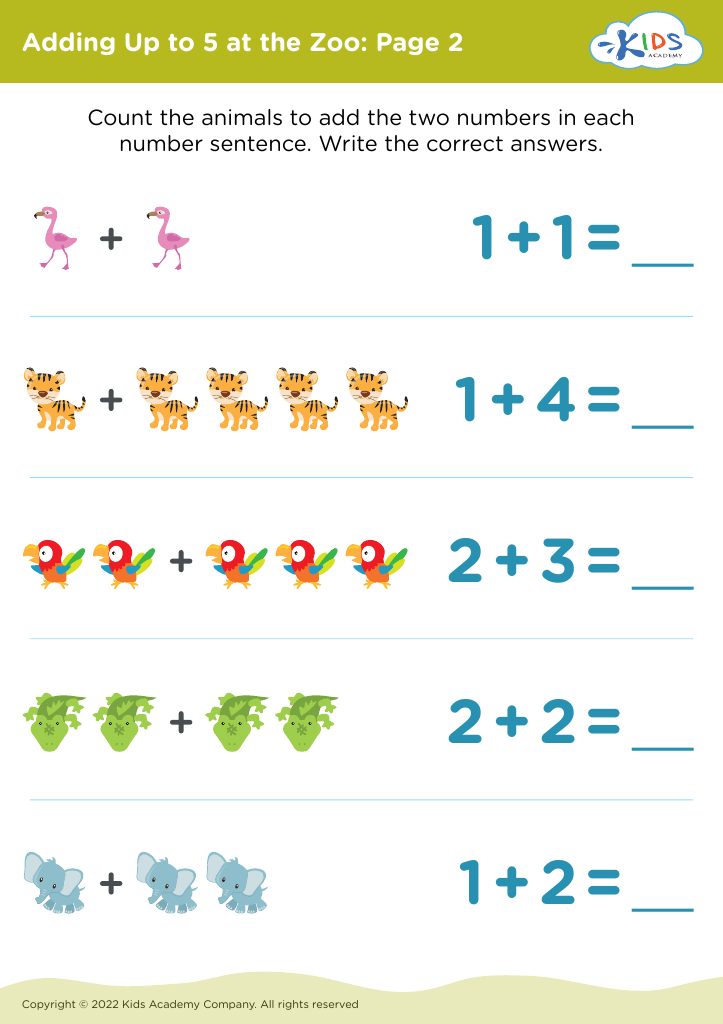
Adding Up to 5 at the Zoo: Page 2

Adding Up to 5 at the Zoo: Page 2

Adding Up to 5 at the Zoo: Page 2
Worksheet
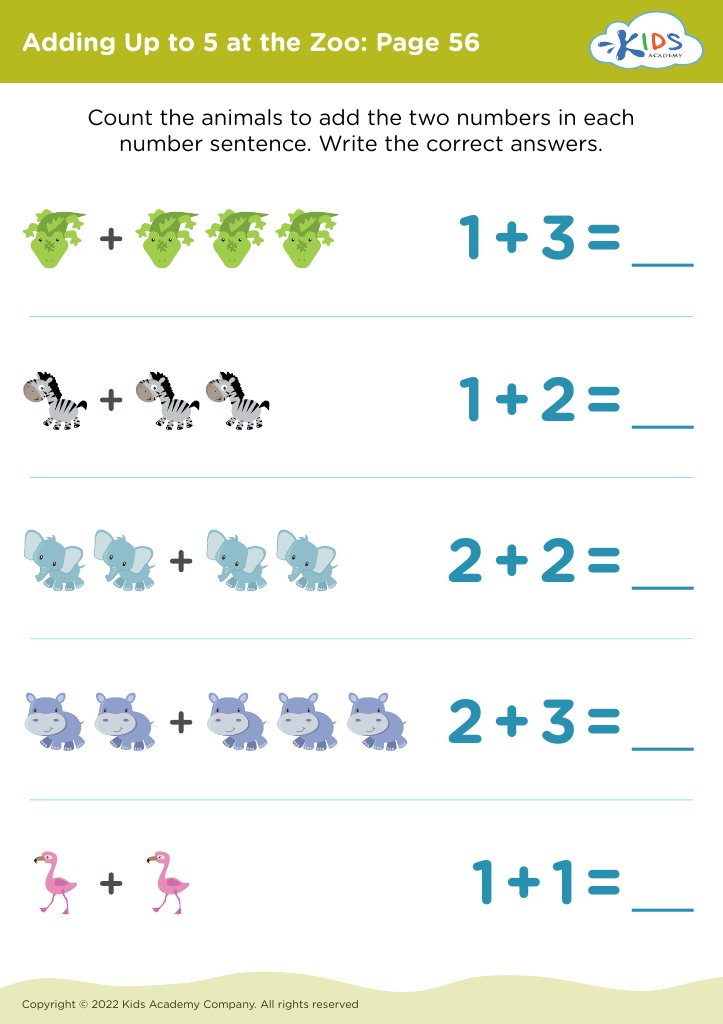
Adding Up to 5 at the Zoo: Page 56
Worksheet
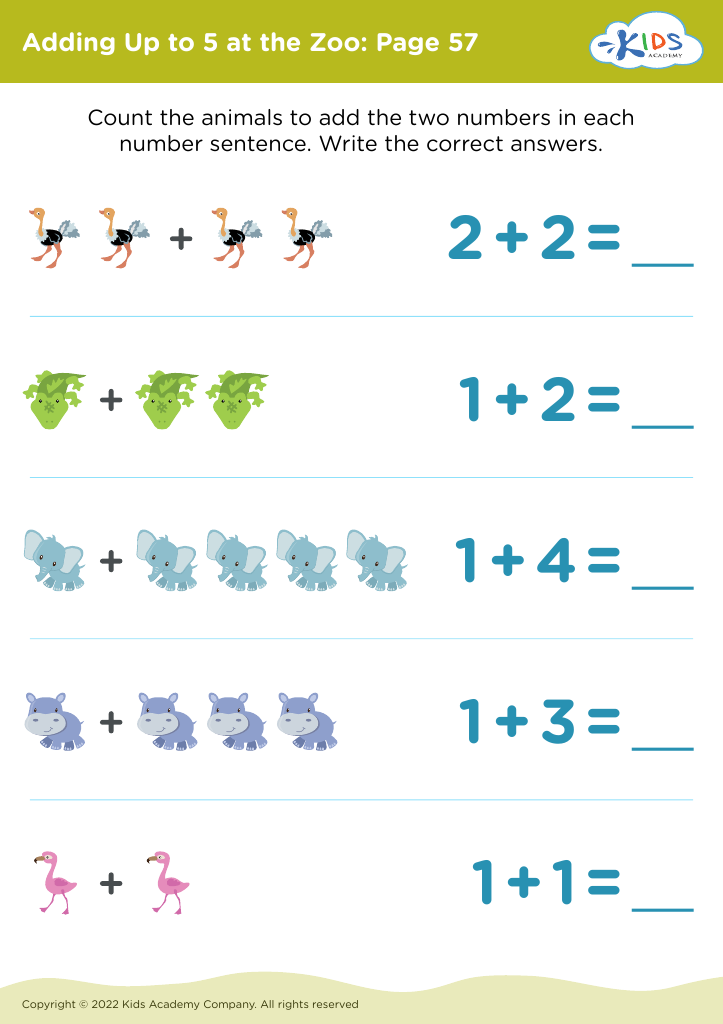
Adding Up to 5 at the Zoo: Page 57
Worksheet
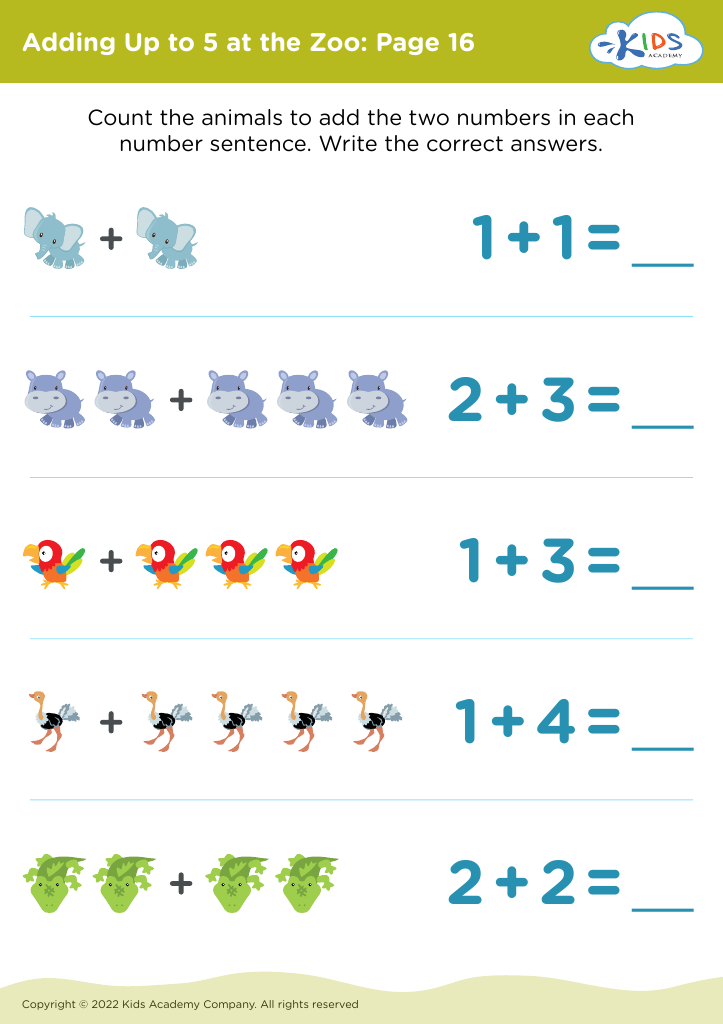
Adding Up to 5 at the Zoo: Page 16
Worksheet
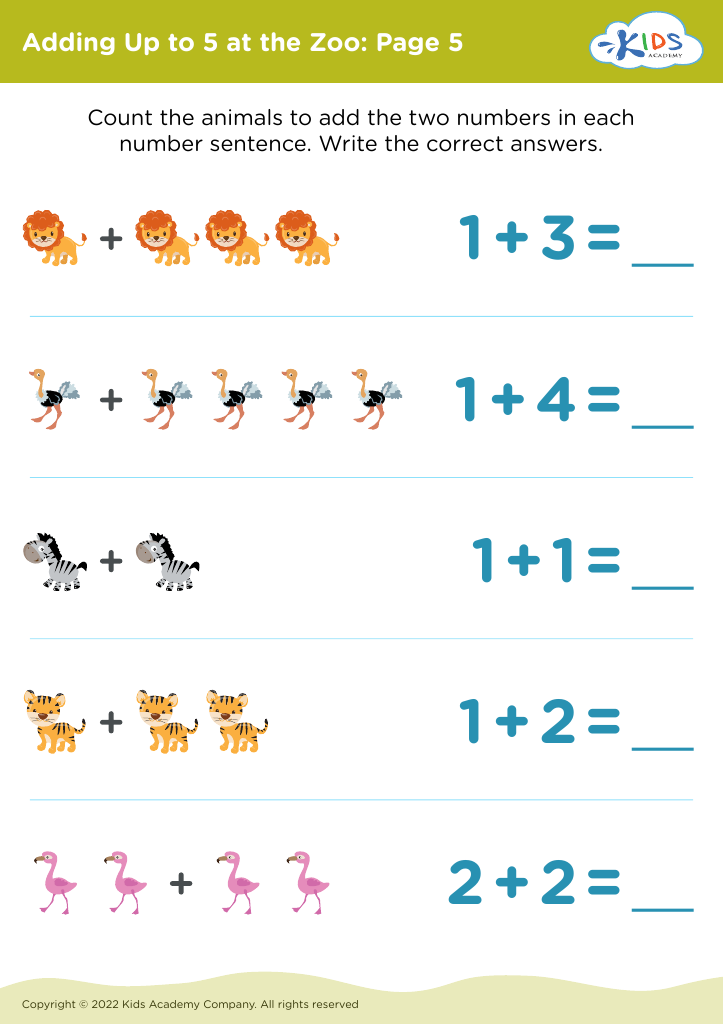
Adding Up to 5 at the Zoo: Page 5

Adding Up to 5 at the Zoo: Page 5

Adding Up to 5 at the Zoo: Page 5
Worksheet
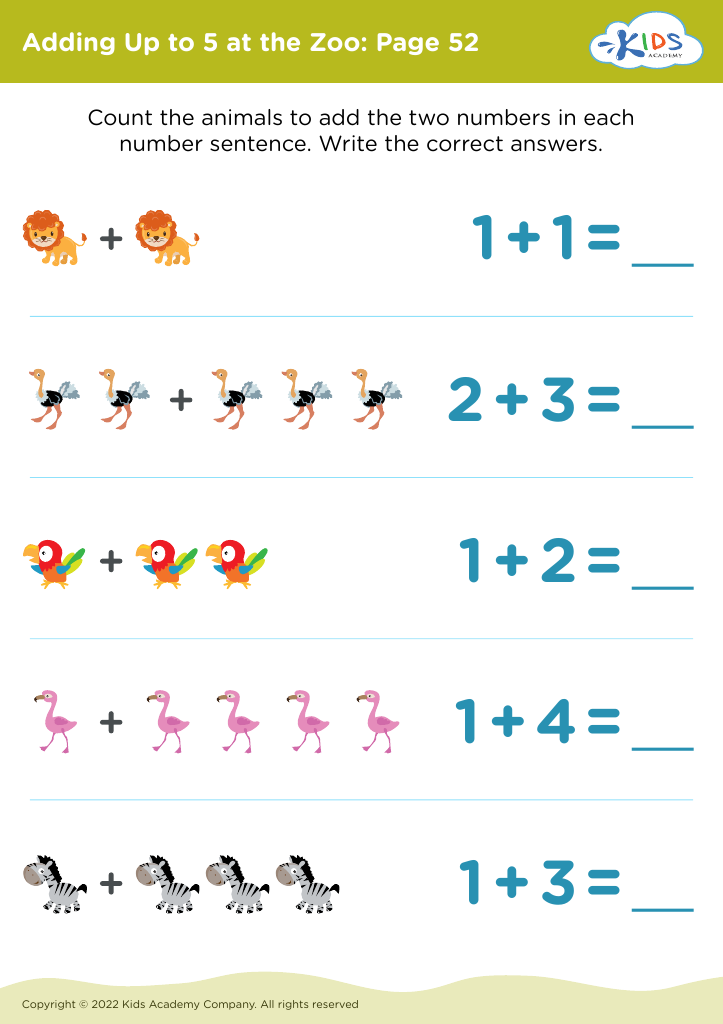
Adding Up to 5 at the Zoo: Page 52
Worksheet
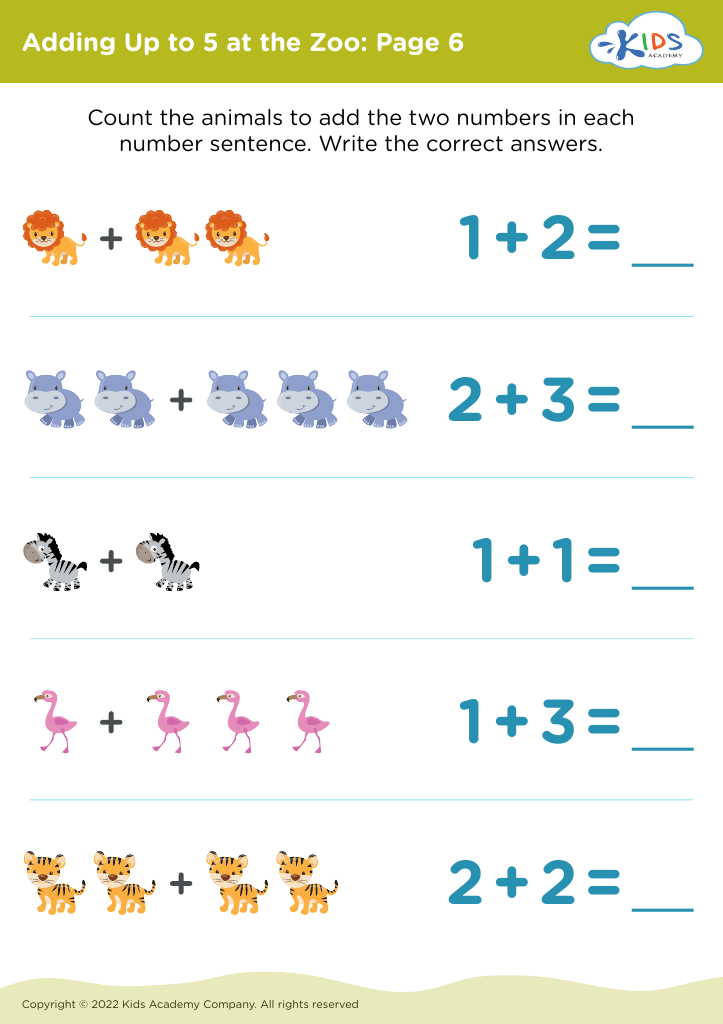
Adding Up to 5 at the Zoo: Page 6

Adding Up to 5 at the Zoo: Page 6

Adding Up to 5 at the Zoo: Page 6
Worksheet
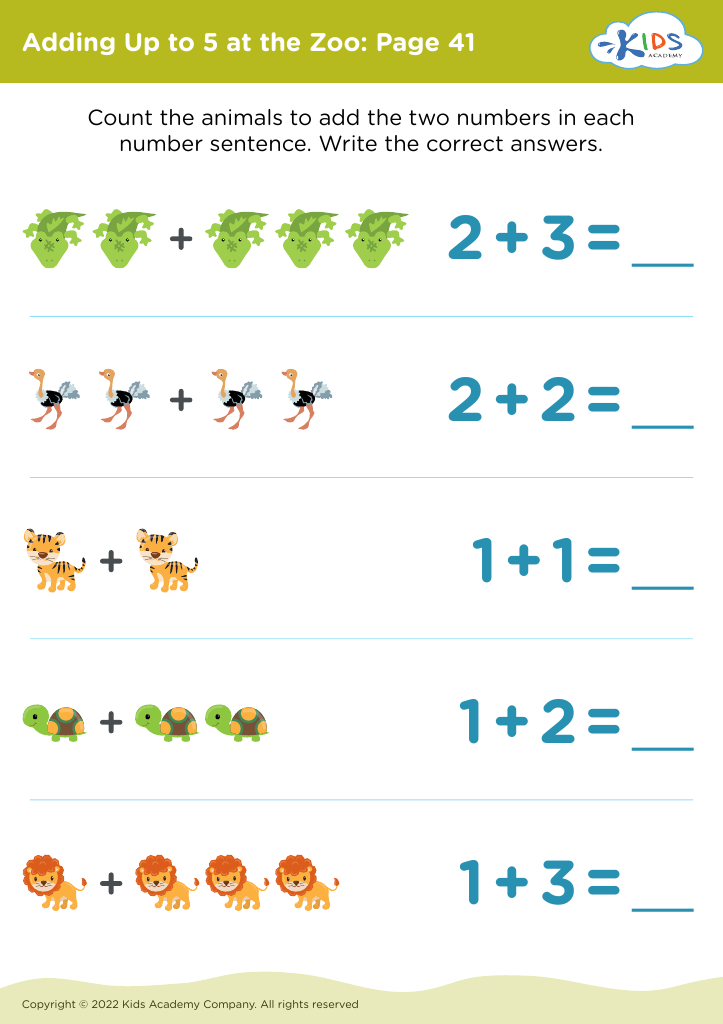
Adding Up to 5 at the Zoo: Page 41
Worksheet
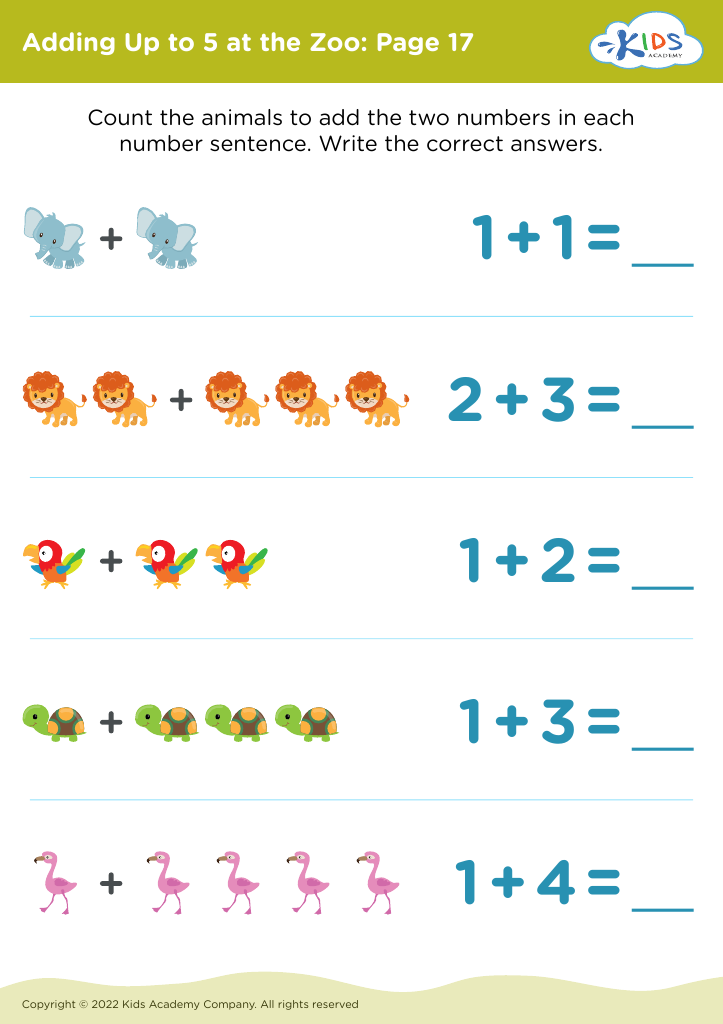
Adding Up to 5 at the Zoo: Page 17
Worksheet
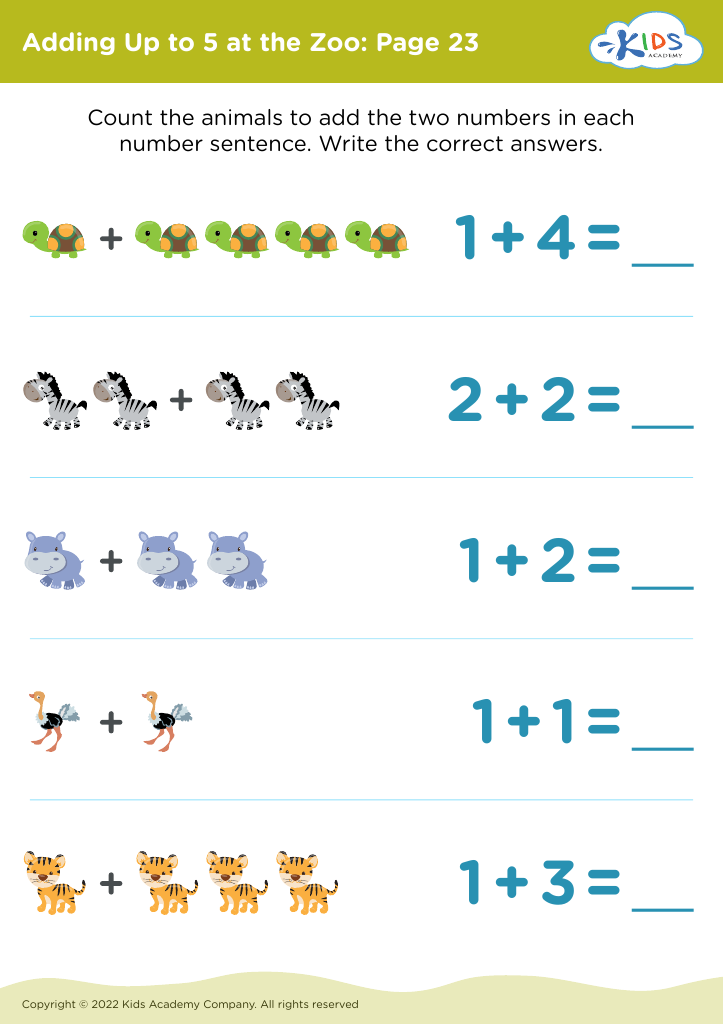
Adding Up to 5 at the Zoo: Page 23
Worksheet
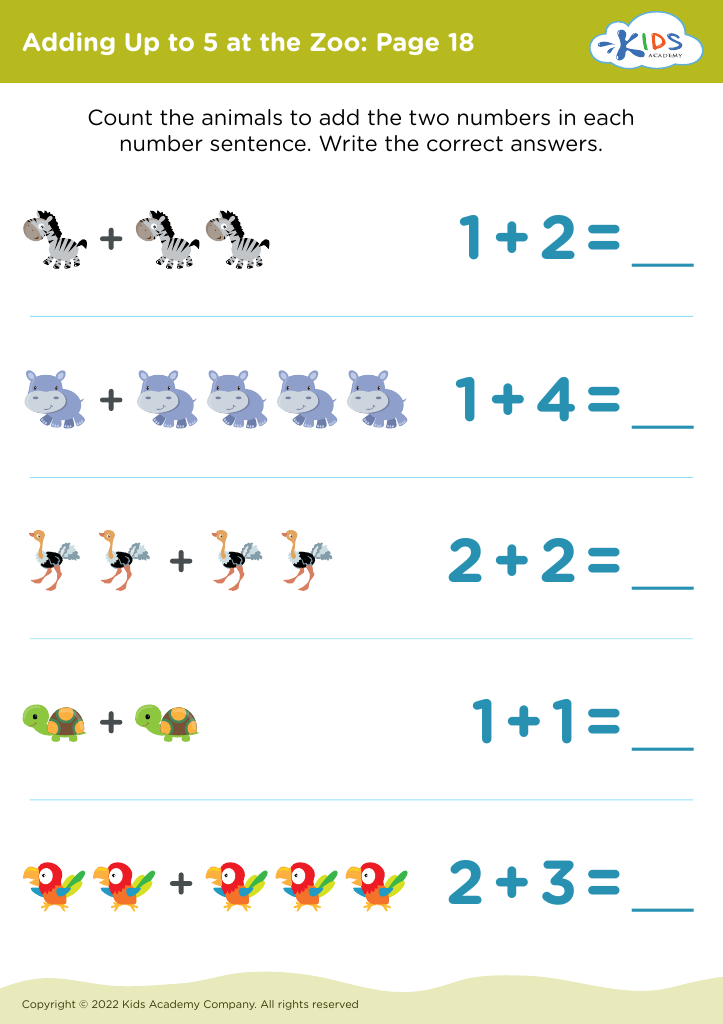
Adding Up to 5 at the Zoo: Page 18
Worksheet
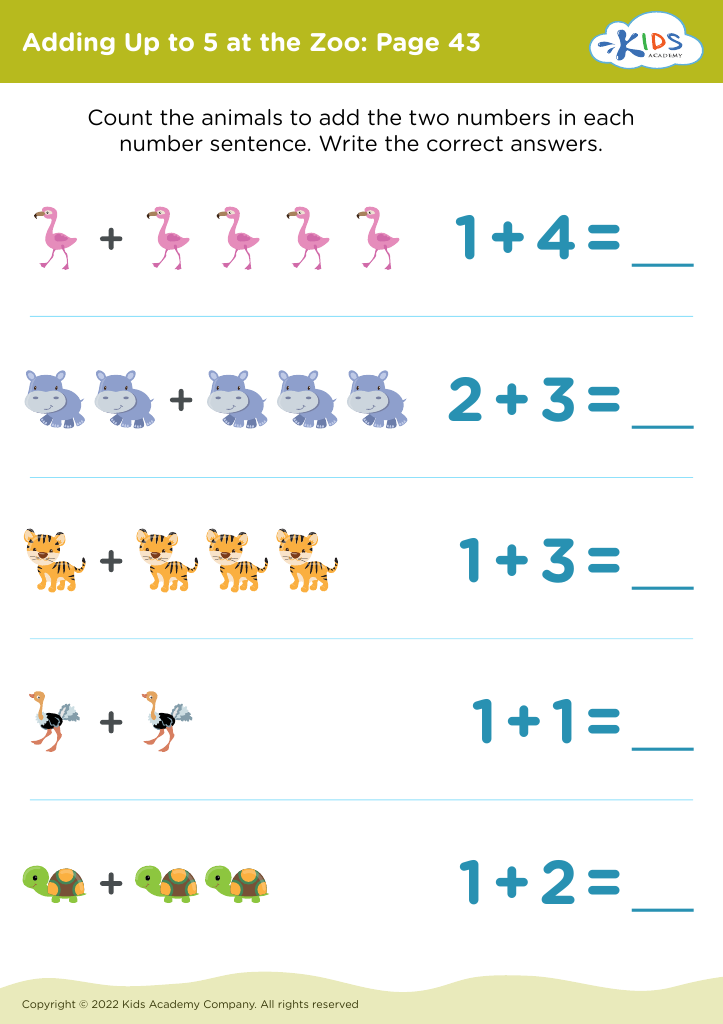
Adding Up to 5 at the Zoo: Page 43
Worksheet
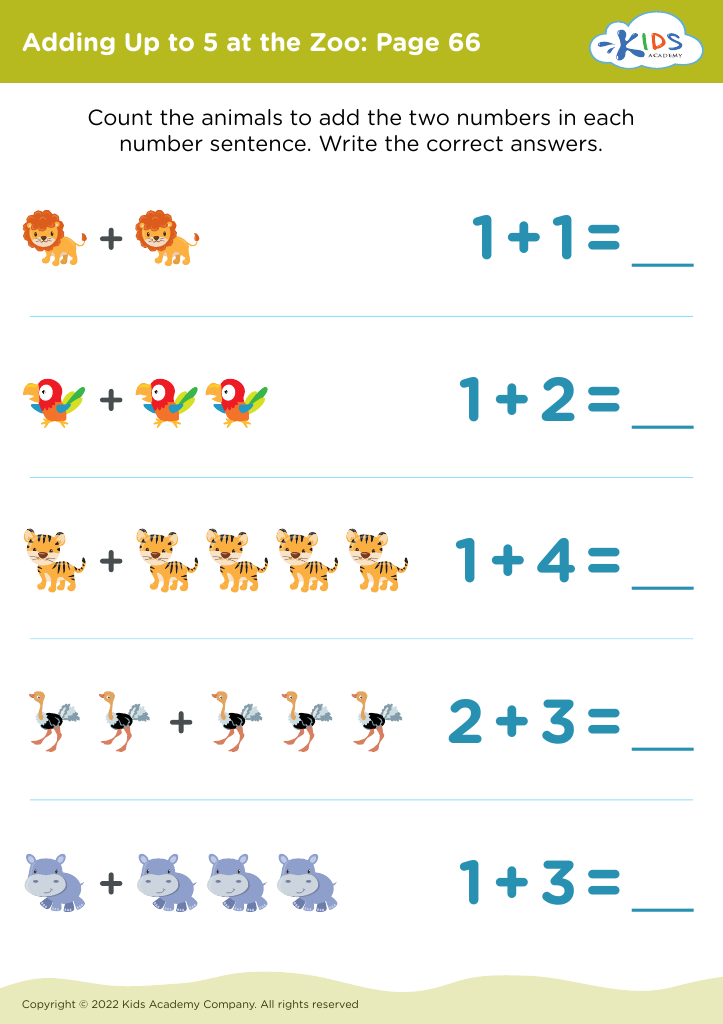
Adding Up to 5 at the Zoo: Page 66
Worksheet
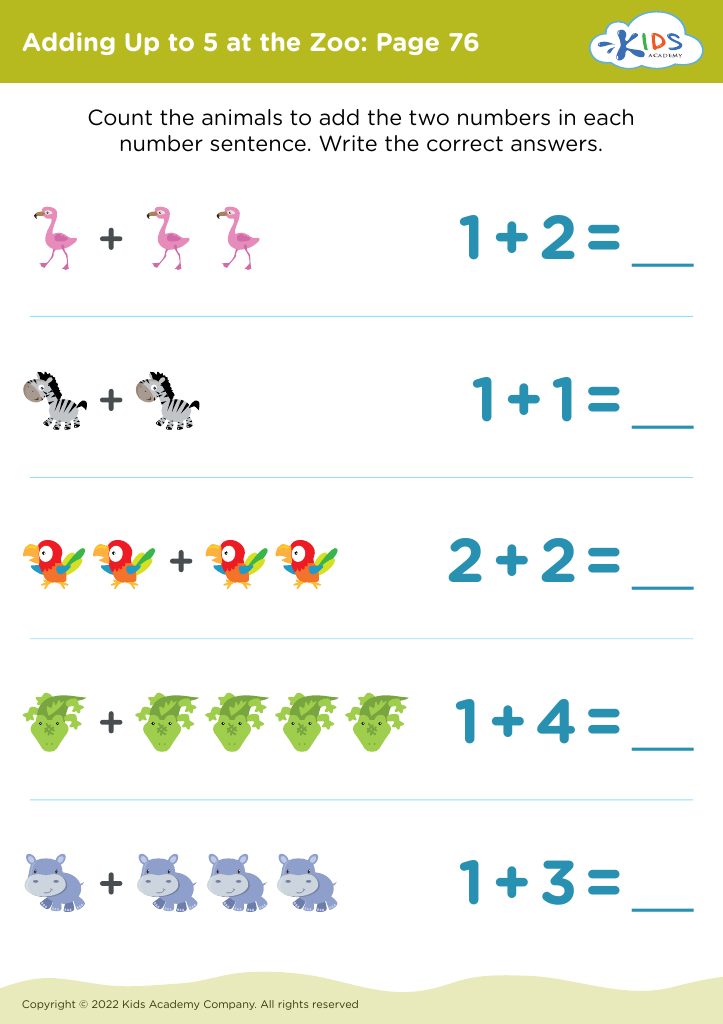
Adding Up to 5 at the Zoo: Page 76
Worksheet
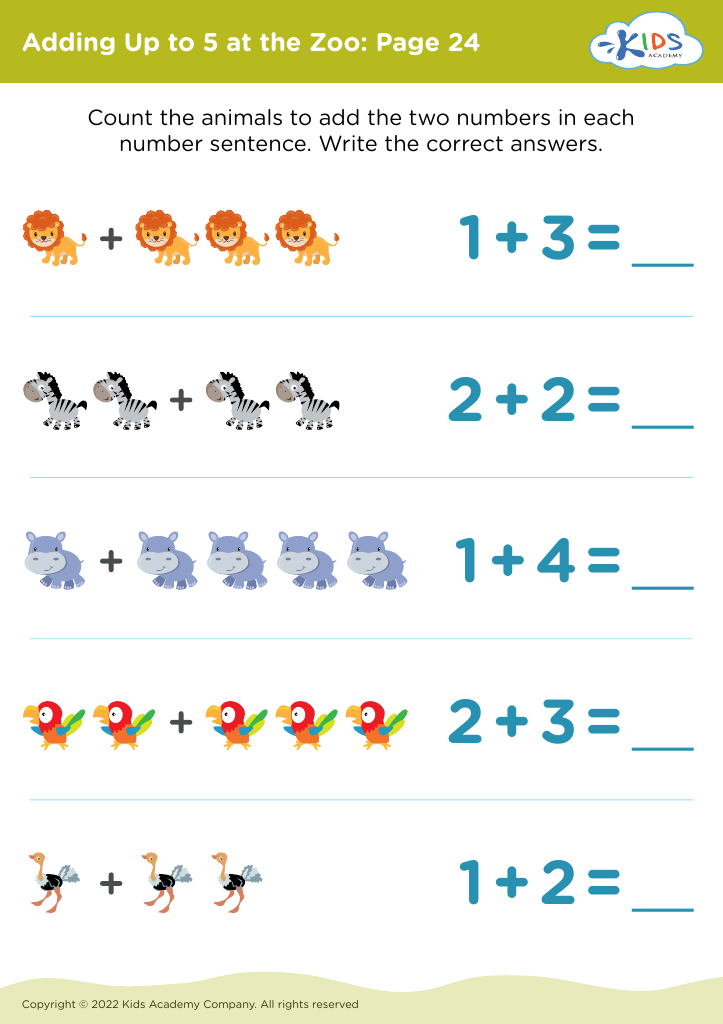
Adding Up to 5 at the Zoo: Page 24
Worksheet
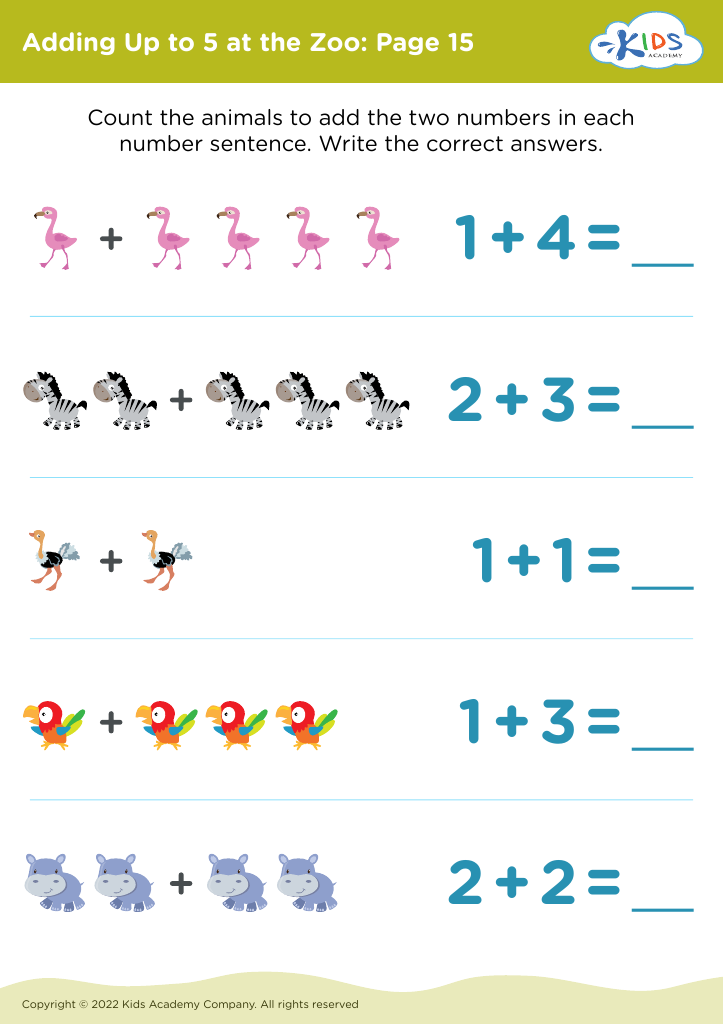
Adding Up to 5 at the Zoo: Page 15
Worksheet
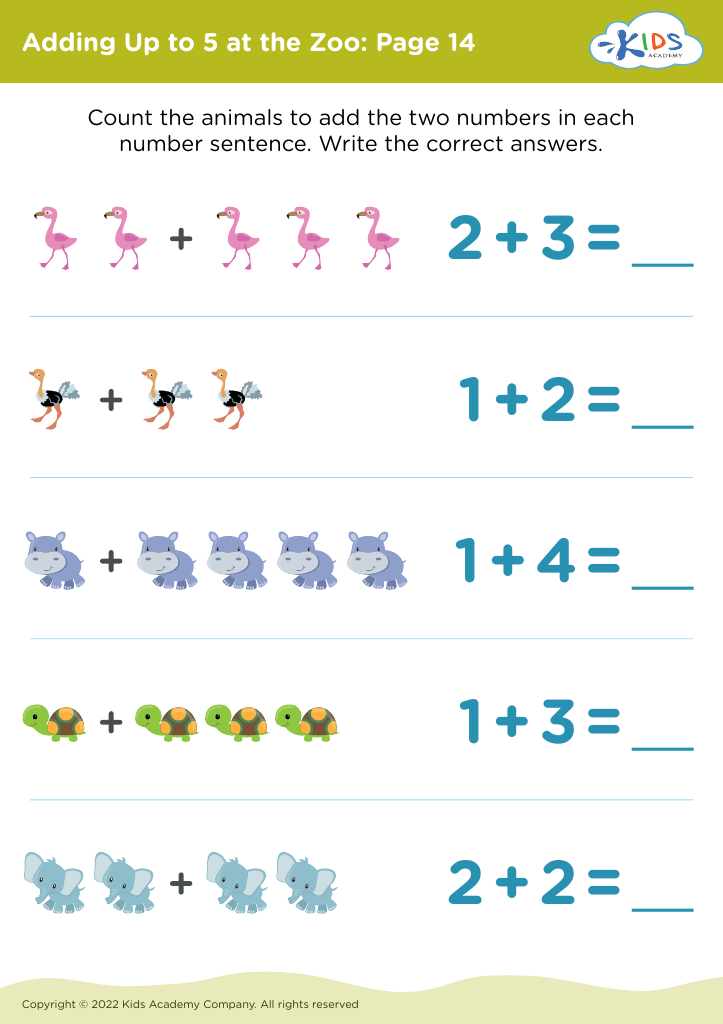
Adding Up to 5 at the Zoo: Page 14
Worksheet
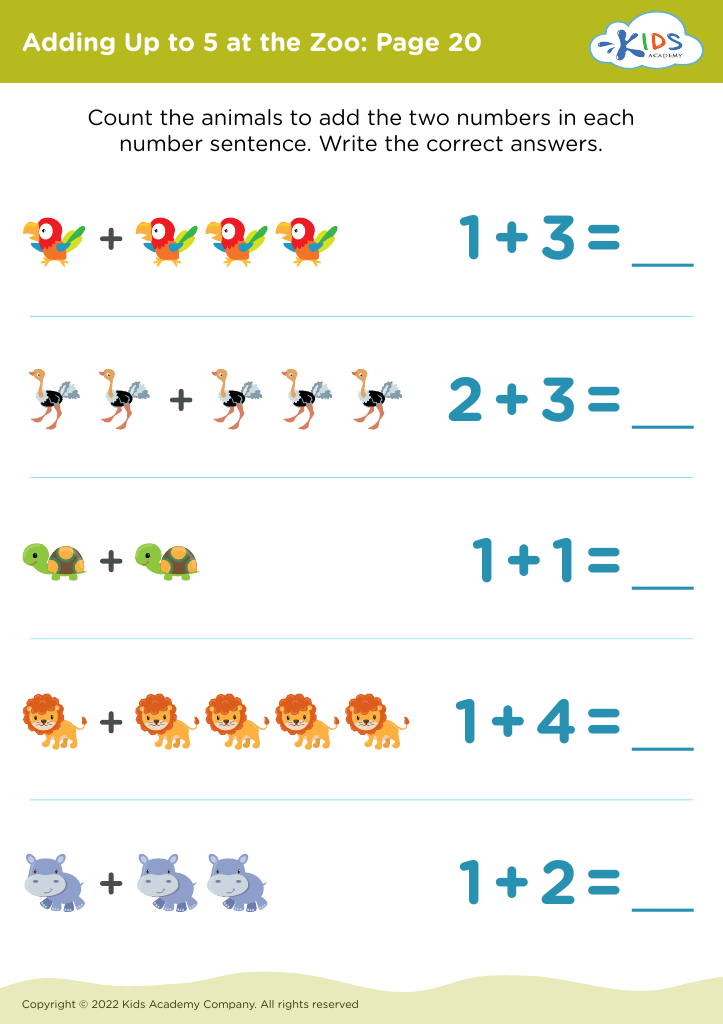
Adding Up to 5 at the Zoo: Page 20
Worksheet
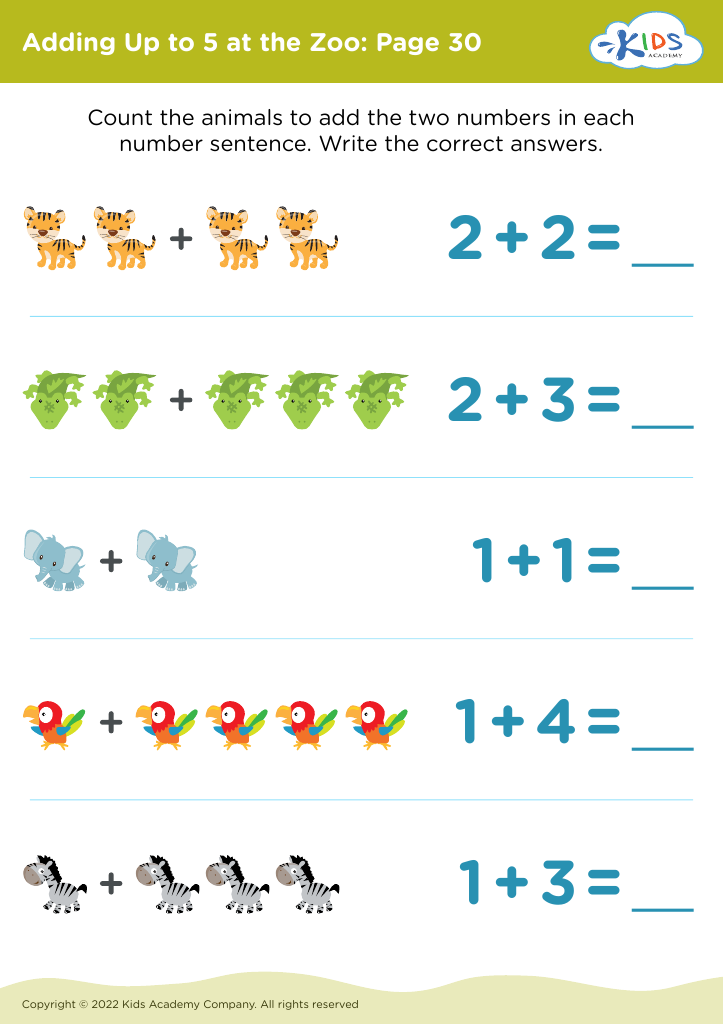
Adding Up to 5 at the Zoo: Page 30
Worksheet
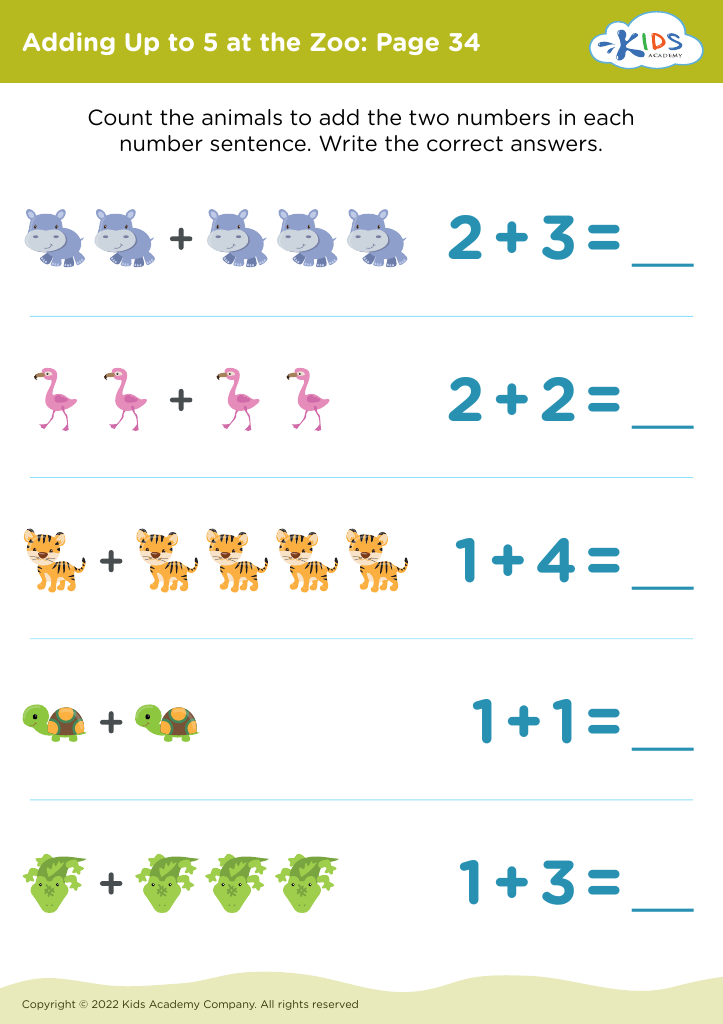
Adding Up to 5 at the Zoo: Page 34
Worksheet
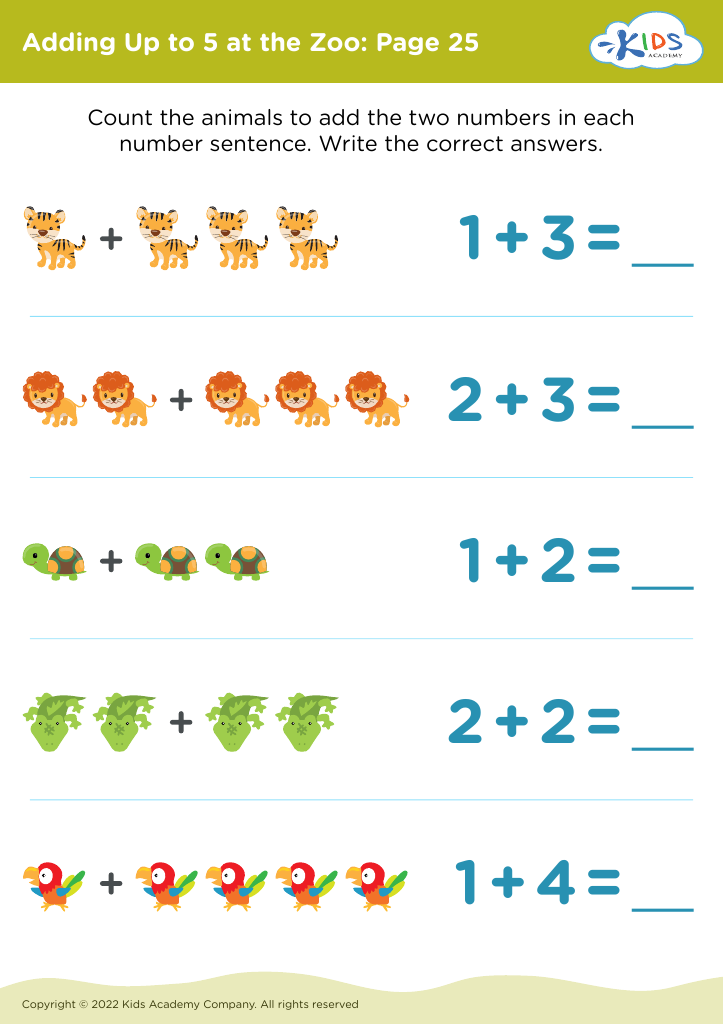
Adding Up to 5 at the Zoo: Page 25
Worksheet


Number Recognition Adding at the Zoo for ages 3-4 is a vital educational activity that fosters early mathematical skills in young learners. For parents and teachers, this interactive experience is crucial for several reasons.

First, number recognition forms the foundation of all mathematical concepts. Introducing young children to numbers through fun, real-world contexts—like animals at the zoo—makes learning engaging and enjoyable. This relevance helps children grasp and retain numerical concepts better.

Second, adding through hands-on activities encourages cognitive development. Engaging with physical objects, such as counting animal figures, enhances fine motor skills and strengthens problem-solving abilities. It also challenges children’s thinking and allows them to grasp basic addition in a playful manner.

Third, social interaction during group activities promotes communication and collaboration skills, which are essential for holistic development. When children learn together, they not only grasp mathematical concepts but also develop friendships and teamwork abilities.

Lastly, introducing mathematics in playful contexts builds a positive attitude toward learning. When children associate numbers with fun experiences, it encourages a lifelong love for learning and exploration. Parents and teachers should therefore prioritize these activities to lay a strong foundation for future academic success.