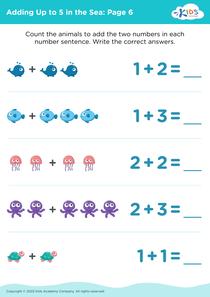
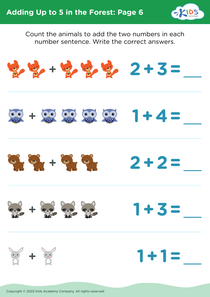
Problem Solving Adding at the Zoo Worksheets for Ages 3-4
3 filtered results
-
From - To
Explore our "Problem Solving Adding at the Zoo Worksheets for Ages 3-4." These engaging worksheets introduce young learners to basic addition through fun, colorful zoo-themed activities. Designed by experienced educators, each worksheet helps build early math skills and problem-solving abilities. Children will love counting and adding charming zoo animals while developing their numerical understanding and critical thinking. Perfect for preschool and pre-K, these worksheets can be used in the classroom or at home, making learning an exciting adventure. Download now to give your child a head start in math while exploring the wonders of the zoo!
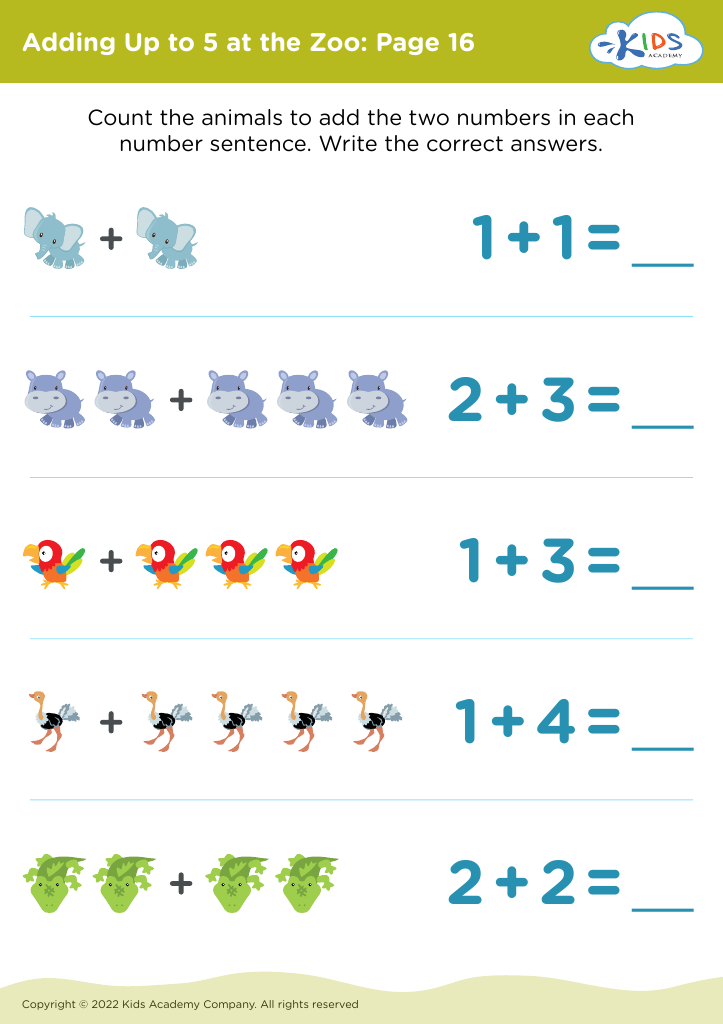
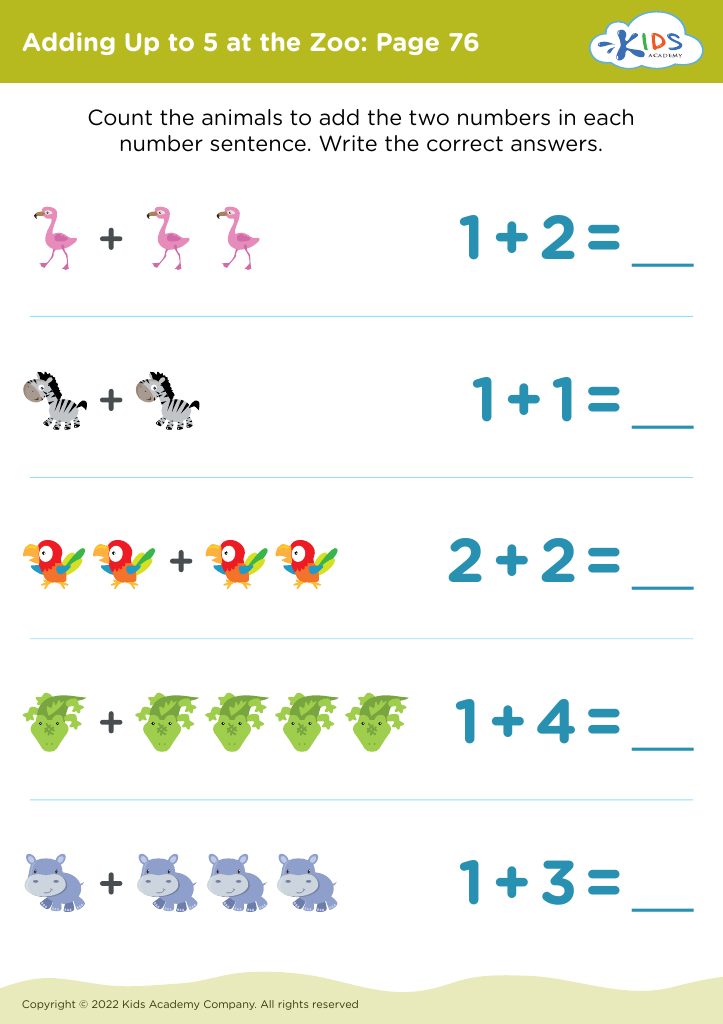
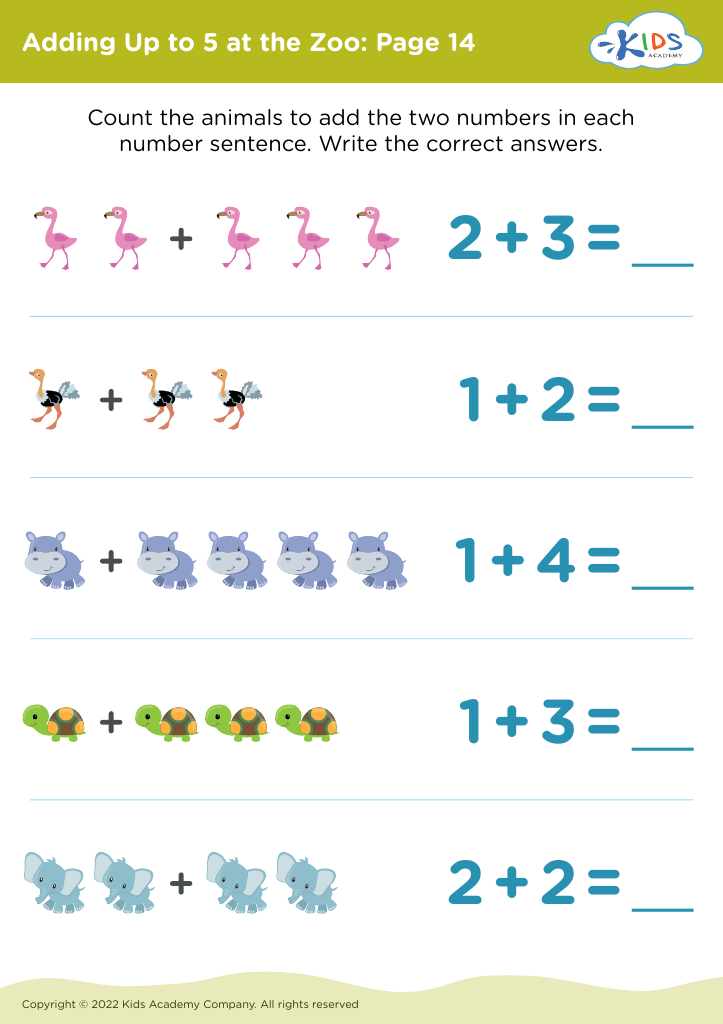



Parents and teachers should care about "Problem Solving Adding at the Zoo" for ages 3-4 because early exposure to mathematical concepts can significantly support cognitive development. Engaging young children in enjoyable, themed activities like those involving animals can capture their attention and make learning fun, which is crucial at this developmental stage.
Such activities offer numerous benefits. First, they help to build foundational skills in numeracy by introducing the concepts of counting and simple addition. When children solve problems by adding items related to familiar zoo animals, they begin to internalize mathematical relationships and operations in a context that makes sense to them.
Additionally, these activities promote critical thinking and problem-solving skills. As children wonder how many animals there are in a group or how many more they need, they develop their ability to reason and make predictions, contributing to overall cognitive development.
Furthermore, engaging collaboratively with these activities can enhance social skills and language development. Through discussions with peers or guided by adults, children practice important social interactions and vocabulary.
Lastly, "Problem Solving Adding at the Zoo" adorns children with confidence in their burgeoning abilities. This confidence encourages a positive attitude towards mathematics and learning in general, laying a strong foundation for future achievement in more complex concepts.
In summary, such activities are invaluable for early cognitive, social, and academic growth.