Visual comprehension Adding at the Zoo Worksheets for Ages 3-4
3 filtered results
-
From - To
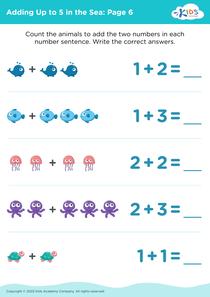
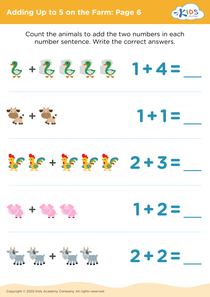
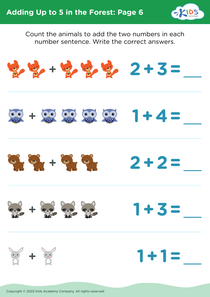
Explore our engaging "Visual Comprehension Adding at the Zoo Worksheets" designed for children ages 3-4! These fun and interactive worksheets combine early math skills with delightful zoo themes, helping young learners enhance their visual comprehension and basic addition skills. Kids will enjoy counting adorable animals and solving colorful, age-appropriate math problems, fostering a love for learning through play. These resources not only support cognitive development but also promote critical thinking and problem-solving. Perfect for classrooms or home learning, our worksheets make math exciting and accessible for preschoolers. Download now to inspire a lifelong journey of learning in your child!
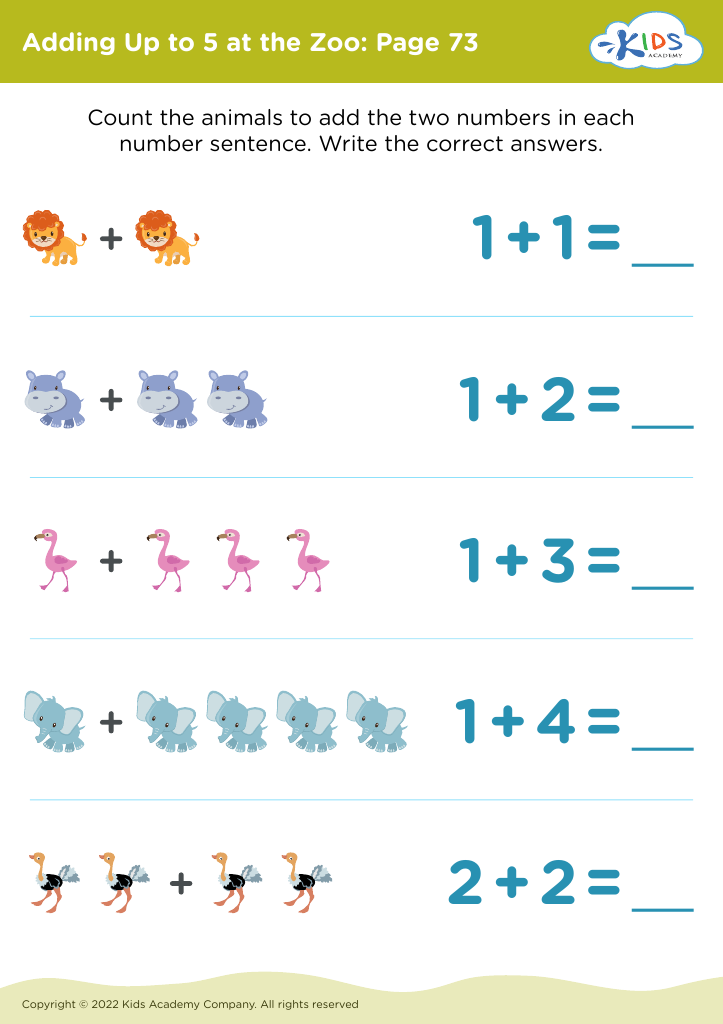
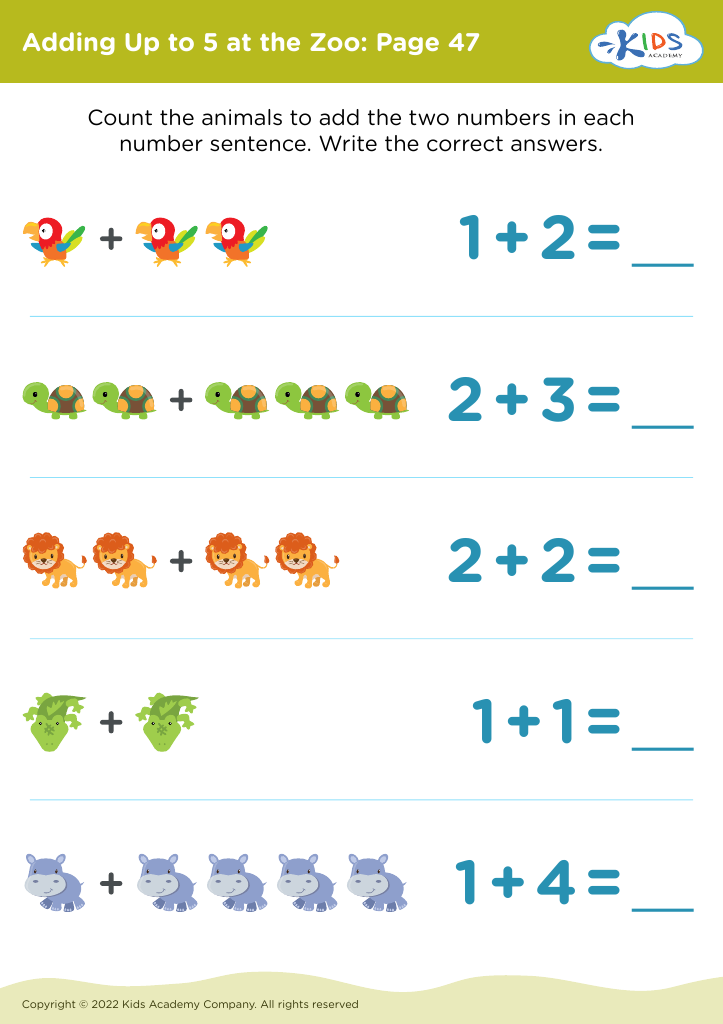
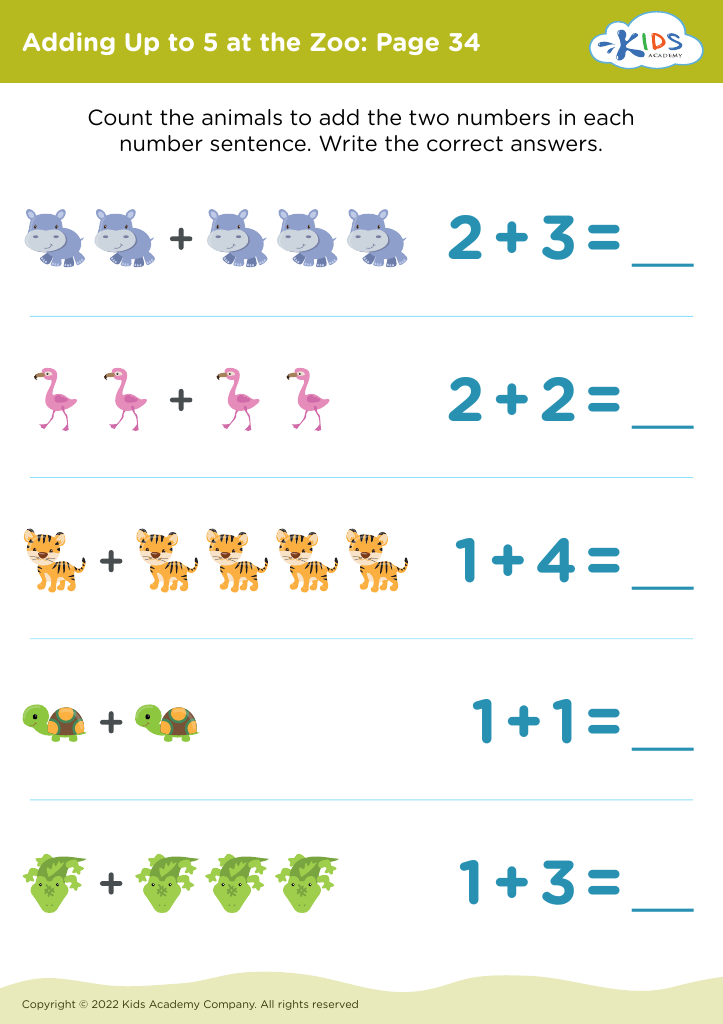



Visual comprehension is essential for early learners, particularly in a context like "Adding at the Zoo" for ages 3-4. This activity not only introduces young children to foundational math concepts but also enhances their visual literacy, which is critical for overall cognitive development. When children engage with images of zoo animals, their recognition and understanding of visual information improve. This skill is vital as it's the basis for later learning in reading and mathematics.
By incorporating visual elements, children learn to interpret illustrations, understand relationships between objects, and develop the ability to compare quantities. For example, counting the number of lions and elephants and combining them fosters early addition skills. Additionally, exploring visual content within a relatable context like the zoo taps into children’s natural curiosity, making learning enjoyable and engaging.
Moreover, strengthening visual comprehension supports language development, as children learn to describe what they see. Teachers and parents, by focusing on these activities, can nurture critical thinking and problem-solving abilities, setting the stage for successful learning in school. Thus, promoting visual comprehension through playful interactions like "Adding at the Zoo" significantly benefits children’s academic journey and cognitive growth.