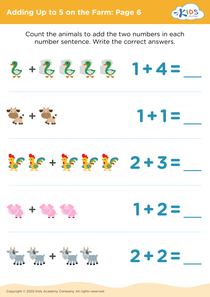
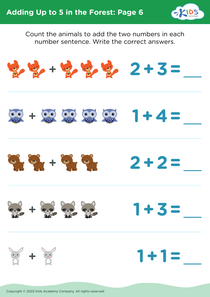
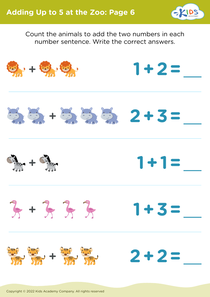
Basic Math Skills Adding in the Sea Worksheets for Ages 3-4
4 filtered results
-
From - To
Welcome to our "Basic Math Skills Adding in the Sea Worksheets" designed specifically for children ages 3-4! These engaging and colorful worksheets introduce young learners to the fundamentals of addition through a fun underwater theme. As children explore counting and adding adorable sea creatures, they will strengthen their early math skills while fostering a love for learning. Each worksheet features clear visuals and simple problems that make math accessible and enjoyable. Perfect for preschool settings or at-home practice, our resources support cognitive development, fine motor skills, and encourage interactive learning. Dive into a world of math fun today!
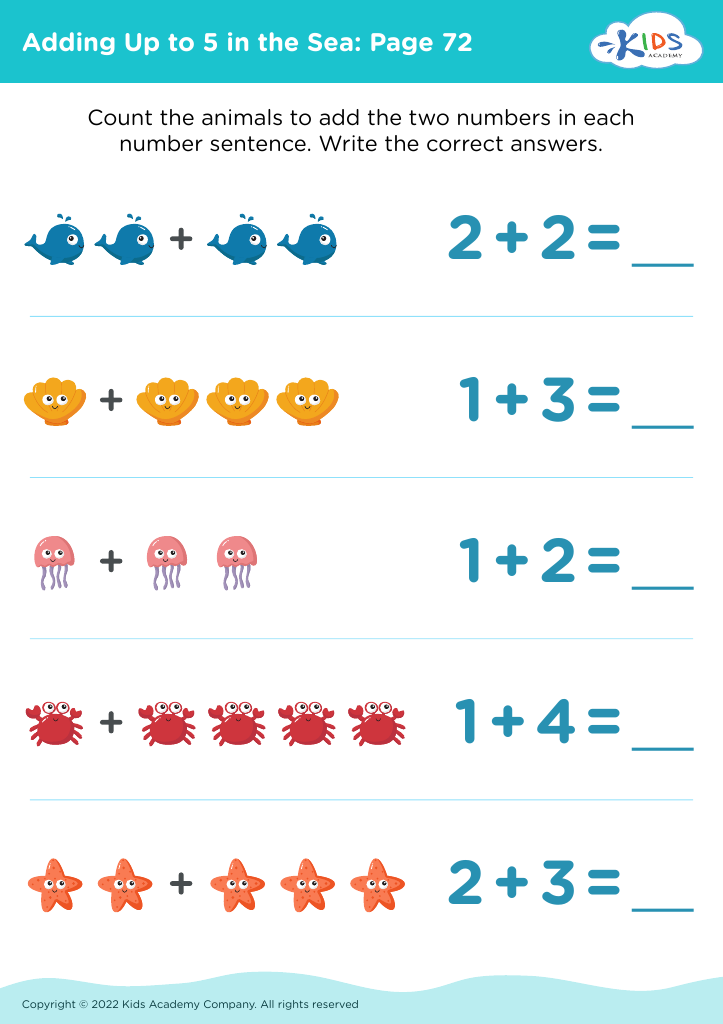
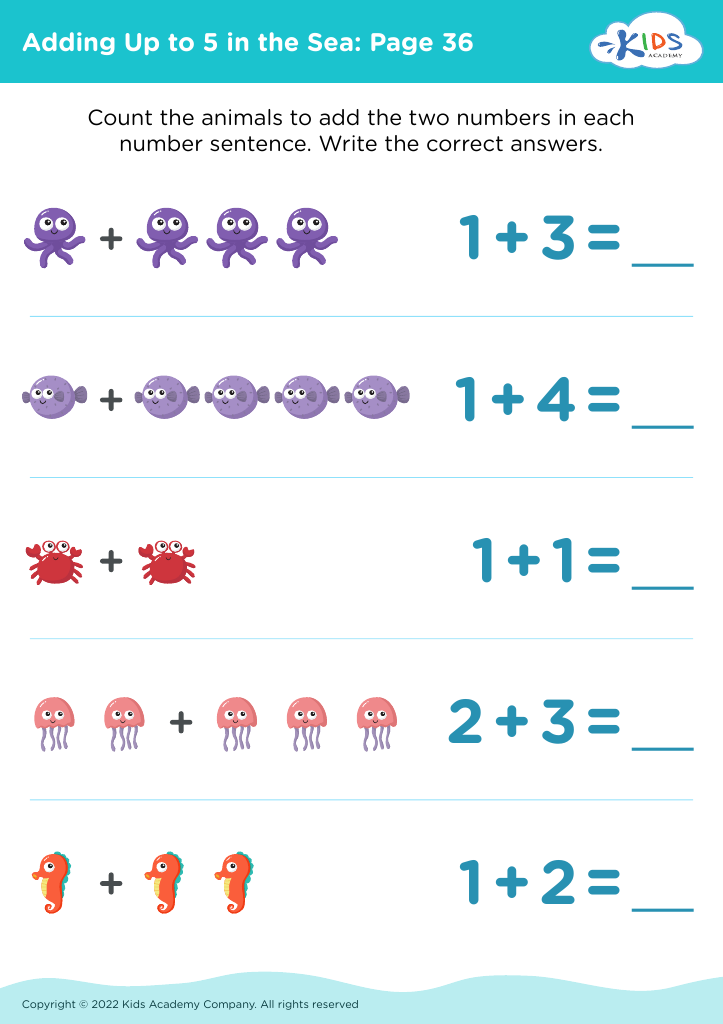
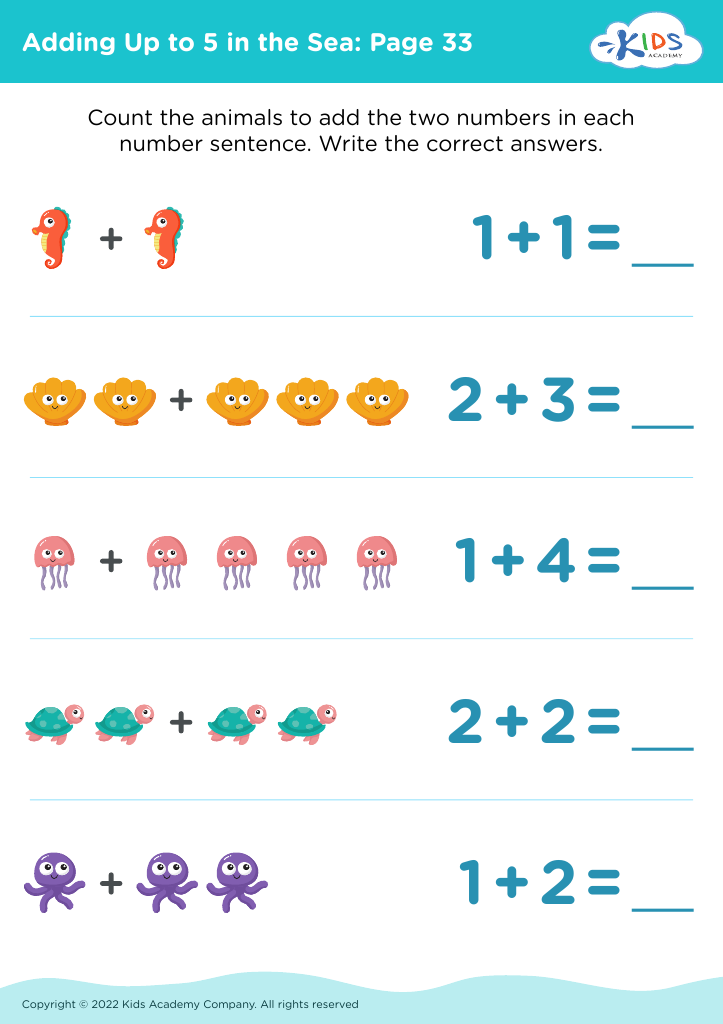
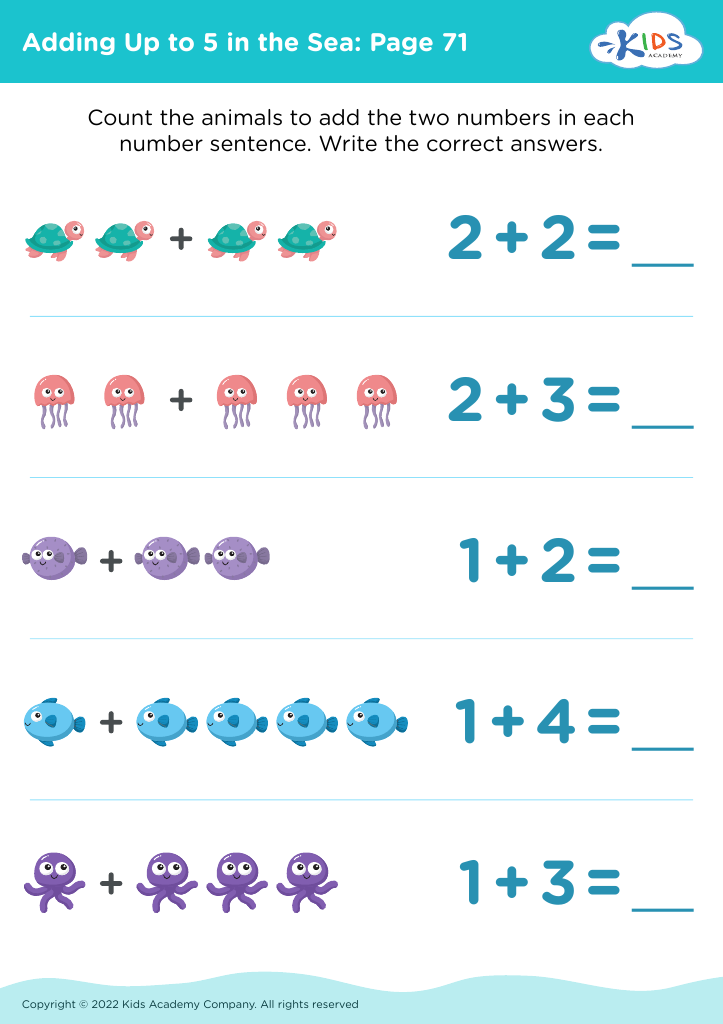



Basic math skills, such as addition, are fundamental building blocks for lifelong learning. For children aged 3-4, introducing math concepts through engaging themes like "Adding in the Sea" not only makes learning enjoyable but also vital for cognitive development. At this age, children are naturally curious, and incorporating a fun theme helps them grasp concepts more readily.
Parents and teachers should care about these skills because they lay the groundwork for future academic success. Basic math promotes critical thinking, problem-solving, and understanding of numerical relationships. By introducing addition through interactive activities—such as counting sea creatures or combining colorful fish—they can develop both cognitive and motor skills.
Furthermore, early math skills can enhance a child's confidence and perseverance when faced with challenges. Engaging with math in playful contexts nurtures a positive attitude towards learning. When children associate math with fun experiences, they are more likely to pursue advanced concepts in later years.
Ultimately, teaching basic math skills through playful themes like the ocean cultivates foundational skills that aid in literacy and more complex subjects, ensuring that young learners are better prepared for their educational journeys. Investing time in this early math exposure pays off not just academically, but also in fostering a love for learning.