Basic Math understanding Adding in the Sea Worksheets for Ages 3-4
3 filtered results
-
From - To
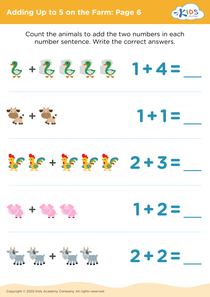
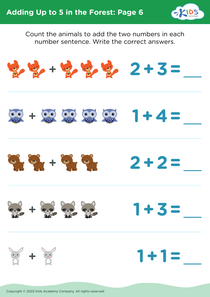
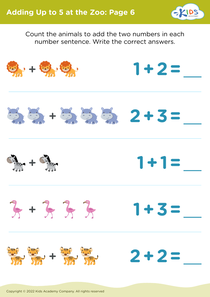
Dive into the ocean of learning with our "Adding in the Sea" worksheets designed for preschoolers aged 3-4! These engaging and colorful worksheets introduce young learners to the fundamentals of basic math through fun marine-themed visuals. With playful illustrations of sea creatures, children will explore simple addition concepts while honing their counting skills. Each worksheet is developed to enhance cognitive abilities and promote early math understanding in a delightful way. Encourage a love for numbers and help your child build confidence in math with our exciting and interactive resources. Get ready to make math a splash for your little ones!
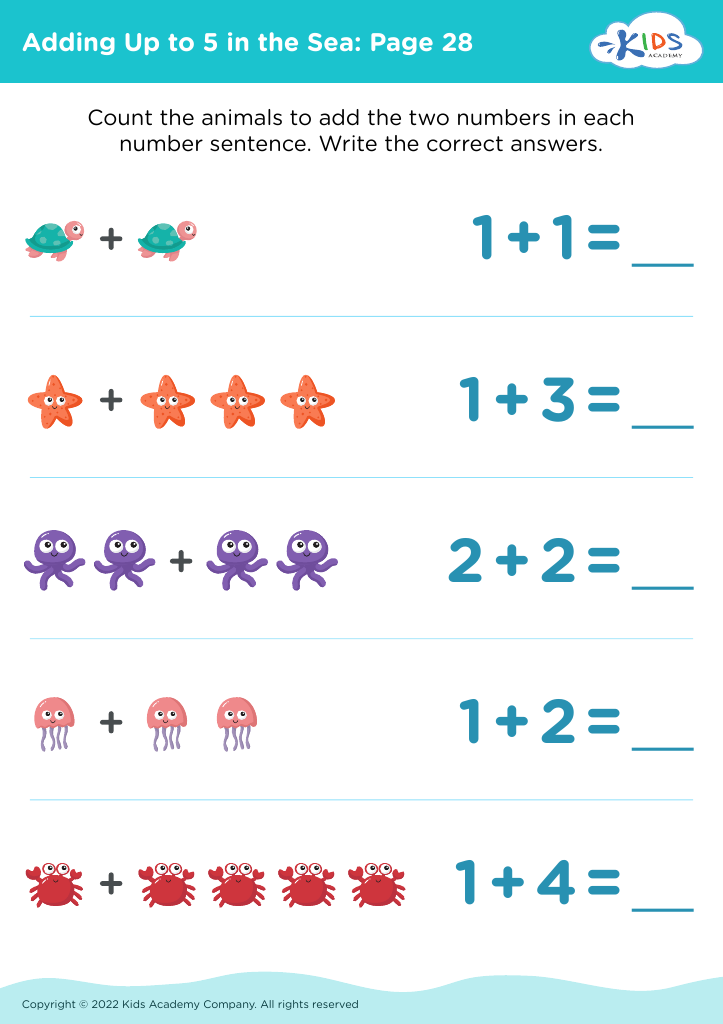
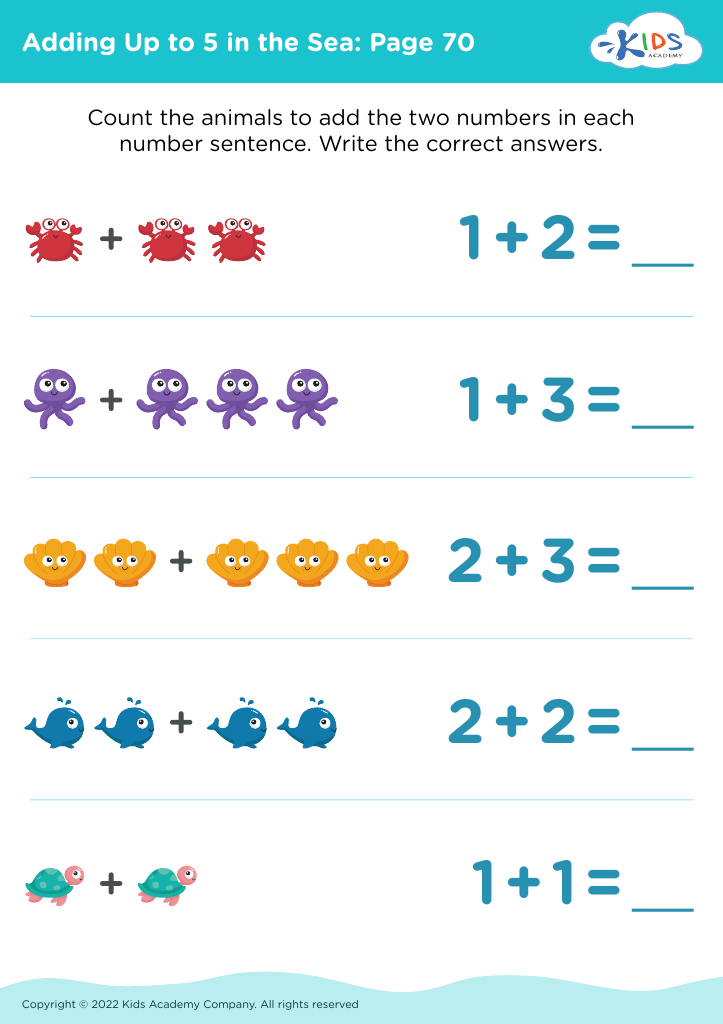
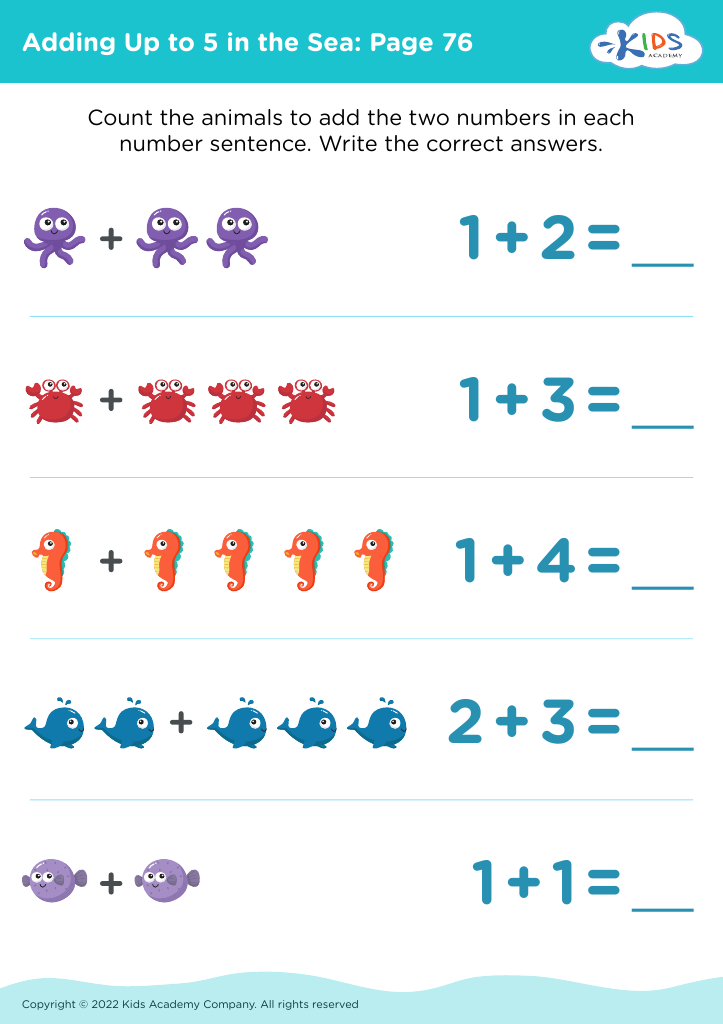



Basic math understanding, specifically in activities like "Adding in the Sea," is crucial for children aged 3-4 for several reasons. At this age, children are naturally curious and eager to engage with their environment. Introducing concepts of addition through playful themes—such as sea creatures—captures their imagination, making learning enjoyable and relevant.
Engaging with basic addition not only builds foundational math skills but also enhances cognitive development. Through play-based learning, kids improve their problem-solving abilities and critical thinking skills. Activities that involve counting and adding reinforce number recognition and one-to-one correspondence, which are essential pre-math skills.
Additionally, math concepts are interconnected with language and social skills. When teachers and parents encourage discussions about numbers and quantities during these activities, it fosters communication skills and boosts vocabulary.
Furthermore, math understanding at this stage can set the tone for future learning. A strong grasp of early math concepts builds confidence in children, encouraging them to explore and enjoy math in later years. Thus, parents and teachers play a crucial role in nurturing mathematical understanding, paving the way for lifelong learning and success.