Hand-eye Coordination Adding in the Sea Worksheets for Ages 3-4
4 filtered results
-
From - To
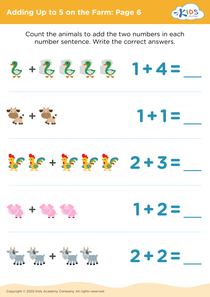
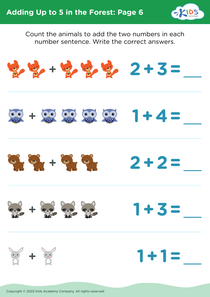
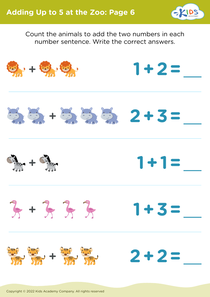
Enhance your child's cognitive and fine motor skills with our "Hand-eye Coordination Adding in the Sea Worksheets" designed for ages 3-4. These engaging worksheets feature fun sea-themed activities that help young learners practice counting and addition while improving their hand-eye coordination. Kids will enjoy connecting and coloring, guiding their little hands through delightful oceanic scenes. Developed by education experts, these playful exercises are perfect for home or classroom use, promoting both mathematical and motor skill development in a captivating underwater world. Dive into learning and make math an exciting aquatic adventure for your preschooler.
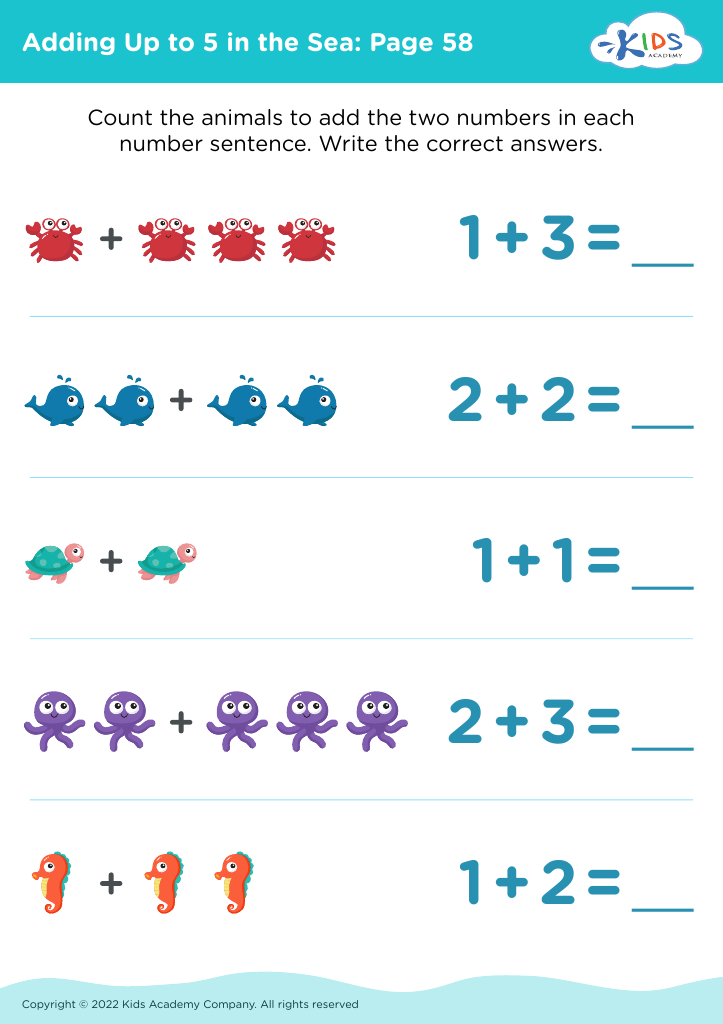
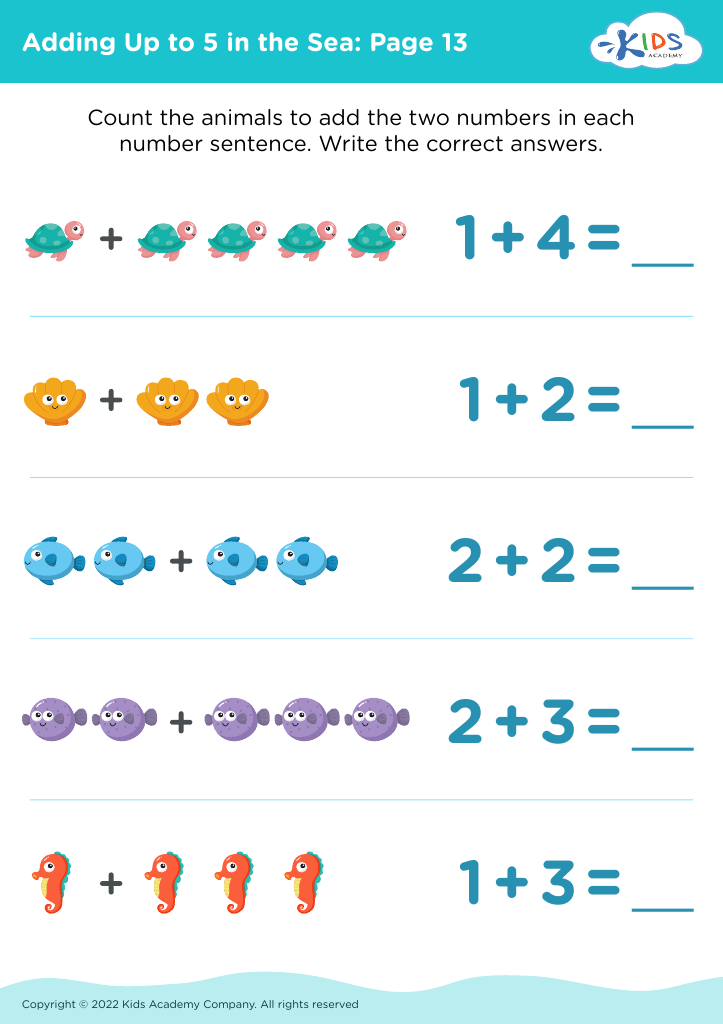
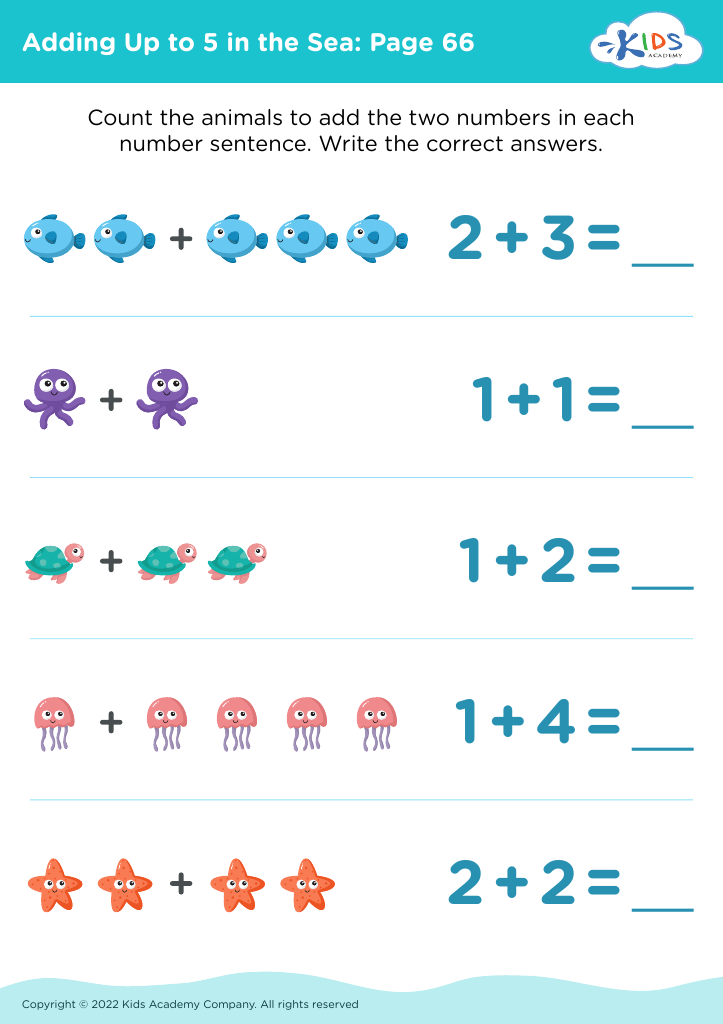
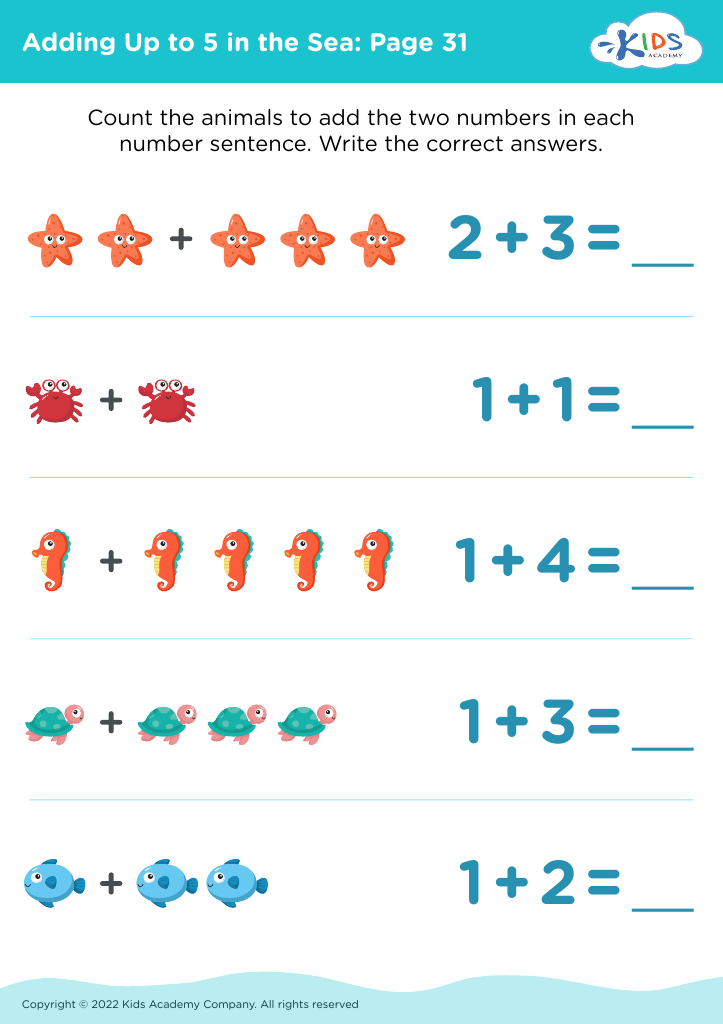



Hand-eye coordination is an essential skill for young children, particularly those aged 3-4, as it plays a crucial role in their overall development. Engaging in activities like "Adding in the Sea," which may involve simple games where children count, move objects, and interact with visual elements, can significantly enhance this skillset.
At this critical age, children's motor skills are rapidly developing. Hand-eye coordination helps to solidify the connection between what they see and how they respond with their movements. This foundation is vital for more complex tasks they'll encounter later, such as writing, sports, and daily activities like tying shoes or buttoning clothes.
For parents and teachers, fostering hand-eye coordination through fun, interactive games also boosts cognitive development. Games like "Adding in the Sea" not only make learning enjoyable but also introduce foundational math skills in a visually stimulating environment. These activities stimulate neural pathways and improve focus, attention, and problem-solving abilities.
Moreover, collaborative games enhance social skills as children play together and learn to take turns, share, and follow instructions. Therefore, incorporating games that support hand-eye coordination into a child's routine is invaluable, laying the groundwork for both academic success and fine motor skill proficiency.