Underwater animal identification Adding in the Sea Worksheets for Ages 3-4
3 filtered results
-
From - To
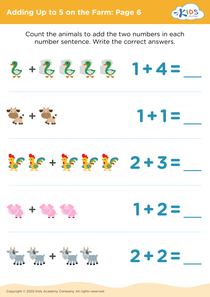
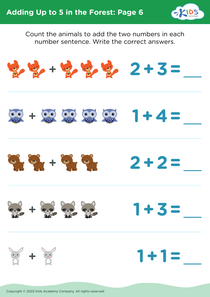
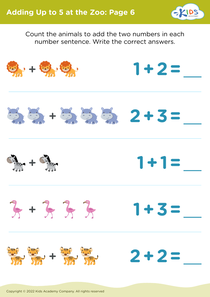
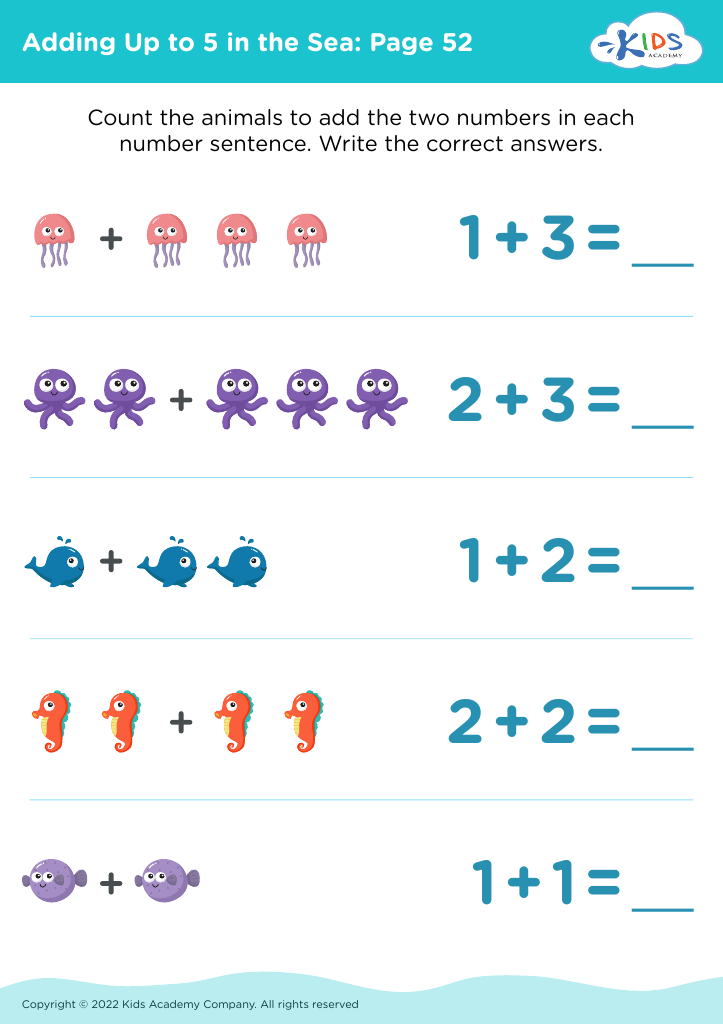
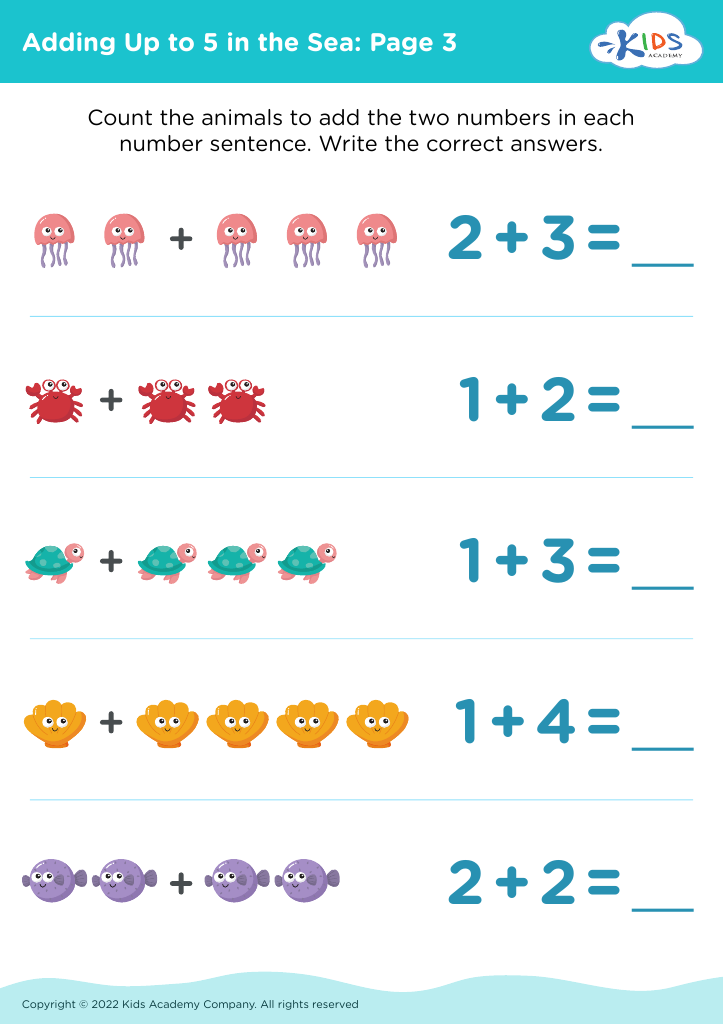
Dive into learning with our "Underwater Animal Identification: Adding in the Sea" worksheets, tailored for children ages 3-4! These engaging and colorful worksheets provide a fun way for young learners to identify marine creatures while practicing their addition skills. Each exercise features captivating underwater animal illustrations, helping to spark curiosity and enhance vocabulary. Children will enjoy counting and adding as they explore the ocean's wonders. Our worksheets not only support early math learning but also encourage recognition of various sea animals, making it a perfect blend of education and entertainment. Start your aquatic adventure today and inspire a love for learning!
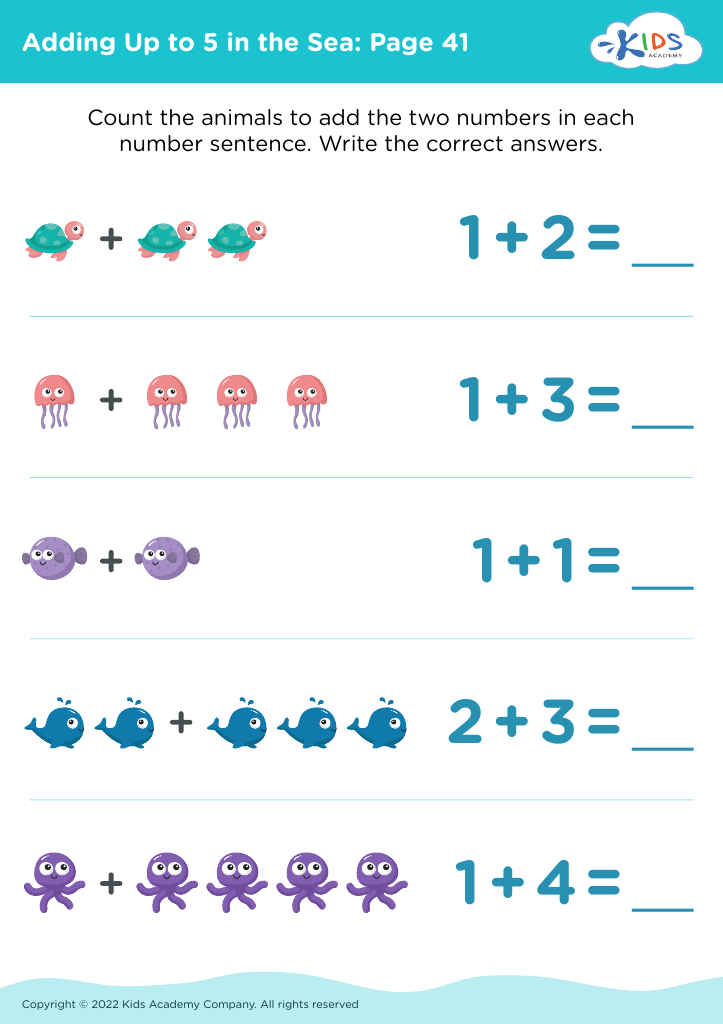



Understanding underwater animal identification is crucial for parents and teachers, especially for children ages 3-4, as it fosters a strong foundation in environmental awareness and curiosity about the world. At this young age, children are naturally curious and eager to learn, making it the perfect opportunity to introduce them to the diverse and vibrant life in our oceans.
Identifying underwater animals enhances cognitive development by improving memory and categorization skills. As children learn to recognize different species, they also develop language skills by expanding their vocabulary through names and characteristics. Furthermore, this educational activity promotes empathy and respect for marine life, instilling an early sense of responsibility towards protecting our environment.
Interactive activities like matching games or picture books can make identification fun, integrating play into learning. This approach not only caters to their developmental needs but also strengthens the bond between parents or teachers and children as they explore together. Additionally, appreciating the beauty and diversity of underwater creatures can spark an interest in science and conservation, encouraging future generations to become advocates for the health of our oceans. Overall, teaching young children about underwater animal identification enriches their minds and promotes a caring, informed outlook towards the natural world.