Animal recognition Adding on the Farm Worksheets for Ages 3-4 - Page 2
31 filtered results
-
From - To
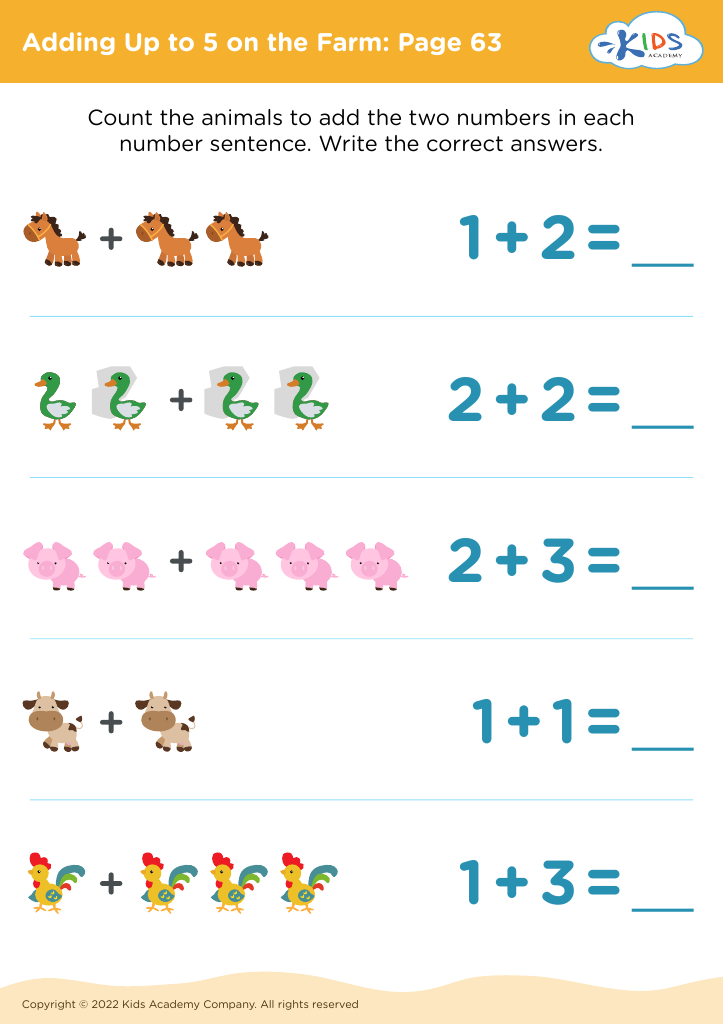
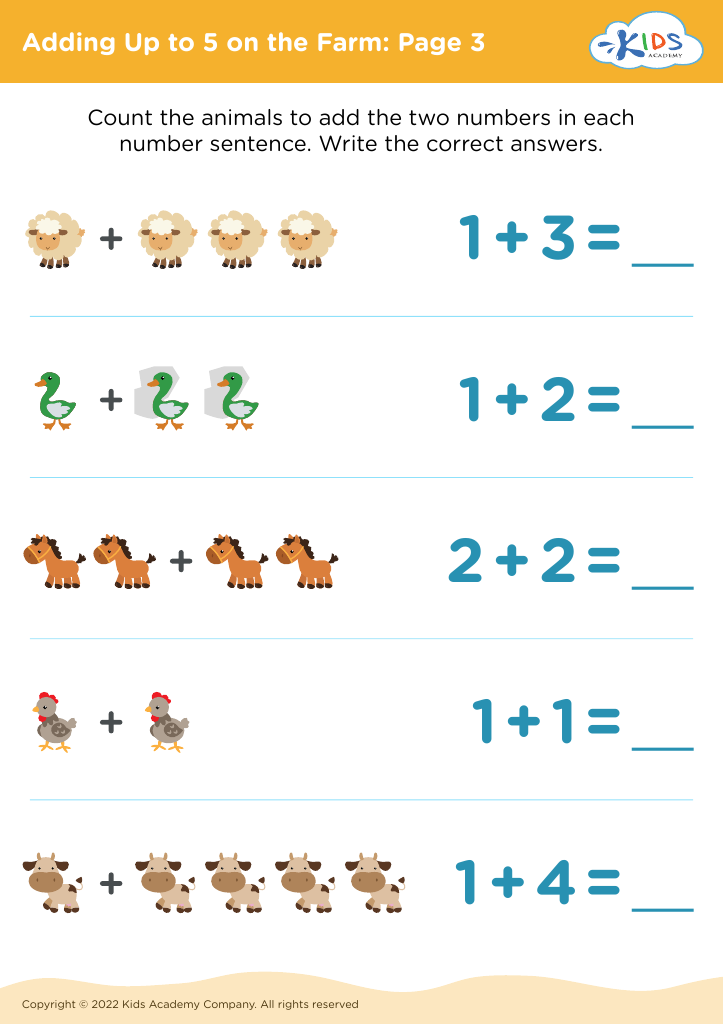
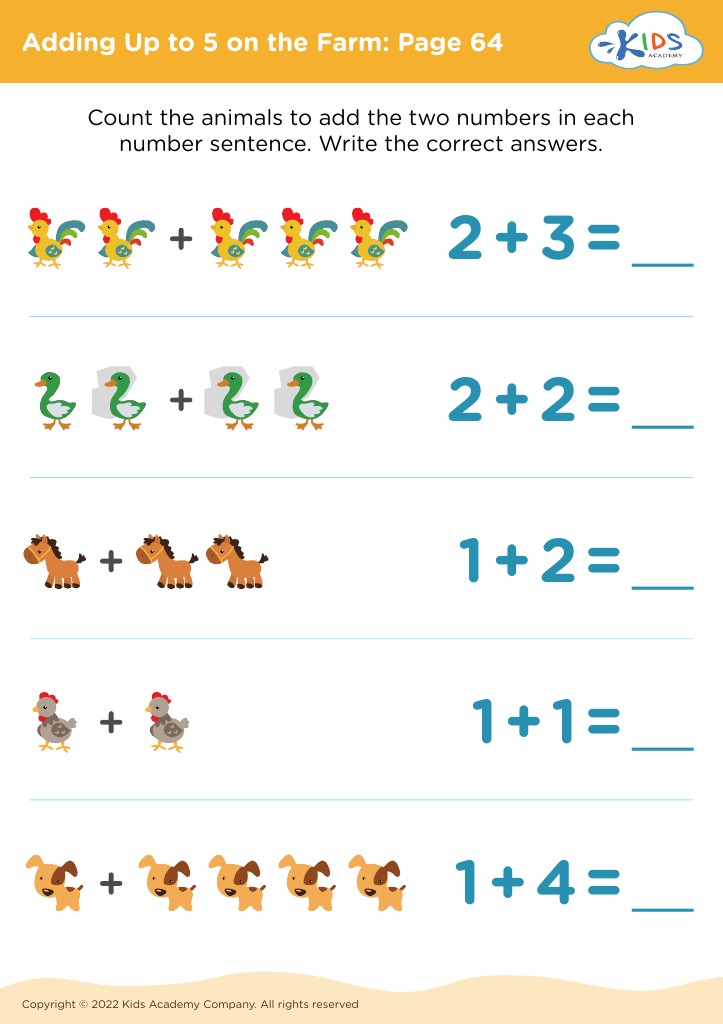
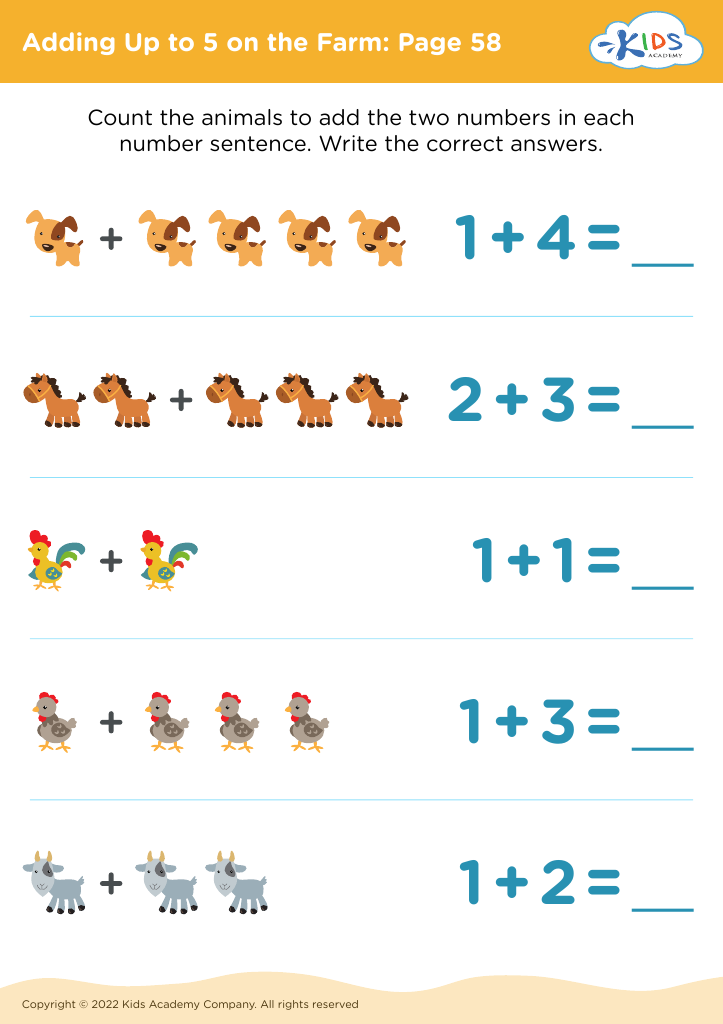
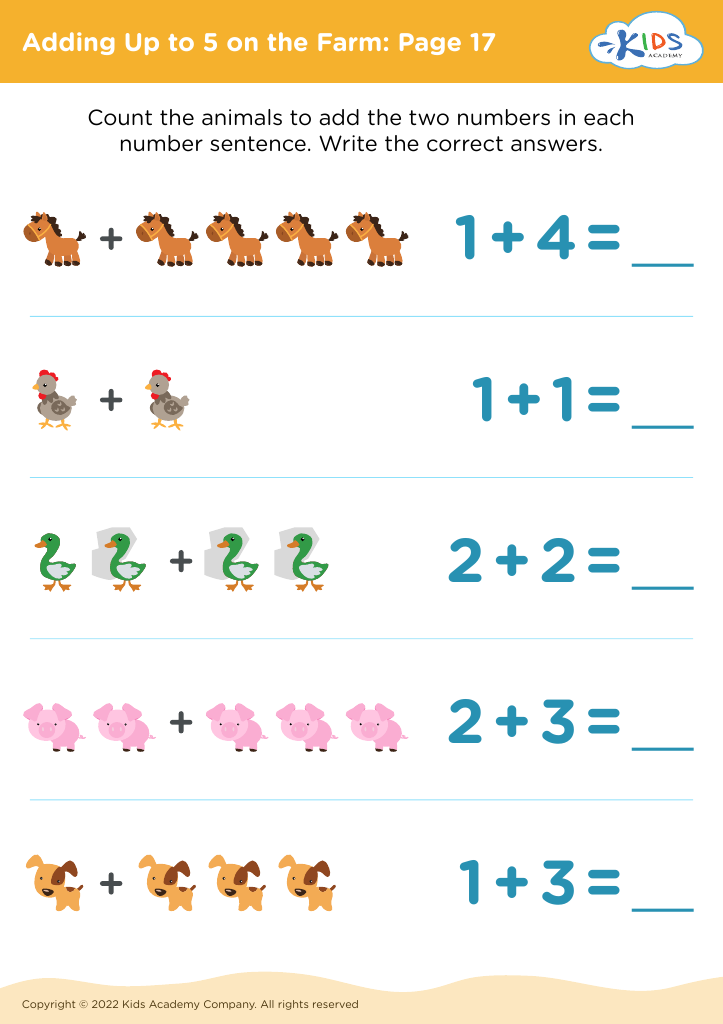
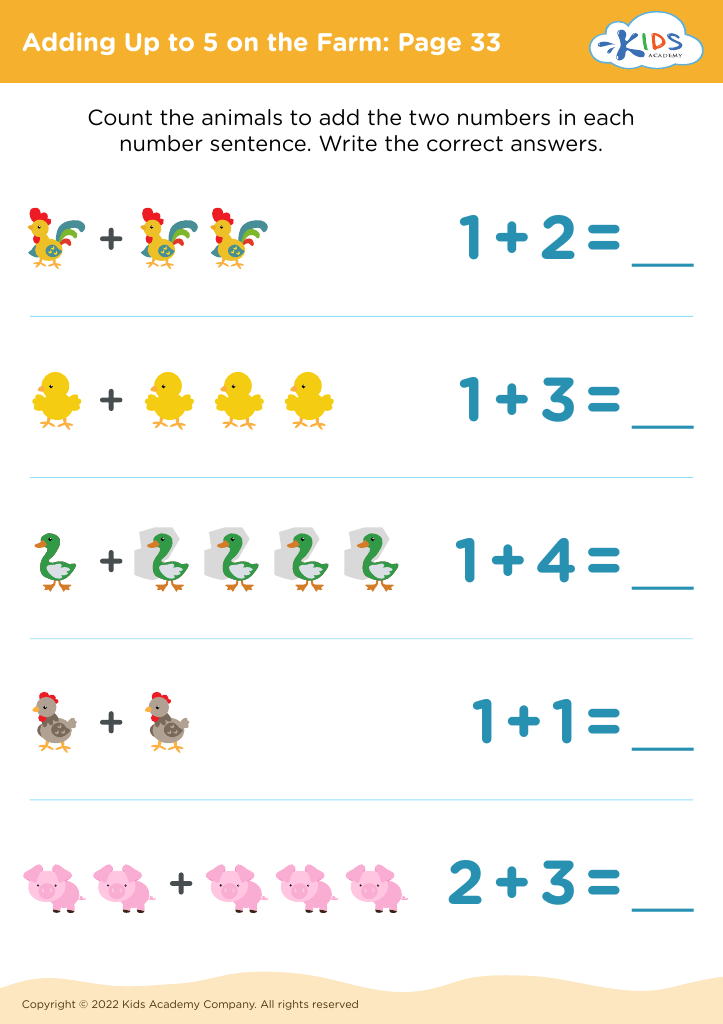
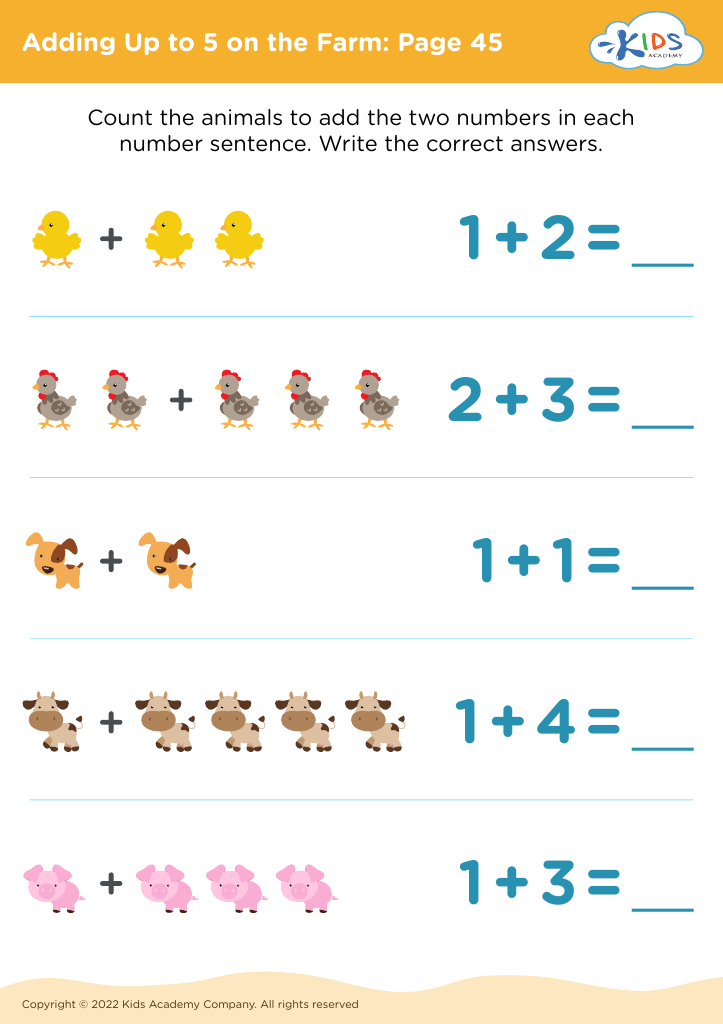



Animal recognition on a farm is crucial for young children aged 3-4, as it serves as a foundational aspect of their cognitive and social development. By learning to identify different farm animals, children engage in active learning that enhances their vocabulary, memory, and observational skills. Recognizing animals like cows, pigs, sheep, and chickens helps enrich their understanding of their environment and fosters curiosity about the world around them.
Moreover, animal recognition promotes emotional intelligence. Children can develop empathy by understanding that animals have needs, behaviors, and characteristics. This aspect can lead to discussions about the importance of caring for animals and their role in our lives, bridging the connection between humans and nature.
For parents and teachers, integrating animal recognition into the learning environment encourages imaginative play and creativity. It allows for active participation through storytelling, songs, and hands-on experiences, making learning enjoyable and engaging. Additionally, farm animals can be tied to lessons on responsibility, such as the importance of caring for living creatures. Ultimately, promoting animal recognition nurtures a sense of wonder, laying the groundwork for environmental awareness and ethical consideration as children grow.