Addition up to 5 Adding Up to 5 Worksheets for Ages 3-4
4 filtered results
-
From - To
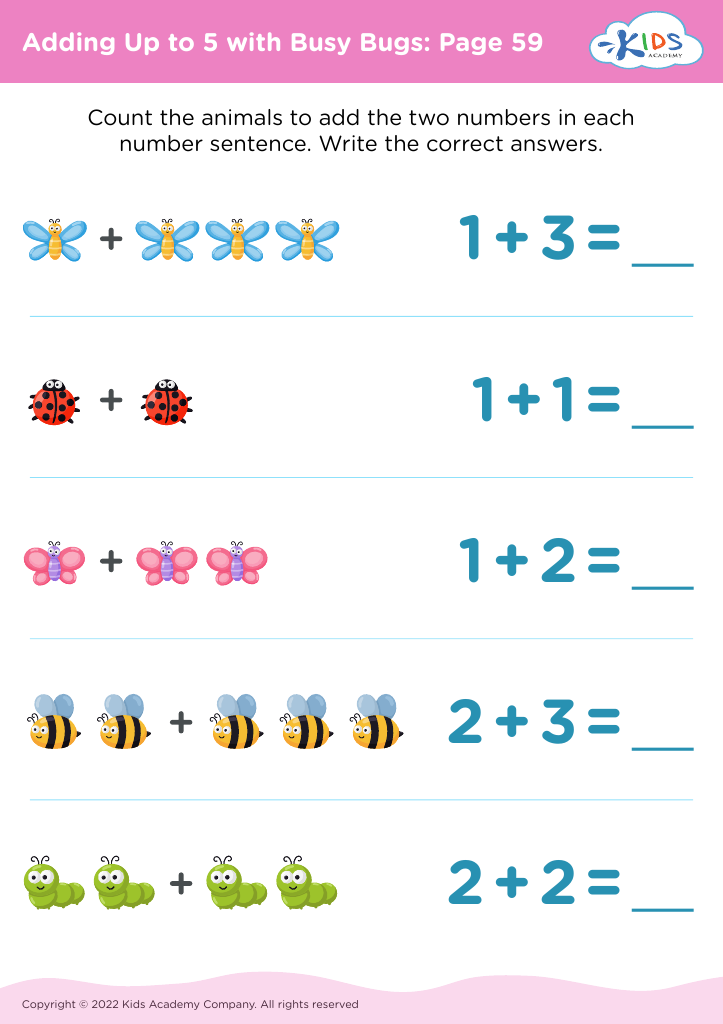
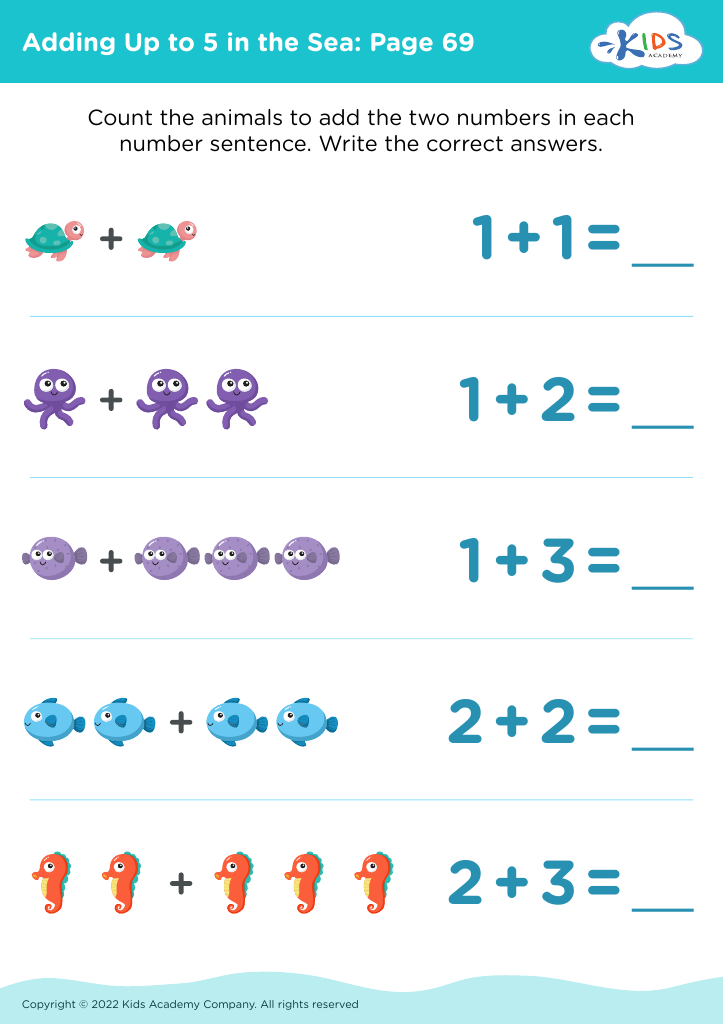
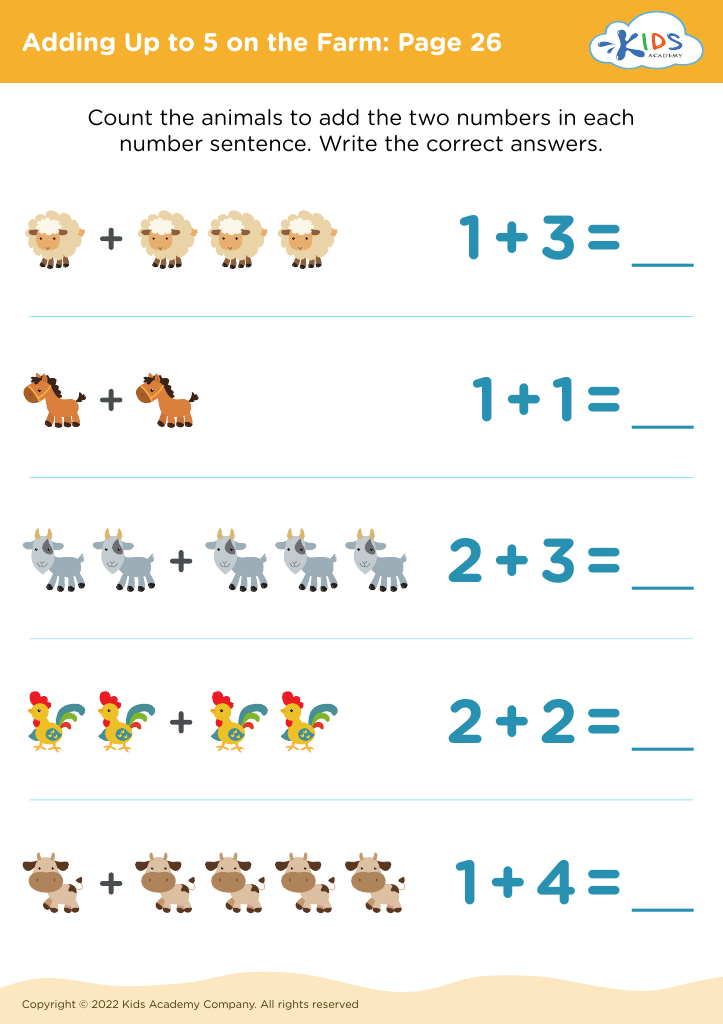
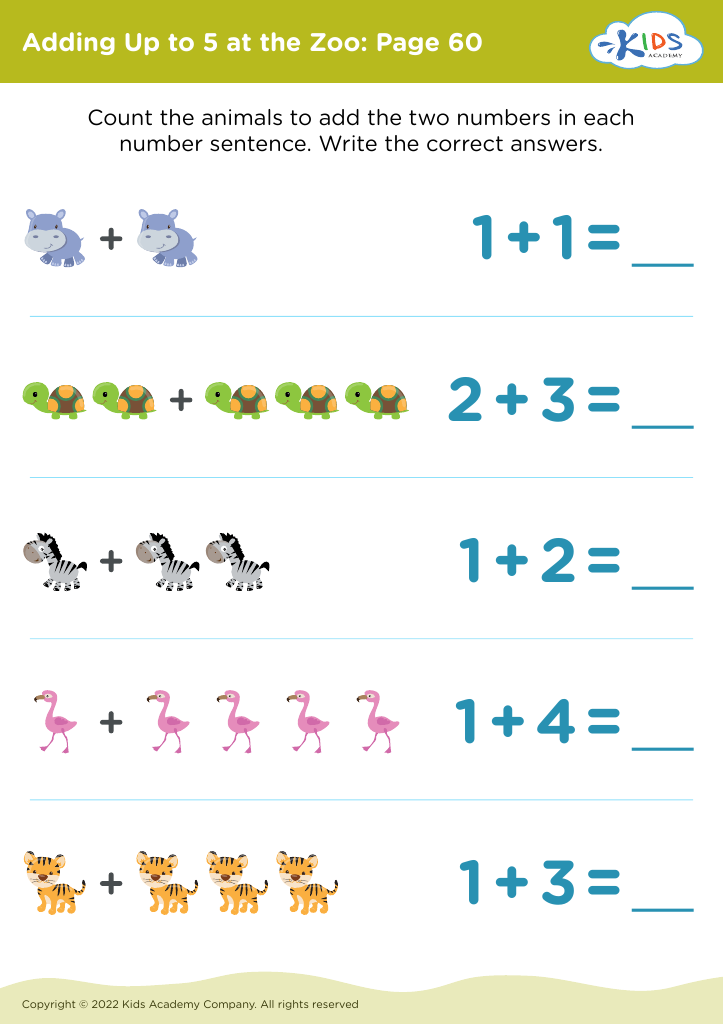
Explore our engaging "Addition up to 5 Worksheets" designed specifically for children aged 3-4. These fun and colorful worksheets help young learners grasp the basics of addition through interactive activities tailored to develop their counting skills and mathematical understanding. Kids will enjoy hands-on experiences while adding numbers up to 5, enhancing their cognitive abilities and confidence in math. Each worksheet encourages critical thinking and problem-solving, making learning enjoyable. Perfect for homeschooling or classroom use, our Addition up to 5 worksheets provide a solid foundation for early math skills. Start your child's math journey today with these exciting printable resources!






.jpg)

Addition up to 5 is a fundamental skill that serves as the building block for later mathematics and problem-solving abilities in young children aged 3-4. At this early age, children are naturally curious and eager to explore numbers, making it an ideal time to introduce simple addition. Engaging children in adding small numbers helps them develop a solid understanding of quantity and numeracy, promoting cognitive skills necessary for future learning.
Parents and teachers play a crucial role in this learning process. By providing interactive and enjoyable activities involving addition, such as counting toys, using fingers, or engaging in games, they can boost children's confidence and enthusiasm for math. This hands-on exploration enables children to visualize concepts, enhancing retention and application of knowledge.
Furthermore, learning basic addition fosters critical thinking and problem-solving skills, as children begin to recognize patterns and relationships between numbers. It also supports language development as they learn to articulate their thought processes. In conclusion, teaching addition up to 5 in a fun and engaging manner not only builds essential numerical fluency at an early age but also lays the groundwork for future academic success, encouraging a positive attitude towards learning and mathematics.








