Animal identification Adding Up to 5 Worksheets for Ages 3-4 - Page 2
27 filtered results
-
From - To






%20(1).jpg)

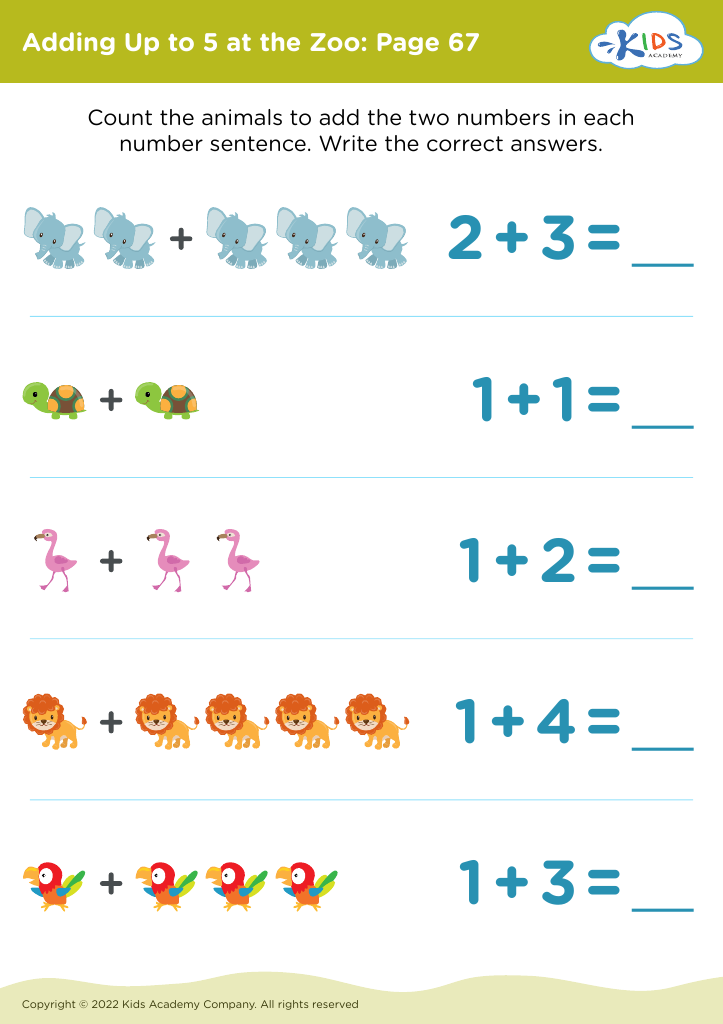
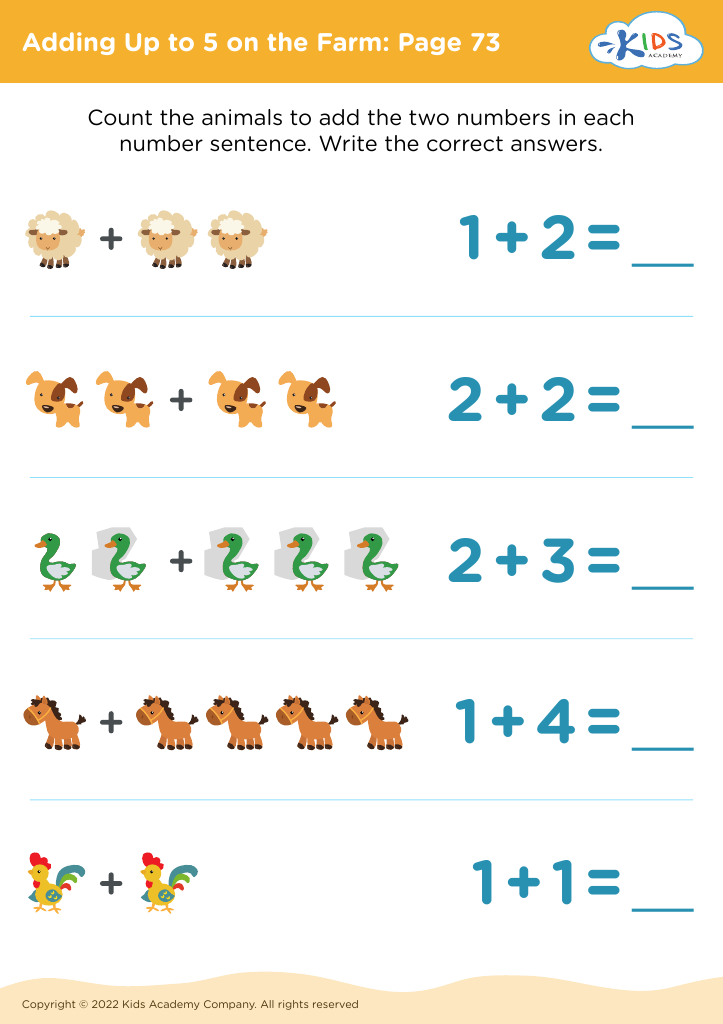
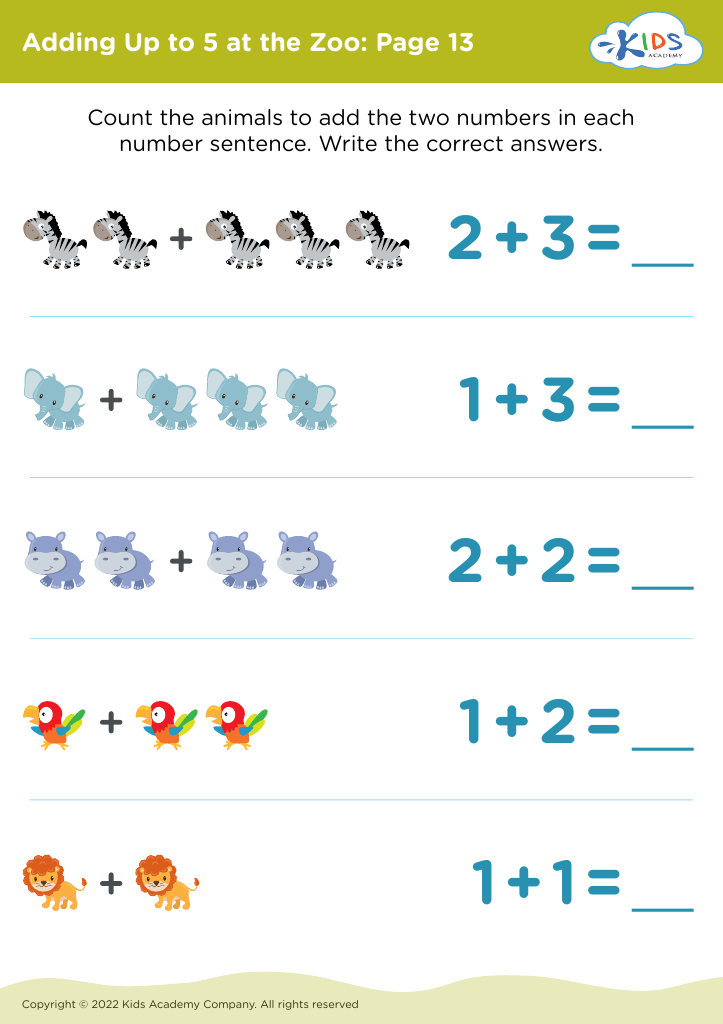
Parents and teachers should prioritize early learning activities like Animal Identification and Adding Up to 5 for ages 3-4 due to their significant developmental benefits. At this young age, children's brains are rapidly growing, making it an optimal time to cultivate foundational cognitive and social skills.
Firstly, identifying animals introduces children to the natural world, nurturing curiosity and engagement with their environment. Learning animal names also enhances vocabulary and language skills, expanding their ability to communicate effectively.
Combining this with simple arithmetic, such as adding up to 5, offers dual developmental benefits. Early exposure to math concepts builds the groundwork for numerical literacy, crucial for future academic success. These activities also promote problem-solving abilities and critical thinking as children learn to count, compare, and understand quantity relationships.
Moreover, these activities can be both fun and interactive, fostering a positive attitude towards learning. Making learning a playful experience encourages children to seek knowledge actively. Mixing cognitive tasks with familiar, enjoyable themes like animals can significantly enhance focus and retention.
Incorporating Animal Identification and Adding Up to 5 enables holistic development, merging language, math, and cognitive skills. Overall, these early educational activities are crucial in building a strong intellectual foundation for young children.








