Basic arithmetic practice Adding Up to 5 Worksheets for Ages 3-4
8 filtered results
-
From - To
Welcome to our "Basic Arithmetic Practice: Adding Up to 5 Worksheets" designed for children aged 3-4! These engaging worksheets aim to introduce young learners to fundamental math concepts through fun exercises that focus on addition within the number range of 5. Each worksheet is colorful and interactive, encouraging kids to explore numbers actively and enhance their counting skills. With a variety of activities, including counting dots and matching items, your little ones will develop a strong foundation in basic arithmetic. Perfect for home or classroom settings, these worksheets make learning math a fun and enjoyable experience for young learners.
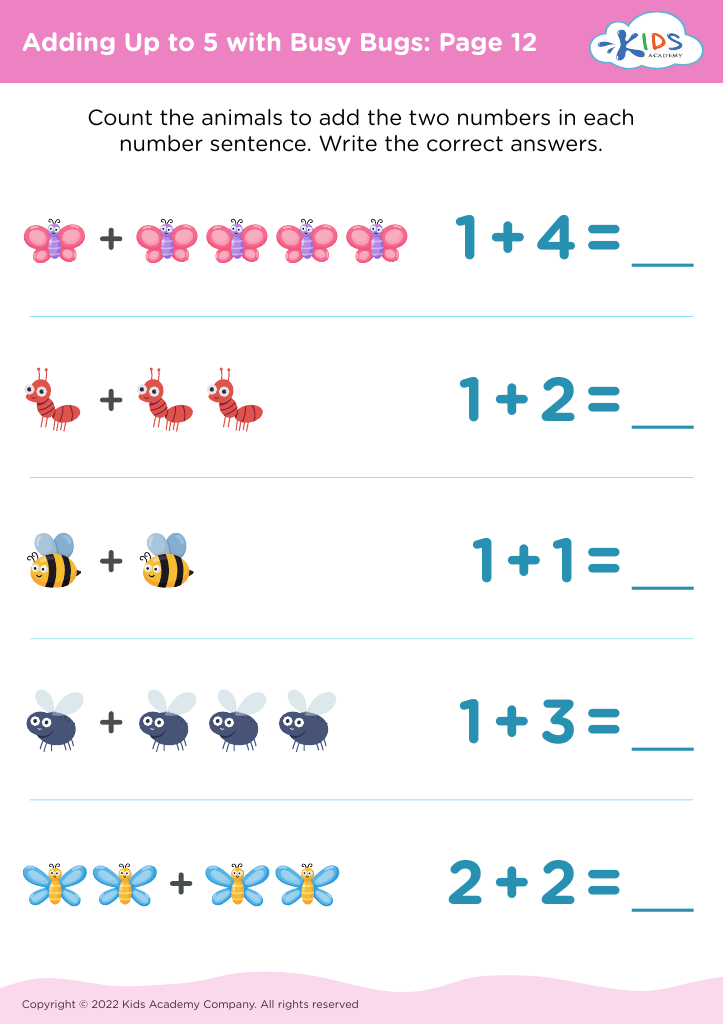
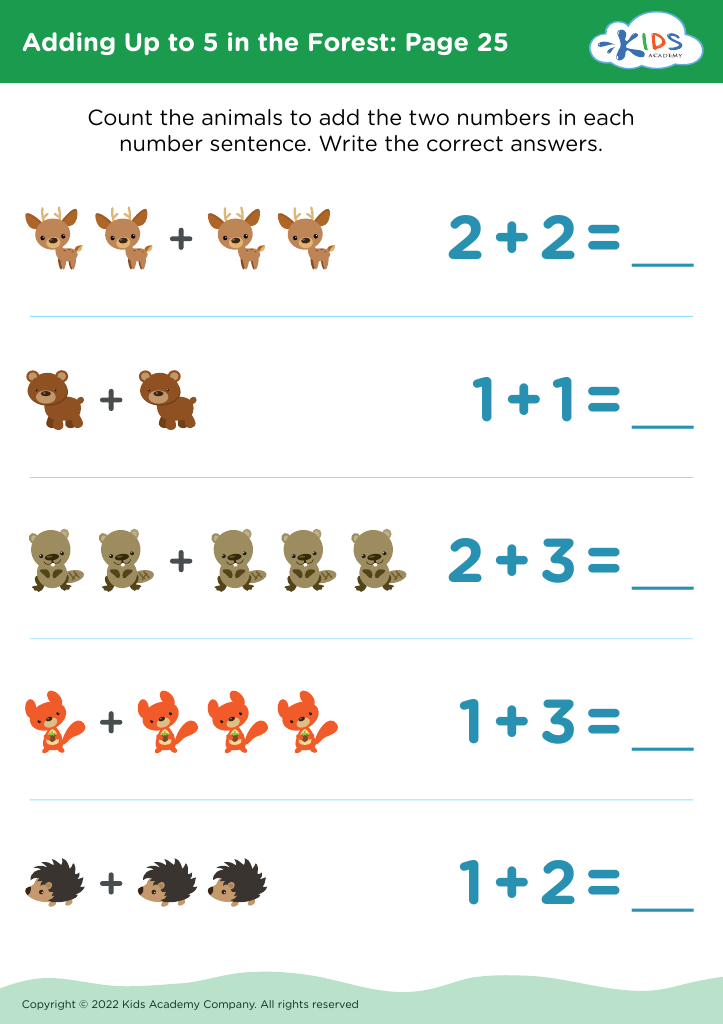
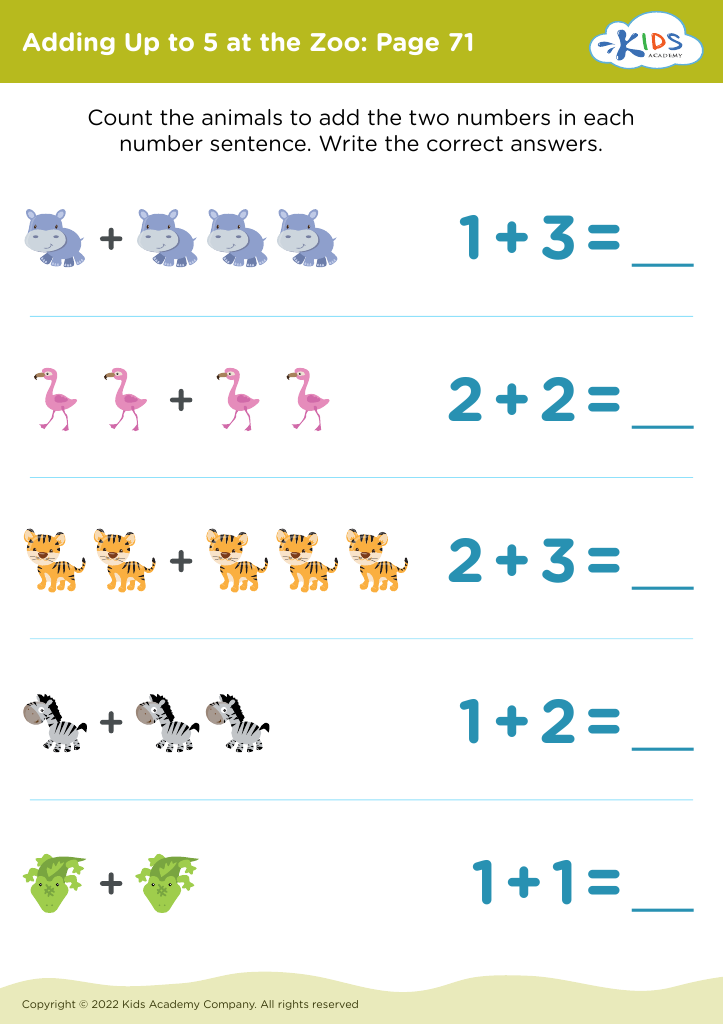
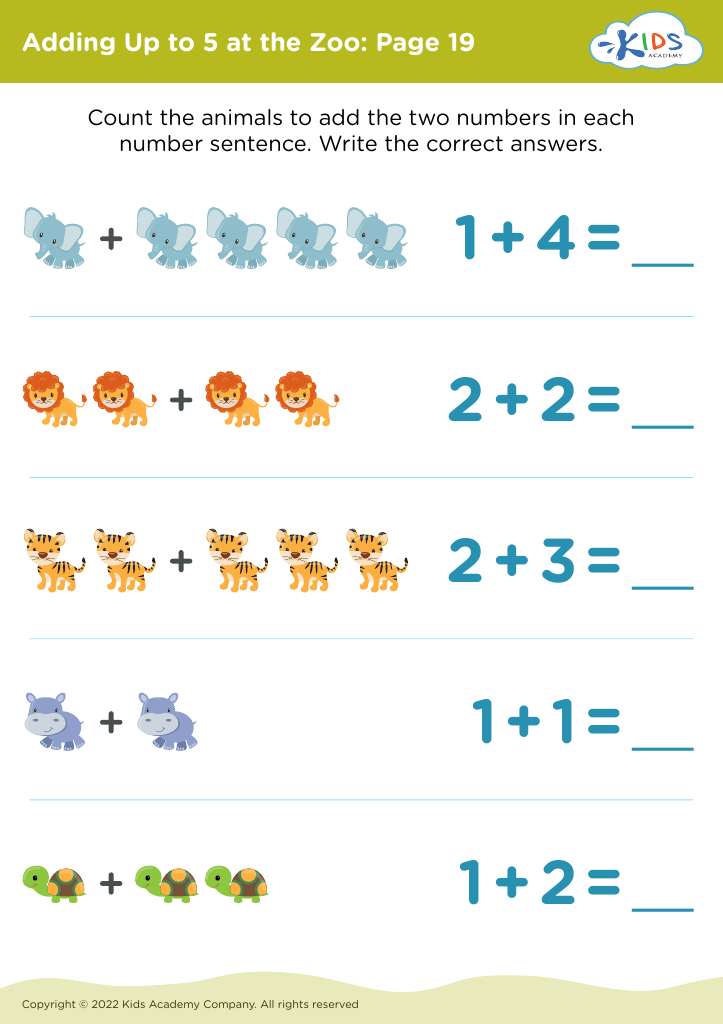
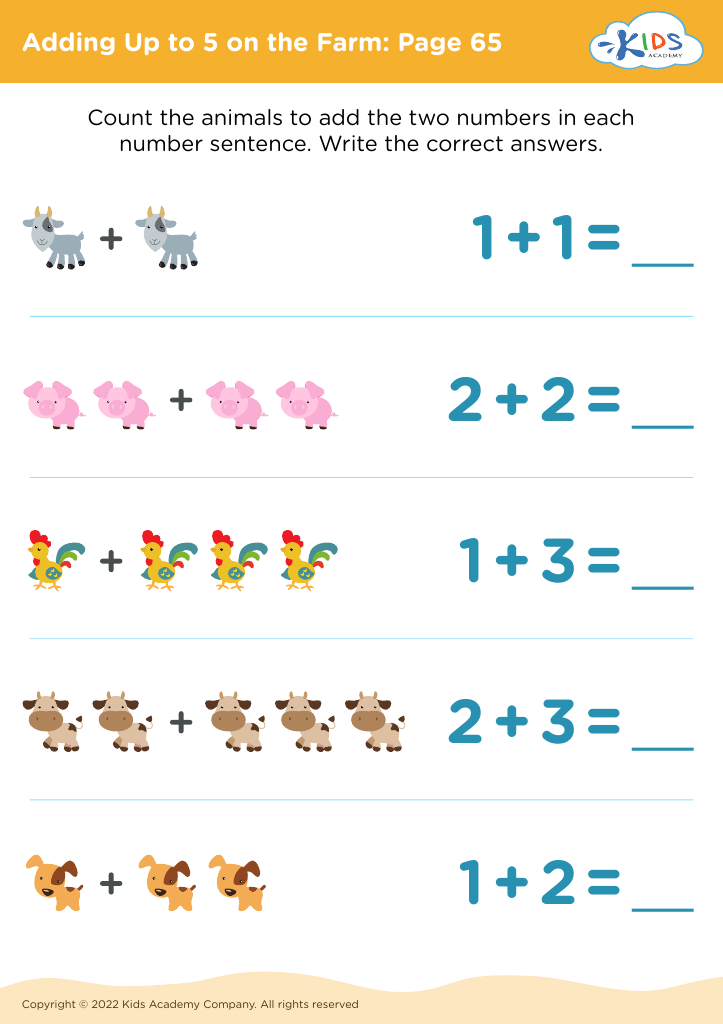
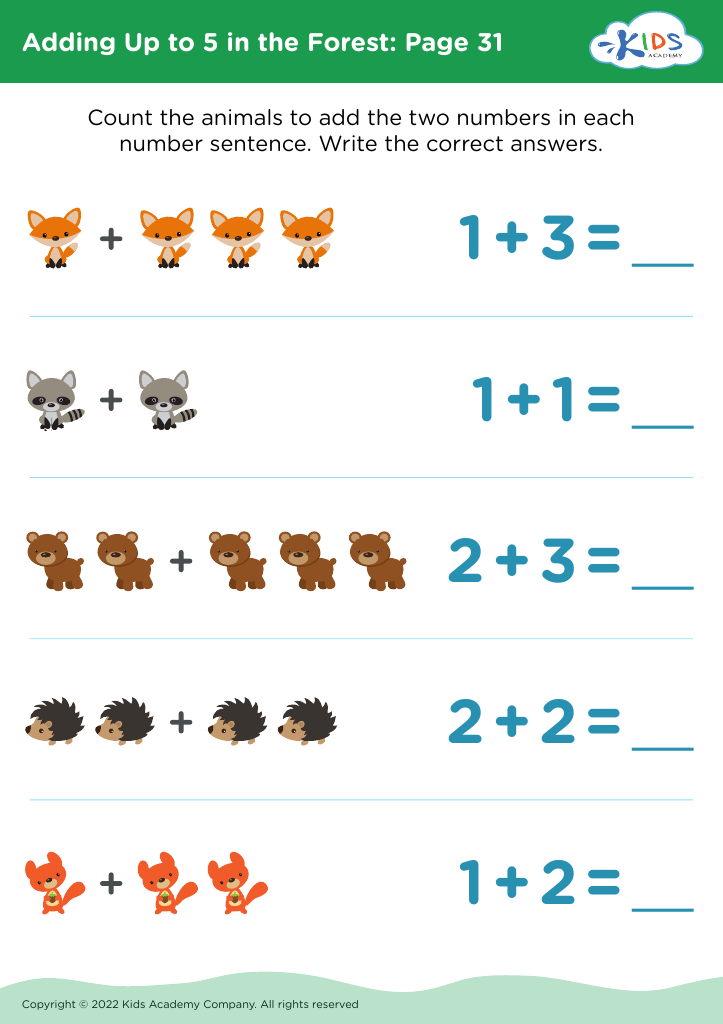
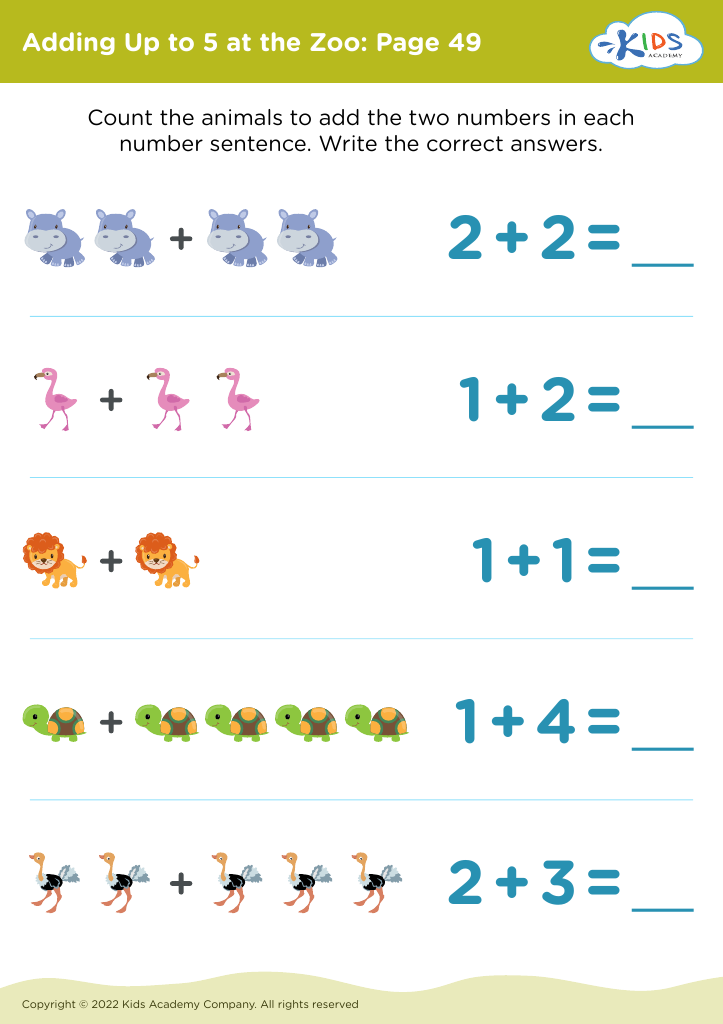
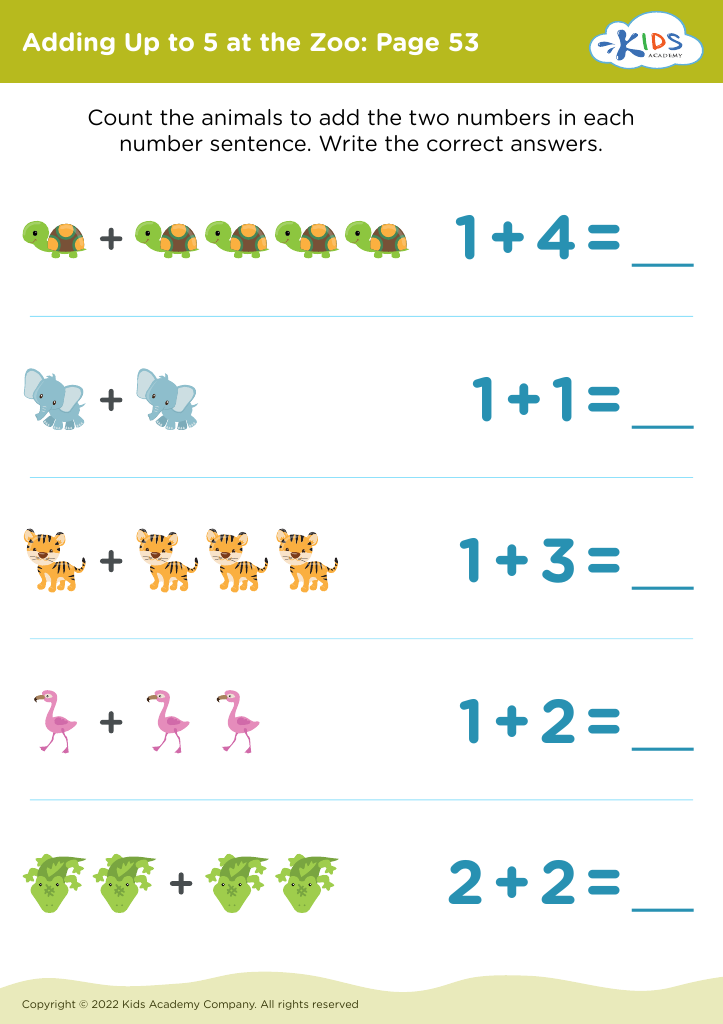








Basic arithmetic practice, particularly adding up to 5, is vital for children aged 3-4 as it lays the foundation for their future math skills. During this developmental stage, young children are naturally curious and eager to explore numbers and patterns; engaging them with simple addition sets the stage for positive associations with math.
Understanding basic addition helps enhance cognitive abilities, such as problem-solving and logical thinking. When children grasp the concept of combining quantities, they begin to see math as a relatable part of everyday life, enhancing their communication and storytelling skills through numerical relationships.
Furthermore, practicing addition aids in developing fine motor skills, especially when using manipulatives like blocks or counters. This multisensory approach creates a more engaging learning environment, making math fun and interactive.
Parents and teachers should recognize that competency in basic addition encourages confidence and a growth mindset in children. Establishing a positive attitude toward math early on can have lasting impacts, fostering a love for learning and facilitating future academic success. Thus, promoting basic arithmetic practice is essential for both immediate understanding and long-term educational outcomes. Investing time in these foundational skills nurtures enthusiastic, well-rounded learners ready for more complex mathematical challenges.








