Filters

21 filtered results

Clear all filters
Favorites
With answer key
Interactive

21 filtered results

Difficulty Level

Grade


Welcome to our “Basic Math Skills: Adding Up to 5” worksheets, specifically designed for children ages 3-4! These engaging and colorful worksheets help little learners develop essential early math skills by introducing the concepts of addition and number recognition. Each activity is carefully crafted to provide hands-on practice while fostering a love for math. Perfect for home or classroom use, these worksheets encourage number counting, combining sets, and understanding the idea of addition through fun exercises. Watch your child gain confidence in their mathematical abilities as they embark on an interactive learning journey that builds a strong foundation in basic math!
Check out this FREE Trial Lesson on Adding Up to 5 for age 3-4!

H

Favorites
With answer key
Interactive
  • 3-4
  • Basic Math Skills
  • Adding Up to 5
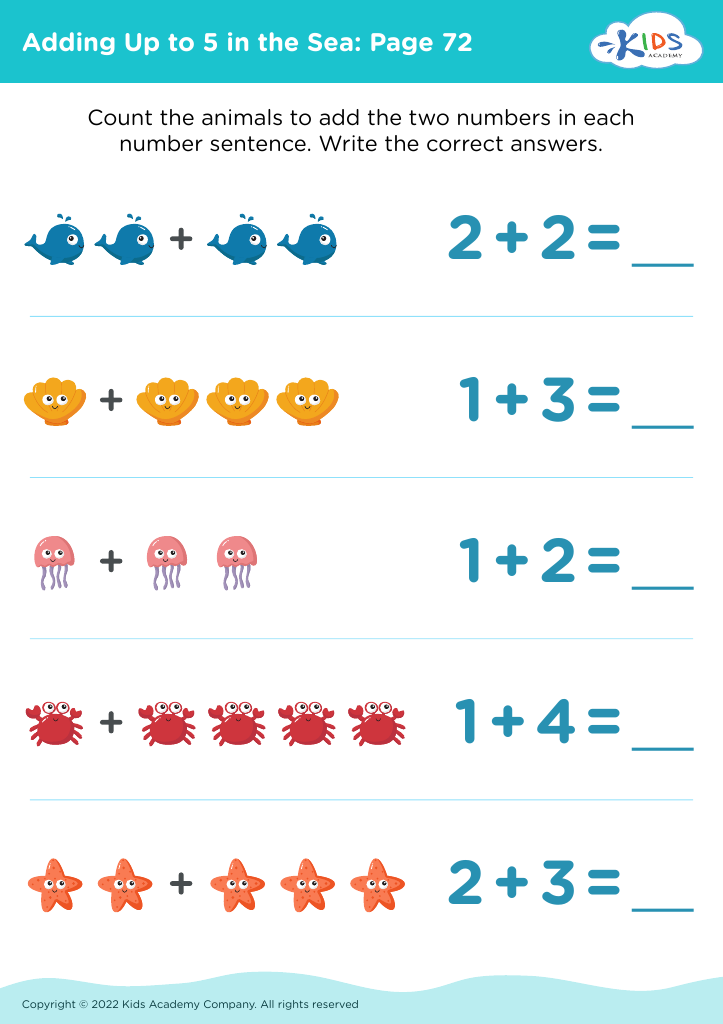
Adding Up to 5 in the Sea: Page 72
Worksheet
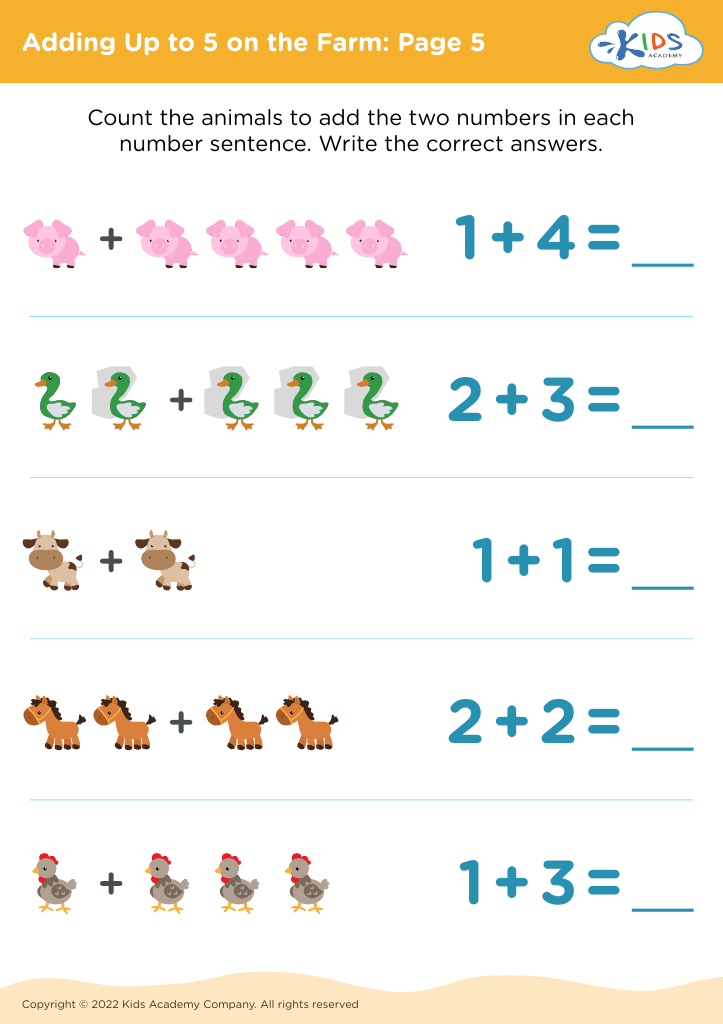
Adding Up to 5 on the Farm: Page 5
Worksheet
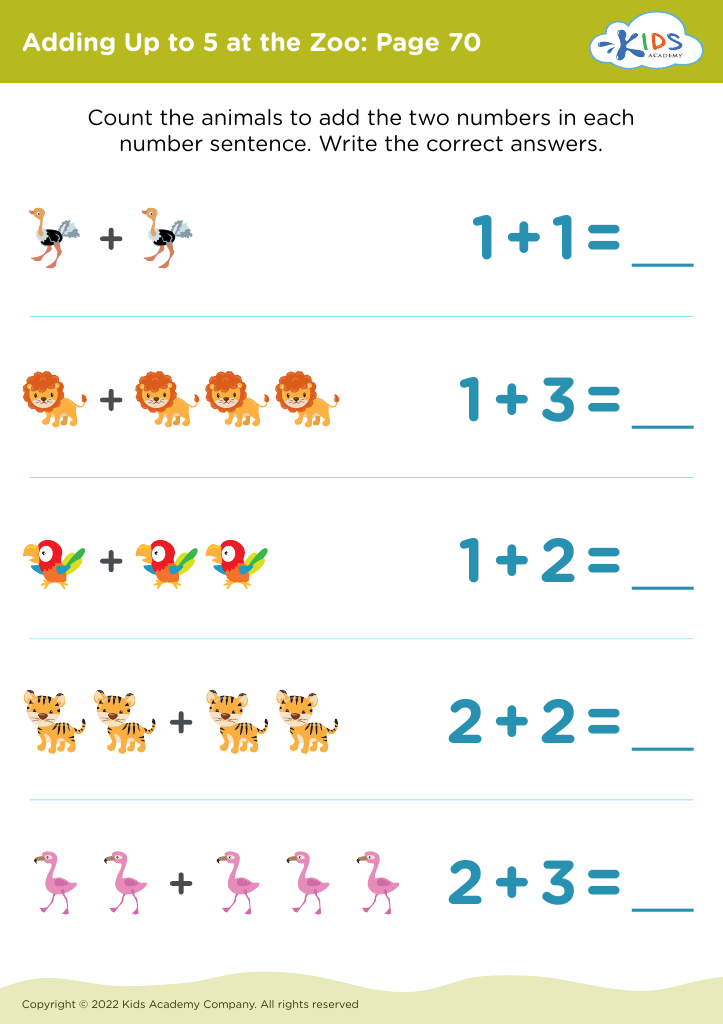
Adding Up to 5 at the Zoo: Page 70
Worksheet
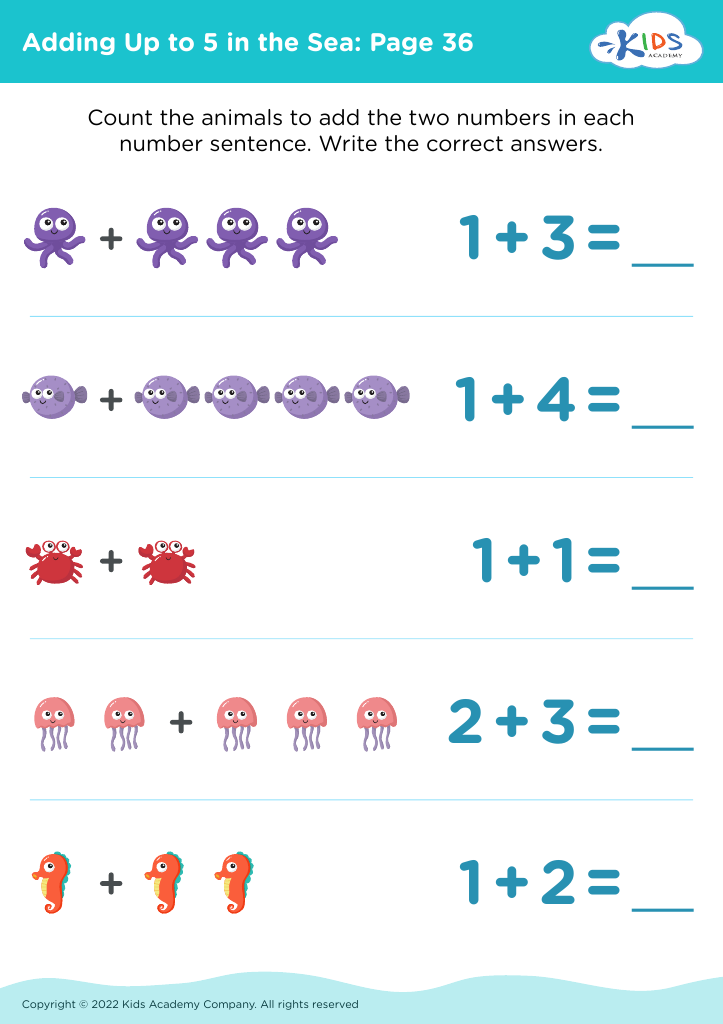
Adding Up to 5 in the Sea: Page 36
Worksheet
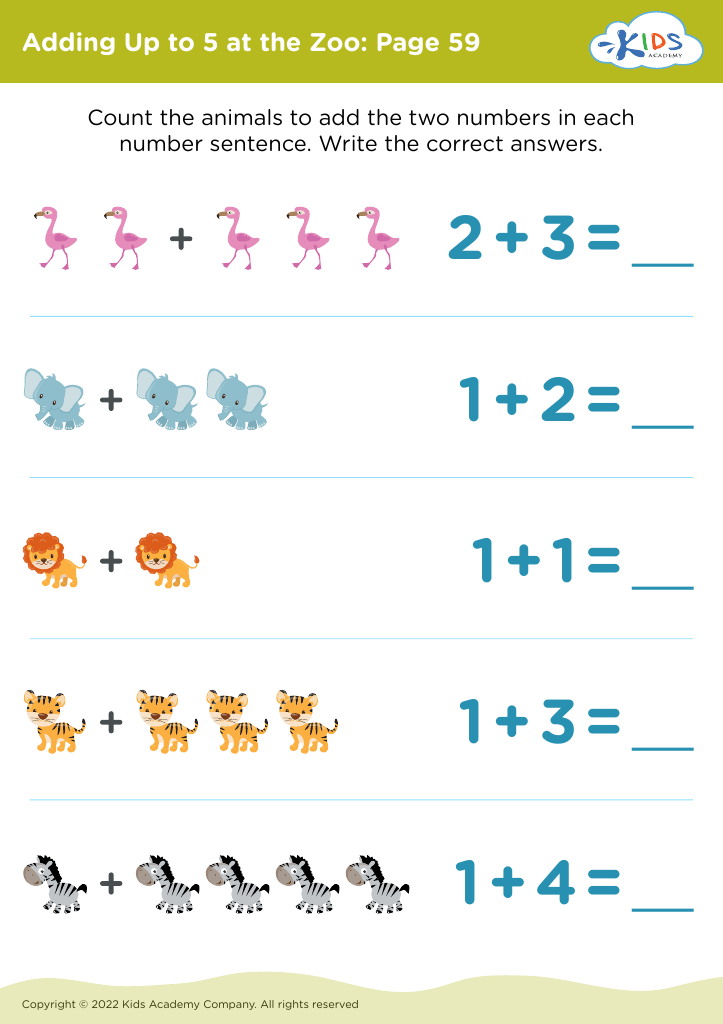
Adding Up to 5 at the Zoo: Page 59
Worksheet
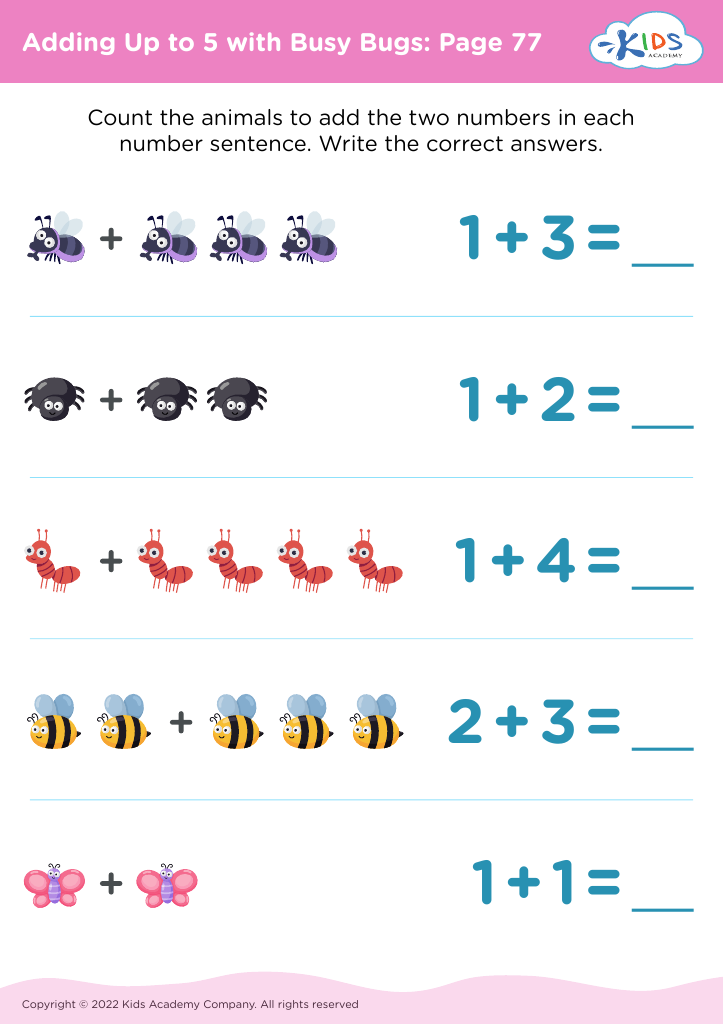
Adding Up to 5 with Busy Bugs: Page 77
Worksheet
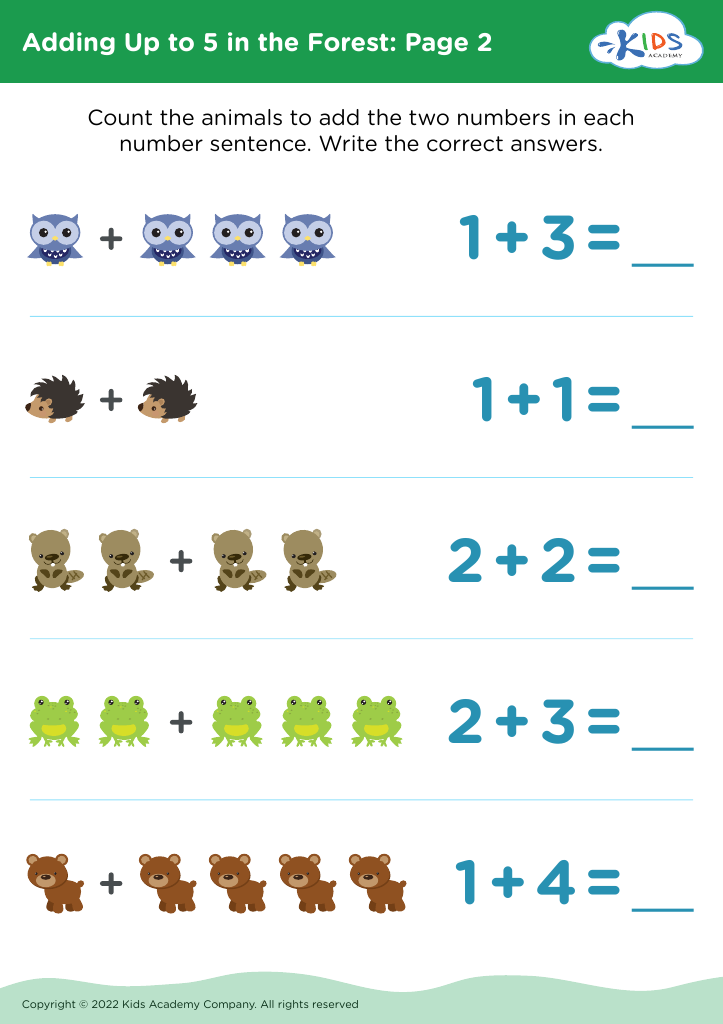
Adding Up to 5 in the Forest: Page 2
Worksheet
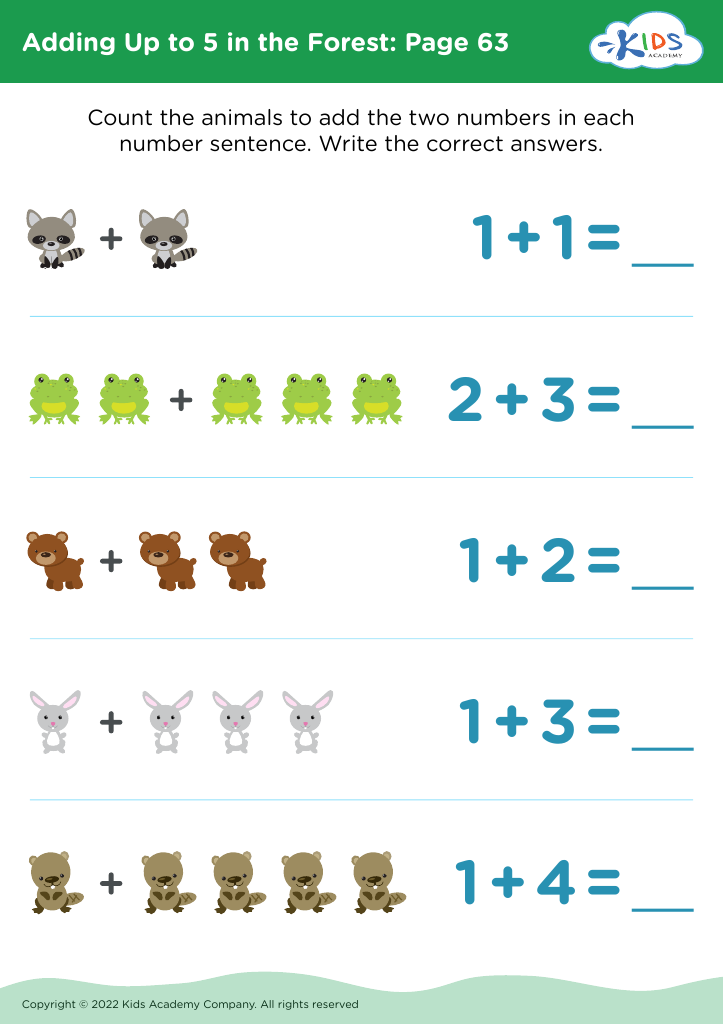
Adding Up to 5 in the Forest: Page 63
Worksheet
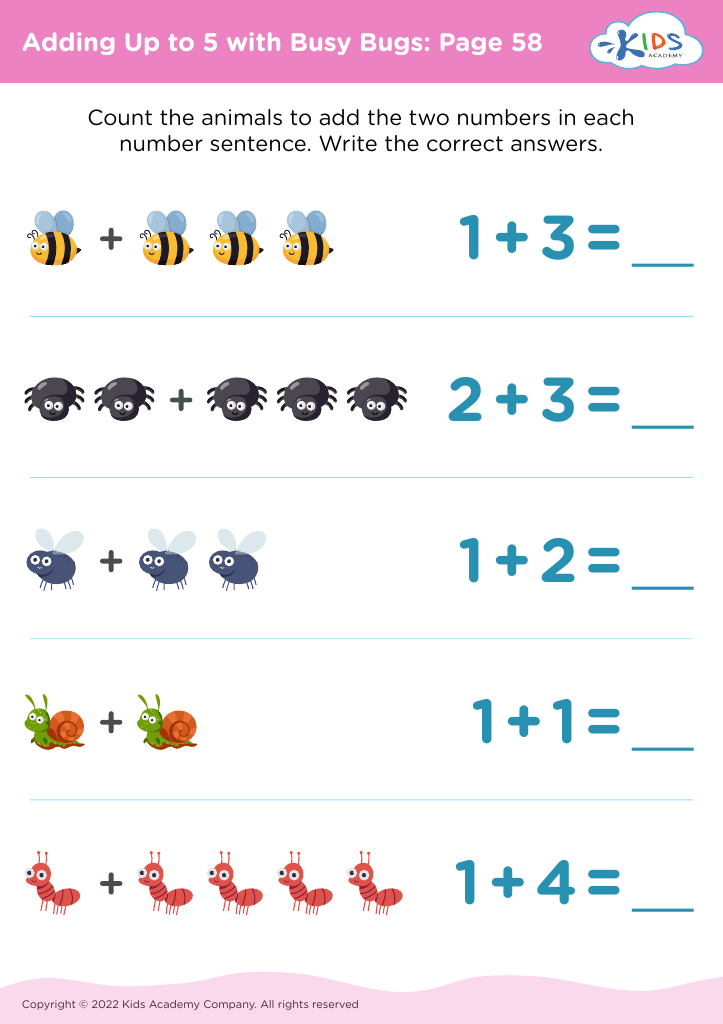
Adding Up to 5 with Busy Bugs: Page 58
Worksheet
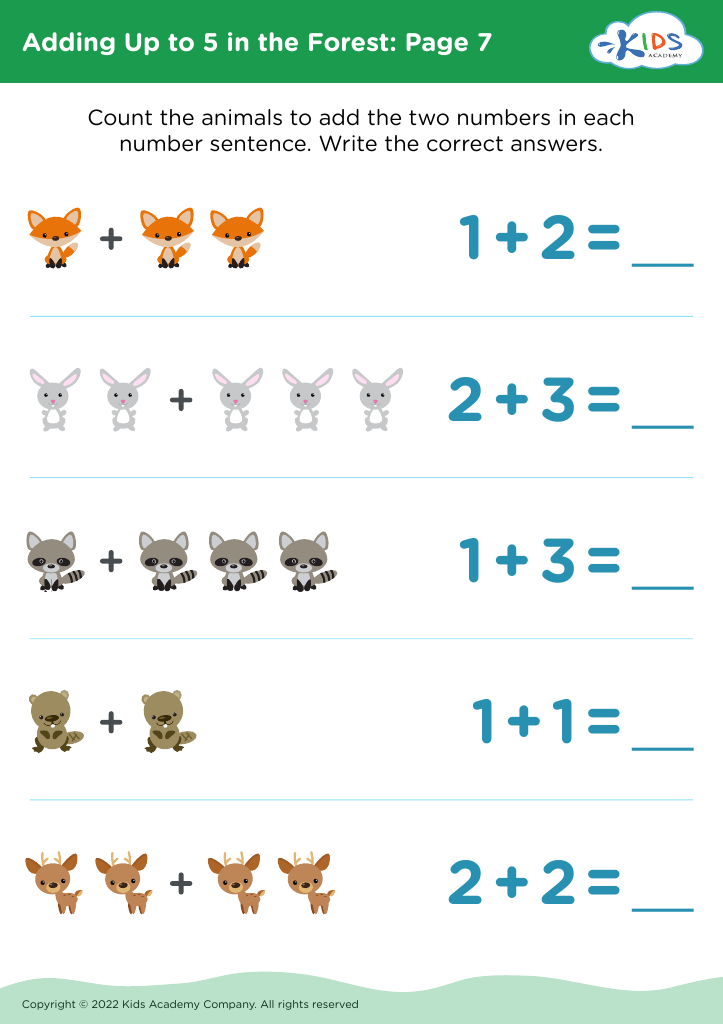
Adding Up to 5 in the Forest: Page 7
Worksheet
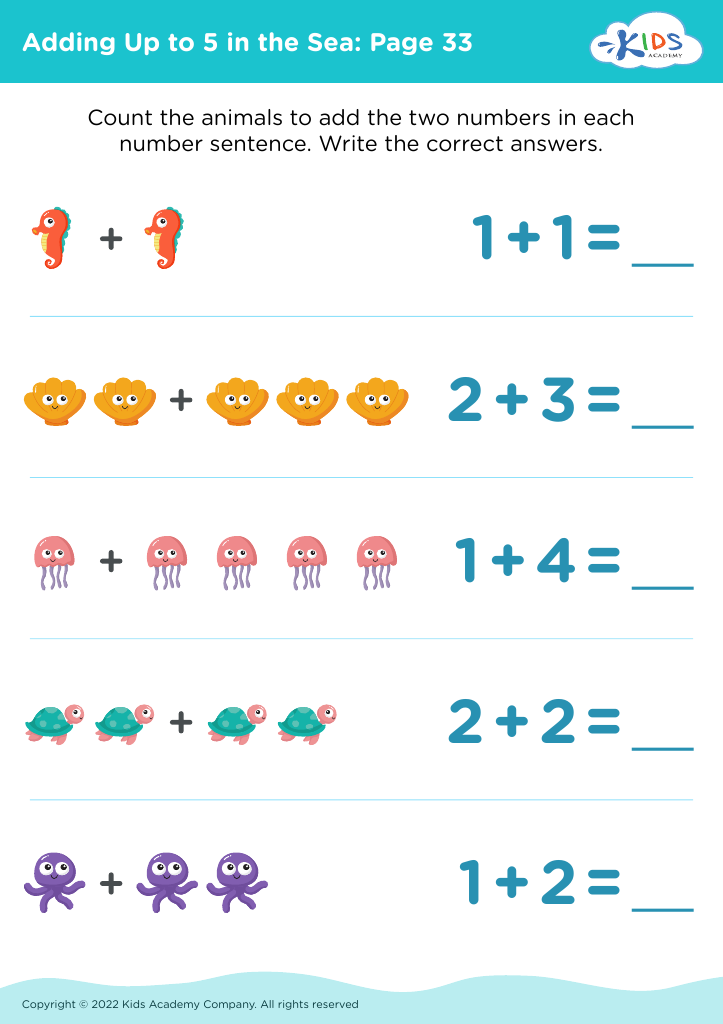
Adding Up to 5 in the Sea: Page 33
Worksheet
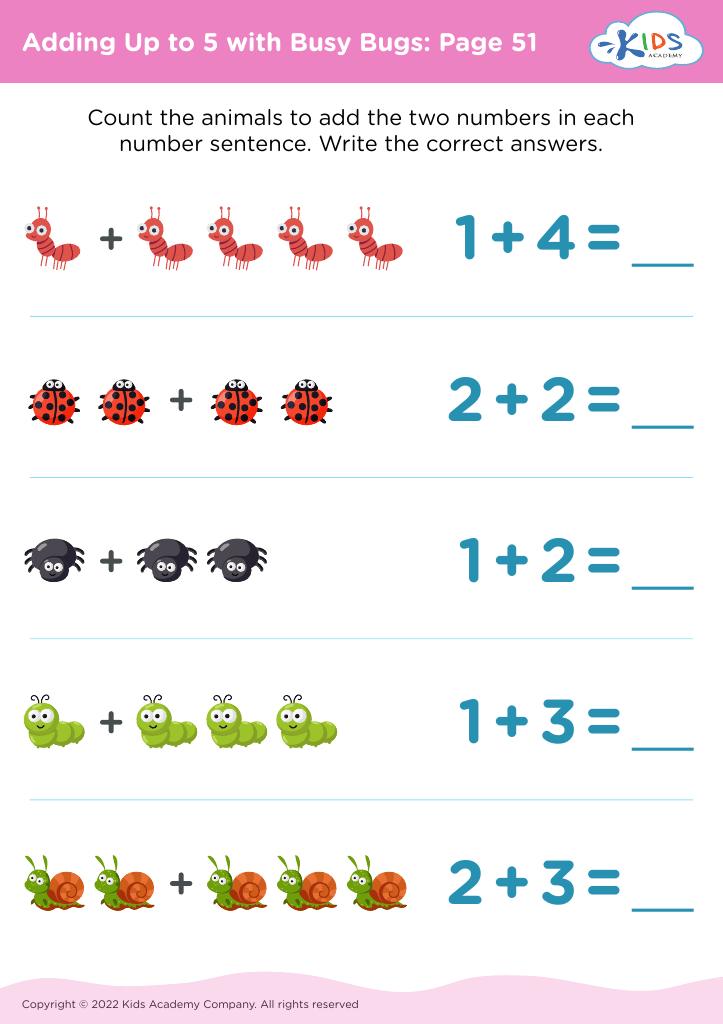
Adding Up to 5 with Busy Bugs: Page 51
Worksheet
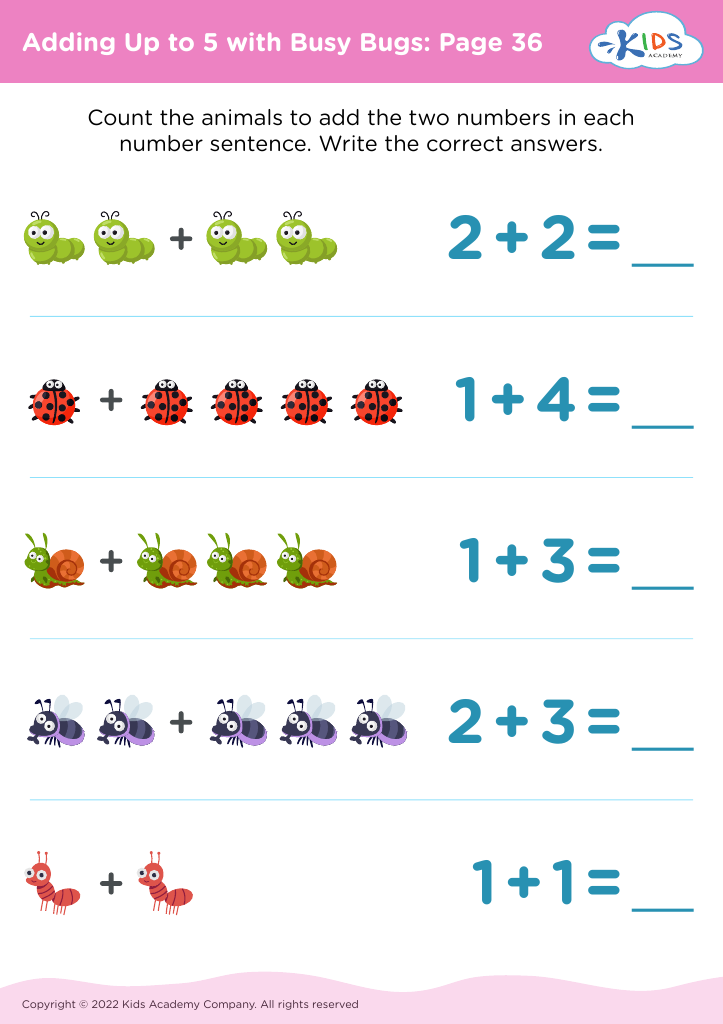
Adding Up to 5 with Busy Bugs: Page 36
Worksheet
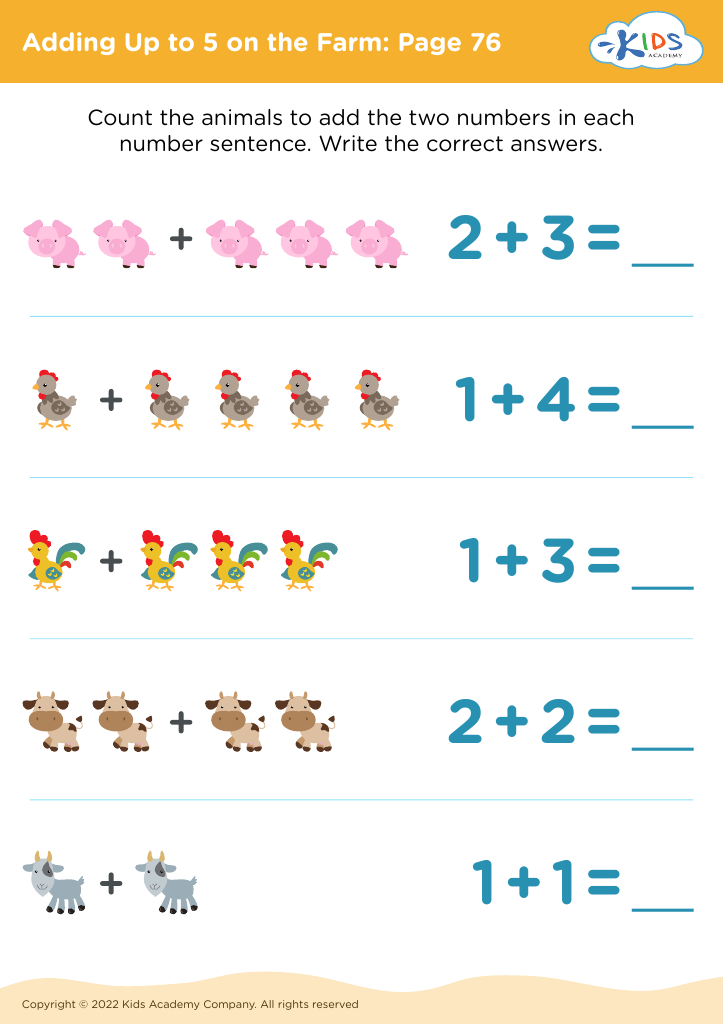
Adding Up to 5 on the Farm: Page 76
Worksheet
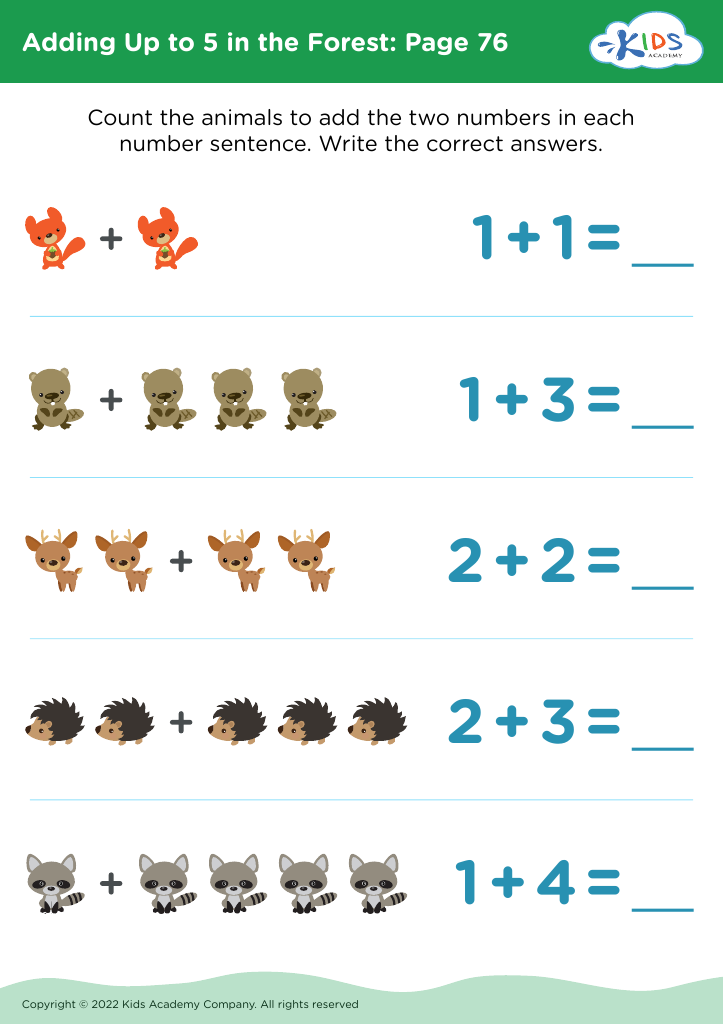
Adding Up to 5 in the Forest: Page 76
Worksheet
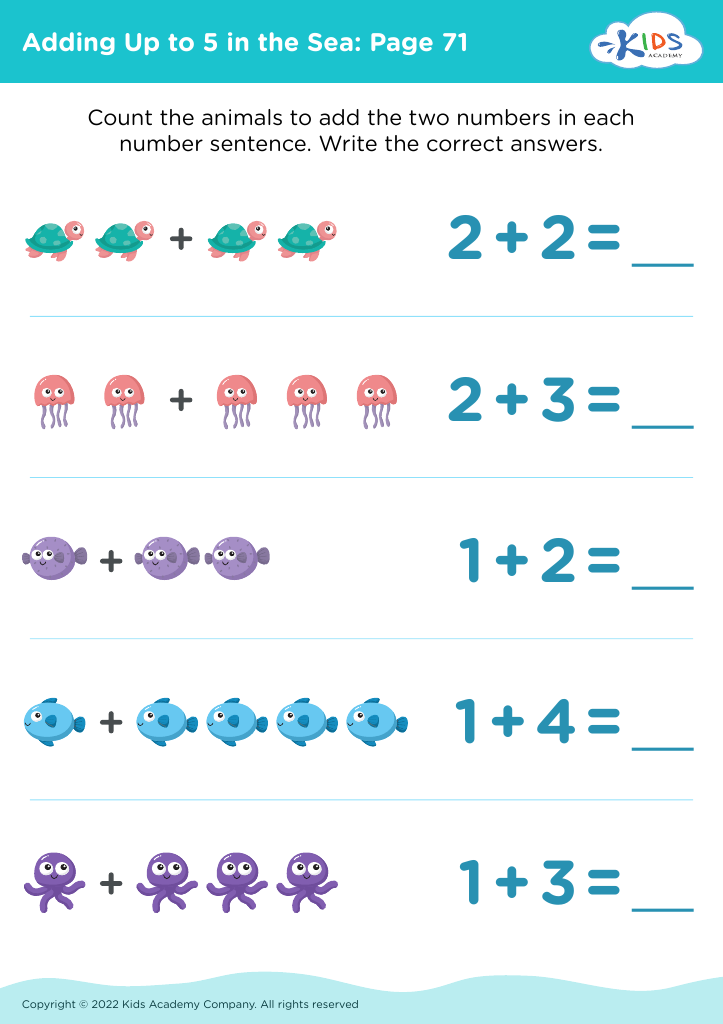
Adding Up to 5 in the Sea: Page 71
Worksheet
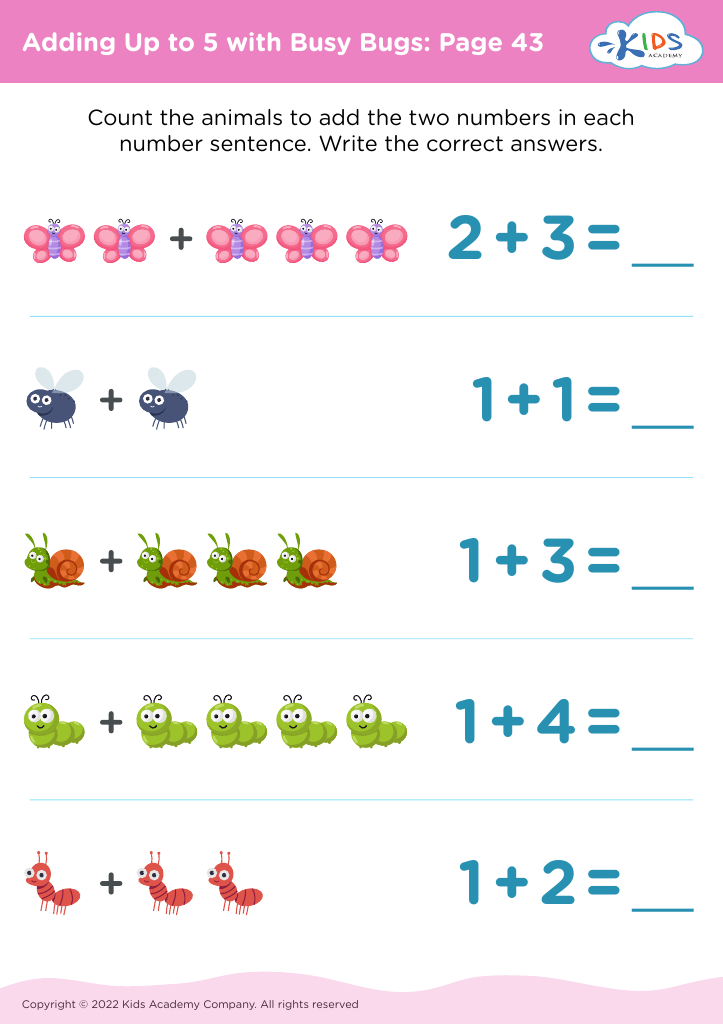
Adding Up to 5 with Busy Bugs: Page 43
Worksheet
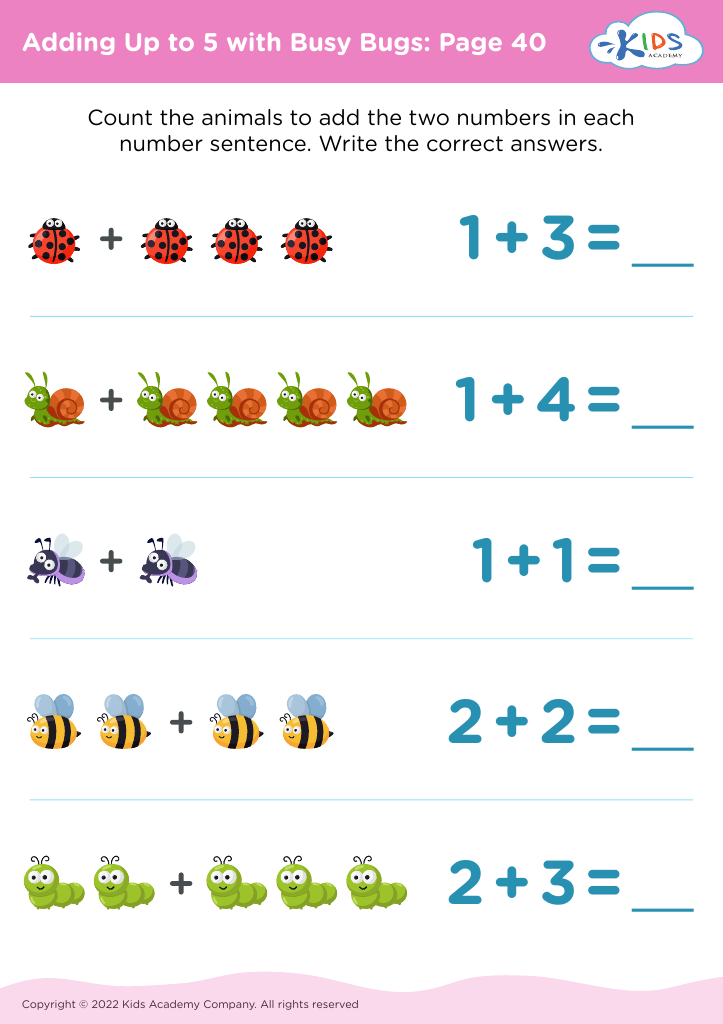
Adding Up to 5 with Busy Bugs: Page 40
Worksheet
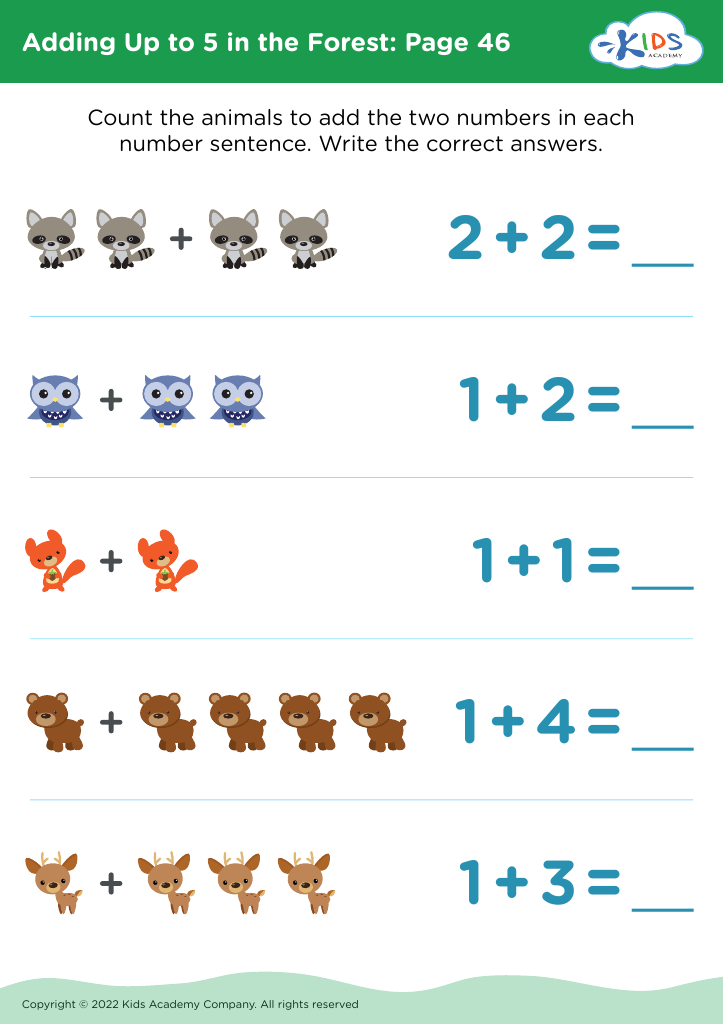
Adding Up to 5 in the Forest: Page 46
Worksheet
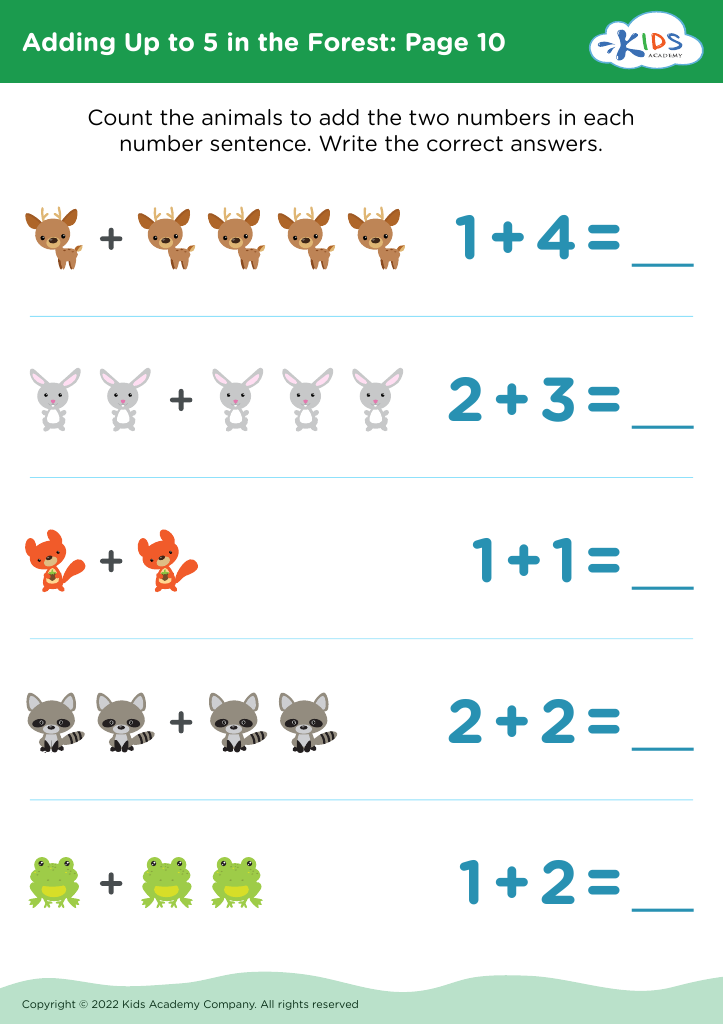
Adding Up to 5 in the Forest: Page 10
Worksheet
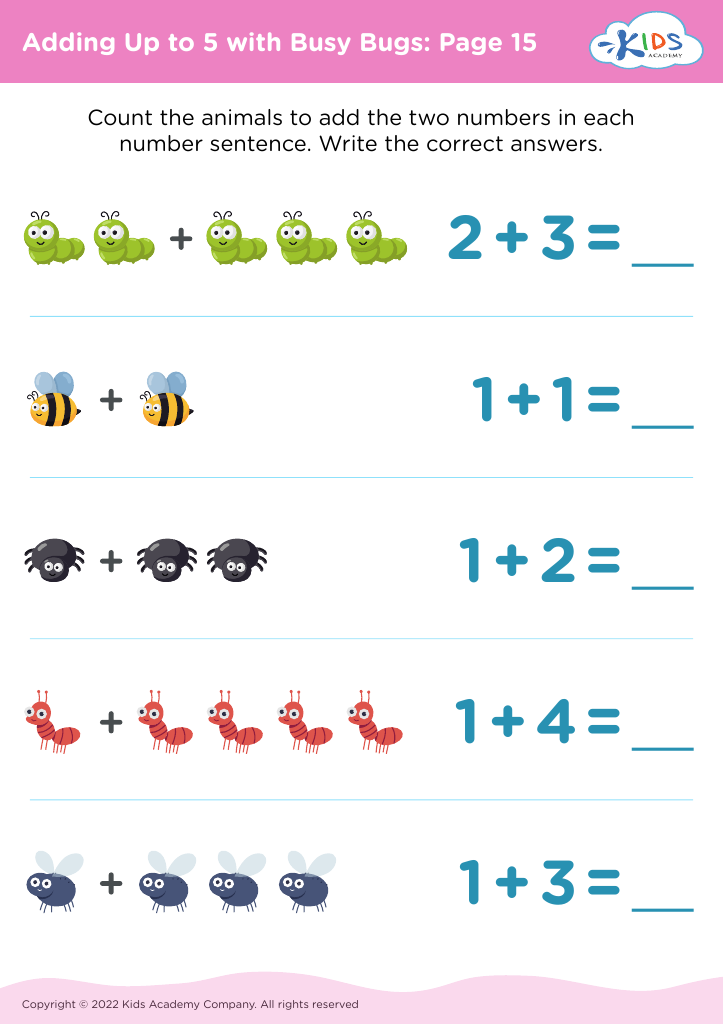
Adding Up to 5 with Busy Bugs: Page 15
Worksheet


Basic math skills, particularly the ability to add up to 5, are fundamentally essential for young children aged 3-4 years. During these early developmental years, children's brains are highly adaptable, making it a prime time for them to grasp foundational concepts. Mastering simple addition not only fosters numerical understanding but also nurtures critical thinking skills and problem-solving abilities, which are vital as they progress in their education.

For parents and teachers, supporting the development of these math skills can enhance children's confidence and enthusiasm for learning. When children feel successful with small numbers, they are more likely to engage positively with more complex mathematical concepts in the future. Additionally, integrating basic math skills into everyday activities—such as counting toys, snacks, or steps—makes learning relevant and enjoyable.

Moreover, early exposure to math encourages better communication skills, as children describe their thought processes and strengthen their vocabulary. As communities increasingly value STEM education, ensuring that children develop robust, accessible math foundations at a young age prepares them for success in school and beyond. Ultimately, fostering these early math skills equips children with the tools they need for lifelong learning and critical thinking.