Filters

232 filtered results

Clear all filters
Favorites
With answer key
Interactive

232 filtered results

Difficulty Level

Grade


Check out this FREE Trial Lesson on Adding Up to 5 for age 3-4!

Short and Long Vowel Sort

Favorites
With answer key
Interactive
  • 3-4
  • Counting practice
  • Adding Up to 5
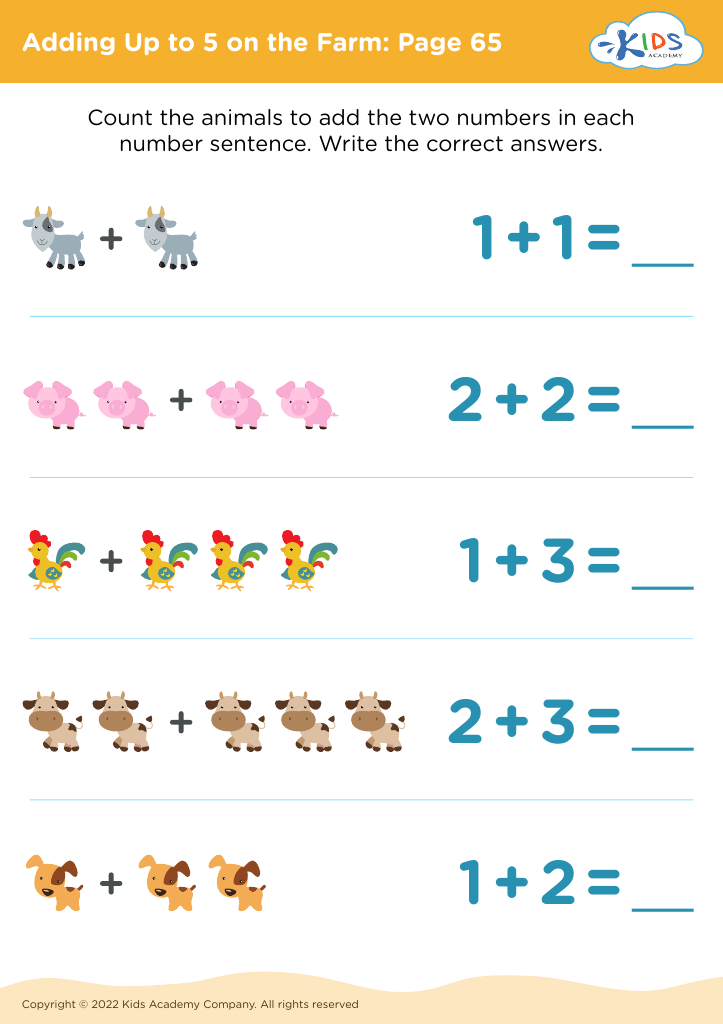
Adding Up to 5 on the Farm: Page 65
Worksheet
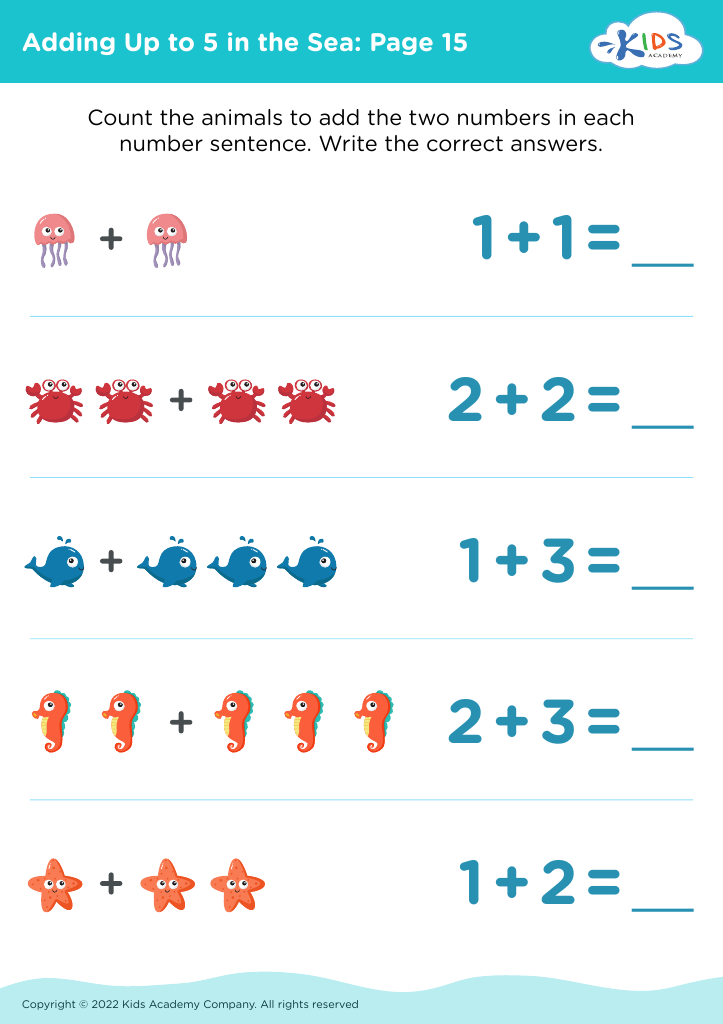
Adding Up to 5 in the Sea: Page 15
Worksheet
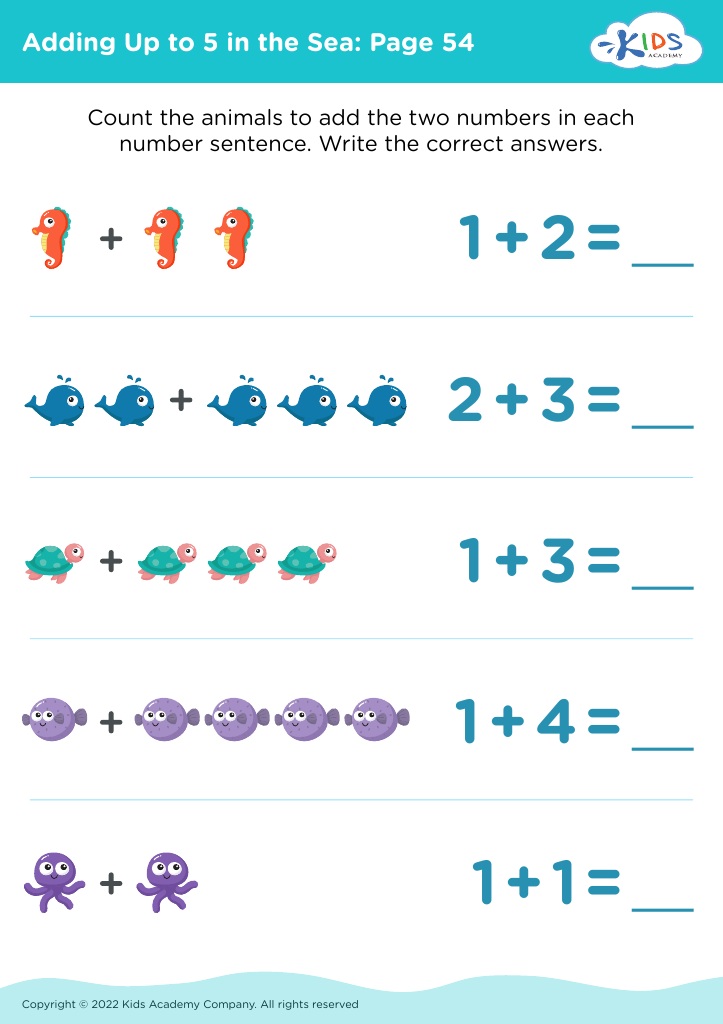
Adding Up to 5 in the Sea: Page 54
Worksheet
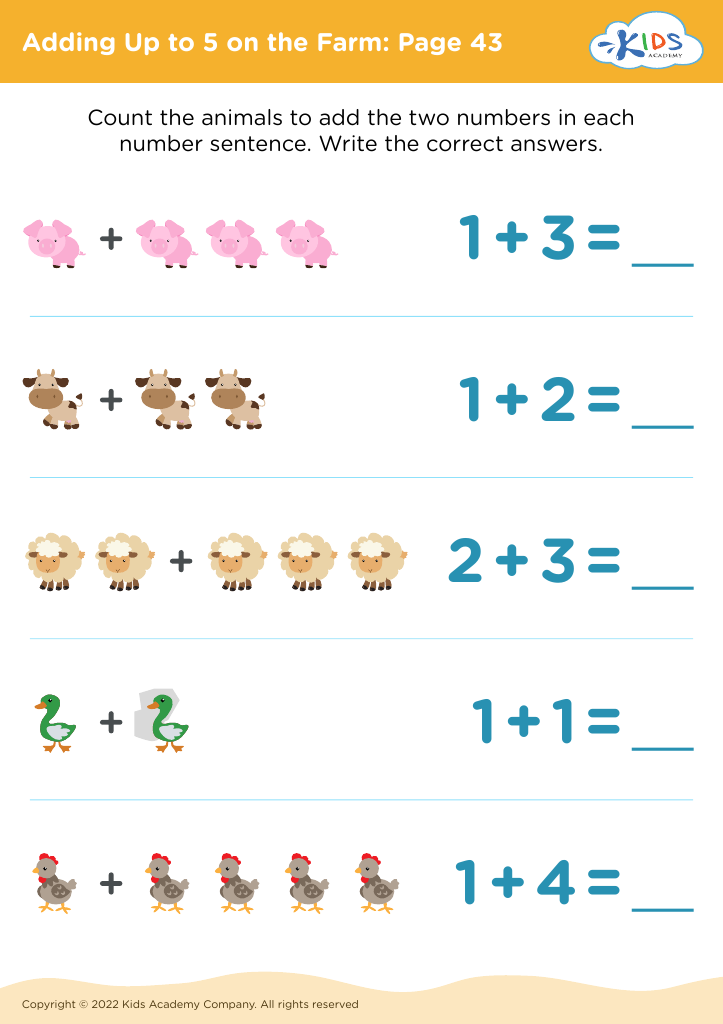
Adding Up to 5 on the Farm: Page 43
Worksheet
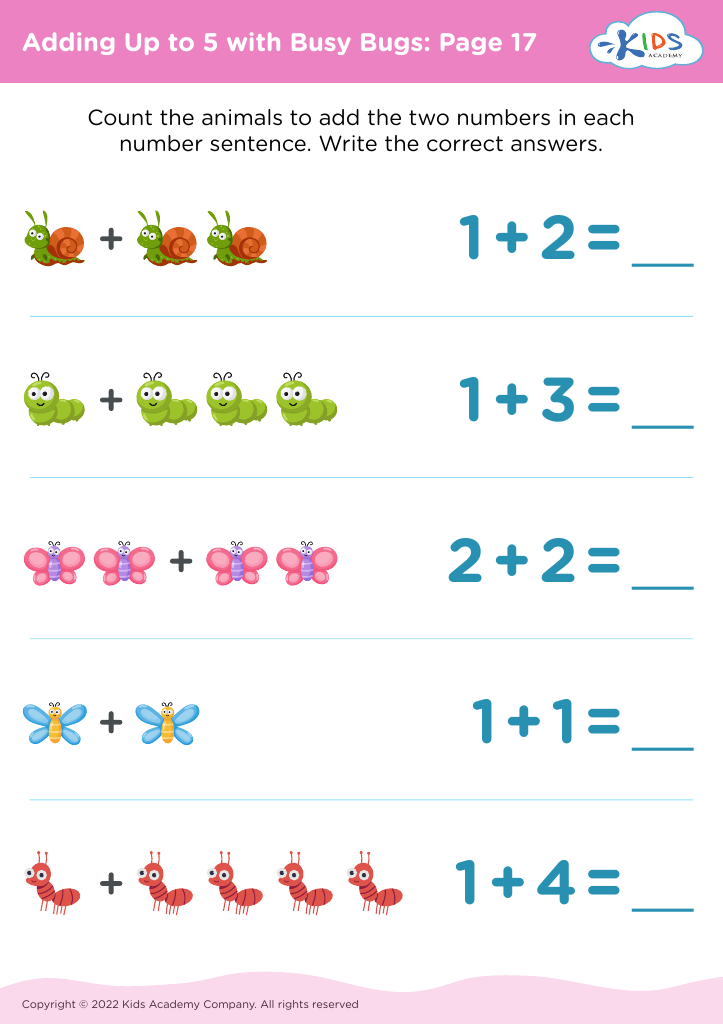
Adding Up to 5 with Busy Bugs: Page 17
Worksheet
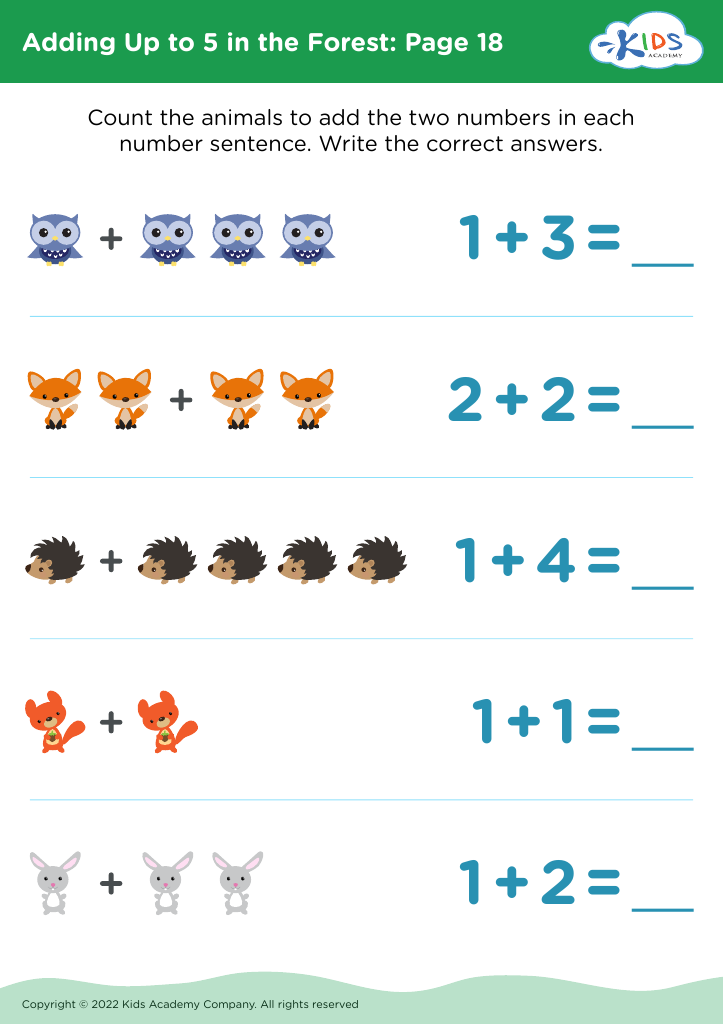
Adding Up to 5 in the Forest: Page 18
Worksheet
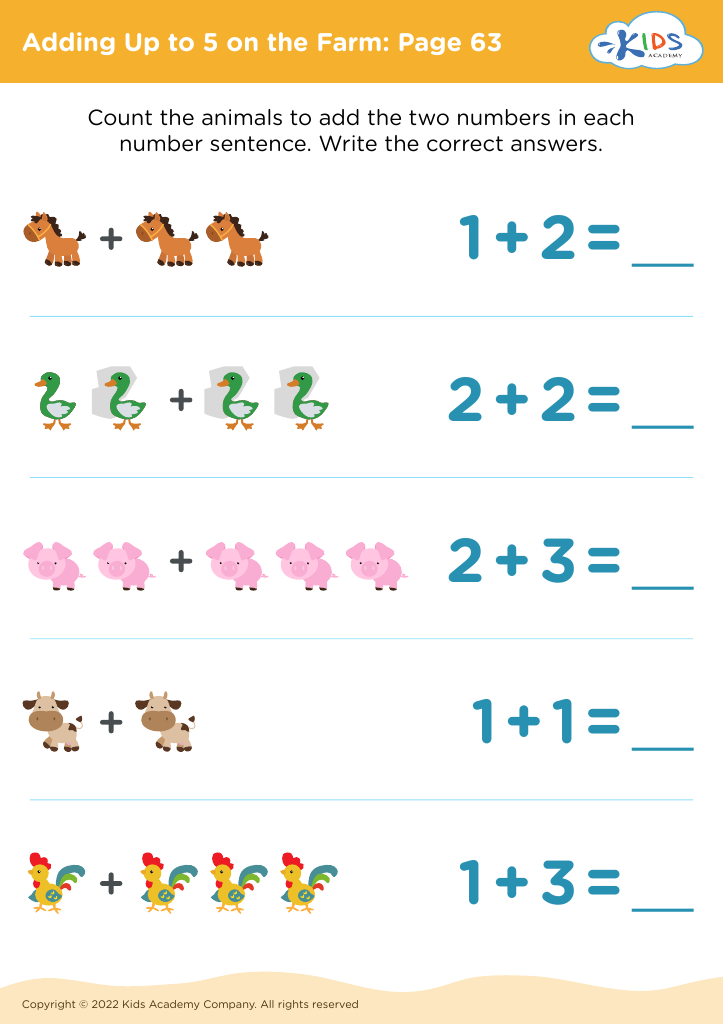
Adding Up to 5 on the Farm: Page 63
Worksheet
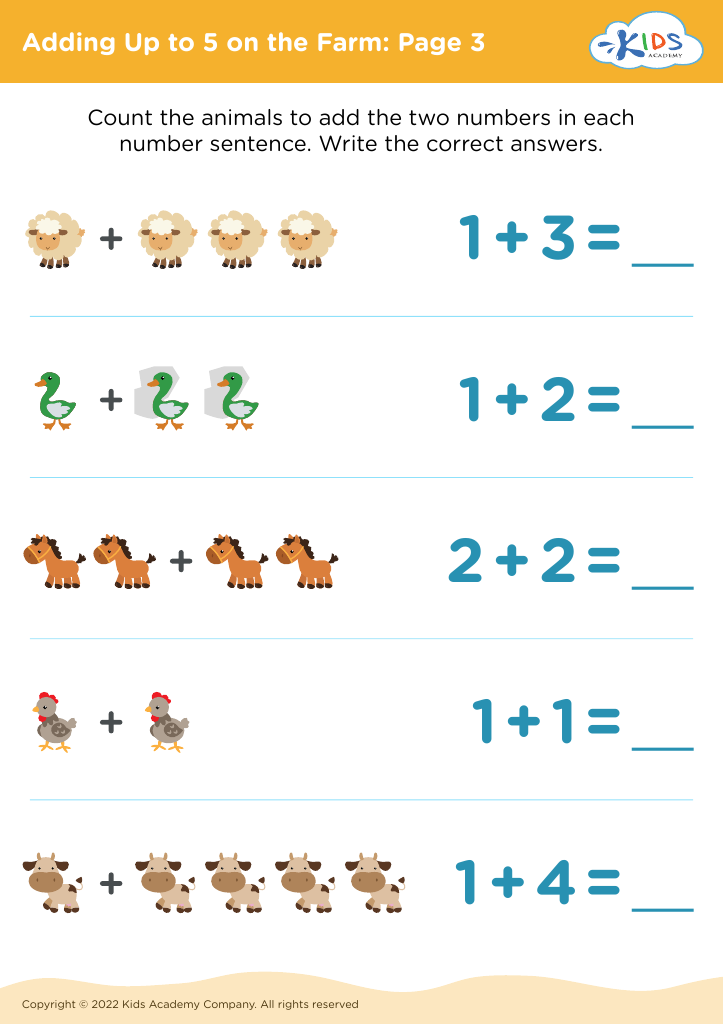
Adding Up to 5 on the Farm: Page 3
Worksheet
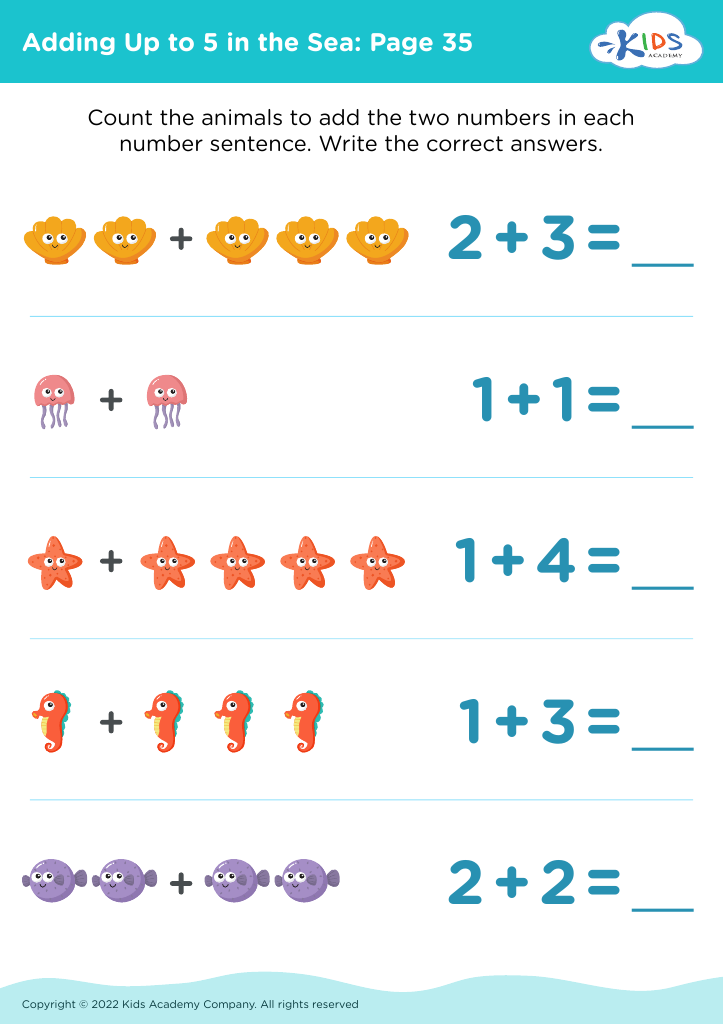
Adding Up to 5 in the Sea: Page 35
Worksheet
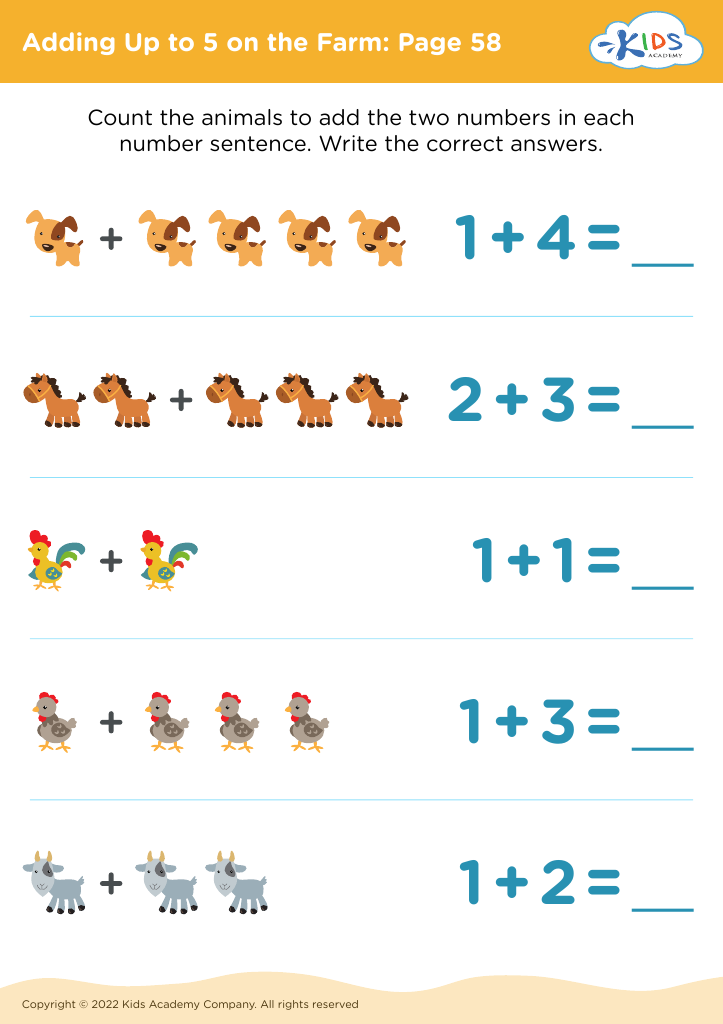
Adding Up to 5 on the Farm: Page 58
Worksheet
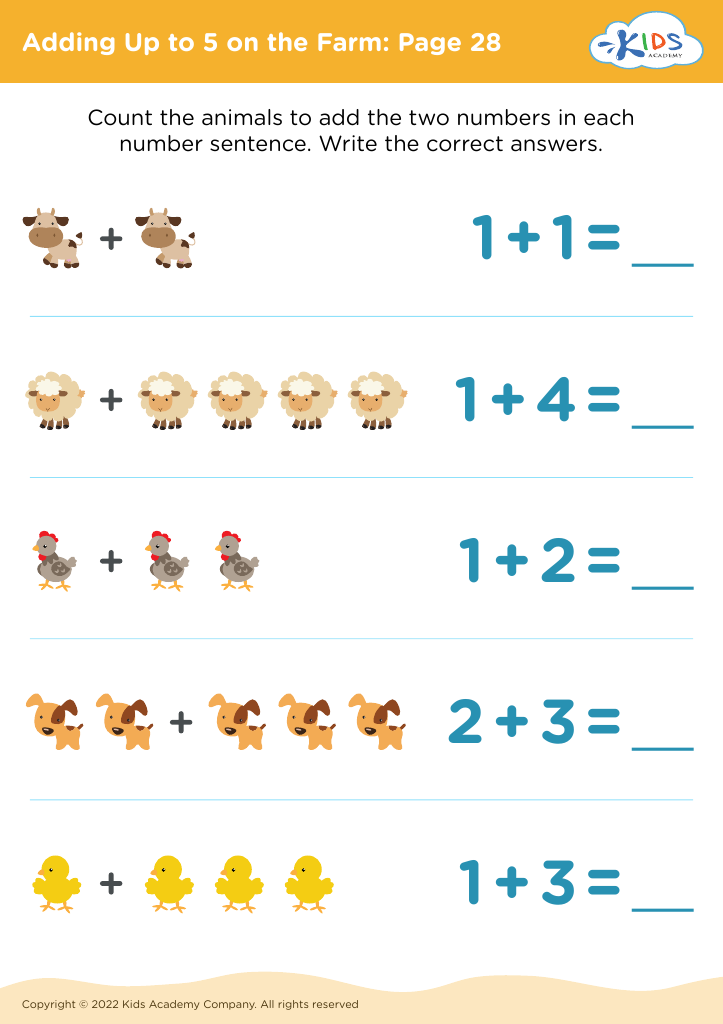
Adding Up to 5 on the Farm: Page 28
Worksheet
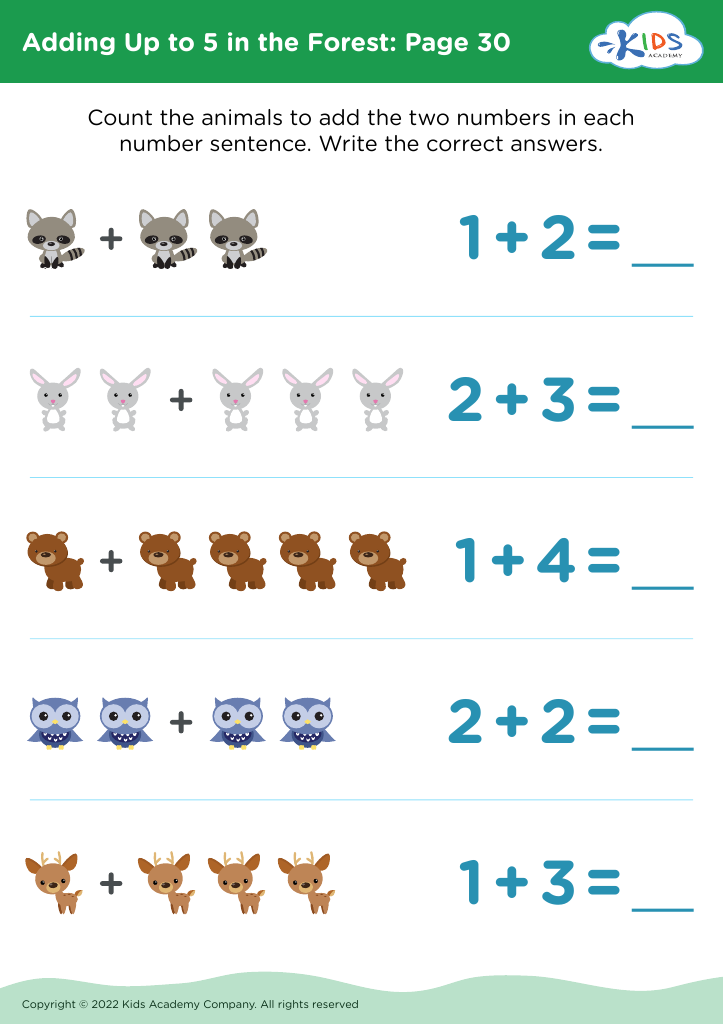
Adding Up to 5 in the Forest: Page 30
Worksheet
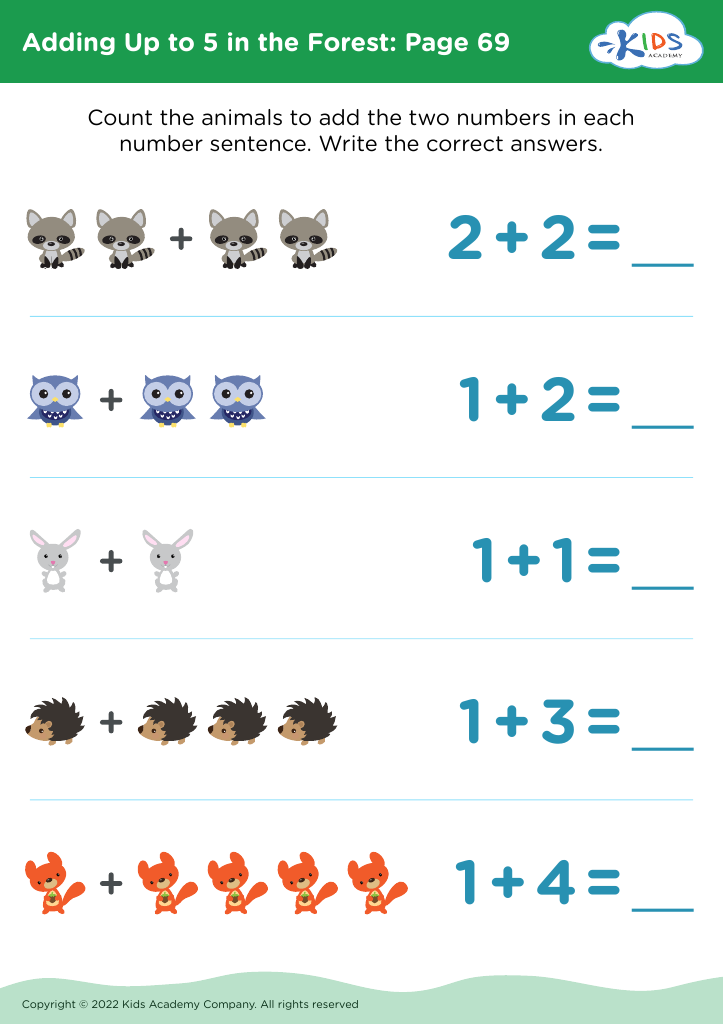
Adding Up to 5 in the Forest: Page 69
Worksheet
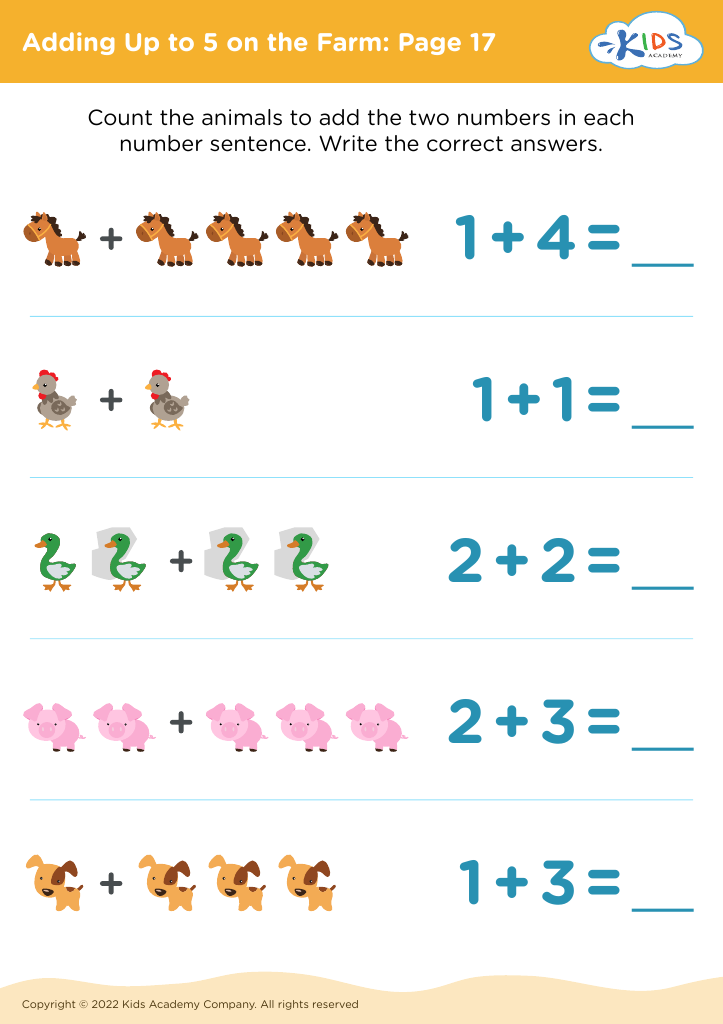
Adding Up to 5 on the Farm: Page 17
Worksheet
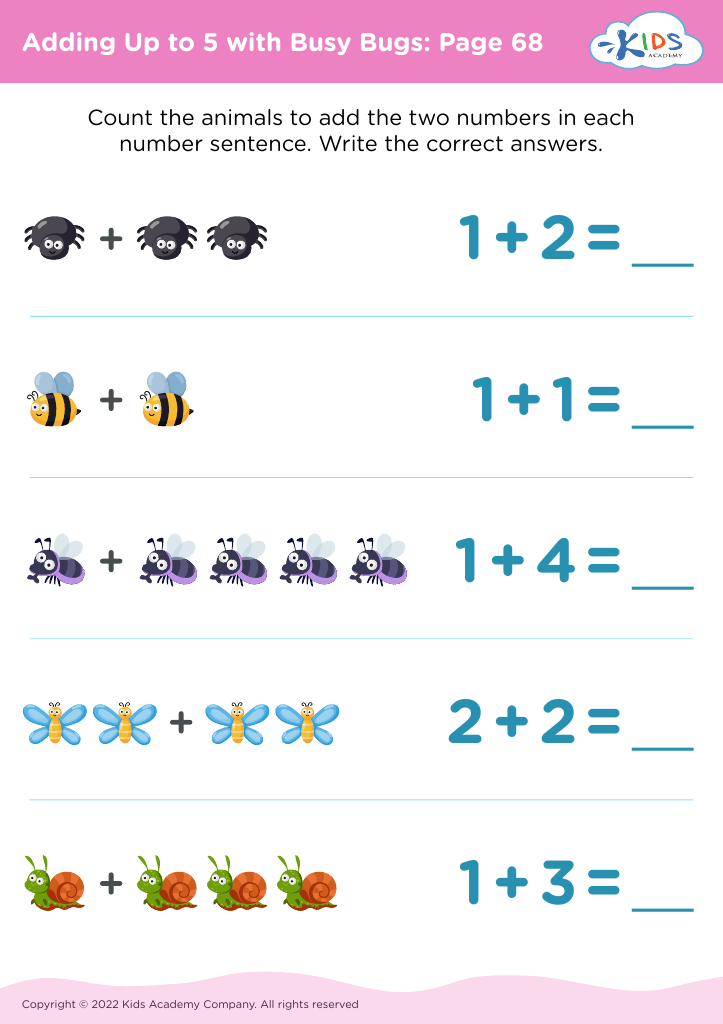
Adding Up to 5 with Busy Bugs: Page 68
Worksheet
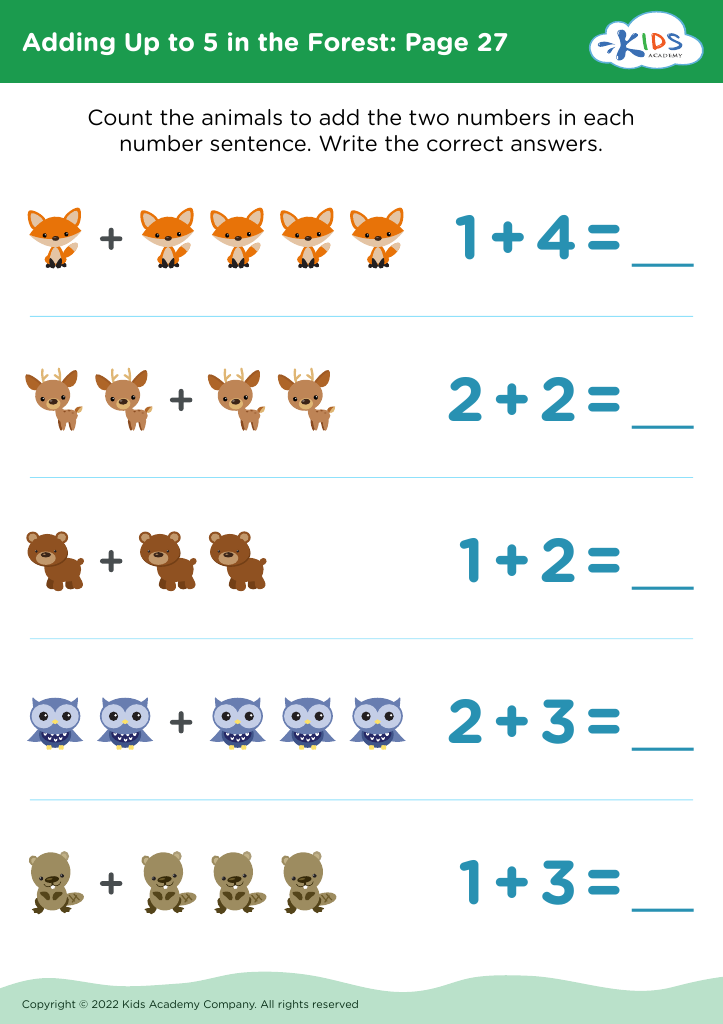
Adding Up to 5 in the Forest: Page 27
Worksheet
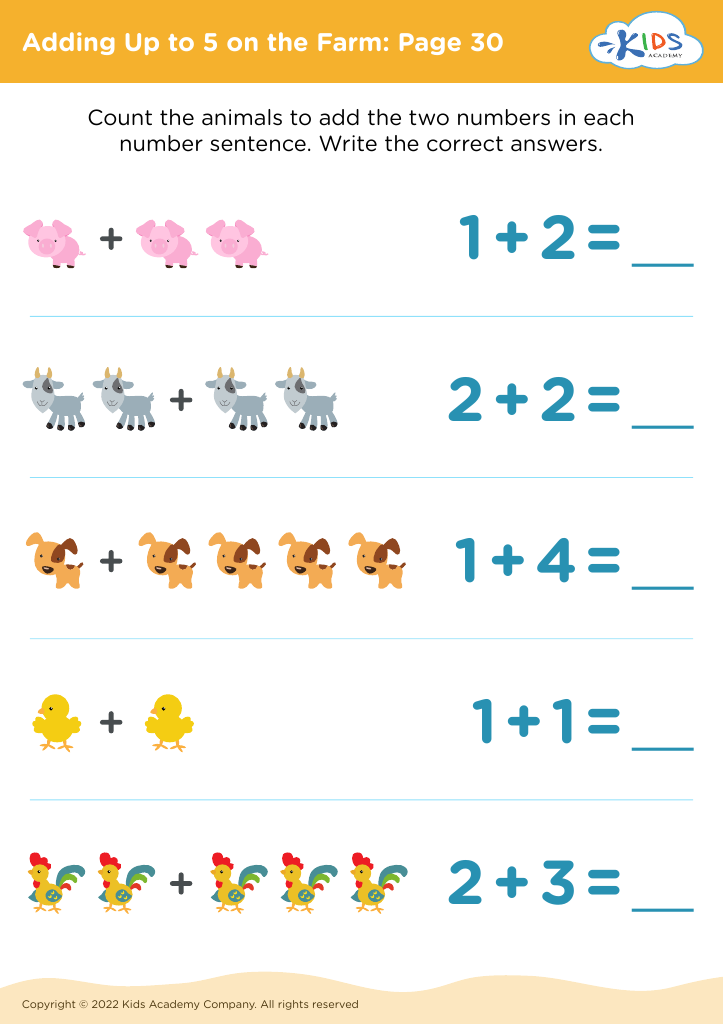
Adding Up to 5 on the Farm: Page 30
Worksheet
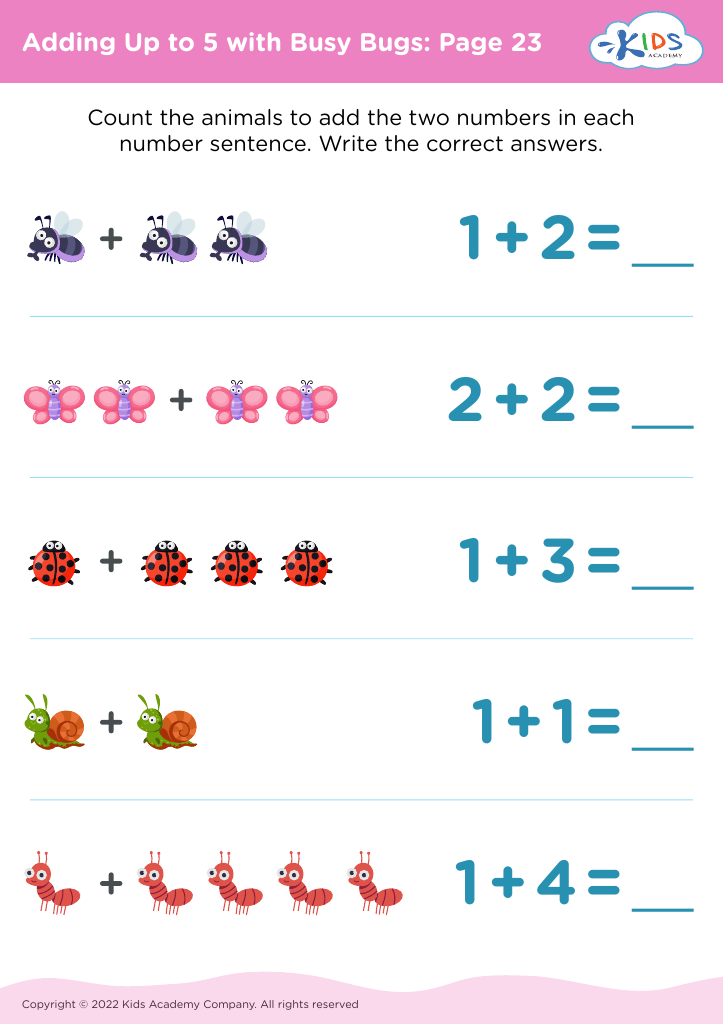
Adding Up to 5 with Busy Bugs: Page 23
Worksheet
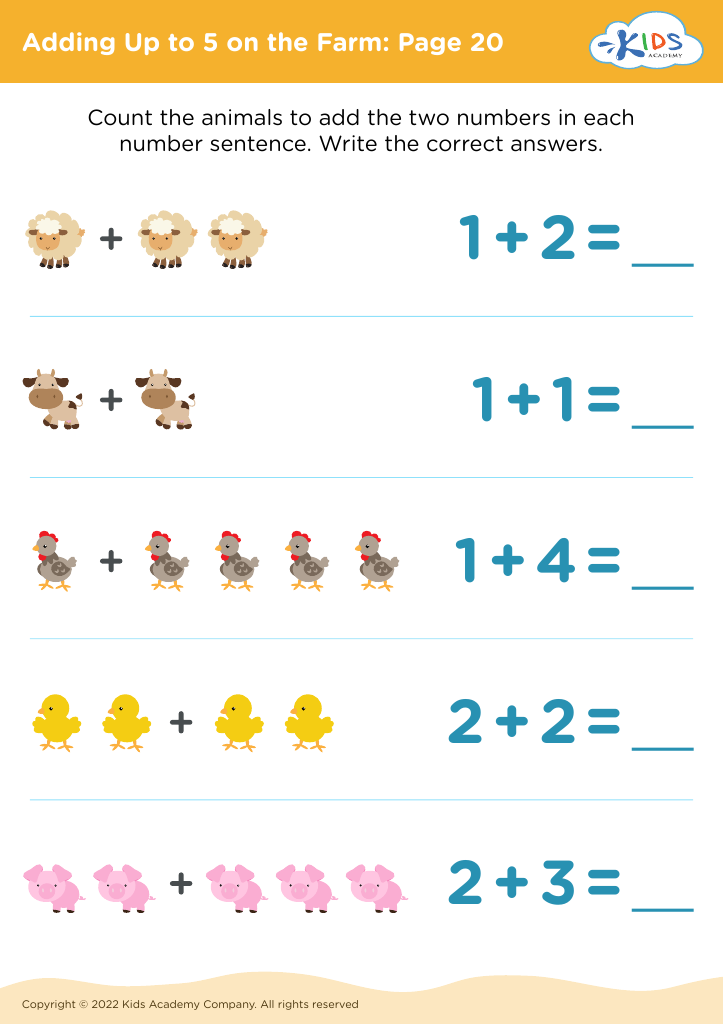
Adding Up to 5 on the Farm: Page 20
Worksheet
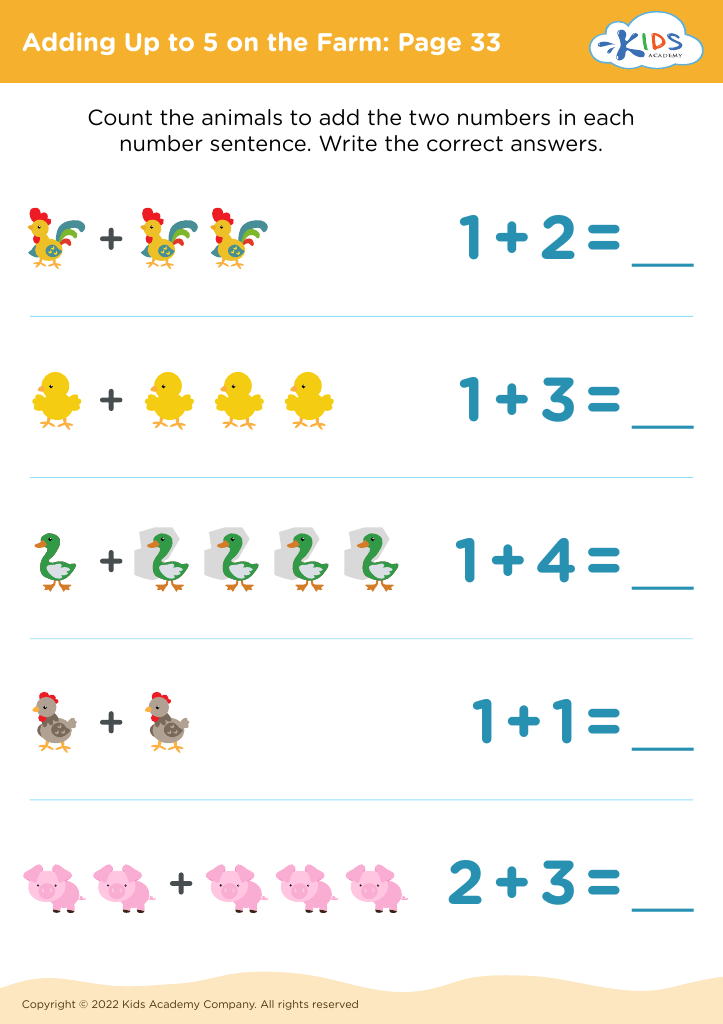
Adding Up to 5 on the Farm: Page 33
Worksheet
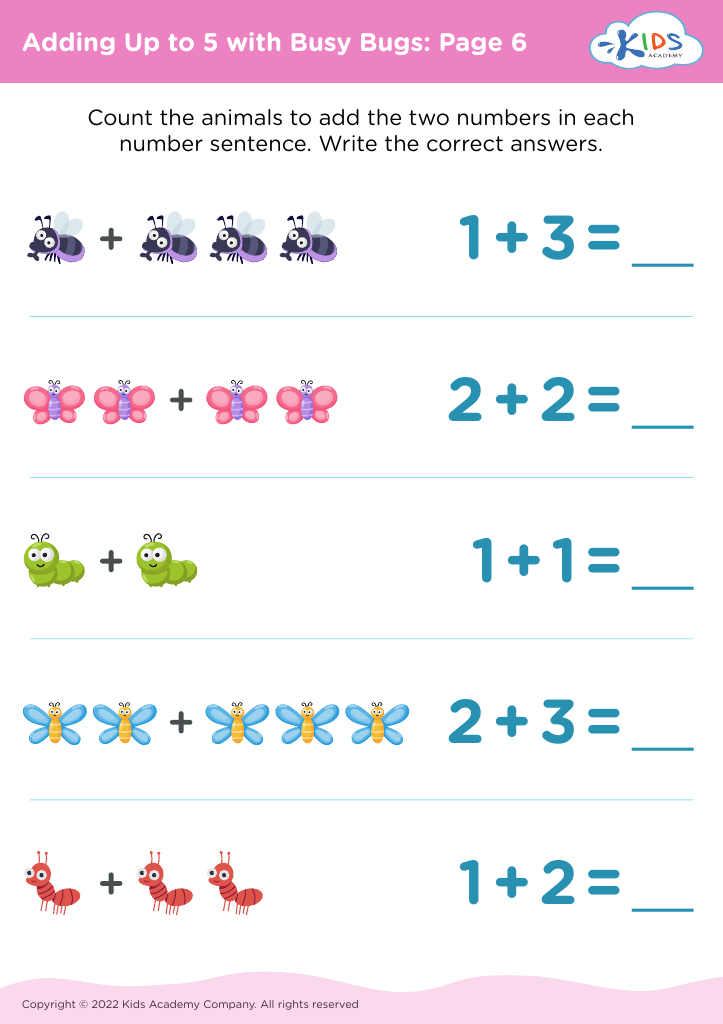
Adding Up to 5 with Busy Bugs: Page 6
Worksheet
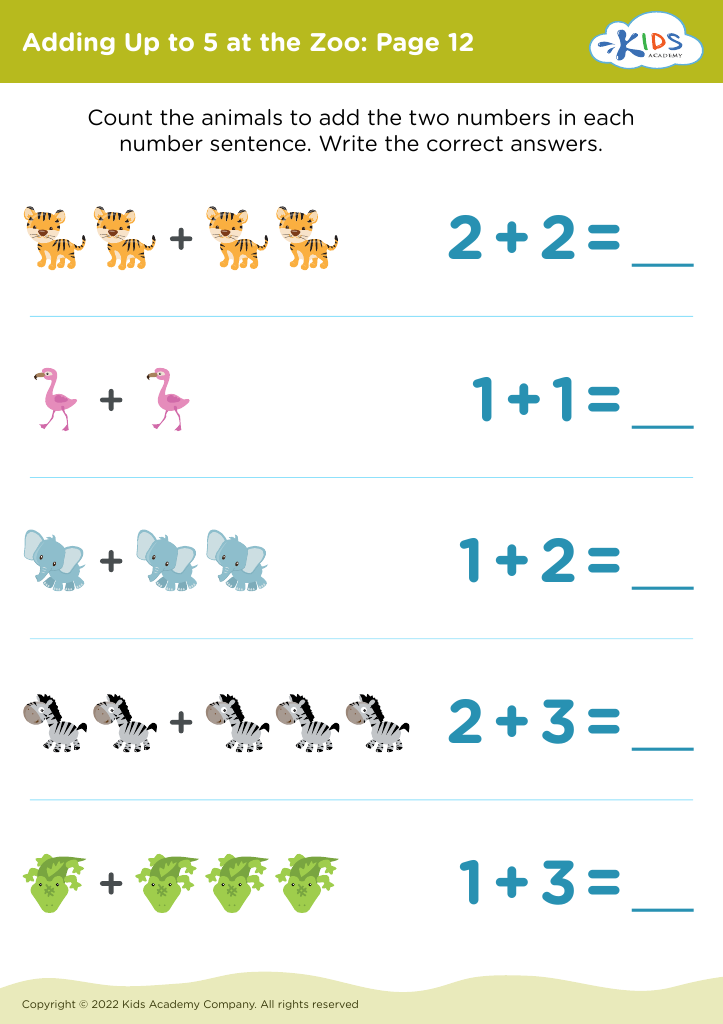
Adding Up to 5 at the Zoo: Page 12
Worksheet
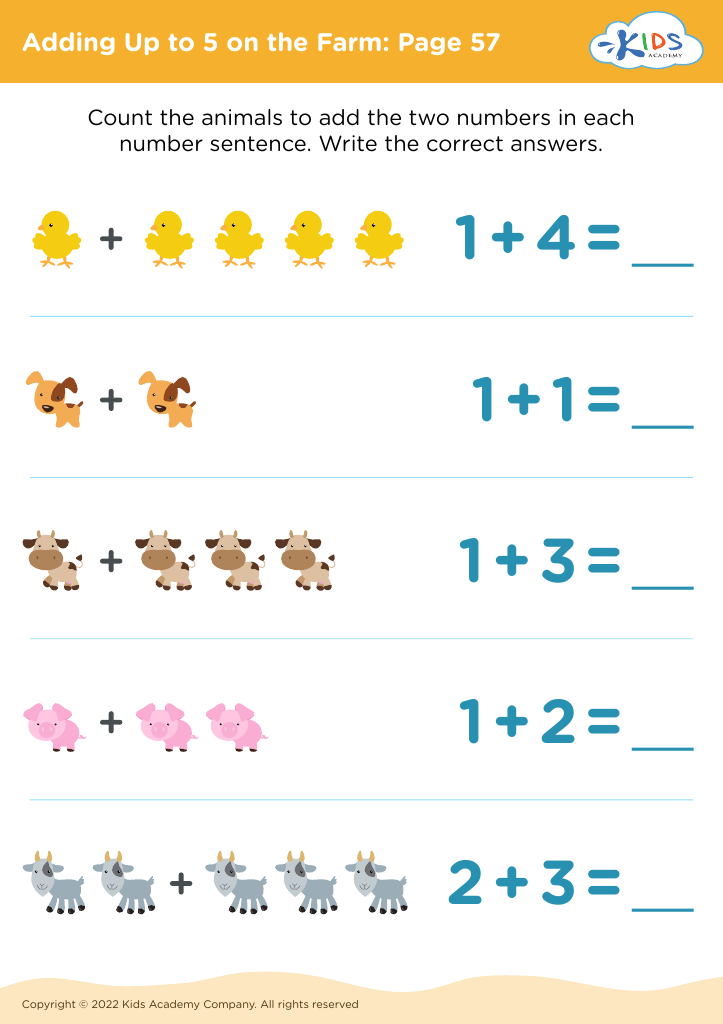
Adding Up to 5 on the Farm: Page 57
Worksheet
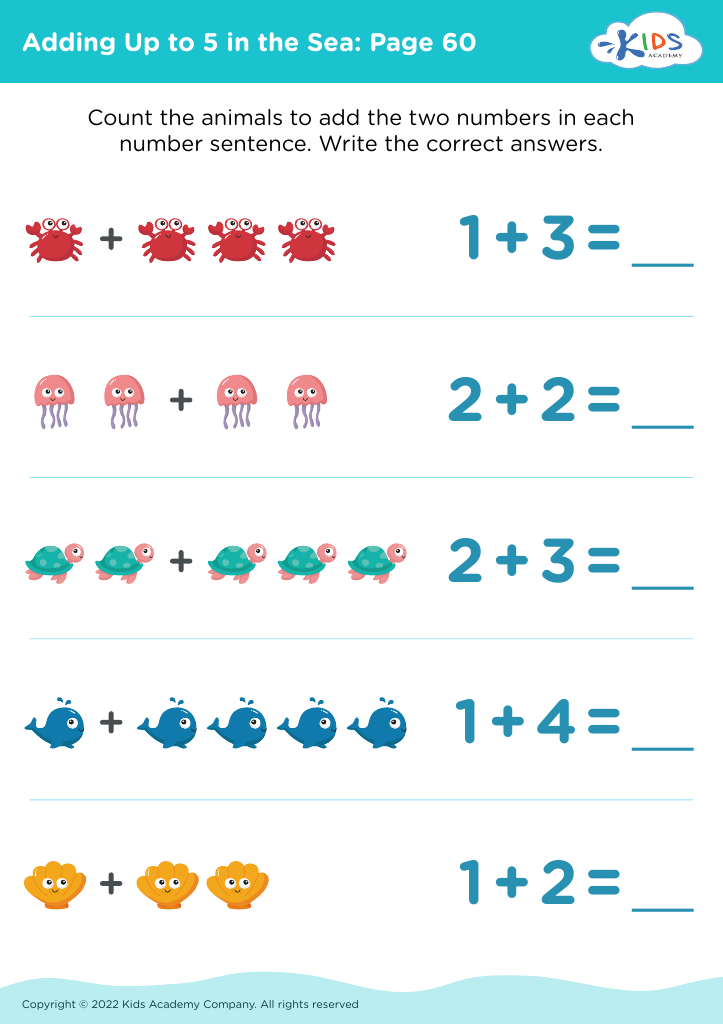
Adding Up to 5 in the Sea: Page 60
Worksheet


Counting practice, specifically focusing on adding up to 5, is essential for children aged 3-4 as it lays the groundwork for their mathematical understanding and cognitive development. At this early stage, children are naturally curious and eager to explore concepts related to numbers and quantities. Engaging them in counting and adding activities fosters their numerical skills, helping them recognize patterns and develop problem-solving abilities.

Practicing addition up to 5 enhances a child's ability to better understand the world around them, as these foundational skills transfer into everyday situations. For instance, identifying how many apples are in a bowl or how many toys they have can ignite their interest in math through practical examples. Moreover, integrating counting into play allows for multisensory learning experiences, making math fun and accessible.

Teachers and parents should prioritize these practices as they help in building confidence and a positive attitude towards math. Early exposure to counting promotes number sense, a critical aspect of overall academic success. By creating a supportive environment for counting practice, adults encourage exploratory learning, stimulate curiosity, and pave the way for future mathematical comprehension. Ultimately, these foundational skills are crucial for their continued educational journey and lifelong learning.