Counting skills Adding Up to 5 Worksheets for Ages 3-4 - Page 5
102 filtered results
-
From - To
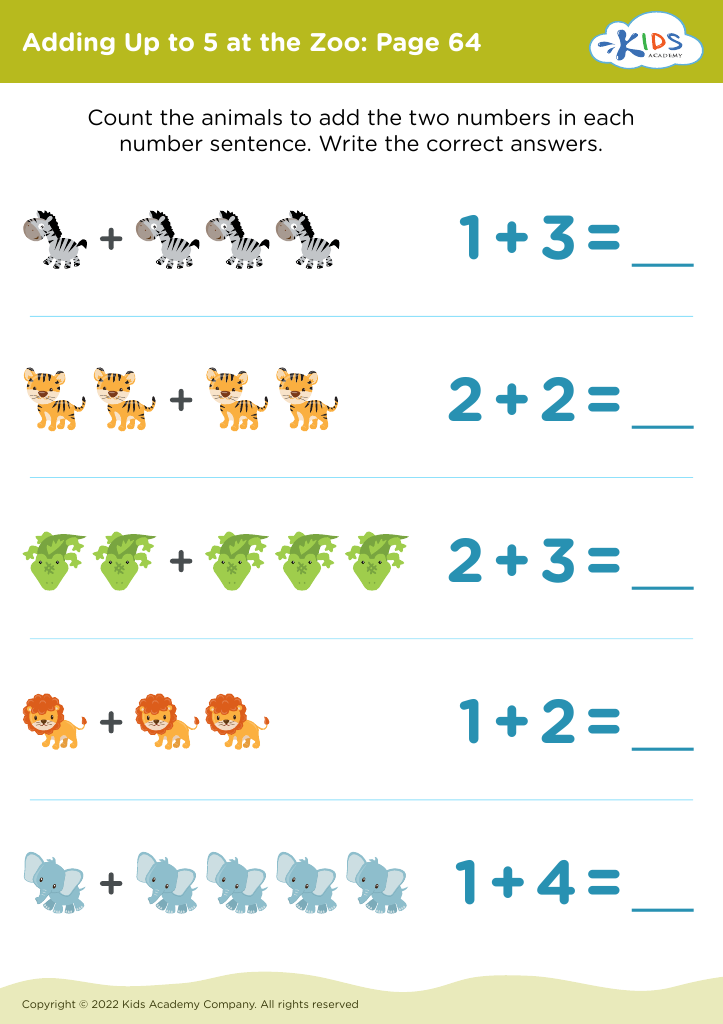
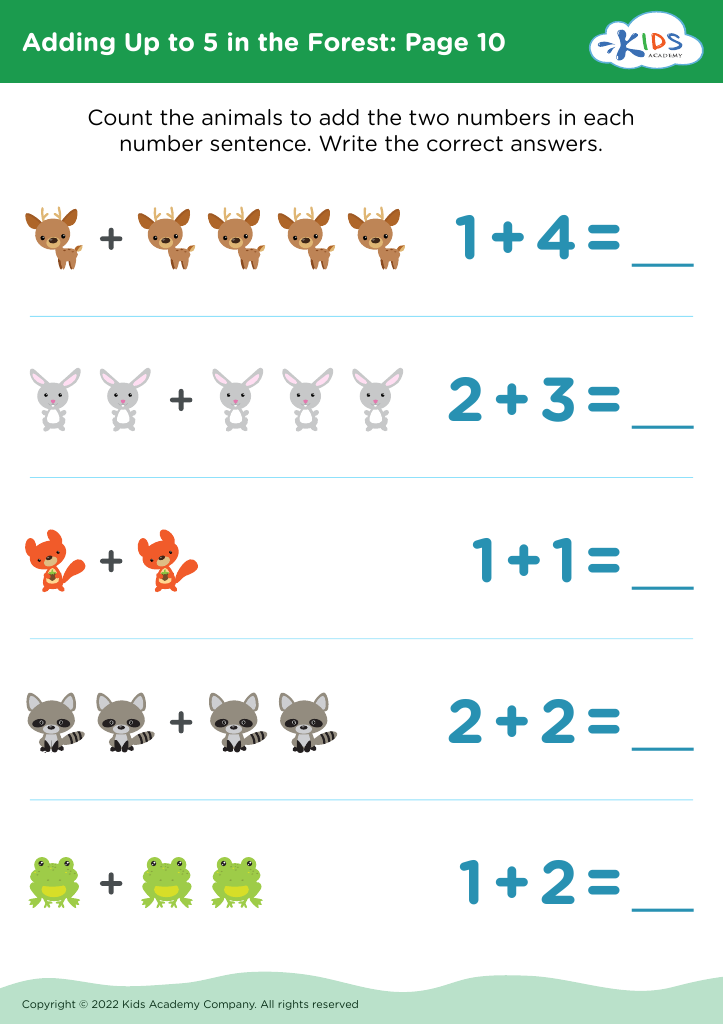
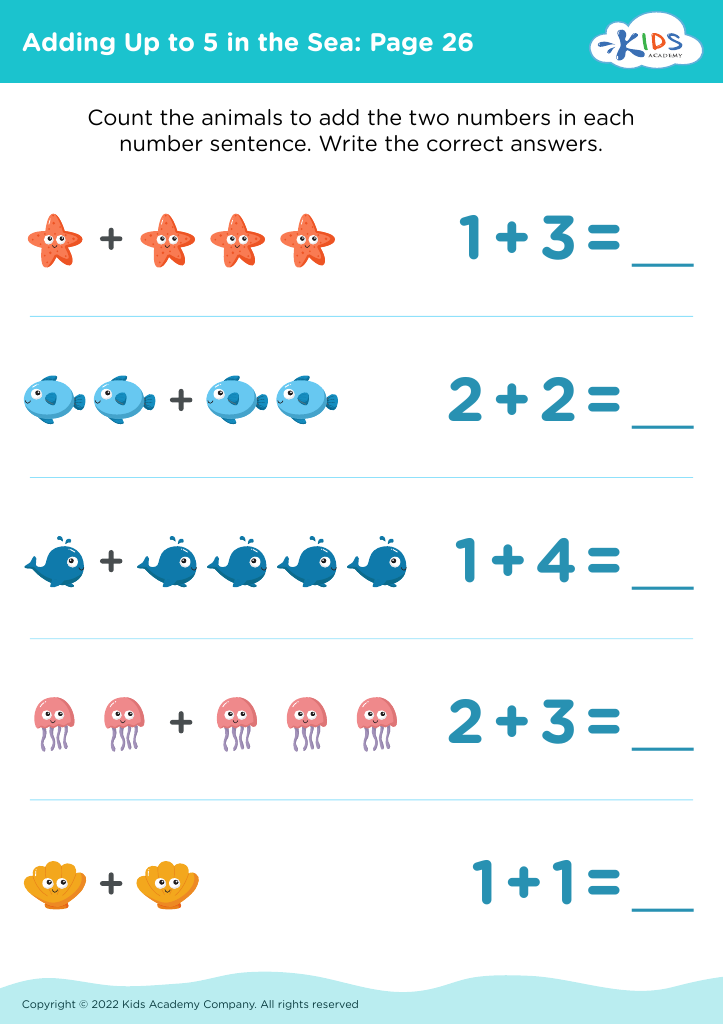
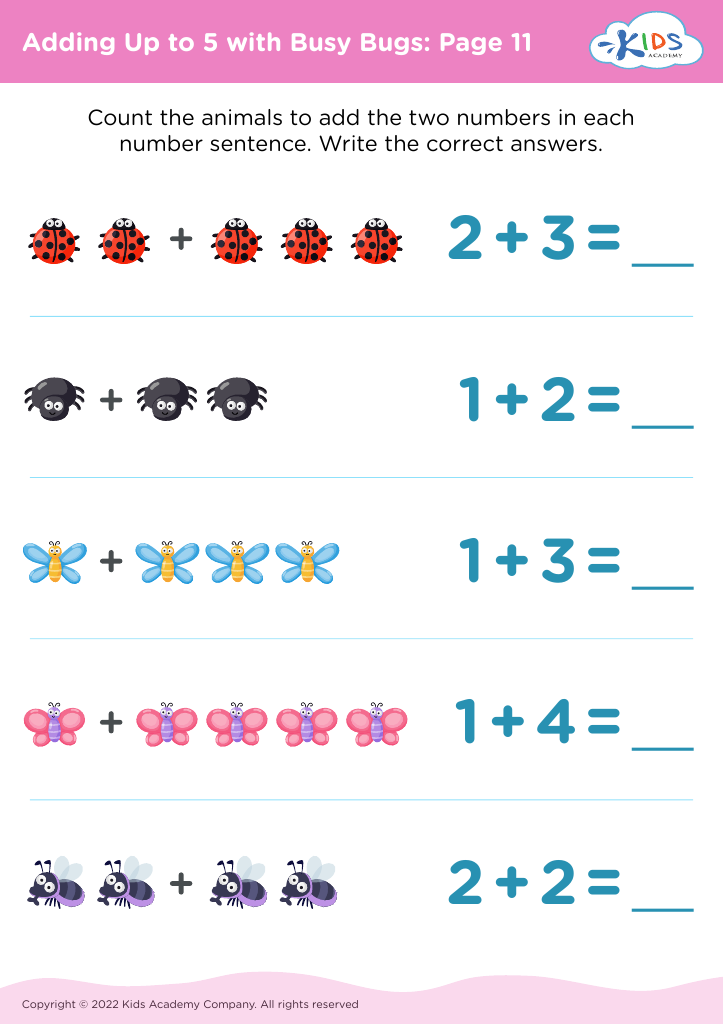
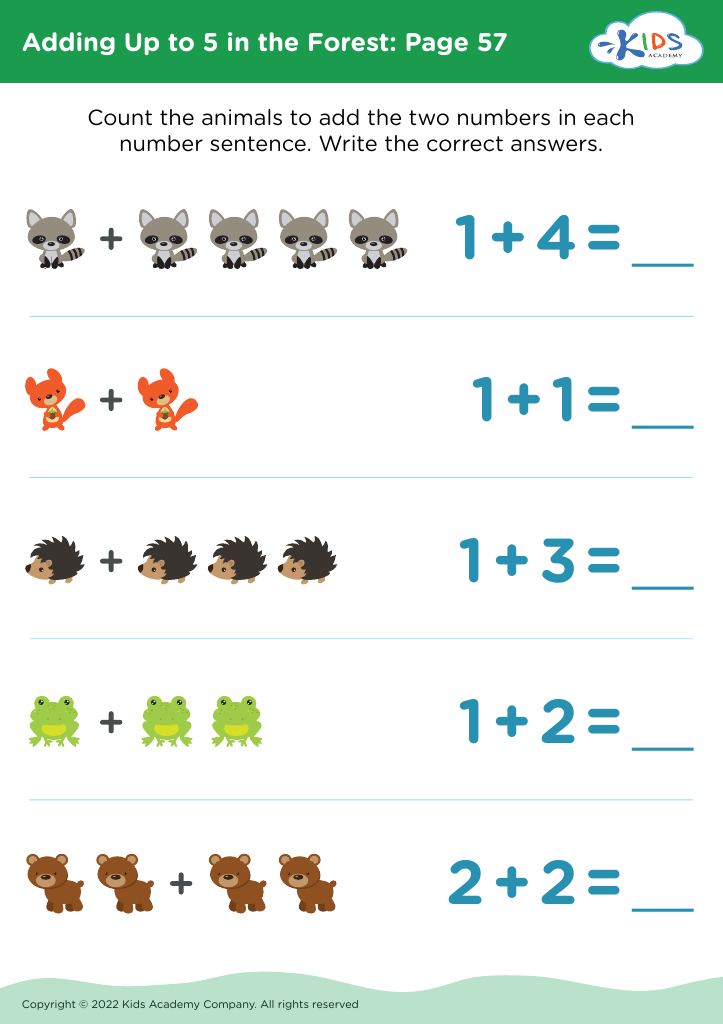
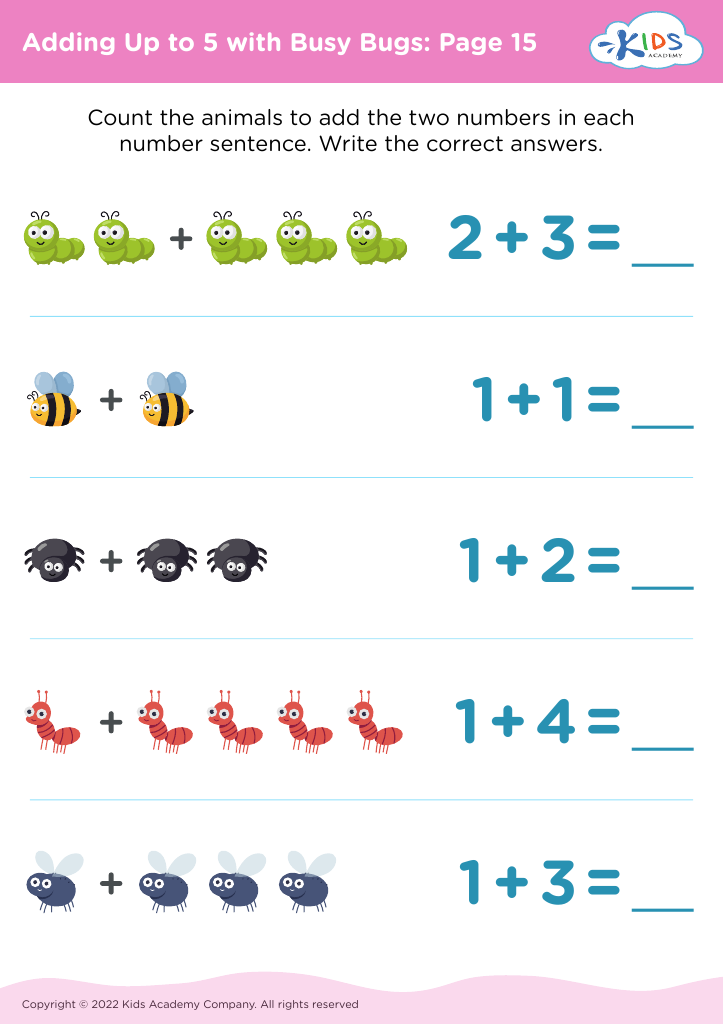






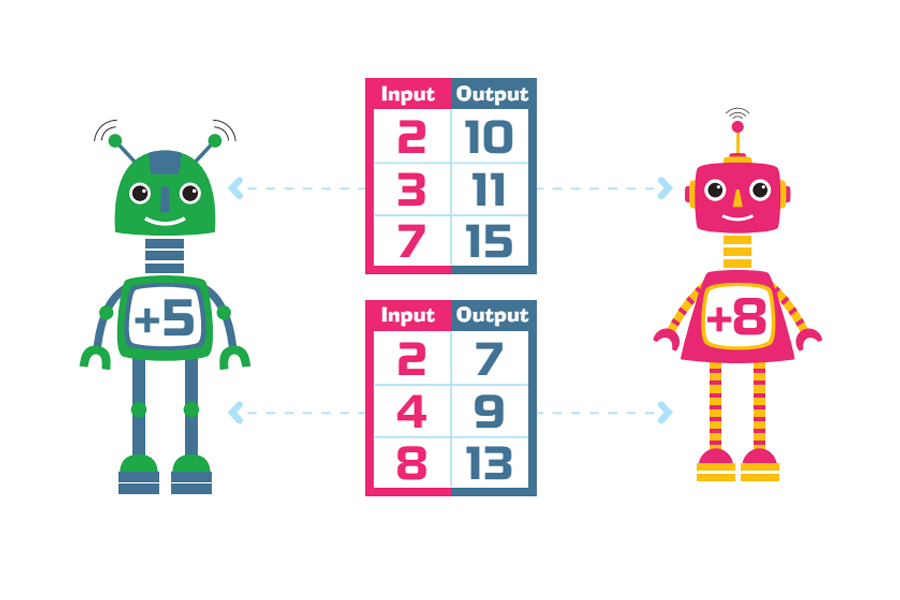

Counting skills and the ability to add up to 5 for children ages 3-4 are foundational for several critical cognitive and academic reasons. First and foremost, these skills lay the groundwork for future mathematical learning. Early proficiency with counting and basic addition nurtures numerical understanding and develops a child's ability to perform more complex math in kindergarten and beyond.
Additionally, mastering counting and simple addition helps bolster a child's confidence, fostering a positive attitude towards math and learning in general. Engaging young children in counting activities can transform math from a daunting subject into a fun and achievable challenge.
Moreover, counting skills are directly tied to the development of logical thinking and problem-solving capabilities. When children practice counting and adding objects, they not only learn about numbers but also recognize patterns, follow sequences, and develop critical thinking skills.
In a broader context, these early math skills are also a part of essential life skills. They help young children understand their environment, make sense of their daily activities (like distributing snacks equally), and set the stage for more advanced concepts involving arithmetic, geometry, and spatial relationships.
Therefore, investing time and effort into teaching counting skills and addition up to 5 can yield significant benefits not just academically but also in a child's overall intellectual development.








