Fine Motor Skills (coloring) Adding Up to 5 Worksheets for Ages 3-4
3 filtered results
-
From - To
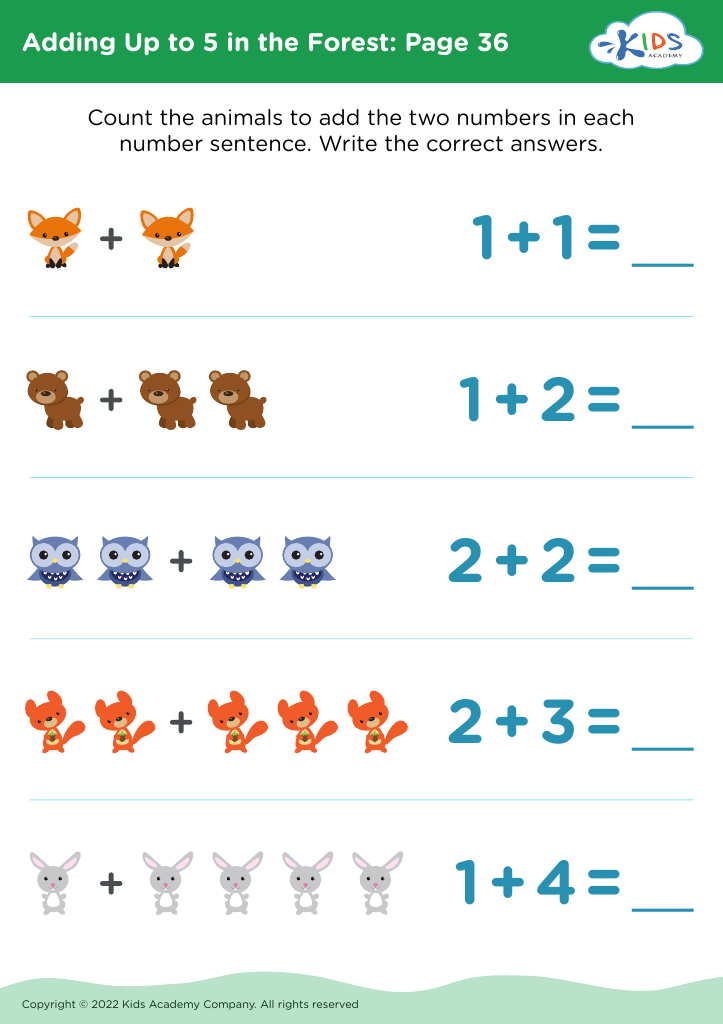
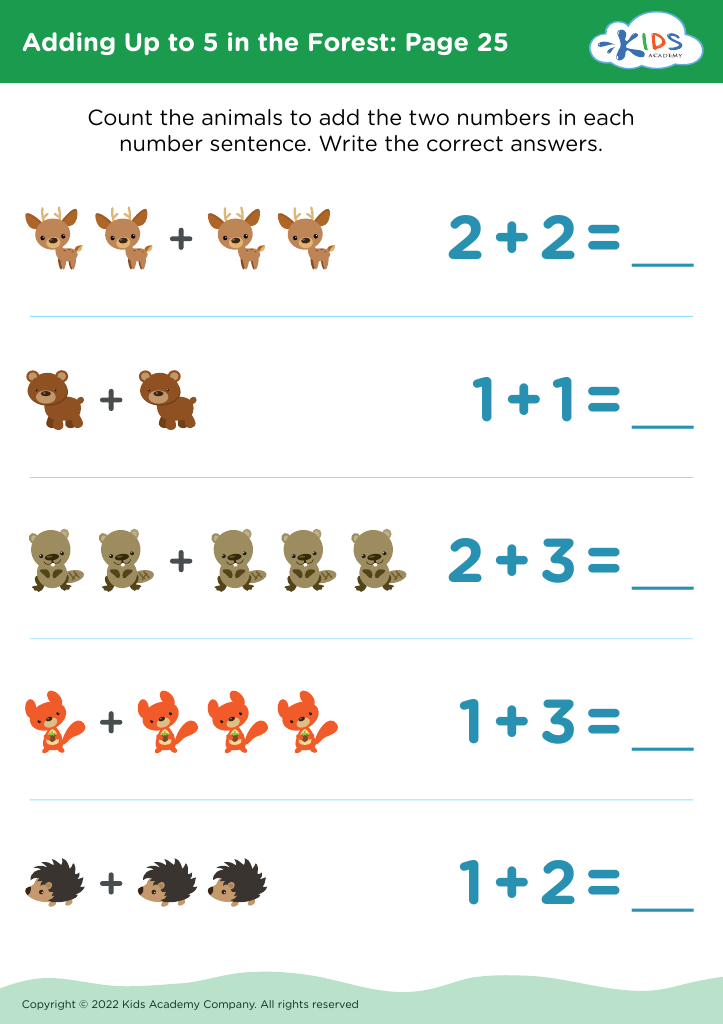
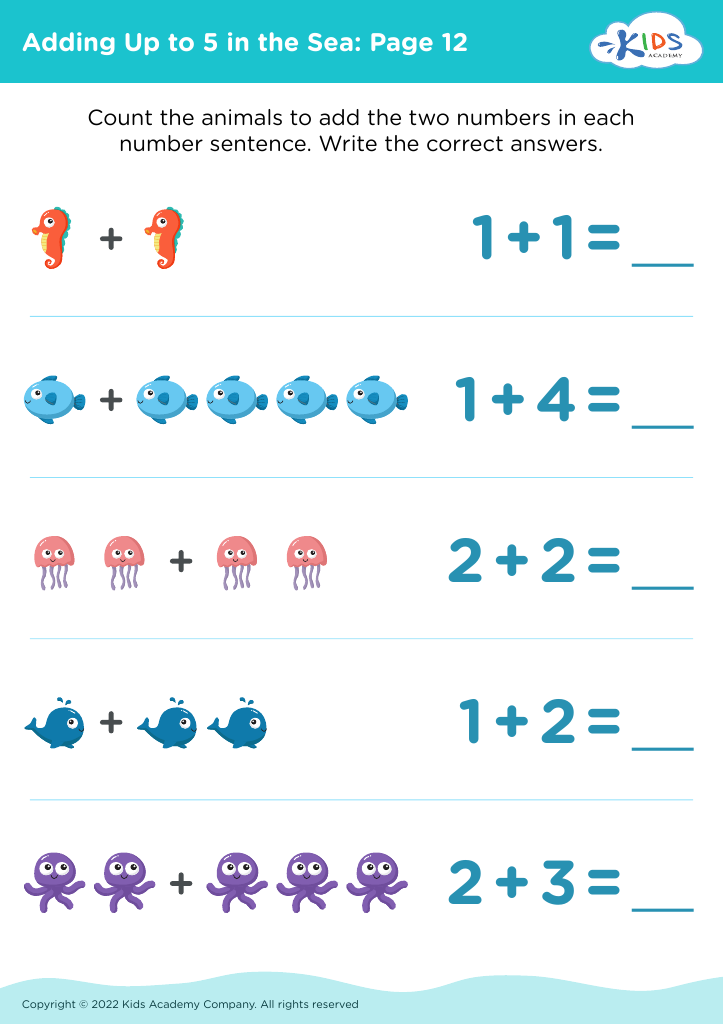
Boost your child's fine motor skills with our engaging "Adding Up to 5" worksheets designed specifically for ages 3-4! These colorful, interactive activities combine early math concepts with creative coloring exercises. Perfect for preschool learners, children will have fun while developing their hand-eye coordination and dexterity as they engage in simple addition problems. Each worksheet features captivating designs that keep young minds entertained while they learn essential numeracy skills. Help your child build confidence in their math abilities and enhance their artistic expression all in one go! Get started today and watch your little one thrive in math and motor skills!








Fine motor skills are essential for young children's development and significantly impact their overall learning and growth. For ages 3-4, activities like coloring help strengthen these skills, as they require control, coordination, and precision. Parents and teachers should care about fine motor skills because they lay the foundation for future tasks such as writing, using scissors, and engaging in everyday activities.
Coloring not only promotes dexterity and finger strength but also enhances hand-eye coordination, allowing children to practice controlling their movements. As they color, children also engage their creativity and learn about colors, shapes, and spatial concepts, contributing to their cognitive development.
Incorporating math skills, such as adding up to 5, helps children make connections between their physical and cognitive growth. Simple tasks like counting colored objects or working through small math problems while coloring can promote early numeracy skills, encouraging a love for learning.
Concerns about lower fine motor skill development or mathematical understanding can lead to challenges in later educational stages. By focusing on these skills now, parents and teachers set children up for success in both academic and daily living activities, fostering confidence and independence as they grow.








