Fine motor skills (drawing lines) Adding Up to 5 Worksheets for Ages 3-4
3 filtered results
-
From - To
Enhance your child’s fine motor skills and early math abilities with our “Fine Motor Skills (Drawing Lines) Adding Up to 5 Worksheets” designed for ages 3-4. These printable worksheets are a fun and engaging way for young learners to practice drawing lines while learning to add up to 5. Perfect for preschoolers, each sheet helps improve hand-eye coordination, pencil control, and mathematical thinking. Our developmentally appropriate activities ensure kids stay interested and motivated as they trace lines and solve simple addition problems. Make early learning enjoyable and effective with these colorful and educational worksheets from Kids Academy!
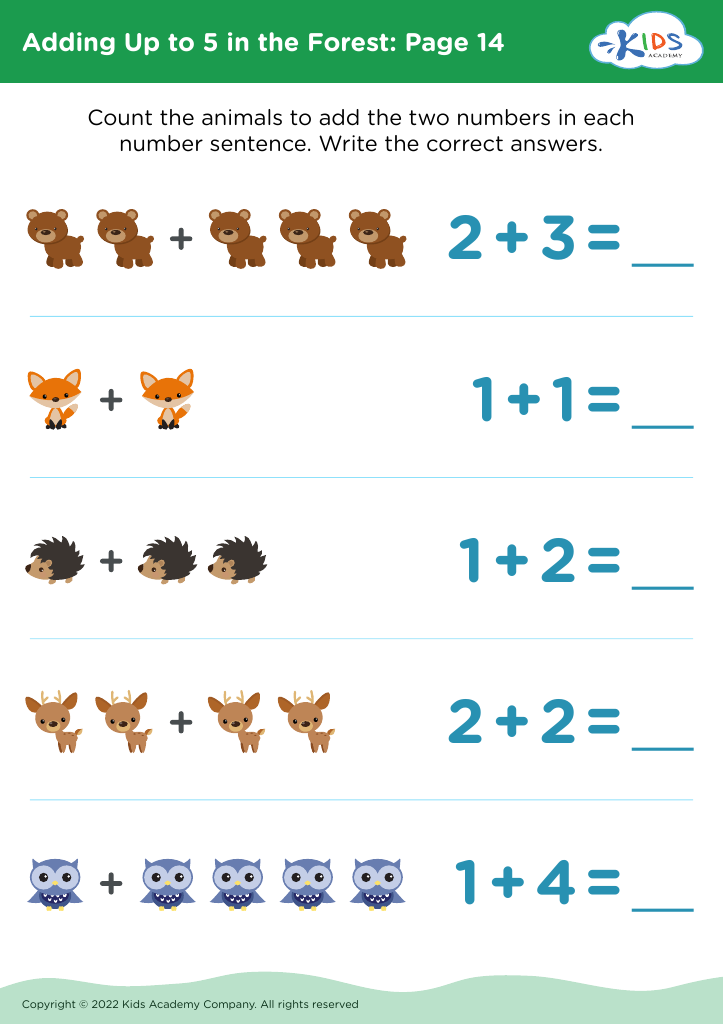
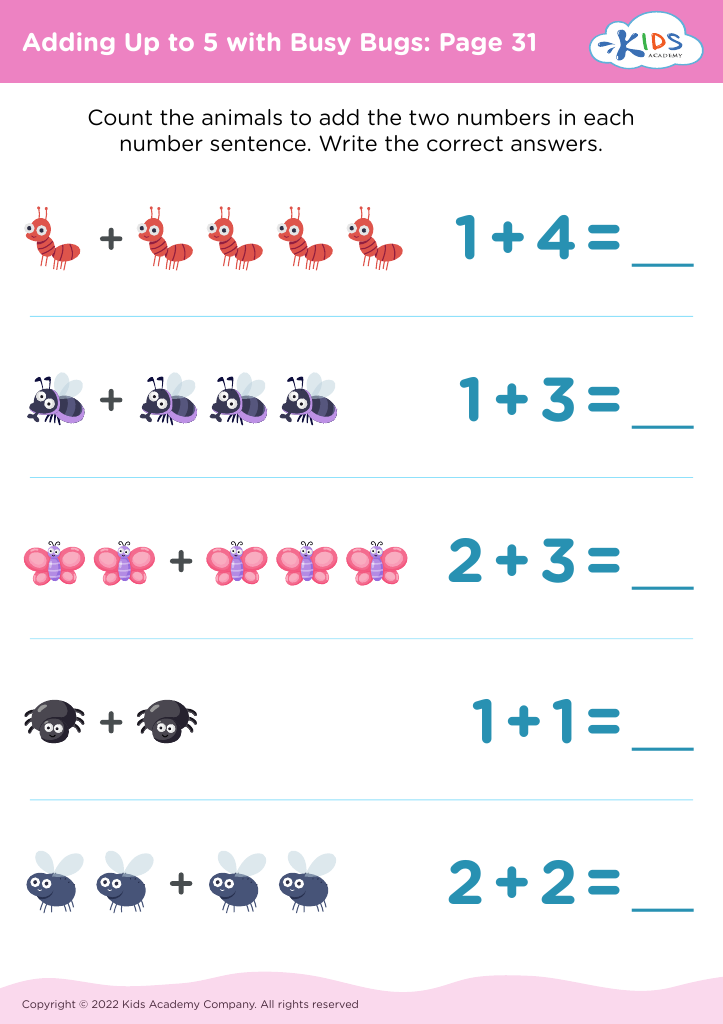
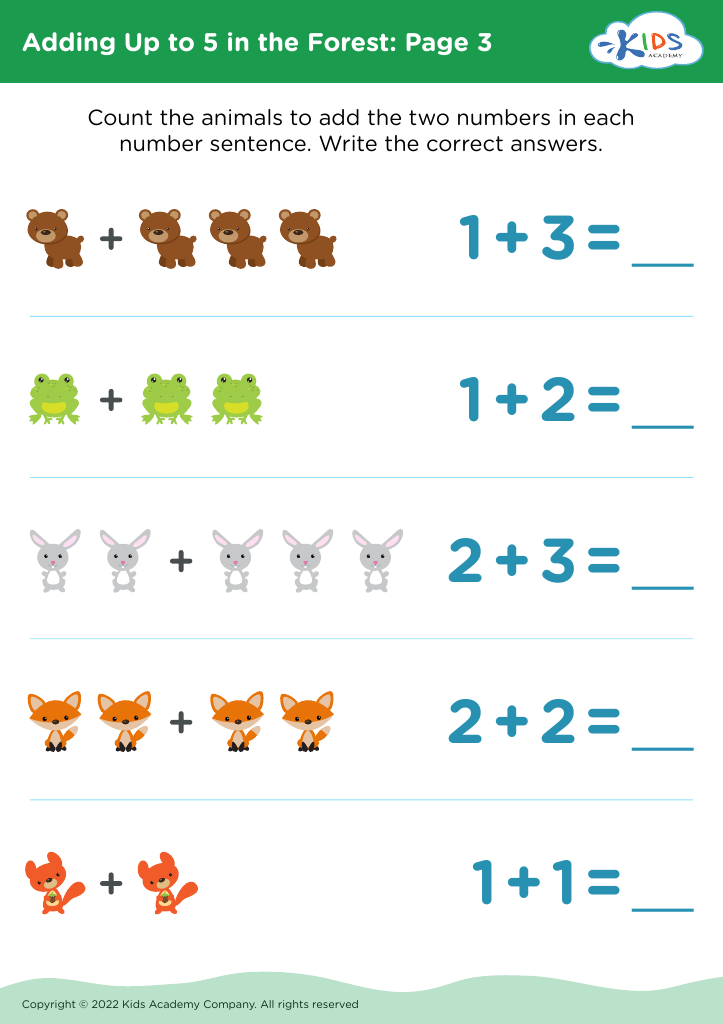








Fine motor skills, such as drawing lines and simple shapes, are crucial developmental milestones for children aged 3-4, offering a gateway to their future academic and personal success. These skills involve the coordination of small muscles in the hands and fingers, and their development is essential for more complex tasks like handwriting, using scissors, and tying shoelaces. When parents or teachers focus on nurturing these abilities, children can build muscle strength, dexterity, and hand-eye coordination.
Numerical skills, specifically adding up to 5, lay the mathematical foundation for young learners. Introducing basic counting and simple addition at this age helps children understand numerical concepts and relationships. Practical mathematical skills not only prepare them for formal education but also enhance their cognitive development, problem-solving abilities, and confidence in handling everyday tasks involving numbers.
When parents and teachers actively engage children in activities that promote fine motor skills and early math, they foster an environment of growth and curiosity. These skills are fundamental for academic readiness, setting the stage for success in kindergarten and beyond. Moreover, early mastery of such skills nurtures a child's sense of accomplishment, encouraging enthusiasm for learning while shaping a strong developmental trajectory.








