Problem-solving abilities Adding Up to 5 Worksheets for Ages 3-4
13 filtered results
-
From - To
Enhance your child's problem-solving skills with our engaging "Adding Up to 5 Worksheets for Ages 3-4." Perfectly designed for young learners, these fun and colorful worksheets help children develop foundational math abilities by practicing simple addition. By solving age-appropriate problems, kids will build confidence in their math skills, learn to recognize numbers, and improve their counting abilities. Perfect for both home and classroom use, our worksheets provide a supportive and enjoyable learning experience that inspires kids to think critically and develop a love for math. Give your child the head start they deserve with our expertly crafted resources.
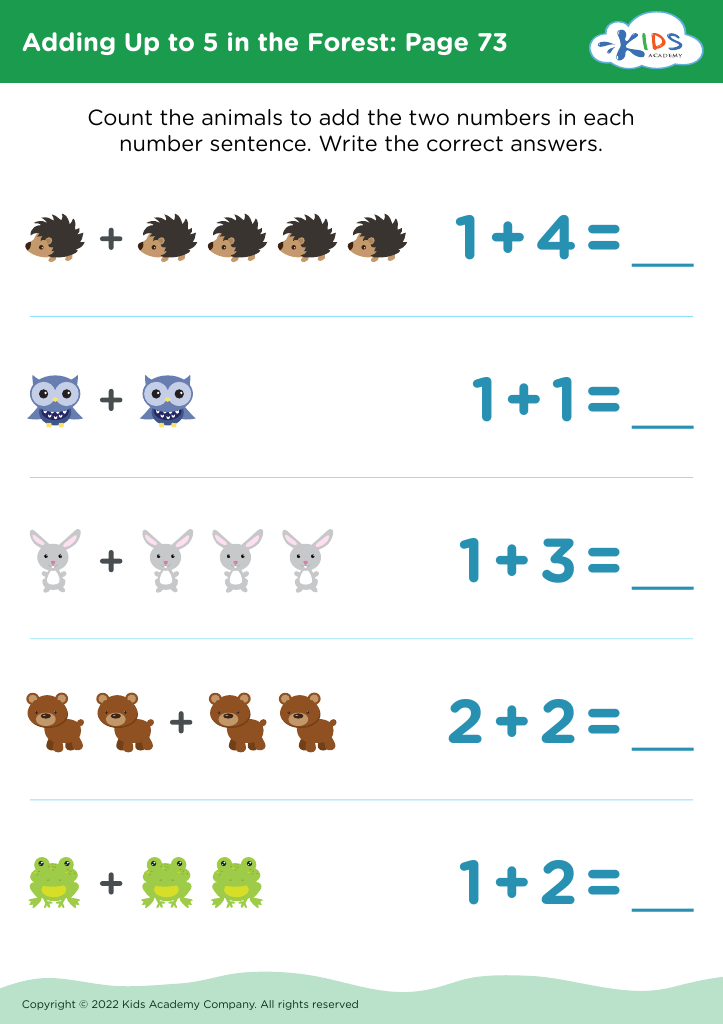
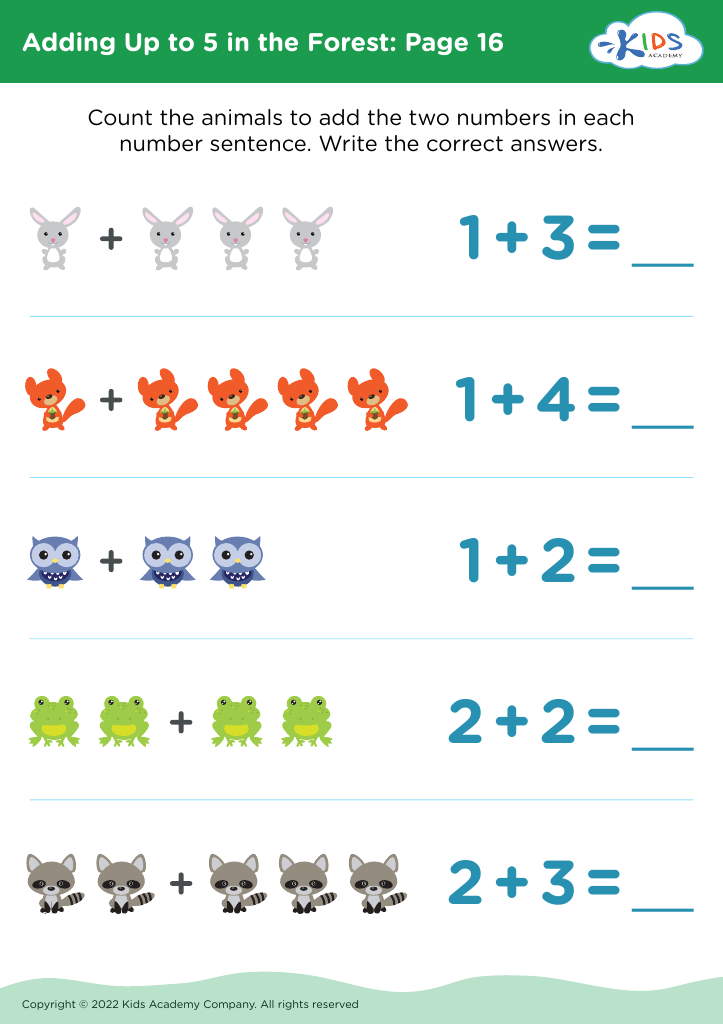
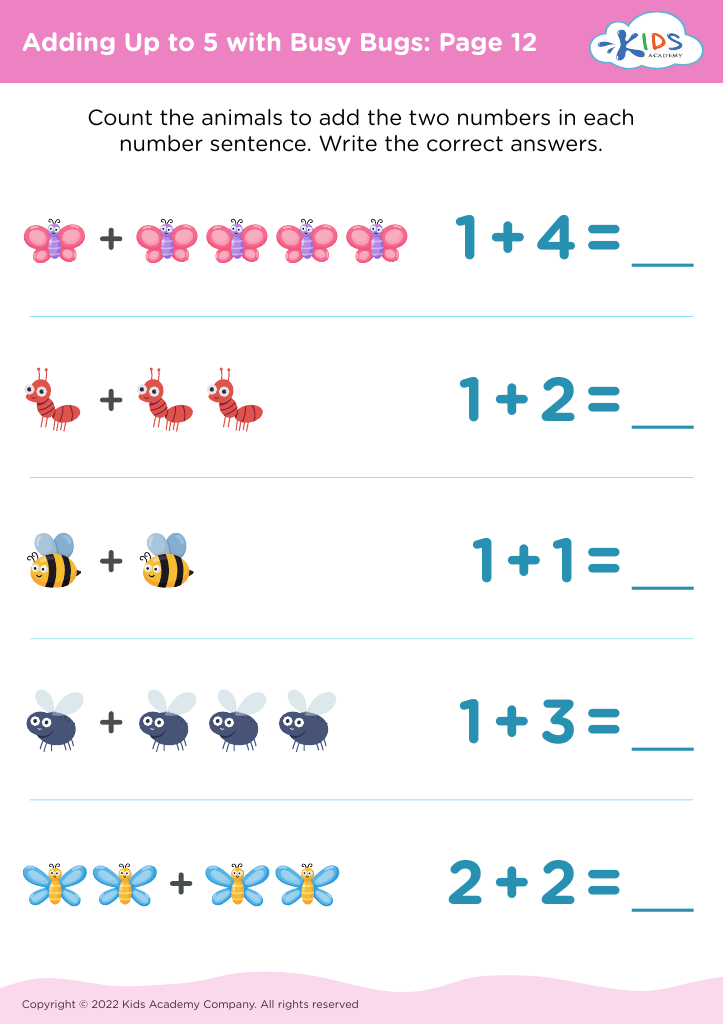
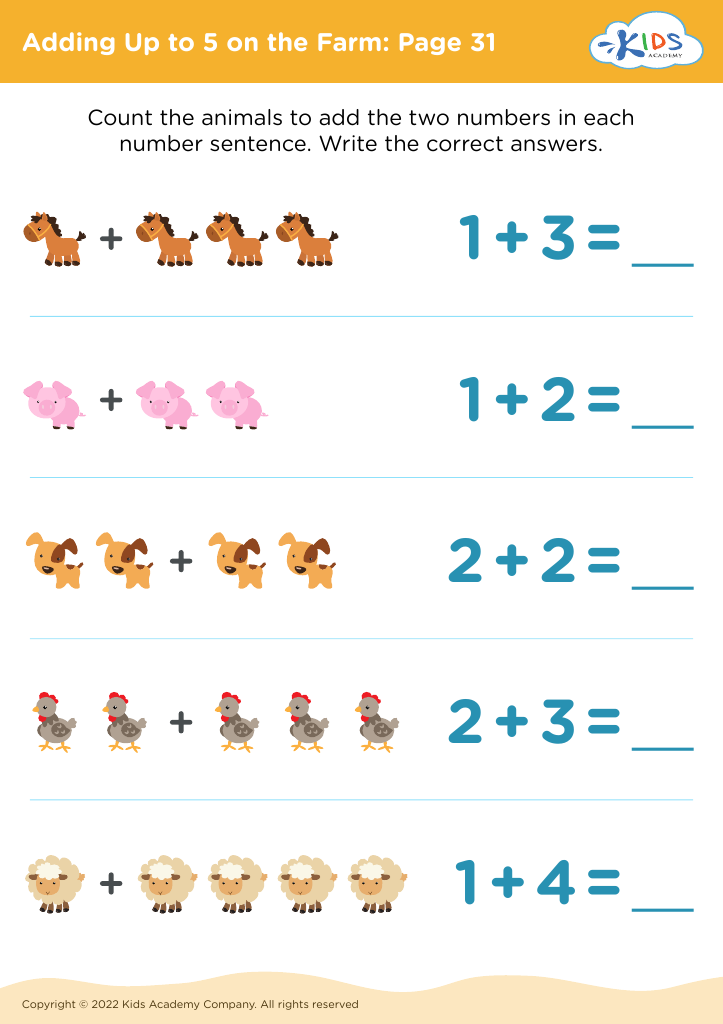
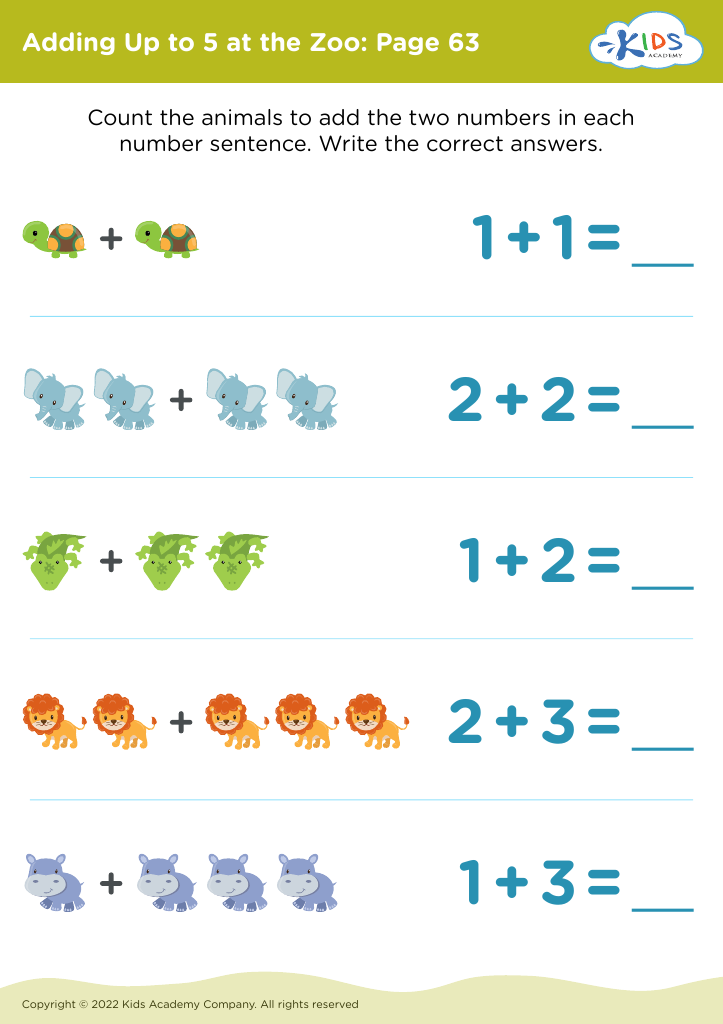
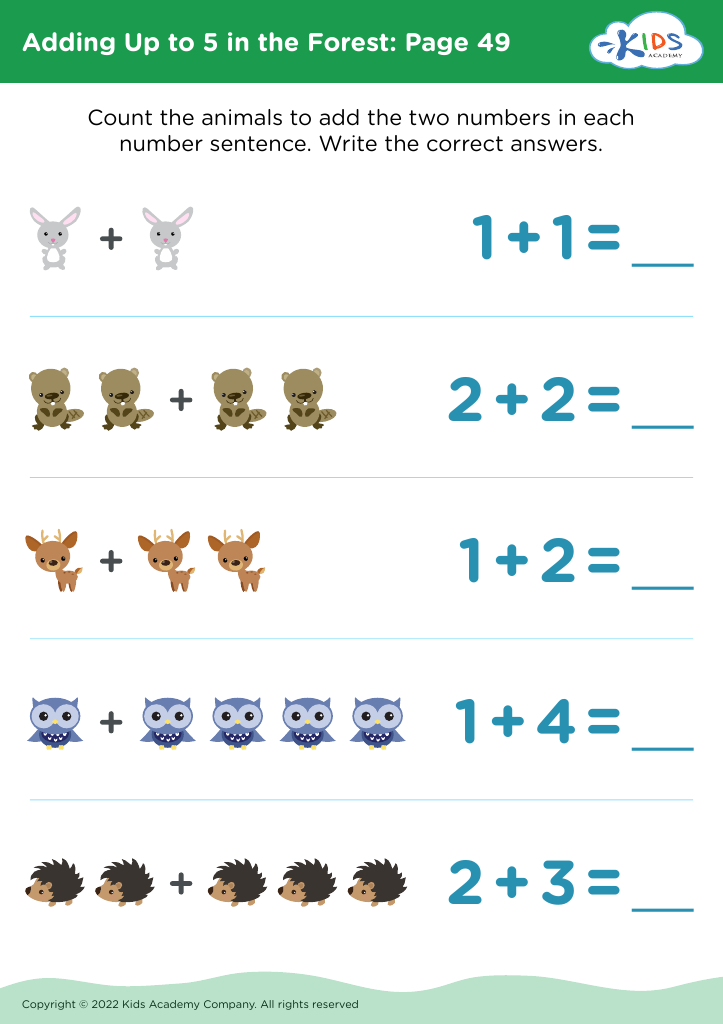
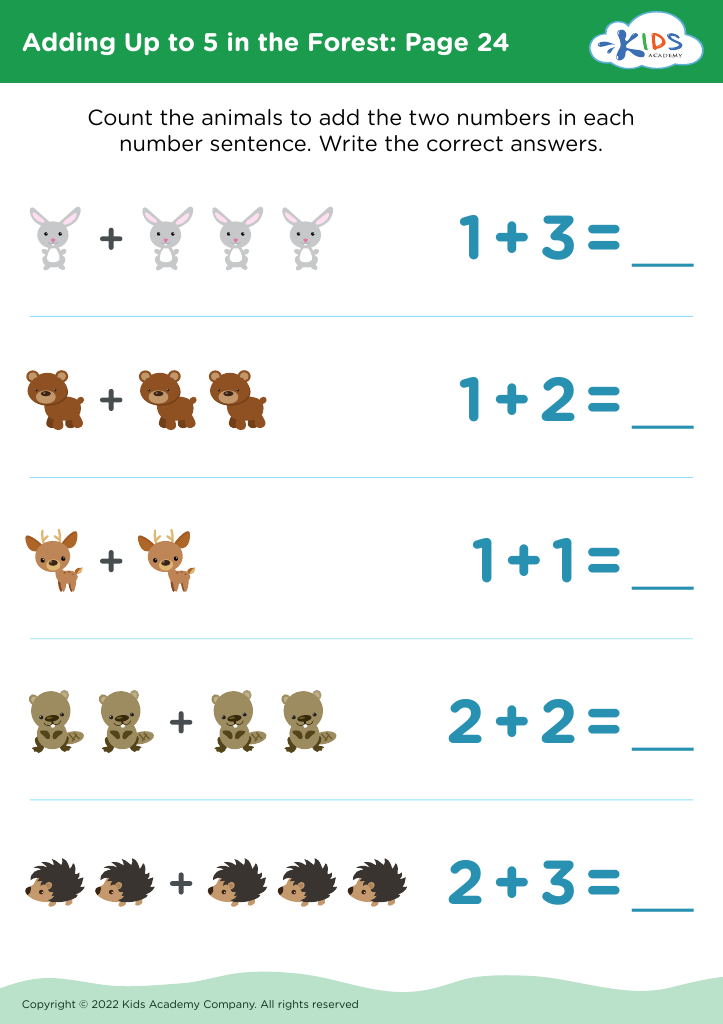
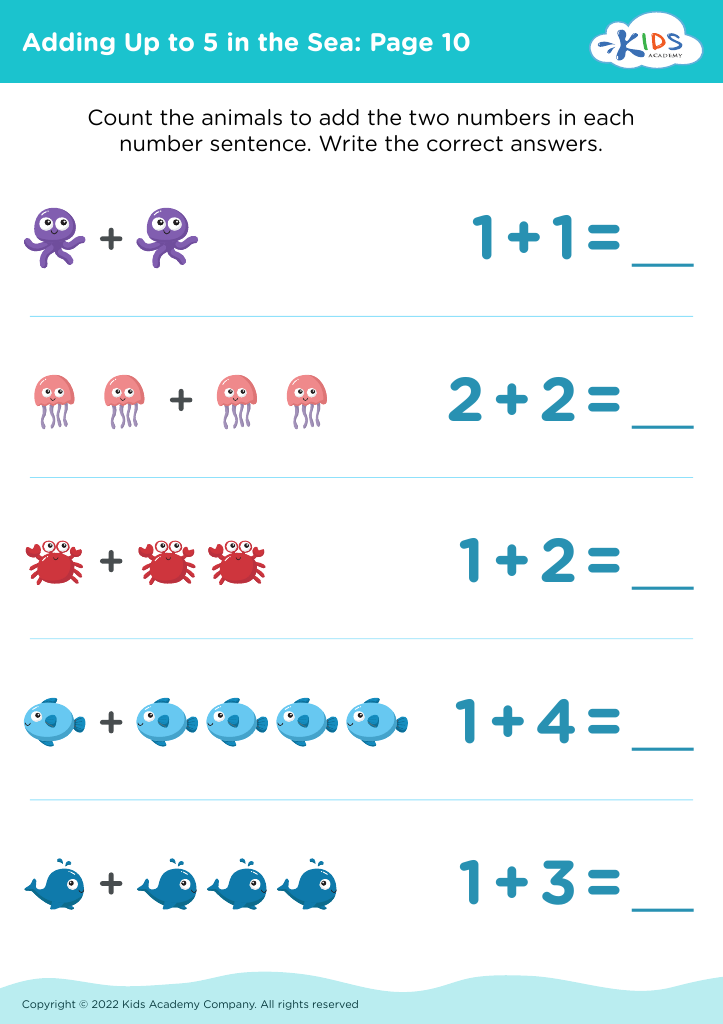
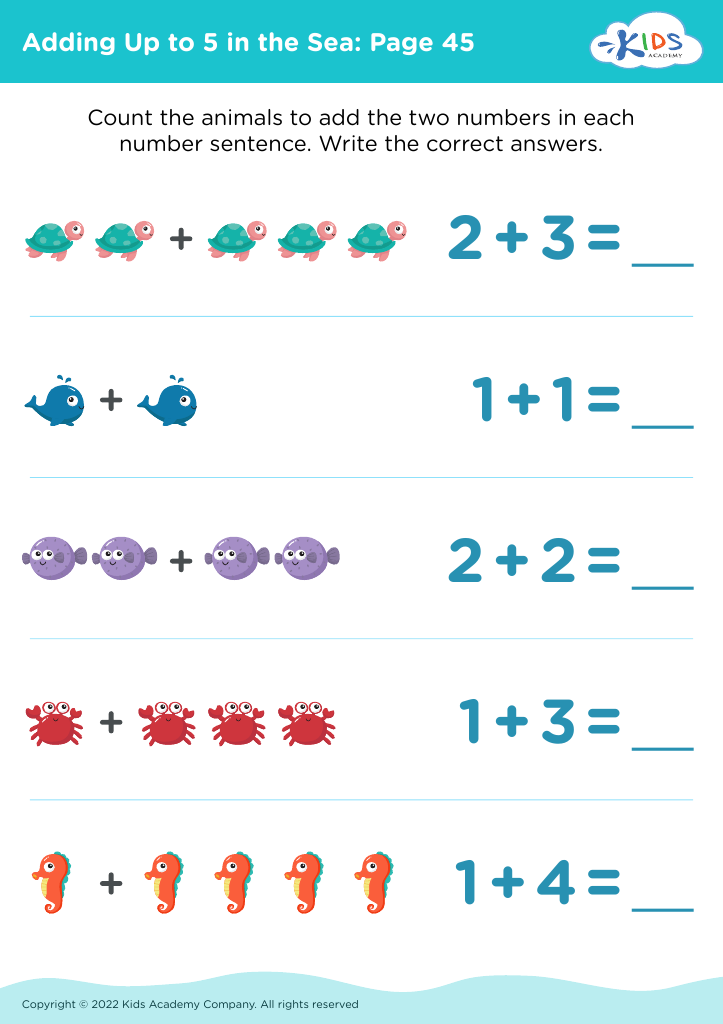
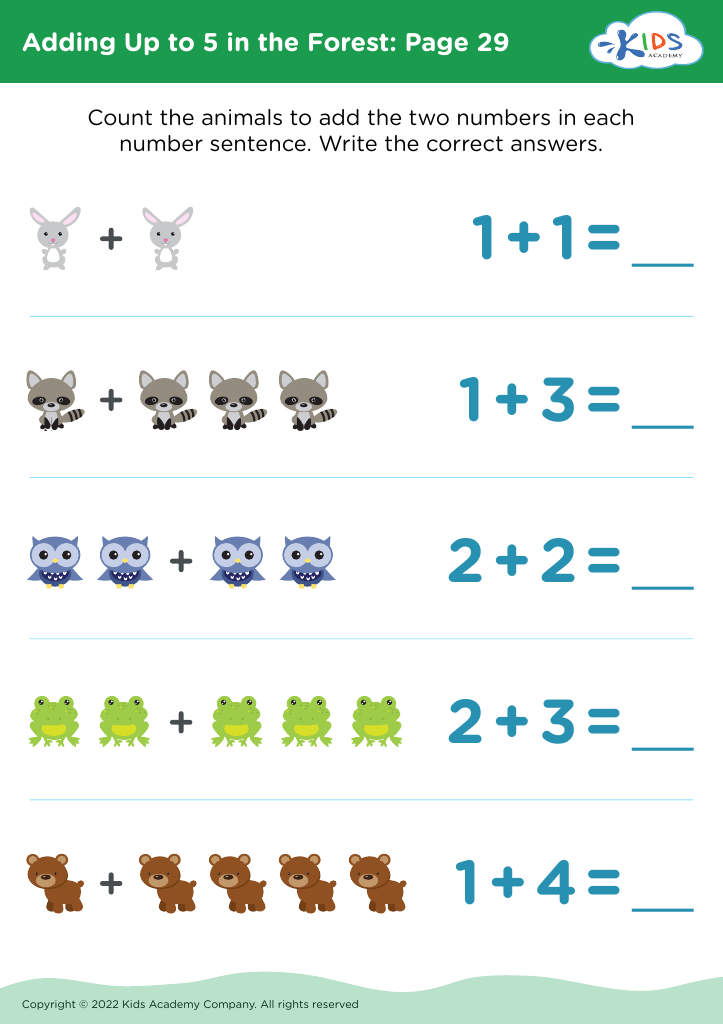
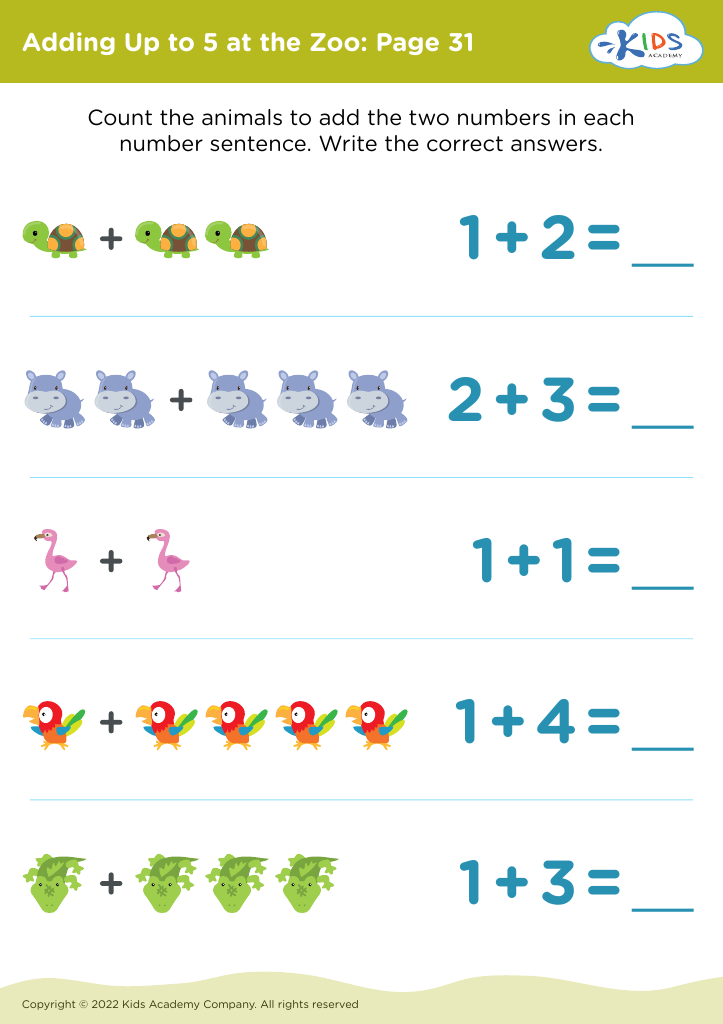
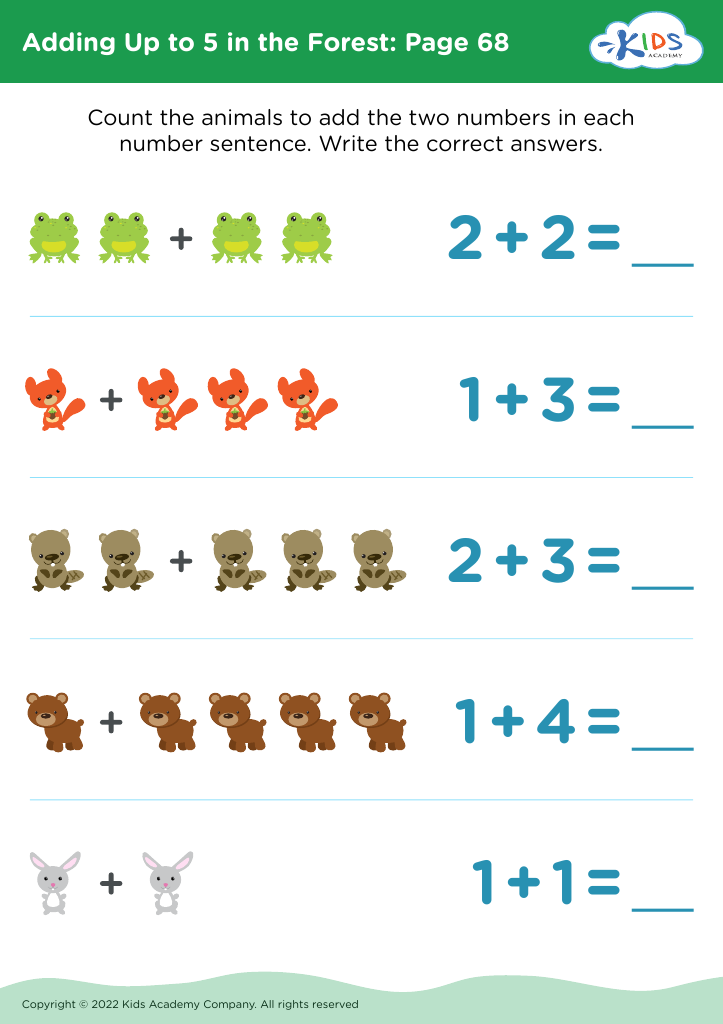
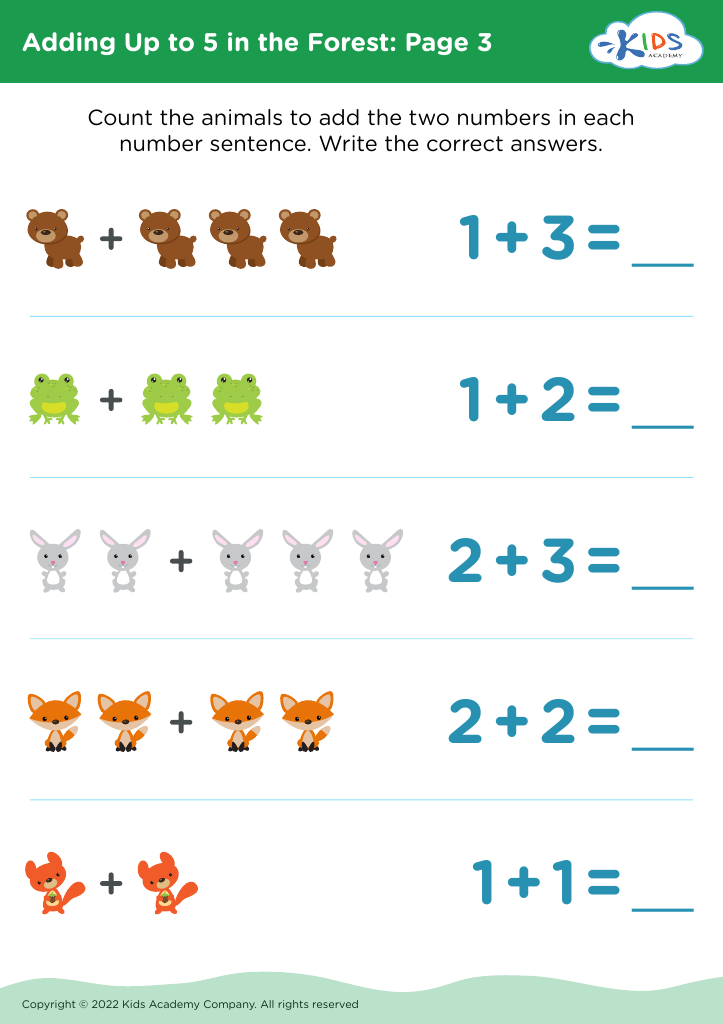








Fostering problem-solving abilities, particularly adding up to 5, in young children aged 3-4 is crucial for their early development. At this age, children's brains are exceptionally malleable, making it a prime time for absorbing foundational math concepts. Introducing simple addition helps to build their cognitive skills and encourages critical thinking, logical reasoning, and pattern recognition.
When parents and teachers emphasize these skills early on, they set the stage for future academic success. Basic math concepts like adding up to 5 serve as building blocks for more complex mathematical understanding. By using everyday objects such as toys or snacks for counting and adding, children can relate abstract concepts to their daily lives, making learning more meaningful and enjoyable.
Additionally, problem-solving activities that involve simple addition can greatly enhance children’s confidence and independence. As they conquer small challenges, their belief in their abilities grows, fostering a positive attitude towards learning. Social-emotional skills are also nurtured when children collaborate with peers to solve problems, promoting teamwork and communication.
In essence, early engagement with problem-solving and addition provides a well-rounded developmental advantage, preparing young minds not just for academic challenges ahead, but also equipping them with life-long skills. Consequently, investing time and effort in these foundational abilities is imperative for parents and educators alike.








