Understanding number relationships Adding Up to 5 Worksheets for Ages 3-4
3 filtered results
-
From - To
Unlock your child's early math potential with our "Understanding Number Relationships: Adding Up to 5 Worksheets for Ages 3-4." Designed by experts for young learners, these interactive worksheets engage preschoolers with fun activities that build foundational math skills. Kids will enhance their understanding of numbers, learn to count accurately, and grasp the concept of addition up to 5. Perfect for at-home practice or supplementary classroom use, these colorful and easy-to-follow worksheets make learning math an enjoyable experience for toddlers. Help your child start their math journey with confidence and enthusiasm with our engaging resources.
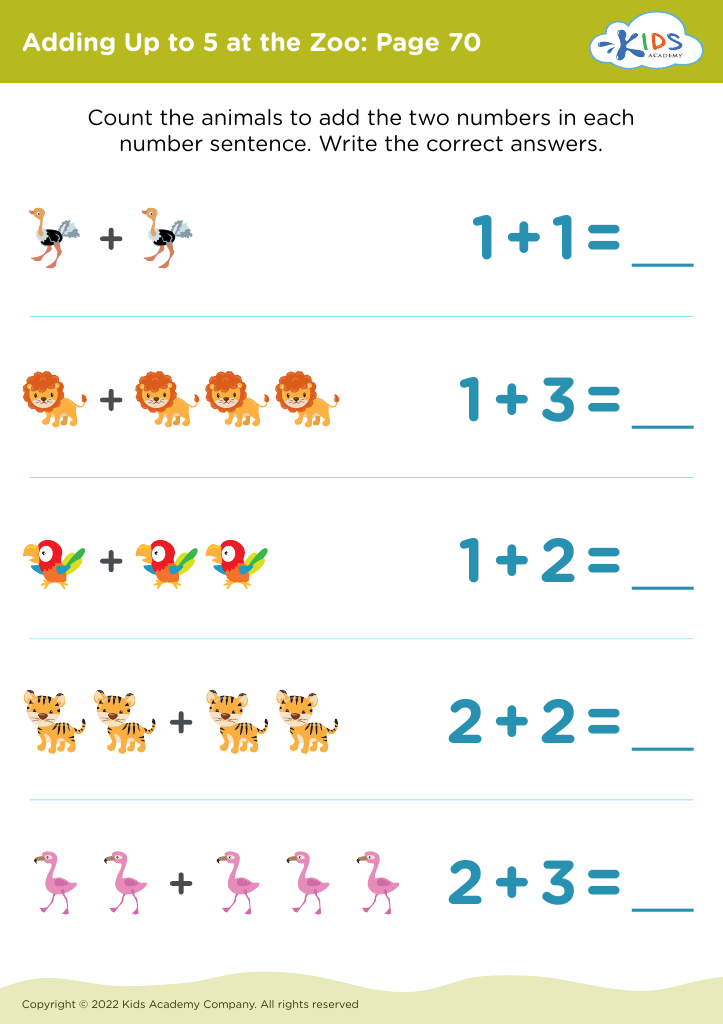
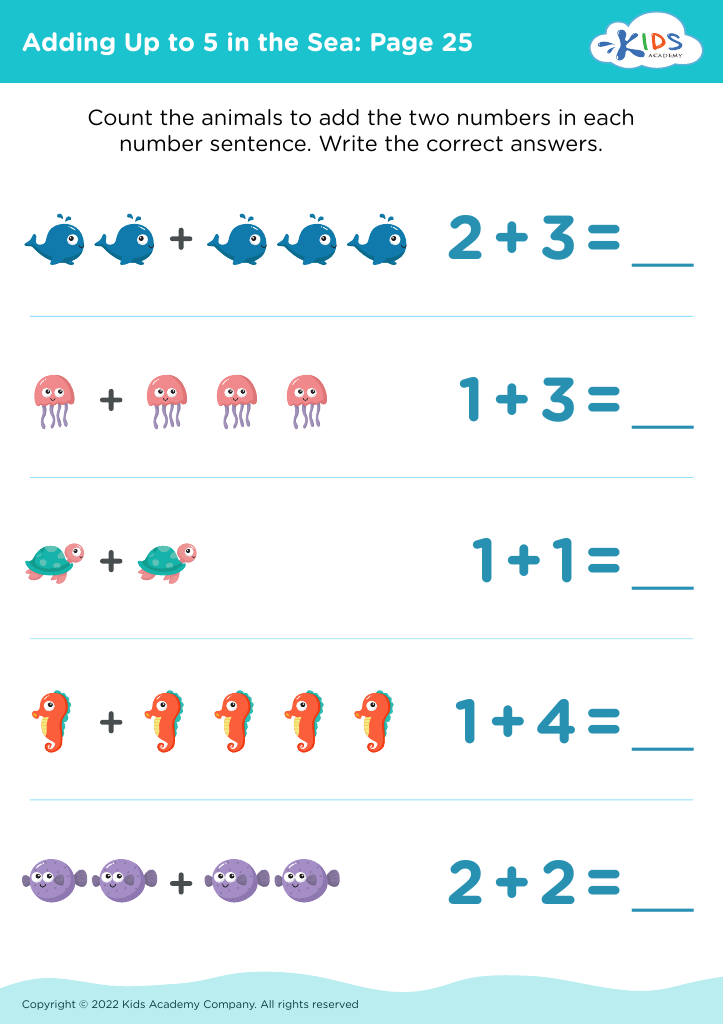
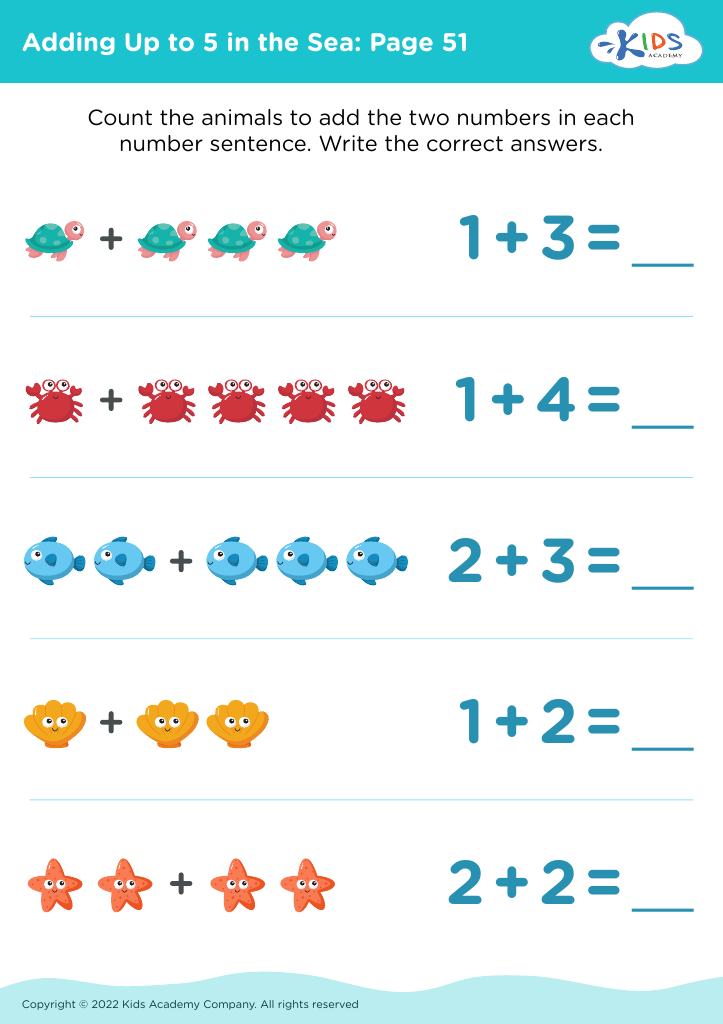




%20(1).jpg)



Understanding number relationships and adding up to five is crucial for young children (ages 3-4) as it lays the groundwork for their mathematical development. This foundational skill helps children grasp the concept of quantity and the relationships between numbers, which is essential for more advanced arithmetic.
At this early age, learning how numbers relate to one another helps children develop number sense, which is the ability to recognize, relate, and work with numbers flexibly. Number sense is vital for problem-solving and reasoning, which underpin much of mathematical thinking.
For children as young as 3-4, working within the small number range of five makes math less intimidating and more accessible. It allows them to build confidence and master the basics before moving on to larger numbers. Activities such as counting objects, playing with number blocks, and simple addition stories enhance their understanding and make learning enjoyable.
Parents and teachers play a crucial role in fostering this early math skill by providing engaging, hands-on experiences. When adults take an active interest in a child's early number sense, they set the stage for future success in math. Additionally, these interactions encourage a positive attitude towards learning and curiosity, both of which are important for a child's overall educational journey.








