Understanding numbers Adding Up to 5 Worksheets for Ages 3-4
3 filtered results
-
From - To
Discover our "Understanding Numbers Adding Up to 5 Worksheets for Ages 3-4", designed to introduce your little ones to the basics of addition. Perfect for preschoolers, these printable worksheets use engaging visuals and simple exercises to help young learners grasp the concept of adding numbers up to 5. Children will develop essential math skills while enjoying fun, colorful activities tailored for their age group. Enhance early math proficiency with our expertly crafted worksheets, and watch your child's confidence grow as they master the foundations of addition in a playful, educational environment.
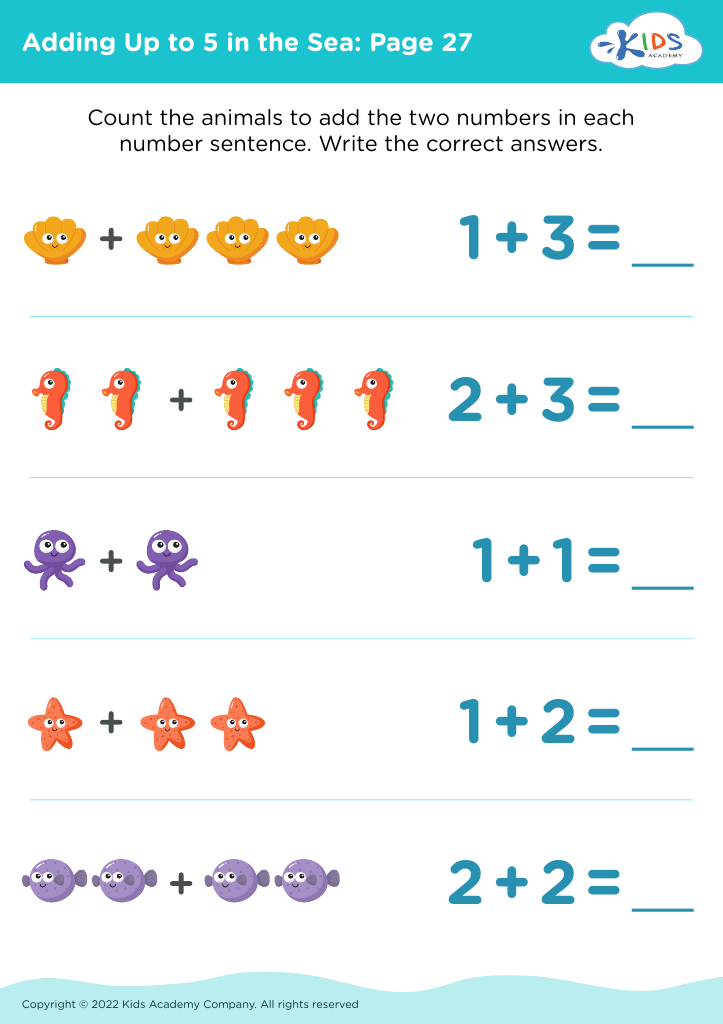
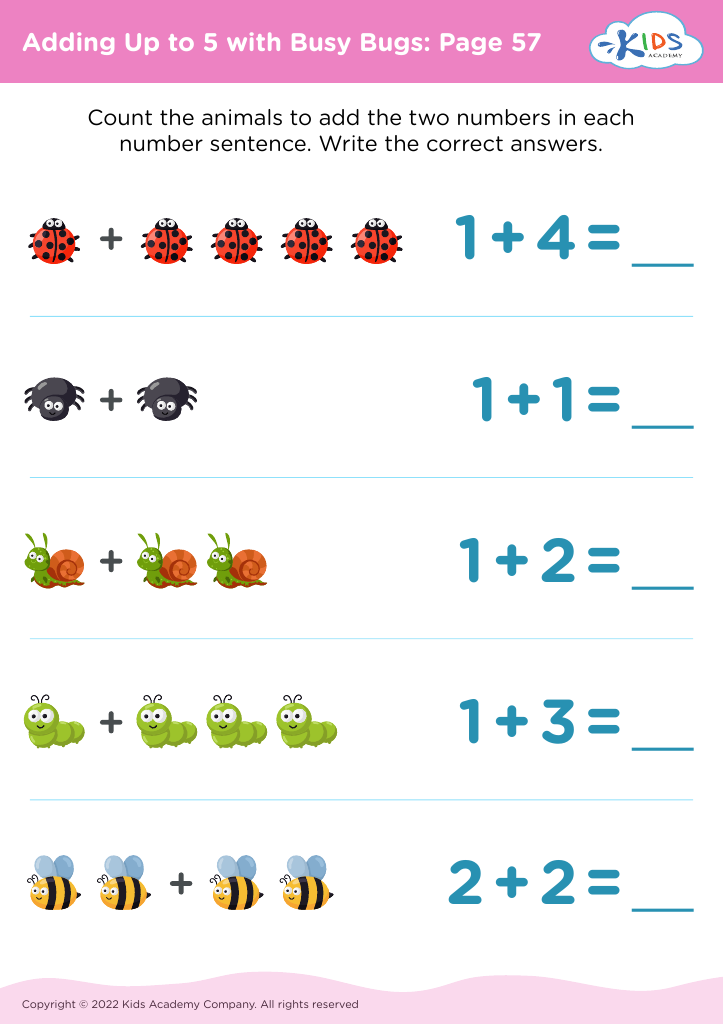
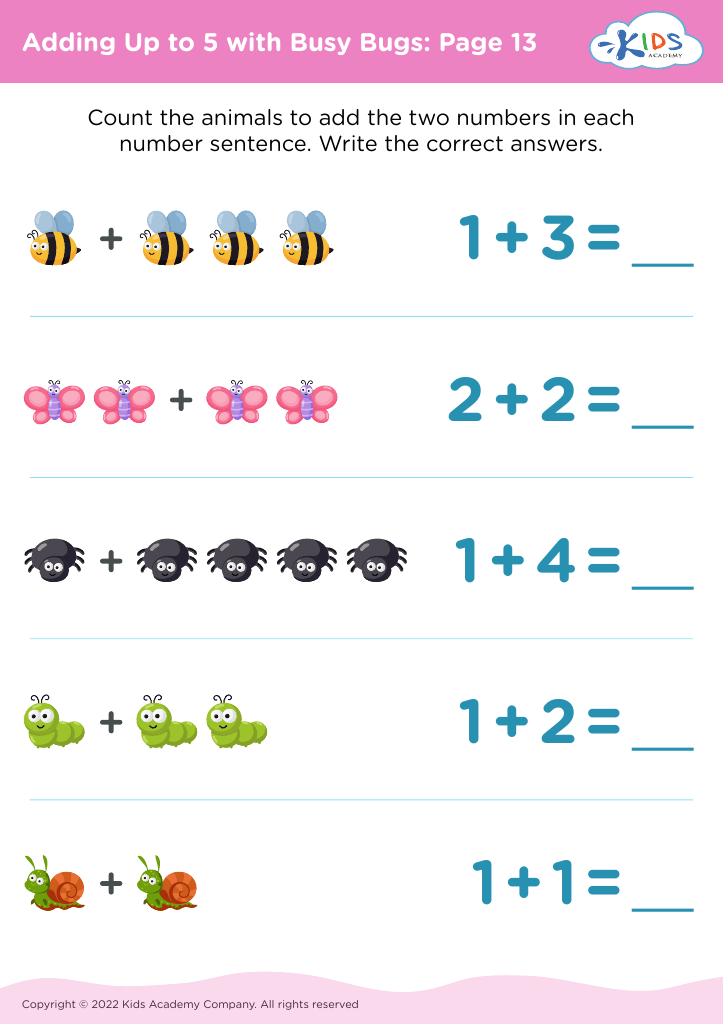



.jpg)




Understanding numbers adding up to 5 is an essential milestone for young children aged 3-4 because it lays the foundation for their future mathematical learning. At this early age, children are naturally curious and developing foundational cognitive skills, making it the perfect time to introduce them to basic concepts in a fun, engaging way.
First, grasping numbers that add up to 5 helps strengthen children's number sense, which is the ability to understand, relate, and connect numbers. This fundamental skill paves the way for more complex mathematical operations like addition, subtraction, and eventually, multiplication and division.
Next, early exposure to mathematical concepts fosters critical thinking and problem-solving abilities. Learning to add numbers, even up to 5 at this stage, requires children to engage their minds in recognizing patterns and understanding basic cause and effect, both crucial cognitive strategies that benefit their overall intellectual development.
Additionally, building a positive relationship with math early on can boost children's confidence and reduce anxiety related to numeracy tasks in the future. Parents and teachers who incorporate playful activities, such as counting games, puzzles, or songs, can make math enjoyable, fostering a lifelong love for learning.
In summary, focusing on numbers adding up to 5 at ages 3-4 equips children with essential skills, nurtures their cognitive growth, and establishes a solid, positive foundation for all future mathematical learning.








