Visual comprehension Adding Up to 5 Worksheets for Ages 3-4
7 filtered results
-
From - To
Enhance your child's early math skills with our "Visual Comprehension Adding Up to 5 Worksheets for Ages 3-4". These engaging activities are designed to develop visual comprehension and basic addition skills, providing a solid foundation for future math learning. Each worksheet features vibrant illustrations and simple addition problems, making learning fun and effective for young minds. Perfect for preschoolers, these exercises help children recognize numbers and quantities, improving their counting and problem-solving abilities. Ideal for parents and educators, these worksheets are an excellent resource for fostering a love of math from an early age.
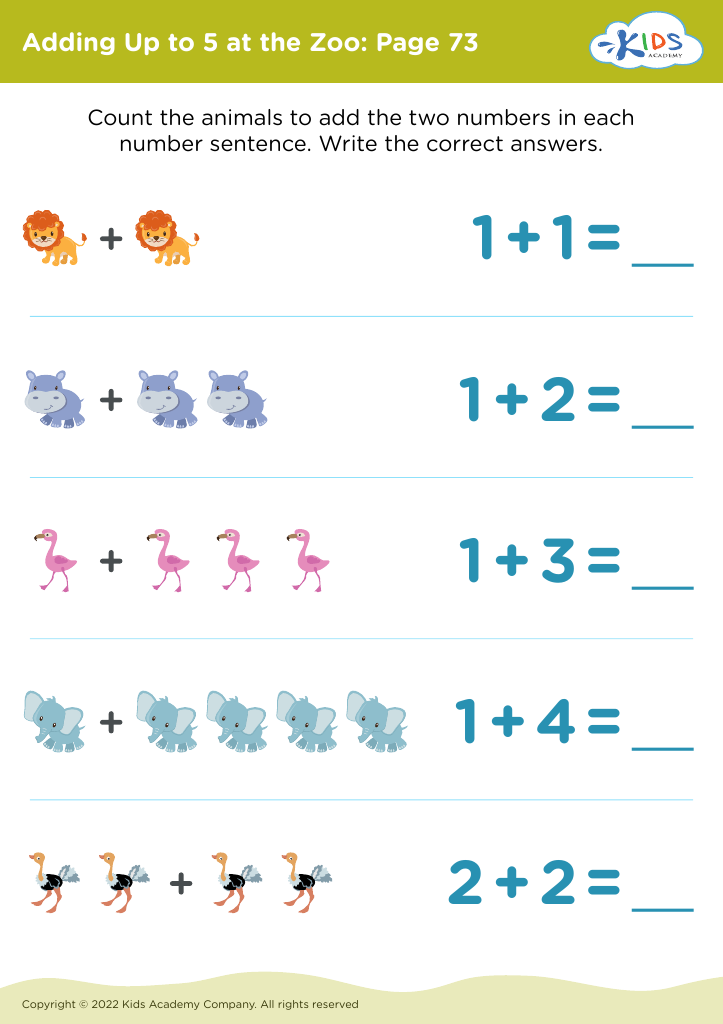
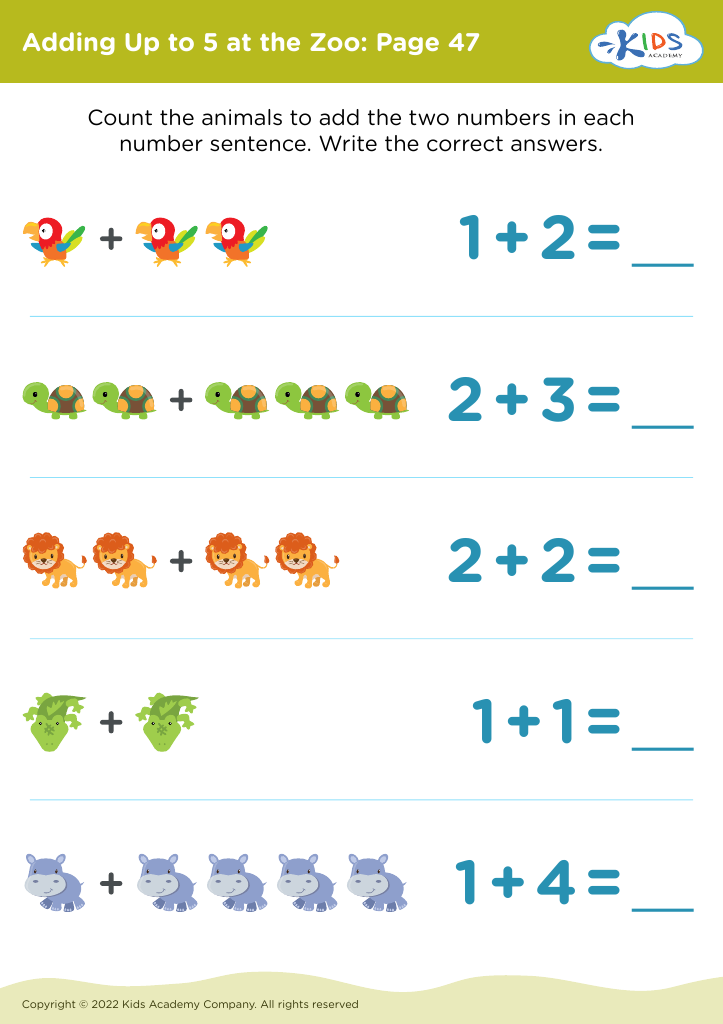
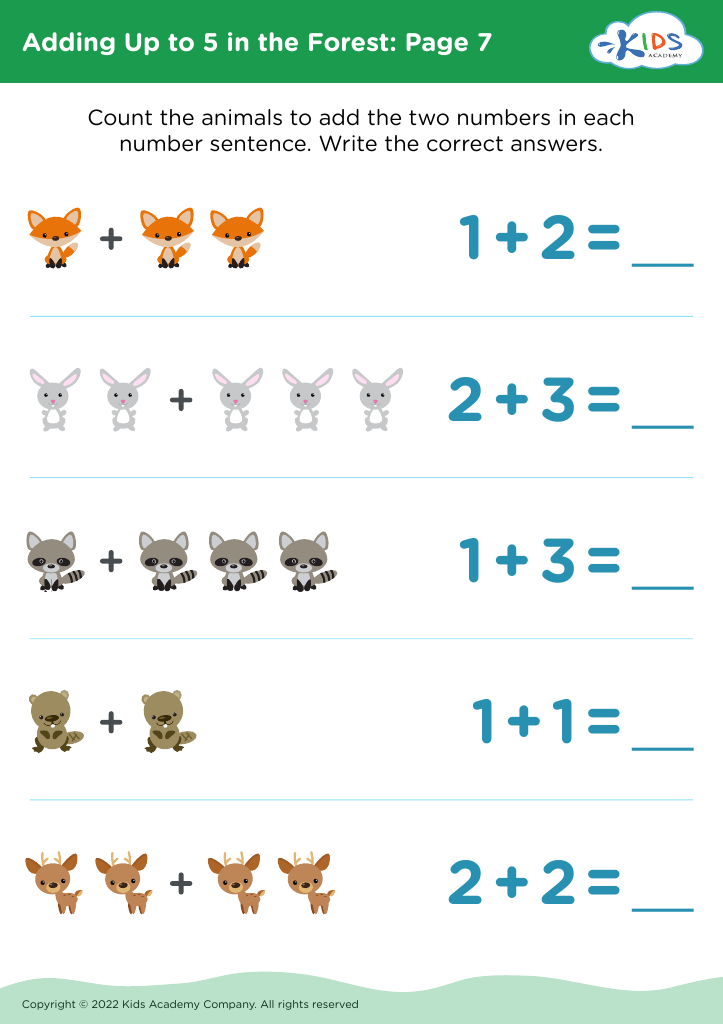
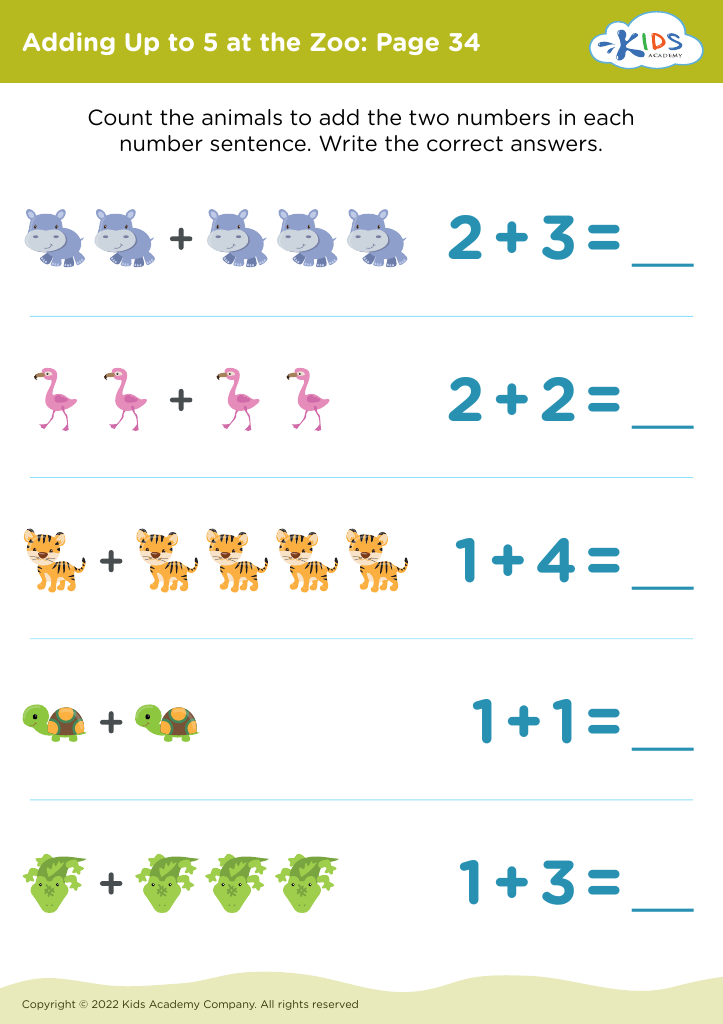
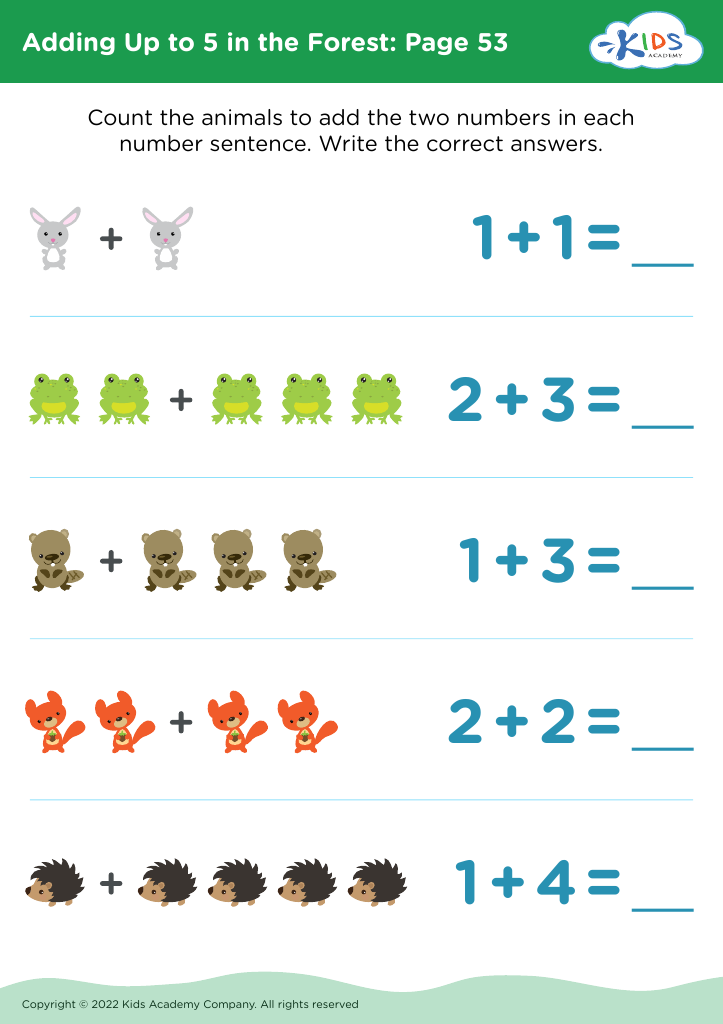
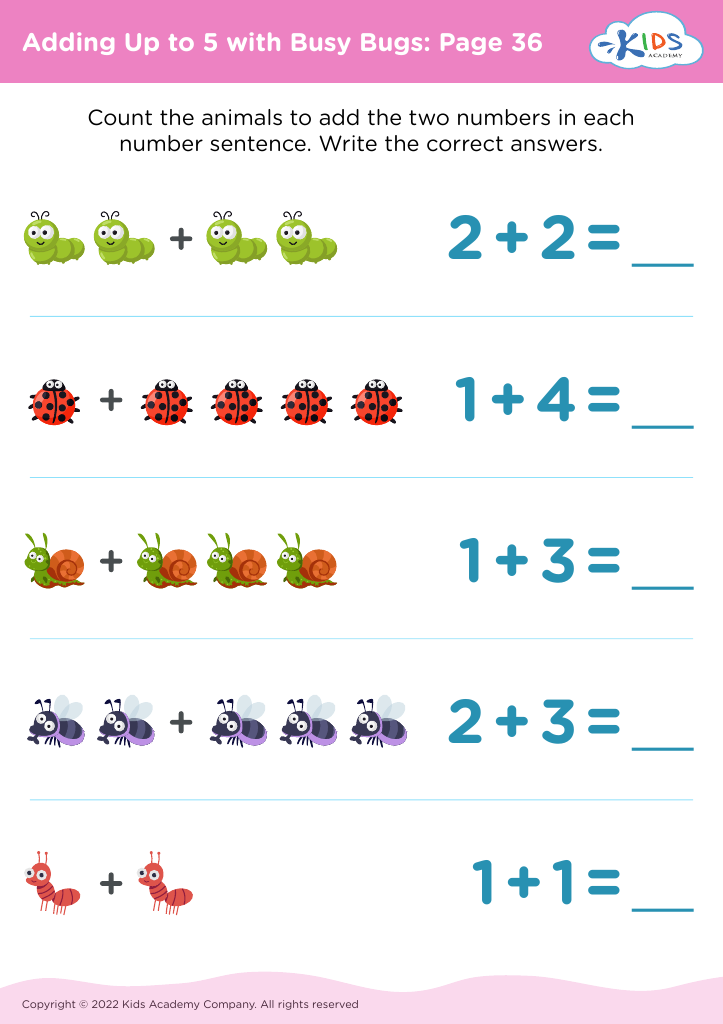
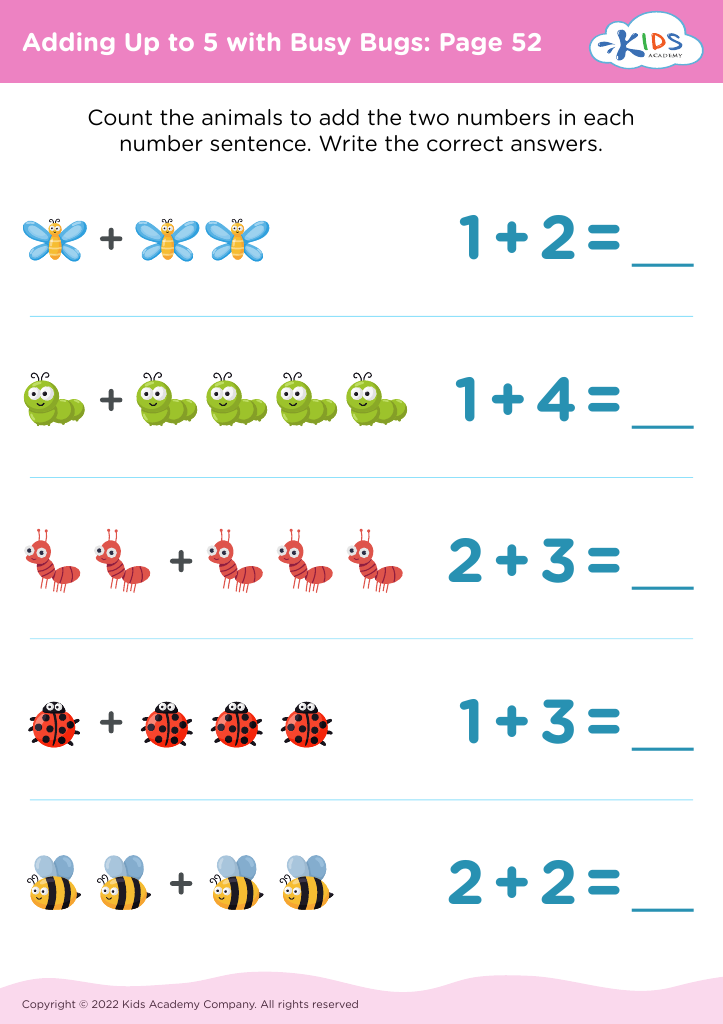








Visual comprehension involving adding up to 5 is crucial for children aged 3-4 as it lays a foundation for early numeracy skills, fostering both cognitive and academic development. During these formative years, young minds are especially receptive to absorbing new information through visual stimuli. Introducing simple arithmetic visually helps children grasp basic mathematical concepts more intuitively. For instance, using colorful objects or images to represent numbers encourages engagement and makes learning feel like play.
This early exposure aids in developing a child’s ability to recognize patterns, enhance problem-solving skills, and build spatial awareness, all of which are essential for future math learning. Moreover, visual comprehension exercises improve concentration and attention spans, both critical for overall academic success.
For parents and teachers, investing in these early educational experiences not only encourages a healthy attitude towards learning but also identifies and nurtures individual potentials and inclinations early on. Recognizing and addressing any difficulties in understanding these concepts at an early stage can prevent future educational hurdles. Ultimately, visual comprehension tasks for adding up to 5 create a supportive learning environment that prioritizes interactive, hands-on learning, fostering a lifelong love for learning and boosting self-confidence in young children.








