Animal identification Addition & Subtraction Worksheets for Ages 3-4 - Page 2
27 filtered results
-
From - To
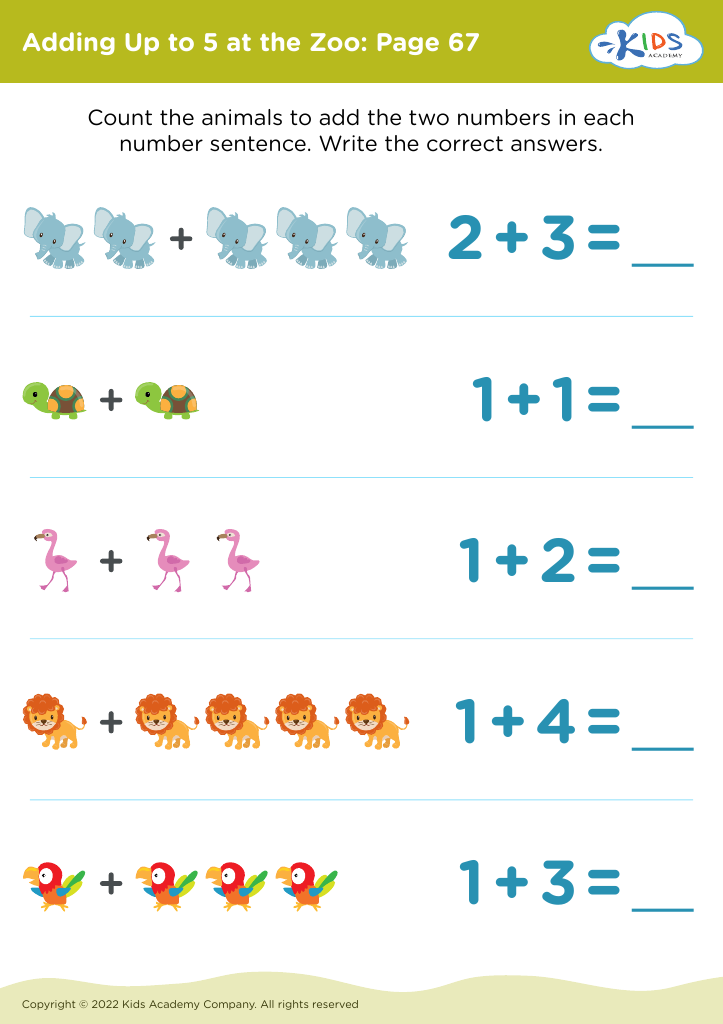
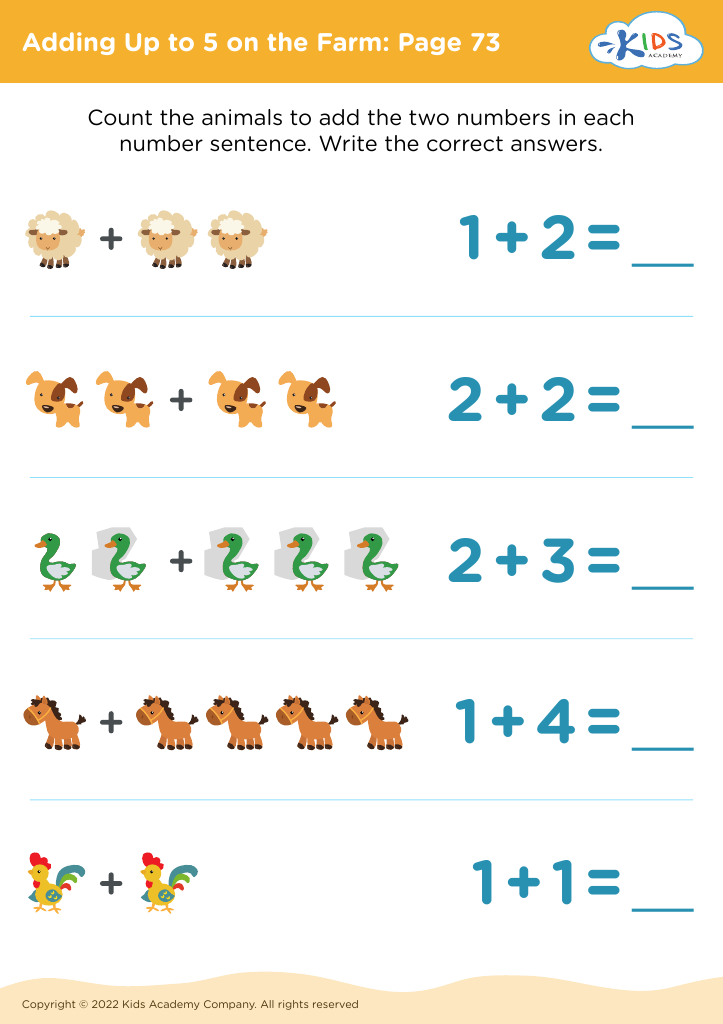
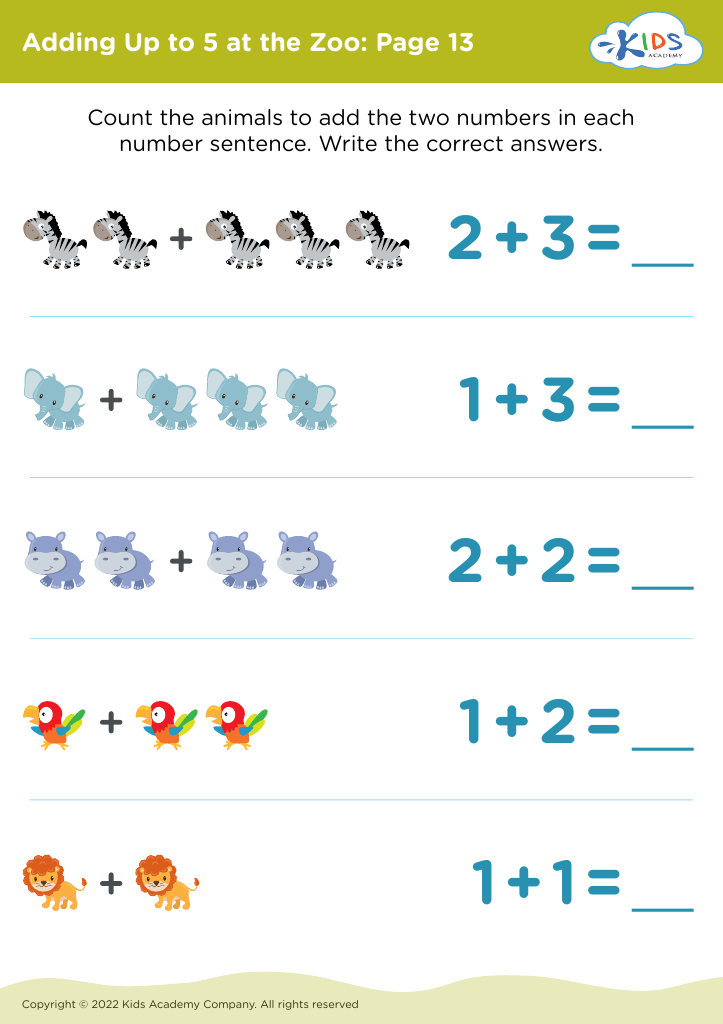








Parents and teachers should view animal identification coupled with addition and subtraction for ages 3-4 as foundational tools in early childhood development. Introducing children to animals encourages curiosity about the natural world and enriches vocabulary, fostering language skills. When combined with basic math, such as addition and subtraction, young learners simultaneously develop numeric understanding and cognitive abilities.
Blending familiar, engaging creatures with numbers can make abstract concepts more tangible, aiding comprehension. For instance, counting paws or combining different animals promotes practical application of math in a relatable context, deeply embedding these basic arithmetic principles through entertaining interactions. These seemingly simple activities do more than teach arithmetic; they improve fine motor skills, observation, and attention to detail as children distinguish and count various animals.
Moreover, these exercises instill confidence and a sense of achievement in young learners, vital for nurturing a lifelong love of learning. Educational experiences that integrate diverse domains—language, math, and natural science—create dynamic and effective learning environments, which are crucial during the early stages of cognitive development.
Consequently, parents and teachers should embrace animal identification and basic arithmetic for young children, recognizing its multifaceted benefits and its potential to lay a strong educational foundation for future learning.








