Filters

97 filtered results

Clear all filters
Favorites
With answer key
Interactive

97 filtered results

Difficulty Level

Grade


Check out this FREE Trial Lesson on Addition & Subtraction for age 3-4!

Match Exactly the Same

Favorites
With answer key
Interactive
  • 3-4
  • Animal recognition
  • Addition & Subtraction
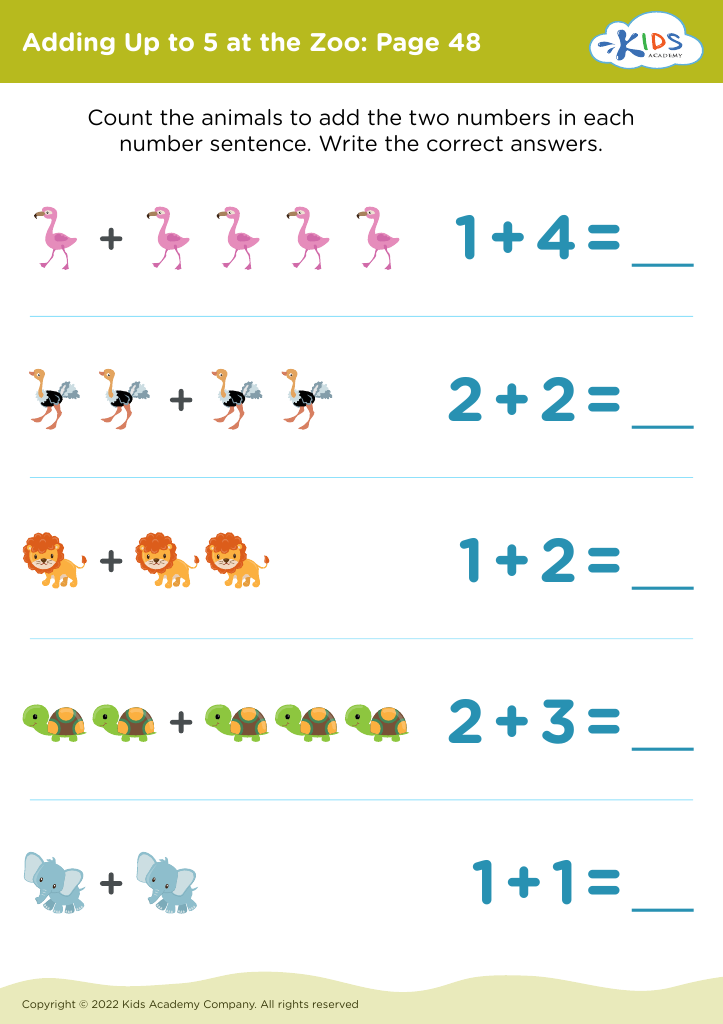
Adding Up to 5 at the Zoo: Page 48
Worksheet
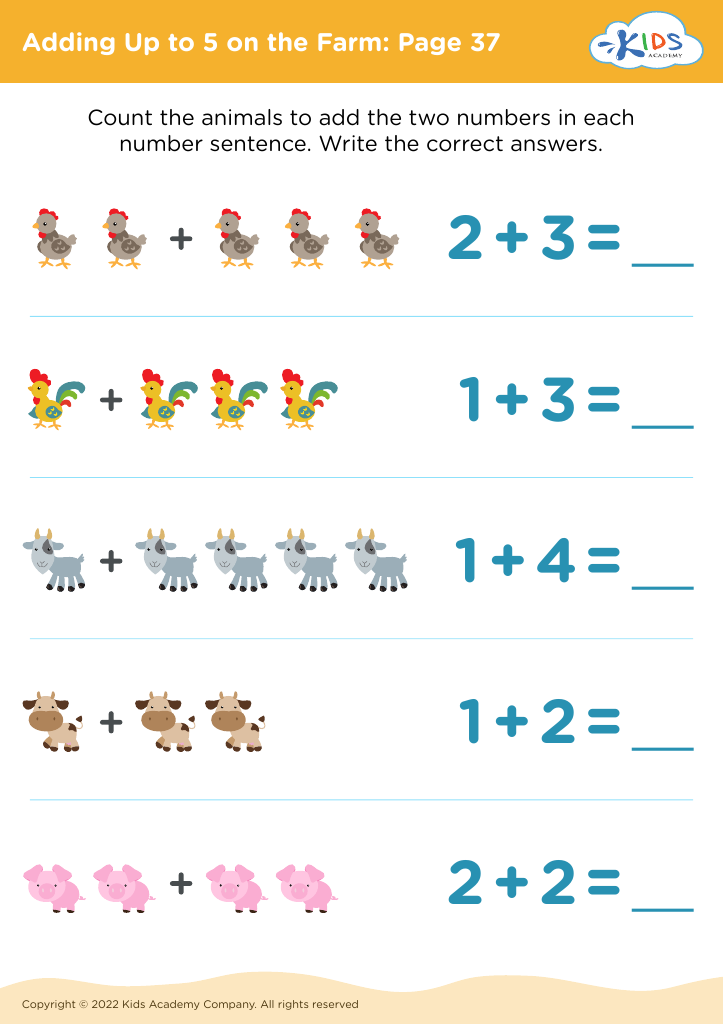
Adding Up to 5 on the Farm: Page 37
Worksheet
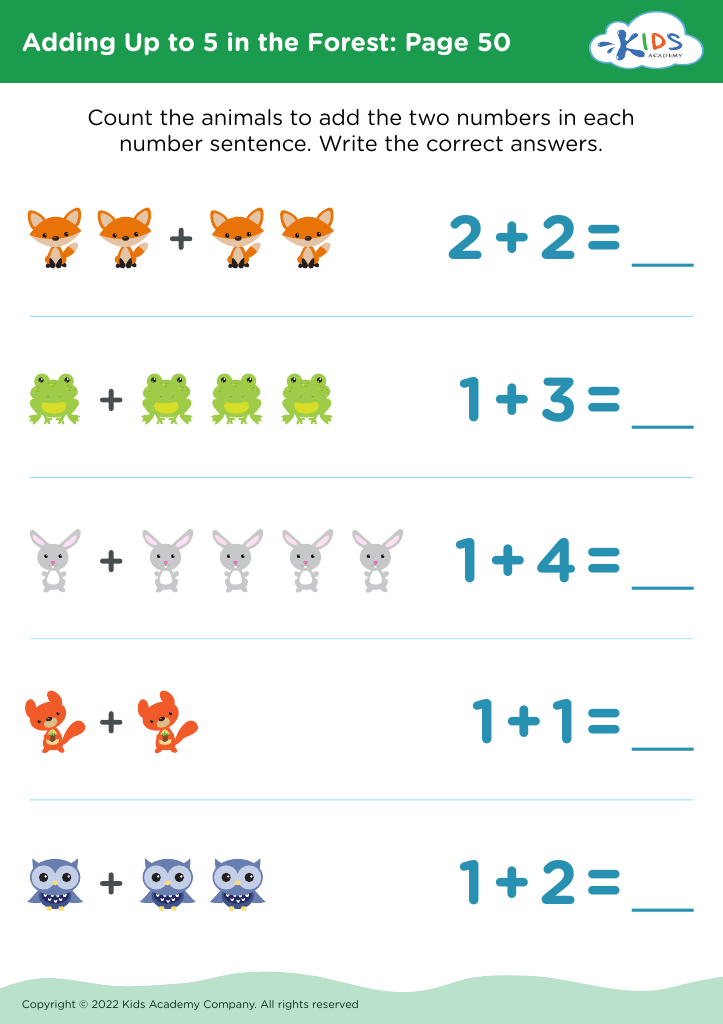
Adding Up to 5 in the Forest: Page 50
Worksheet
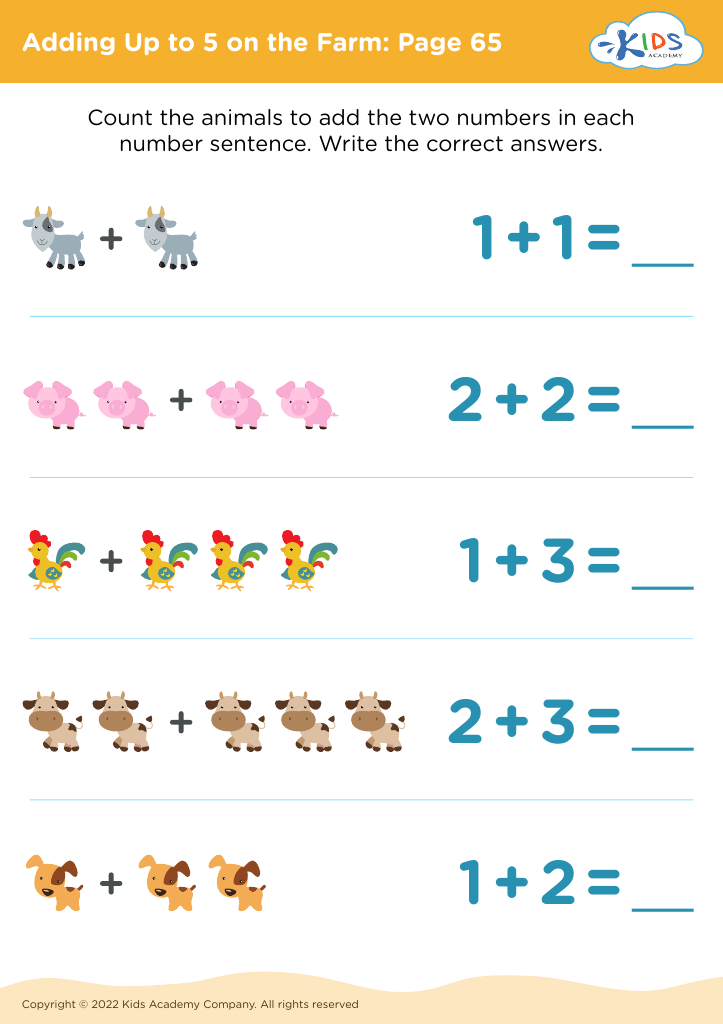
Adding Up to 5 on the Farm: Page 65
Worksheet
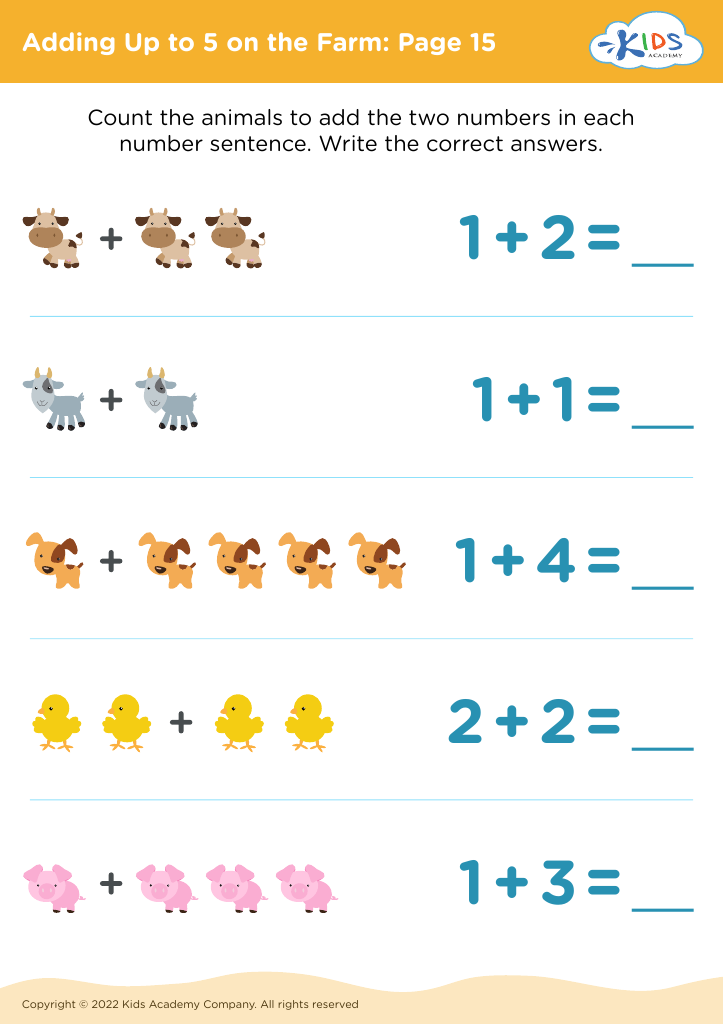
Adding Up to 5 on the Farm: Page 15
Worksheet
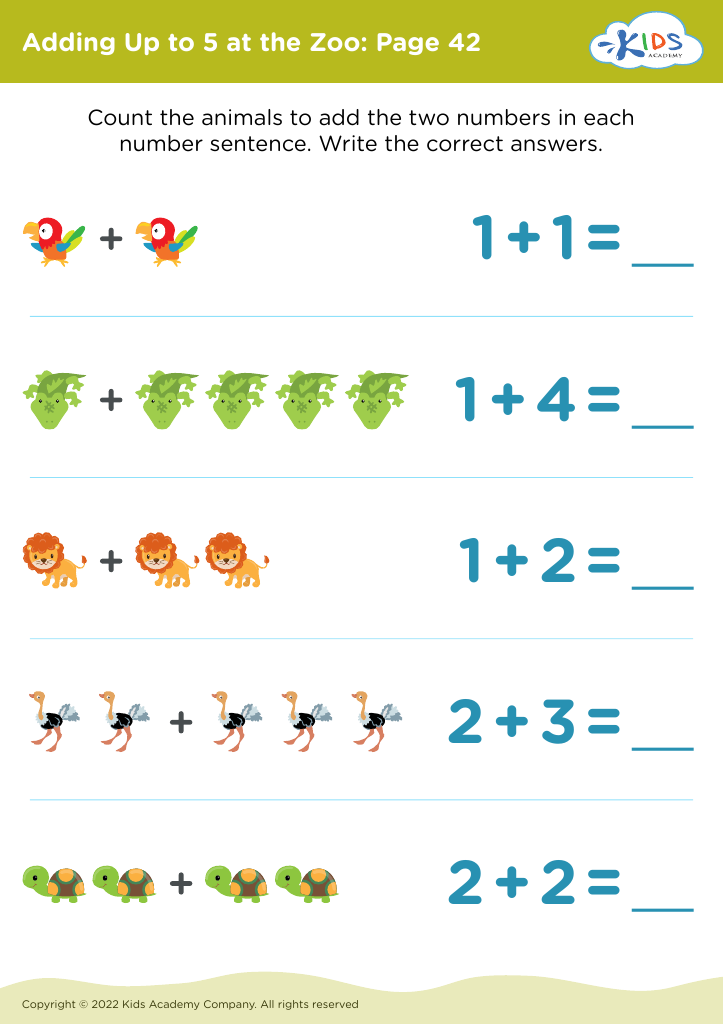
Adding Up to 5 at the Zoo: Page 42
Worksheet
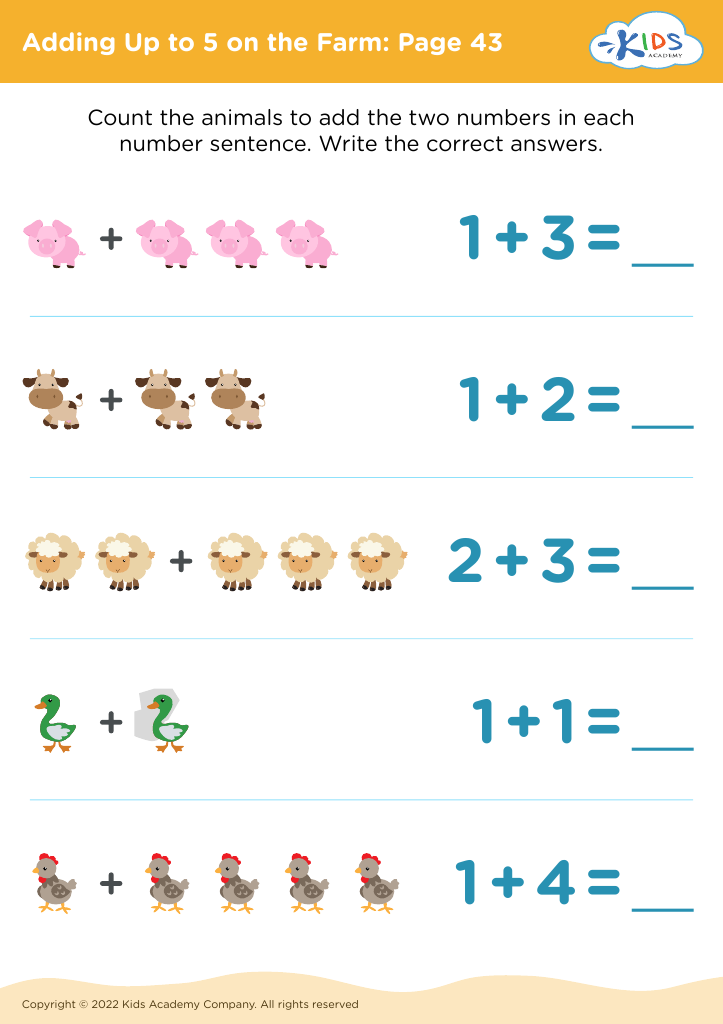
Adding Up to 5 on the Farm: Page 43
Worksheet
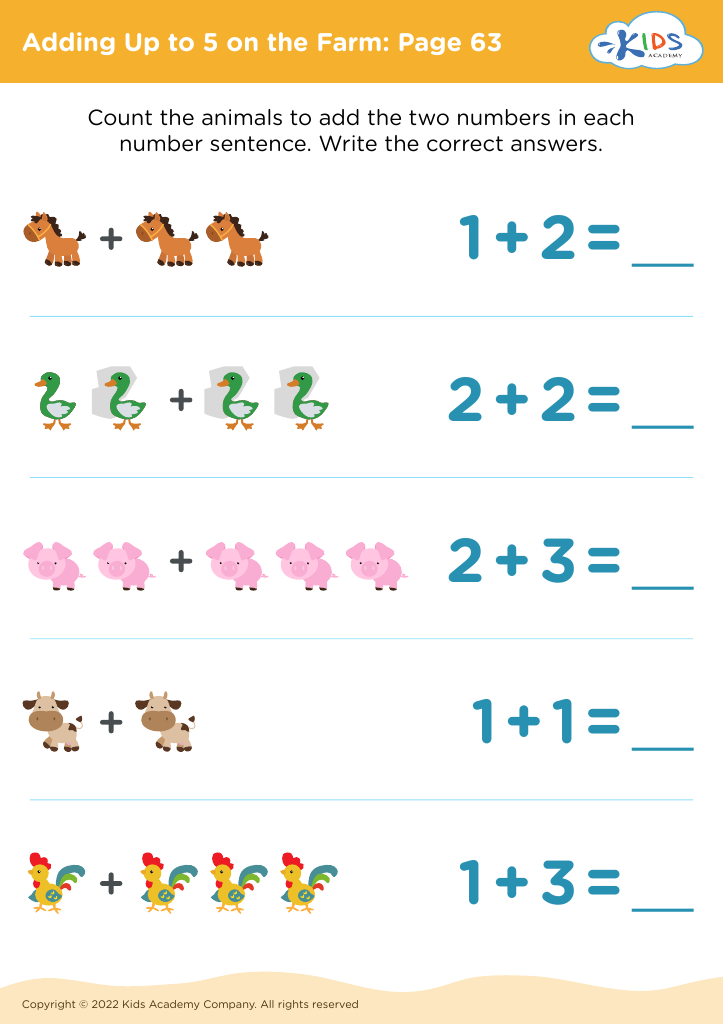
Adding Up to 5 on the Farm: Page 63
Worksheet
Addition at the Zoo Worksheet

Addition at the Zoo Worksheet

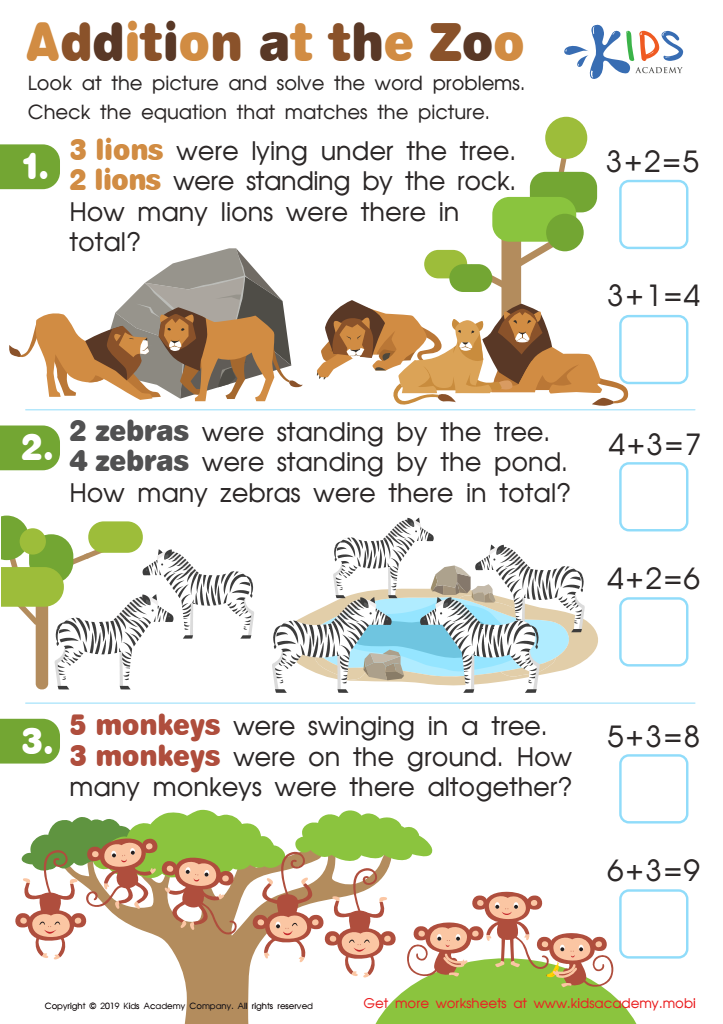
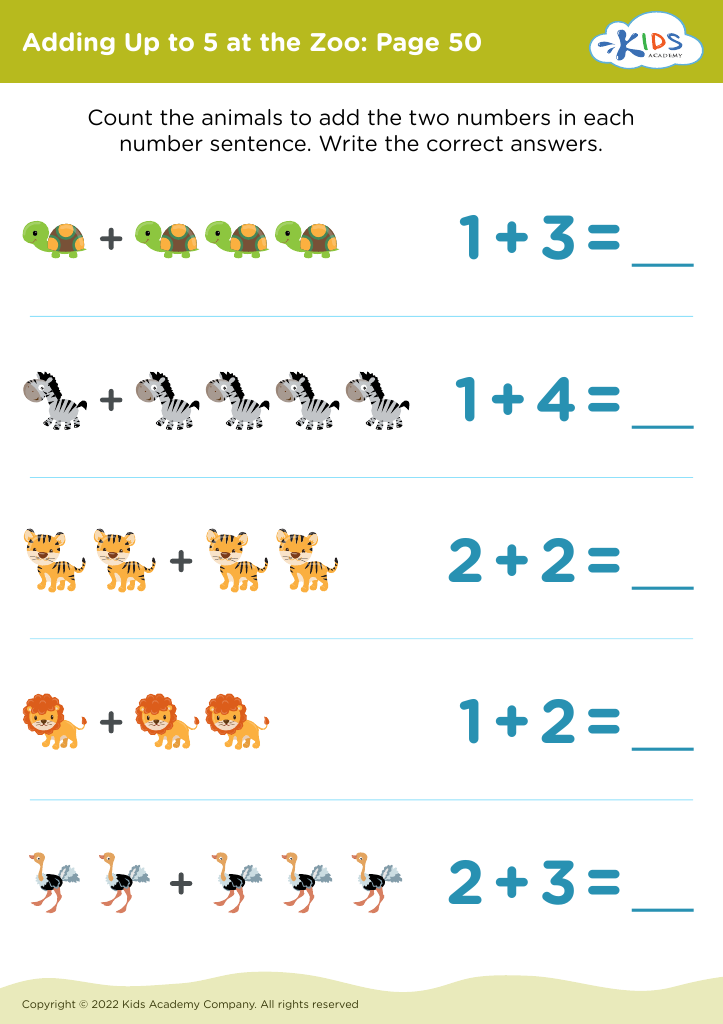
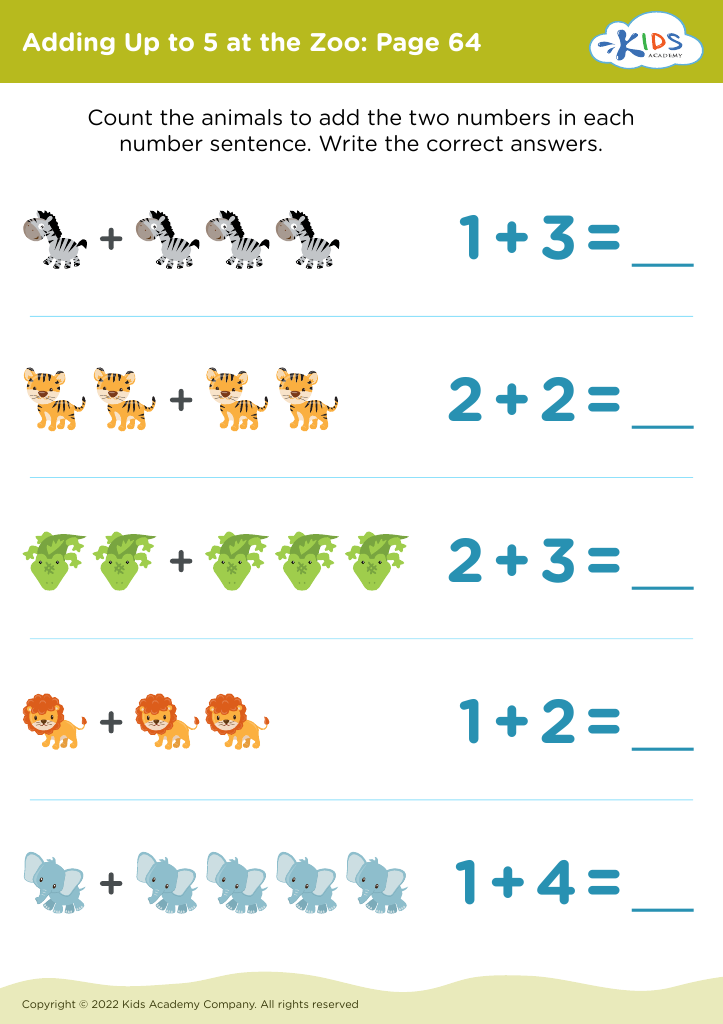
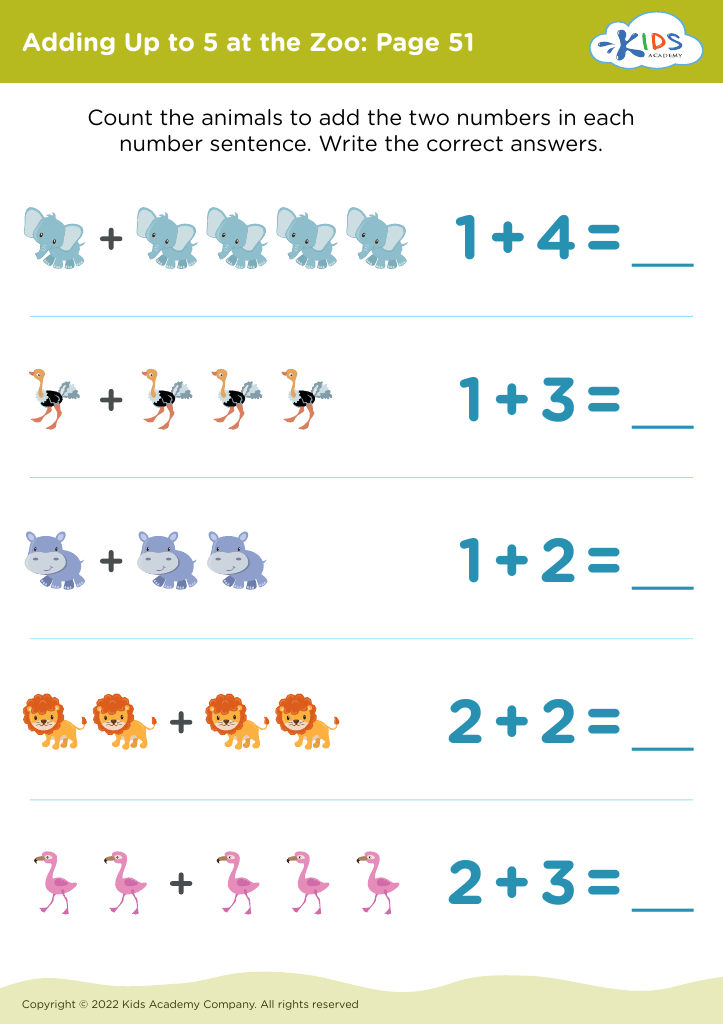
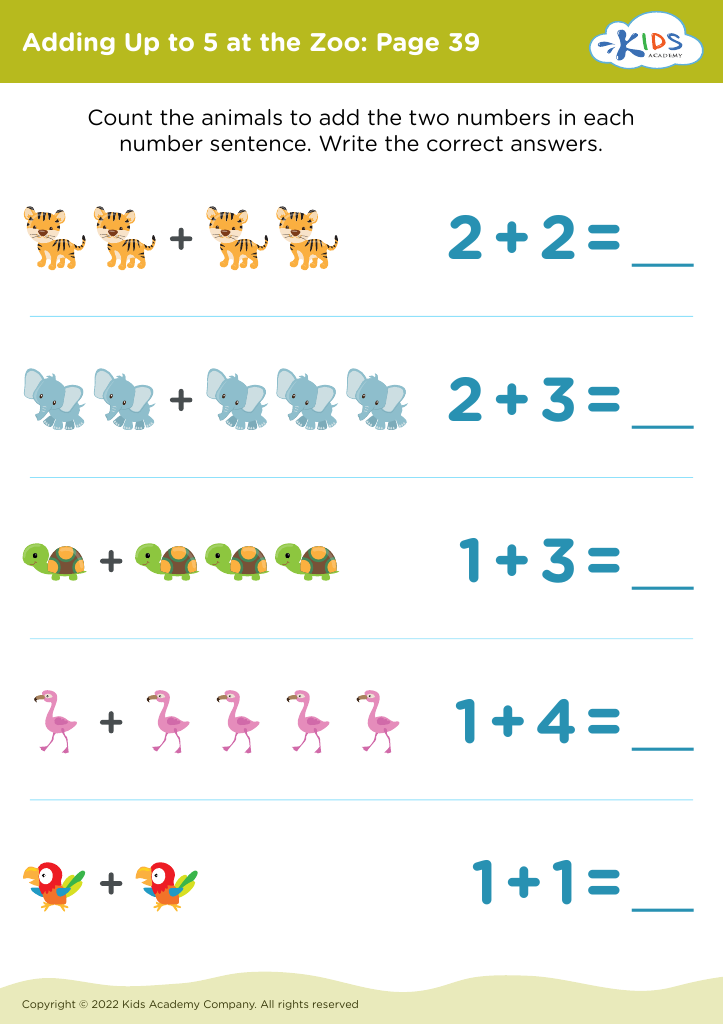
Visit the zoo with your kids and point out all the different animals. Ask them to name their favorites and identify animals on a worksheet. Challenge them to solve word problems related to the pictures. Ask them for the equation that fits the picture and check the answer.
Addition at the Zoo Worksheet
Worksheet
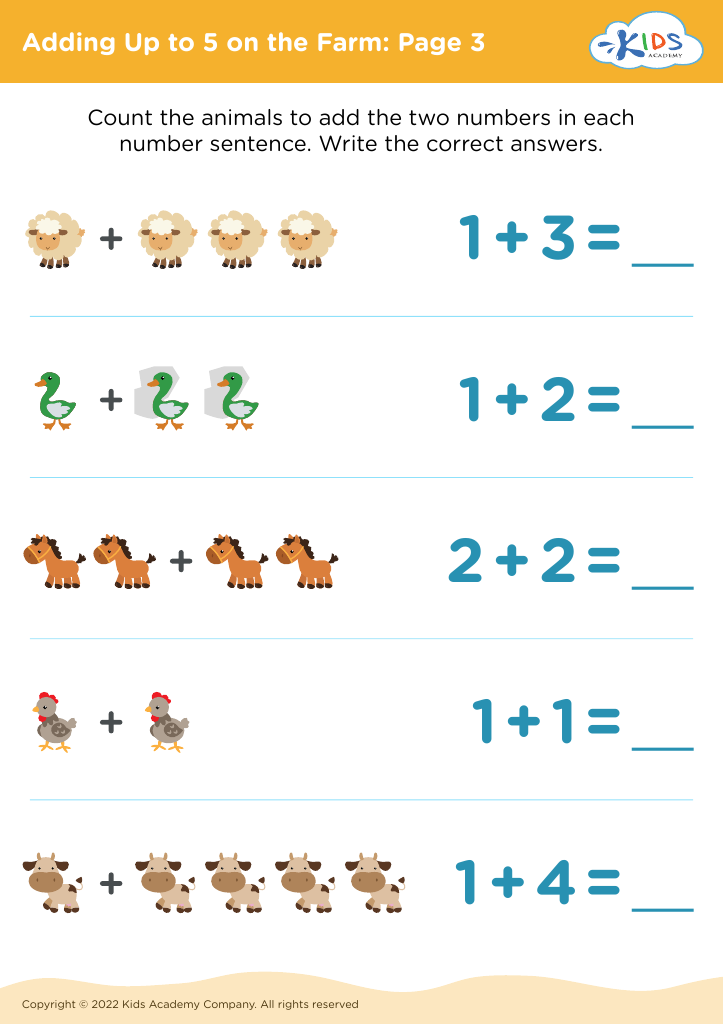
Adding Up to 5 on the Farm: Page 3
Worksheet
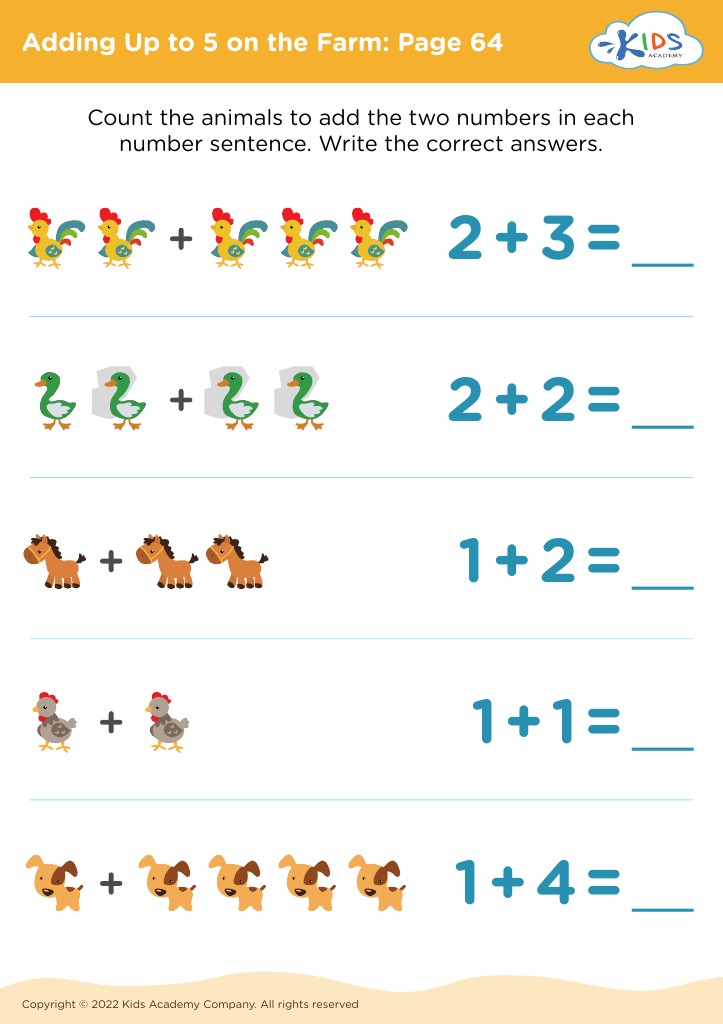
Adding Up to 5 on the Farm: Page 64
Worksheet
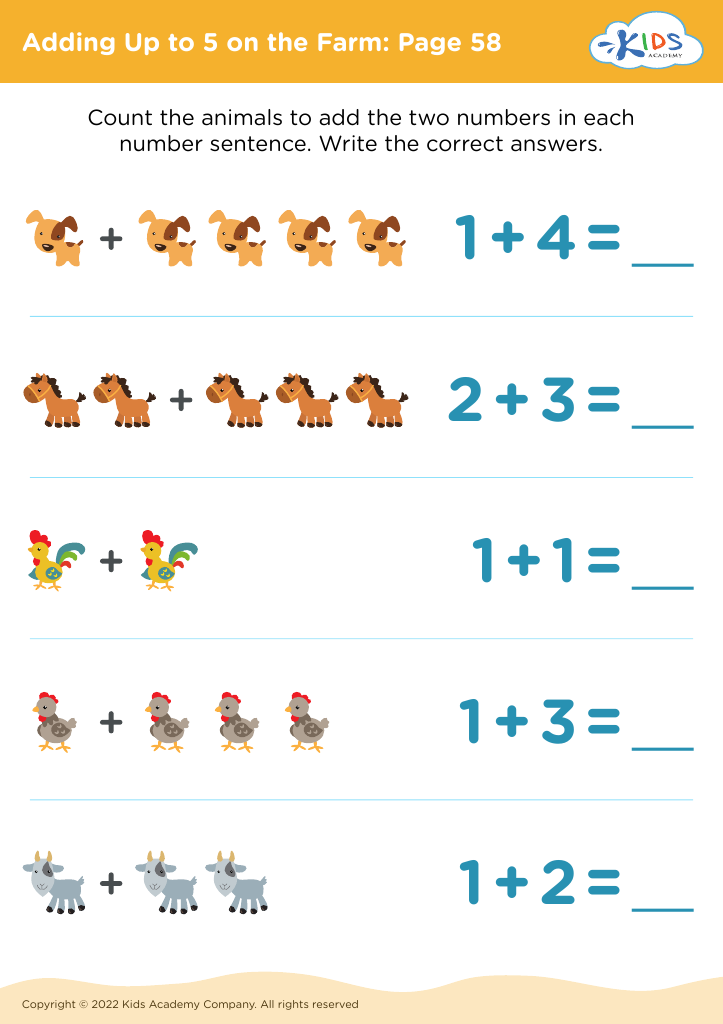
Adding Up to 5 on the Farm: Page 58
Worksheet
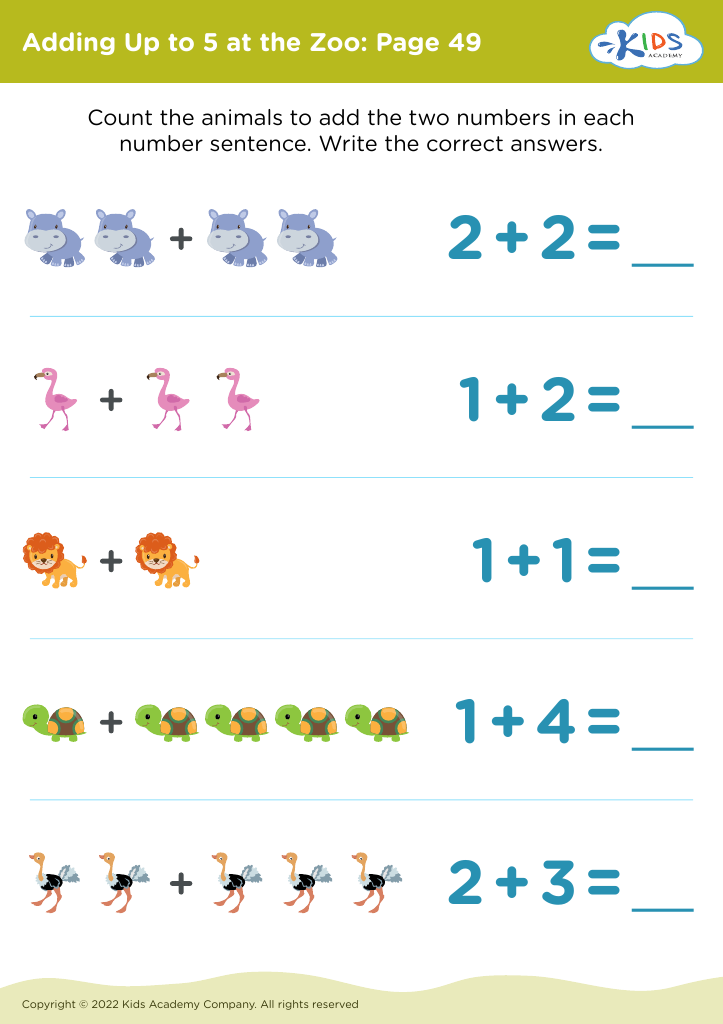
Adding Up to 5 at the Zoo: Page 49
Worksheet
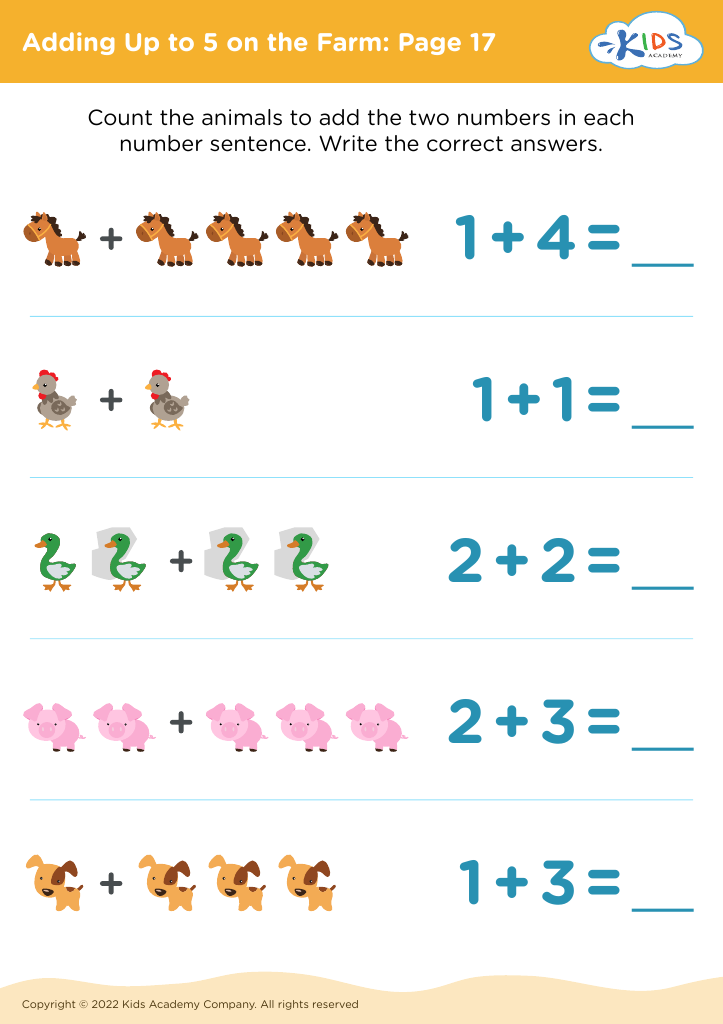
Adding Up to 5 on the Farm: Page 17
Worksheet
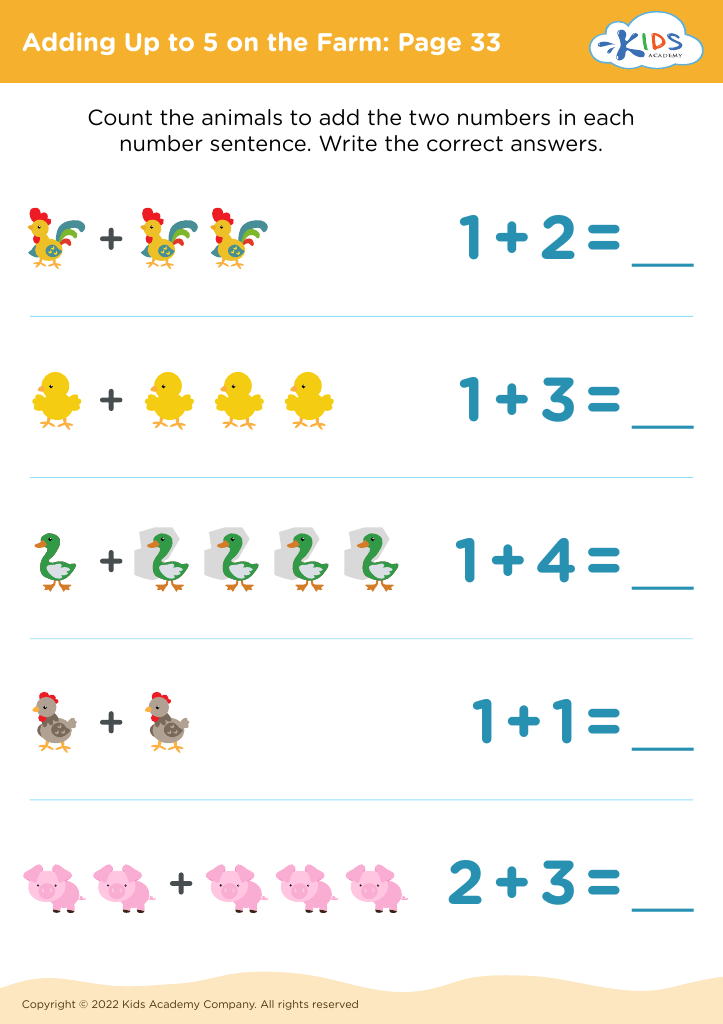
Adding Up to 5 on the Farm: Page 33
Worksheet
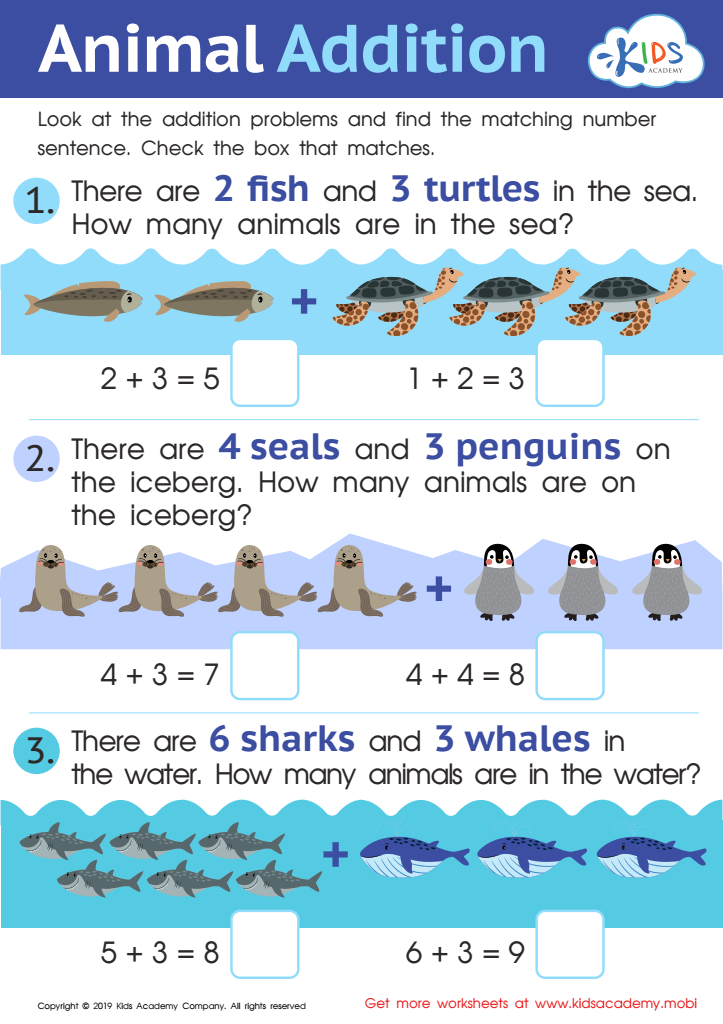
Animal Addition Worksheet
Animal Addition Worksheet

Get your kids learning addition and subtraction with this fun worksheet! Show them that solving equations can be enjoyable and help them match number sentences to the correct boxes. By doing this together, you'll create a positive learning experience that your kids won't forget.
Animal Addition Worksheet

Worksheet
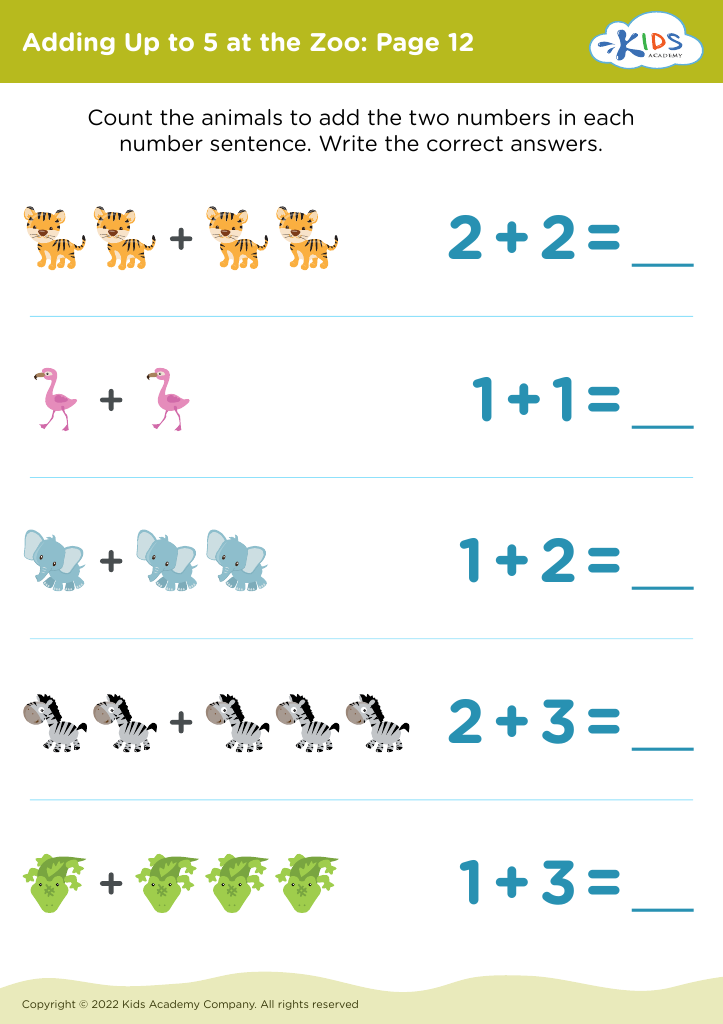
Adding Up to 5 at the Zoo: Page 12
Worksheet
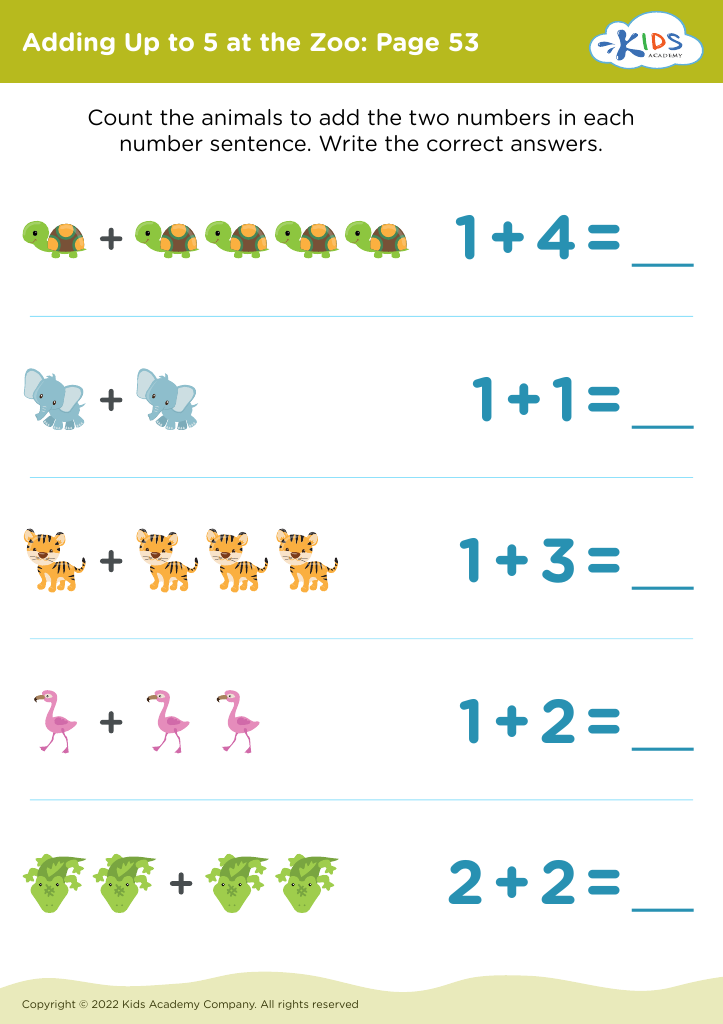
Adding Up to 5 at the Zoo: Page 53
Worksheet
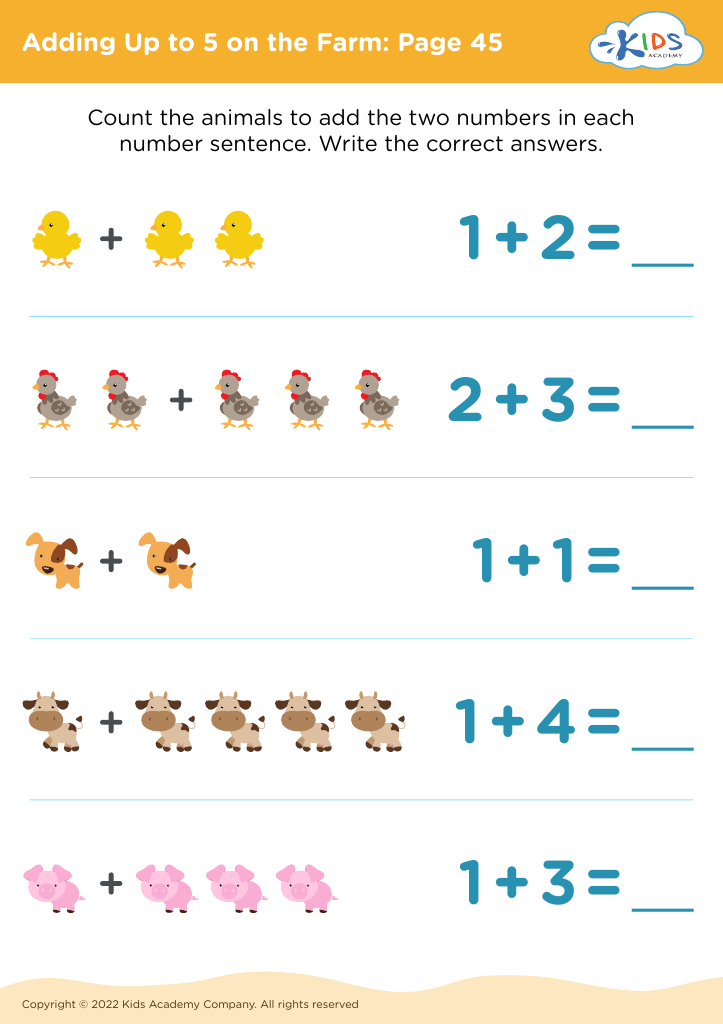
Adding Up to 5 on the Farm: Page 45
Worksheet
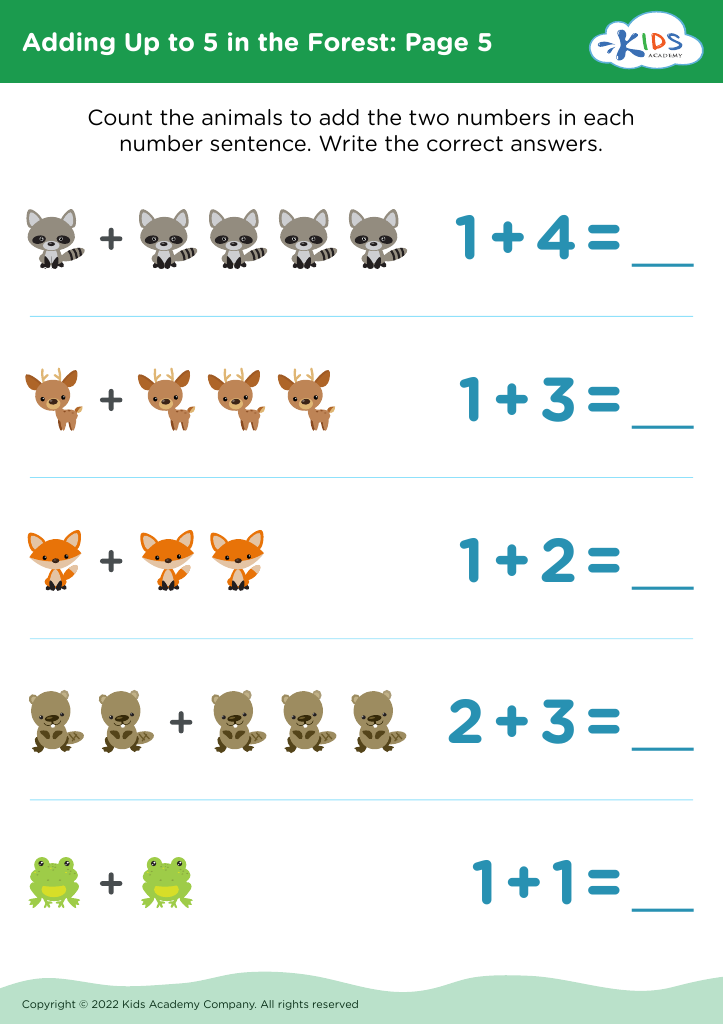
Adding Up to 5 in the Forest: Page 5
Worksheet
Adding Up to 5 at the Zoo: Page 50
Worksheet
Adding Up to 5 at the Zoo: Page 64
Worksheet
Adding Up to 5 at the Zoo: Page 51
Worksheet
Adding Up to 5 at the Zoo: Page 39
Worksheet


Parents and teachers should care about animal recognition, addition, and subtraction for ages 3-4 because these activities support crucial early childhood development. Animal recognition helps young children learn categorization, memory, and vocabulary which are foundational language skills. By recognizing and naming different animals, children strengthen their cognitive processes and expand their understanding of the world, finding joy and curiosity in learning.

Moreover, incorporating basic math concepts such as addition and subtraction into these activities introduces children to numerical literacy in an engaging and accessible way. At ages 3-4, children are naturally inquisitive and can develop an early number sense through playful interactions with objects. Using animals they recognize and adore as tools for counting helps children see math in a fun context, laying groundwork for future mathematical learning.

Finally, engaging in these activities as a family or classroom group also strengthens social skills, patience, and collaborative learning. Parents and teachers contribute to a happy, positive learning environment when they involve children in these playful yet educational activities. Such a foundation not only makes learning enjoyable but also sets children on a path for academic and personal success.

By prioritizing animal recognition and basic math activities, caregivers can foster an atmosphere of playful learning that encourages children’s innate curiosity and prepares them for future educational milestones.