
Enhancing focus Addition & Subtraction Worksheets for Ages 3-4
4 filtered results
Difficulty Level
Grade
Age
-
From - To
Subject
Activity
Standards
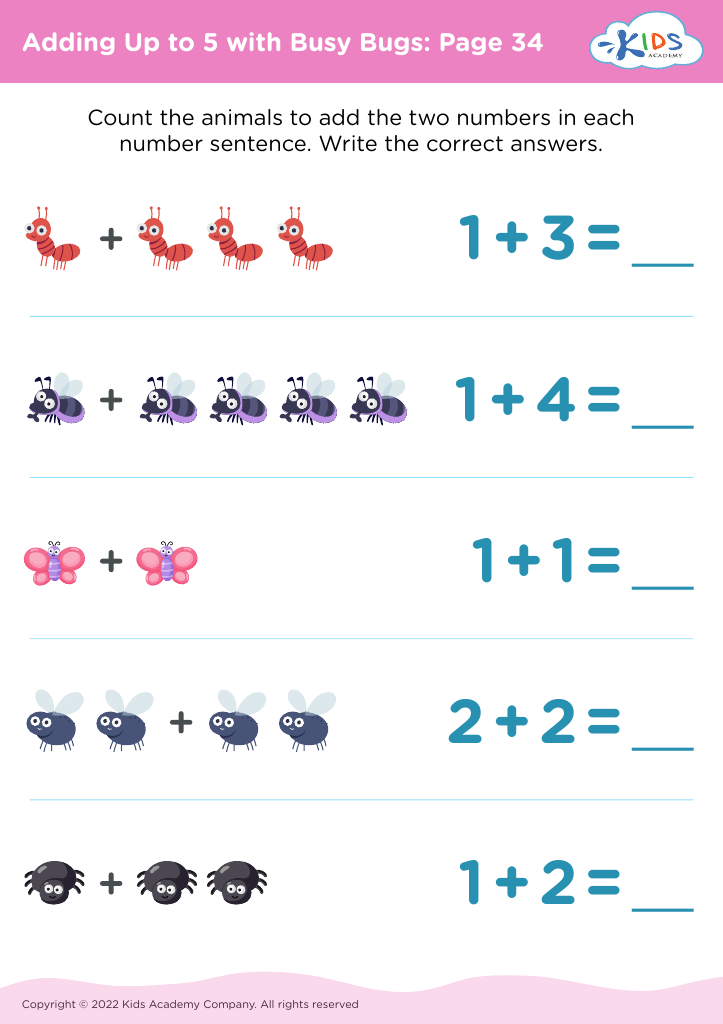
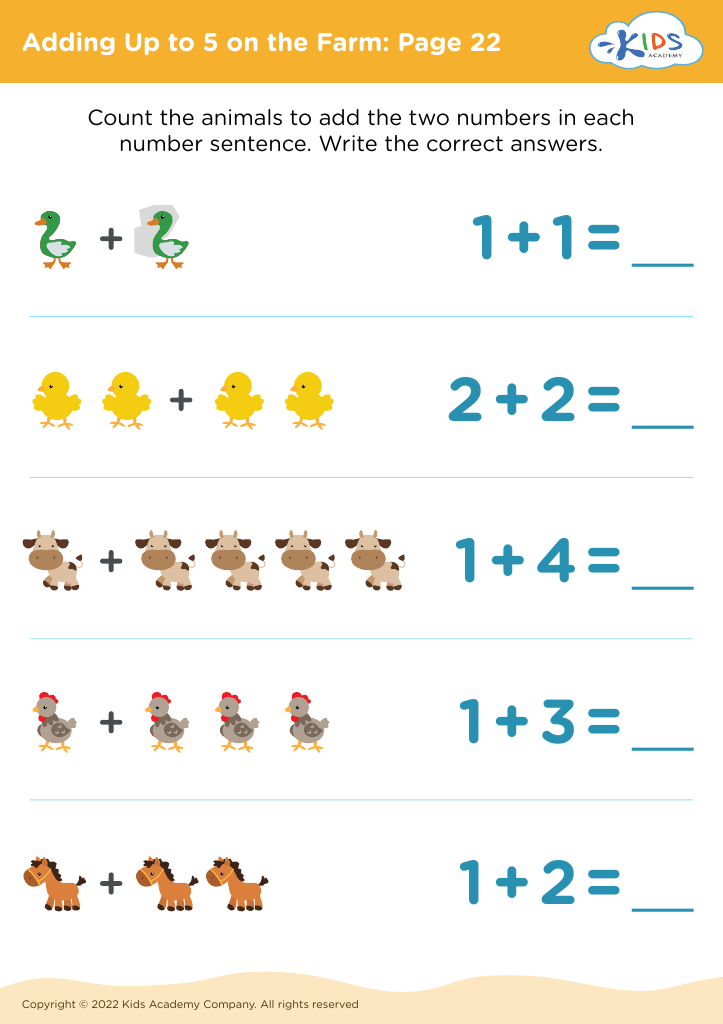
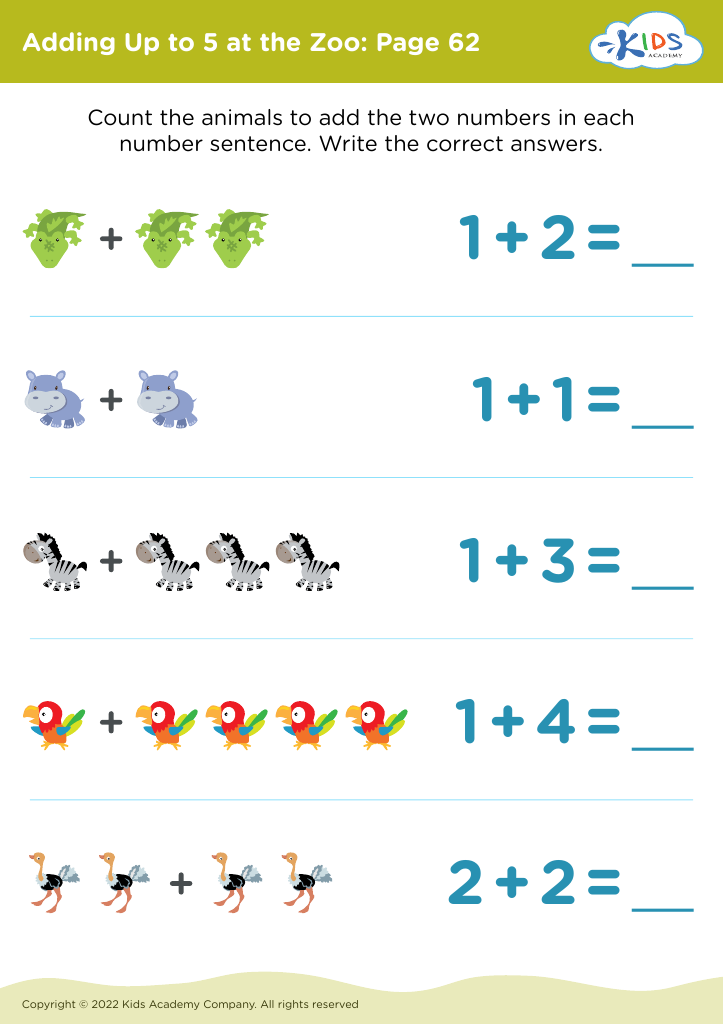
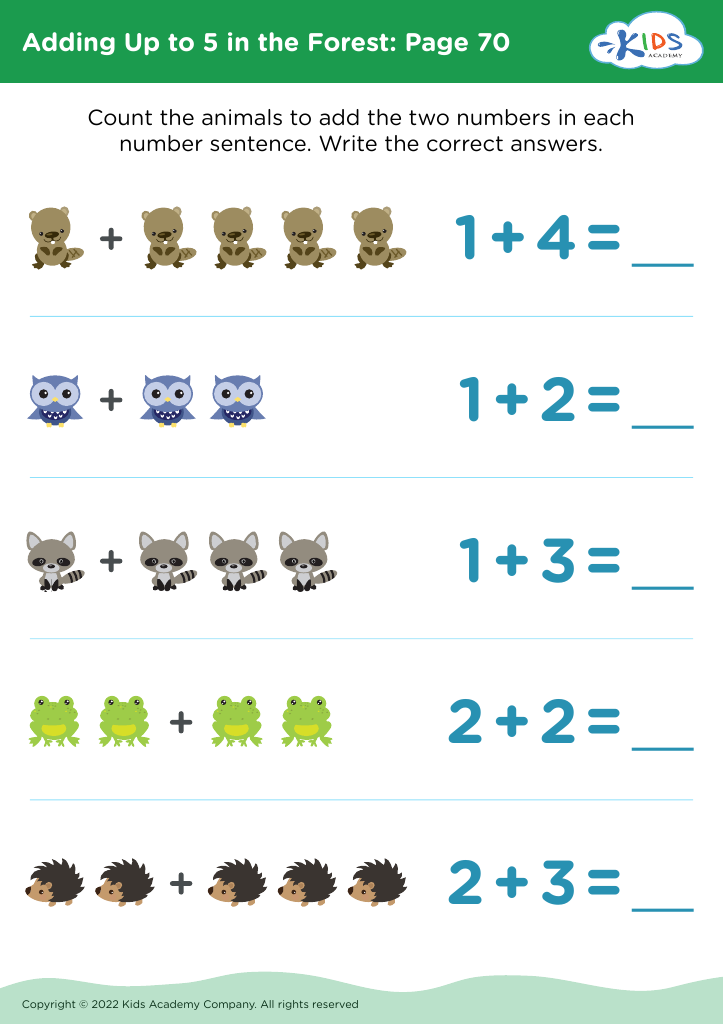
Unlock your child's potential with our "Enhancing Focus Addition & Subtraction Worksheets" designed specifically for ages 3-4. These engaging worksheets combine early math skills with fun activities that capture young learners' attention. By focusing on foundational addition and subtraction concepts, children can strengthen their concentration while enjoying vibrant illustrations and captivating exercises. Our thoughtfully crafted resources promote not just numerical understanding but also improve focus, ensuring a well-rounded learning experience. Ideal for parents and educators alike, these worksheets serve as a perfect tool to prepare your little ones for future academic success. Explore the wonders of math through play today!
Favorites
With answer key
Interactive
Join Kids Academy for Free
Who is primarily going to use this learning content?








Enhancing focus in addition and subtraction for children aged 3-4 is crucial for several reasons. At this age, children are developing essential cognitive and social skills, and understanding basic math concepts is foundational for future learning. Engaging them in early math activities cultivates a love for learning and sparks curiosity. It also promotes critical thinking skills, enabling them to solve problems and make connections across various subjects.
Fostering focus during these activities helps children practice sustained attention, improving their ability to concentrate on tasks—skills that are vital in a classroom setting. Early practice encourages confidence in math, reducing anxiety about numbers as they grow older. Additionally, interactive learning experiences around addition and subtraction, such as counting objects or playing number games, promote social interaction, cooperation, and communication among peers.
By prioritizing this early math focus, parents and teachers set the groundwork for a strong academic future. It helps children establish a positive relationship with math, laying the groundwork for more complex problem-solving and analytical skills that will be built upon throughout their educational journey. In essence, enhancing focus in foundational math helps children not only in academics but also in overall development.








