Improve counting skills Addition & Subtraction Worksheets for Ages 3-4
5 filtered results
-
From - To
Enhance your child's early math skills with our "Improve Counting Skills" worksheets designed specifically for ages 3-4. These engaging addition and subtraction worksheets make learning fun while building a strong foundation in basic math concepts. Each activity encourages children to recognize numbers, count objects, and solve simple problems, fostering confidence and enthusiasm for learning. With vibrant illustrations and interactive exercises, your little ones will enjoy developing their counting abilities through playful challenges. Perfect for parents and educators seeking to support early math education at home or in the classroom, these worksheets are a valuable resource for nurturing young learners' numerical skills.
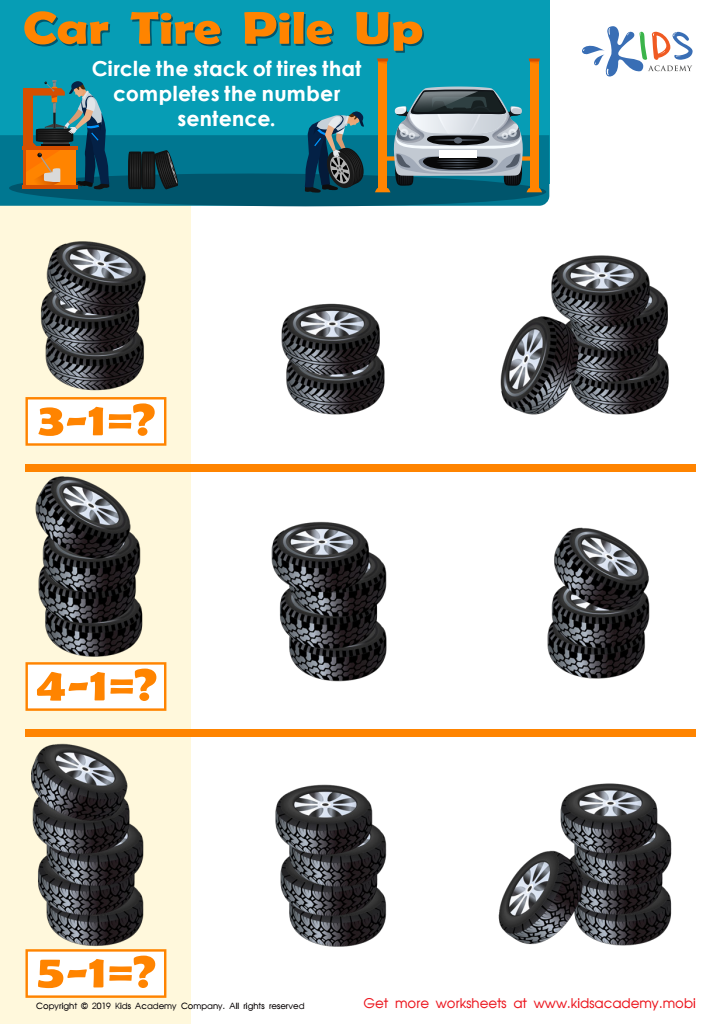
Car Tire Pile Up Worksheet
 Assign to My Students
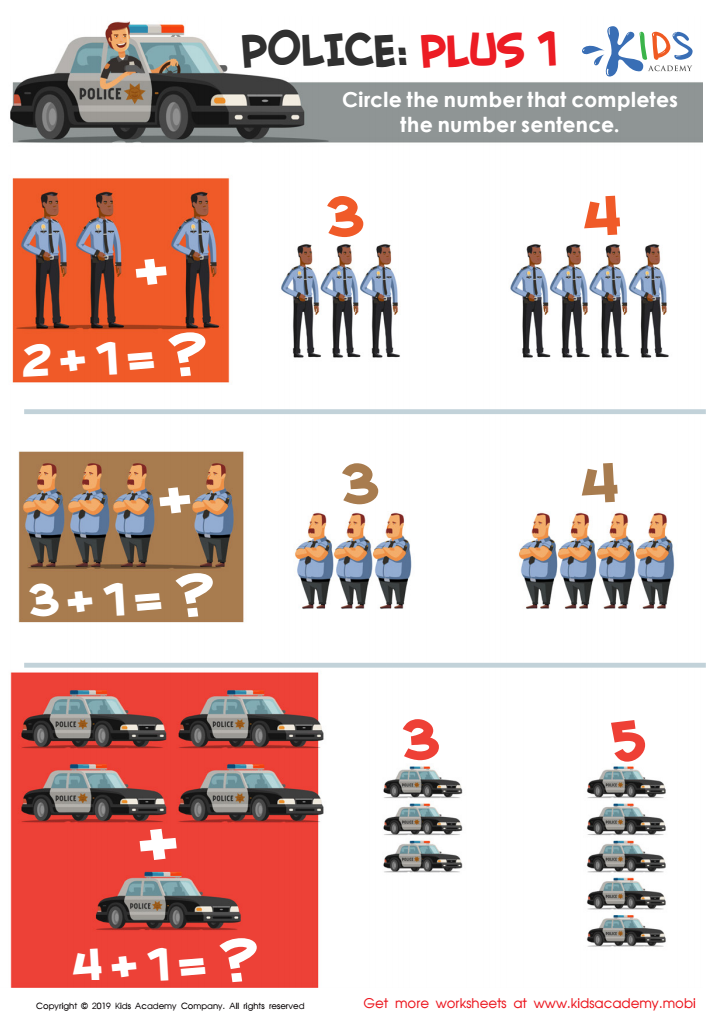
Police: Plus 1 Worksheet
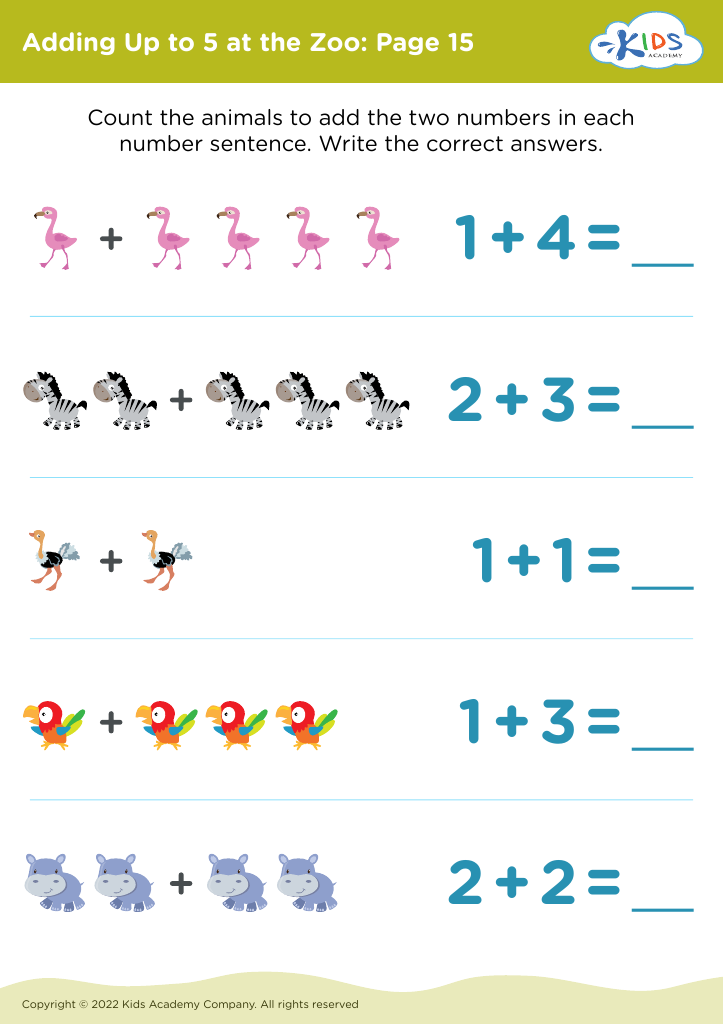
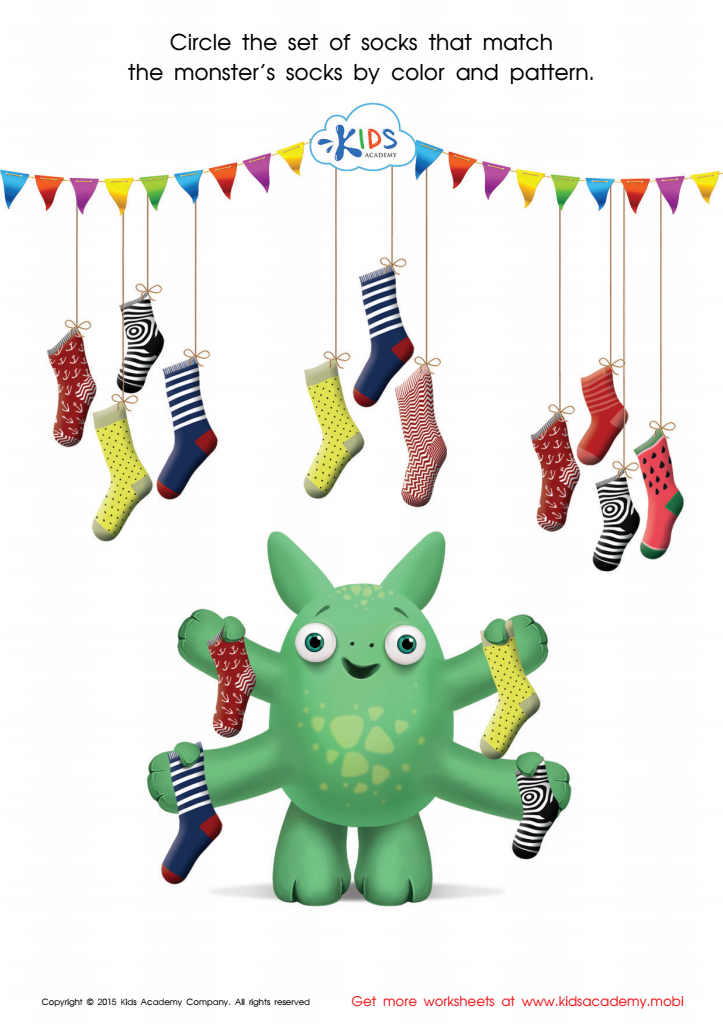
Connecting the Monster's Socks Printable
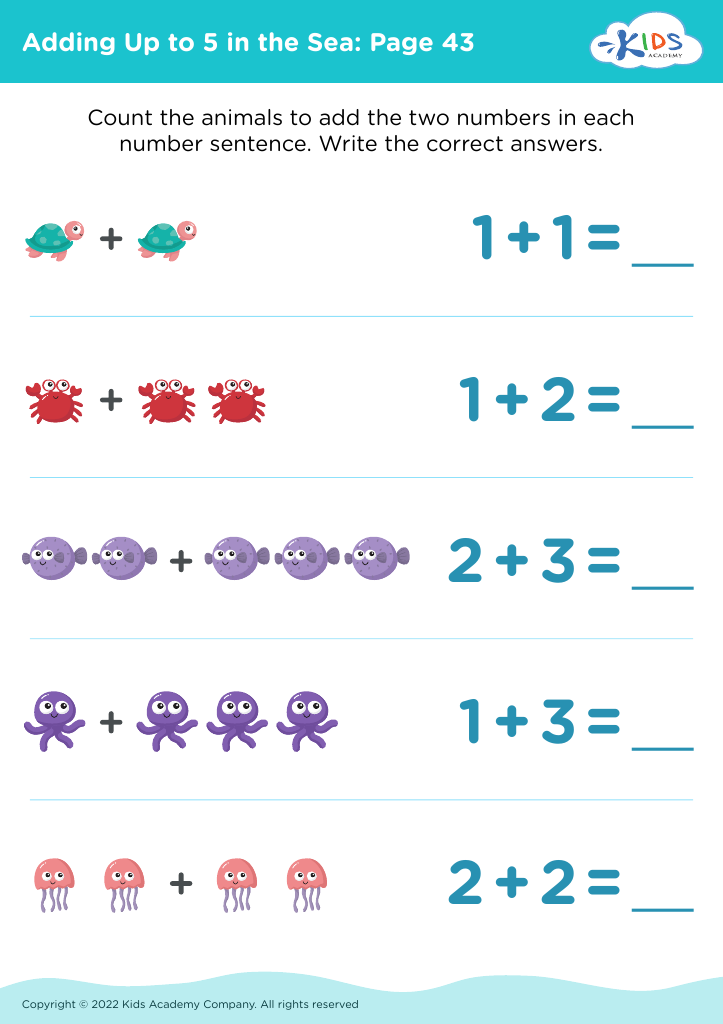








Developing counting skills, particularly in addition and subtraction, is crucial for children aged 3-4, laying a strong foundation for future mathematical understanding. At this age, children are naturally curious and absorb information rapidly, making it an ideal time for introducing basic numeracy concepts. Counting skills underpin all later mathematics, enhancing logical thinking and problem-solving abilities.
Parents and teachers should prioritize mathematical play and learning activities because these skills contribute to cognitive development. Engaging children in counting helps them understand quantity and develop one-to-one correspondence, which are fundamental concepts for all arithmetic operations. Additionally, practicing addition and subtraction through games or storytelling creates a fun learning environment, fostering a positive attitude toward math.
Moreover, strong foundational skills in counting, addition, and subtraction can boost children's confidence and enthusiasm, encouraging them to explore more complex mathematical concepts later on. As these skills are linked to critical thinking and everyday problem-solving, they also play a role in promoting overall academic success. Therefore, investing time and effort in enhancing counting skills through enjoyable and interactive experiences can yield significant long-term benefits for children's learning journeys.








